
How to Maintain a Healthy Lifestyle (Evidence-Based Guide for Every Age)

Hey, there. Let’s talk about something we all want but struggle to achieve: vibrant, long-term health. These days, figuring out how to maintain a healthy lifestyle can be completely overwhelming. Every week, we see a new fad diet or crazy workout trend on our feeds.
But here is the truth from a medical doctor. You don’t need extreme rules to stay healthy. Instead, building a solid foundation of simple, daily habits is what actually works for the long haul. Furthermore, adapting these habits to your specific age and career makes all the difference in the world.
As a board-certified physician, I see patients struggle with this burnout constantly. Therefore, I created this evidence-based guide to help you cut through the marketing noise. First of all, we will cover exactly how to maintain a healthy lifestyle using proven, practical, and truly sustainable steps.
TL;DR — Quick Summary Box
A healthy lifestyle includes balanced nutrition, regular physical activity, quality sleep, stress management, preventive healthcare, and avoidance of harmful habits. Maintaining it requires sustainable daily habits tailored to your age, career, and health status.
What Are 10 Tips for a Healthy Lifestyle?
Need a quick, actionable checklist to get started? Here are 10 ways to maintain a healthy lifestyle that you can implement right now.
- Eat a balanced diet rich in natural fiber and lean protein.
- Stay physically active every single day, even just walking.
- Prioritize sleep by aiming for 7 to 9 hours nightly.
- Drink enough water to keep your cells fully hydrated.
- Maintain a healthy weight to reduce chronic joint stress.
- Manage stress through daily mindfulness or deep breathing.
- Avoid tobacco completely to protect your lungs and heart.
- Limit alcohol intake to reduce your risk of liver disease and cancer.
- Stay socially connected to protect your long-term mental health.
- Get regular checkups to catch potential issues early.
Consequently, making these 10 healthy lifestyle choices forms the absolute bedrock of modern preventive medicine.
How Can We Maintain a Healthy Lifestyle?
You might wonder how to change your lifestyle to be healthy without immediately burning out. First of all, you absolutely must start small. Trying to overhaul your entire life overnight rarely works and usually leads to immense frustration.
Instead, focus heavily on consistency over perfection. Making 5 positive lifestyle choices repeatedly is much better than having one perfect, exhausting week. For instance, just adding a 10-minute walk after dinner is a massive cardiovascular win over time.
Furthermore, you should track your habits. Writing things down keeps you deeply accountable and shows you real-time progress. In the same way, building realistic daily routines anchors these new, healthy behaviors right into your busy schedule.
Ultimately, learning how to keep healthy is a marathon, not a sprint. Therefore, give yourself some grace as you slowly build these 5 ways to stay healthy into your permanent daily rhythm.
Healthy Eating & Diet Foundations
Food is literally the medicine that fuels your cells. So, figuring out how to maintain a healthy diet is absolutely crucial for your long-term vitality. Let’s break down exactly how to maintain a healthy eating lifestyle without resorting to miserable starvation diets.
First, focus heavily on macronutrient balance. You need a smart mix of complex carbohydrates, healthy fats, and lean proteins at every single meal. As a result, your blood sugar stays completely stable all day long, preventing those dreaded afternoon energy crashes.
Additionally, you must prioritize fiber for your gut health. Most Americans simply do not get enough dietary fiber. Therefore, loading up on green vegetables, beans, and whole grains directly supports your digestion, lowers your cholesterol, and boosts your immune system.
Also, portion control matters deeply when learning how to maintain a healthy diet and lifestyle. Even incredibly healthy foods can cause weight gain if you eat too much of them. Hence, using smaller dinner plates easily tricks your brain into feeling full on fewer calories.
Similarly, proper hydration is absolutely non-negotiable for how to maintain a healthy, balanced lifestyle. Drinking enough water flushes out metabolic toxins and keeps your joints perfectly lubricated. In fact, many people mistakenly confuse mild dehydration with actual hunger pangs.
Finally, meal timing plays a massive role in your metabolic health. Try your best to stop eating at least two hours before you go to bed. Consequently, your body can focus entirely on deep, restorative sleep rather than aggressively digesting heavy food all night.
What is the 3-3-3 rule for eating?
The 3-3-3 rule generally suggests eating 3 balanced meals a day, spaced about 3 hours apart, with each meal containing 3 distinct food groups (protein, carbs, and fat). This simple framework actively prevents severe blood sugar crashes and stops mindless snacking.
How to Maintain a Healthy Active Lifestyle
Moving your body is pure magic for your heart and your brain. So, how do you maintain a healthy, active lifestyle when you are super busy working or raising a family? You just need a strategic plan.
First of all, aim for a minimum of 150 minutes of moderate cardio every single week. This could easily be brisk walking, cycling, or swimming laps. Consequently, your cardiovascular system stays incredibly strong, significantly lowering your heart disease risk.
Furthermore, you must include strength training two to three times a week. Lifting weights or doing heavy bodyweight exercises actively preserves your crucial muscle mass. As a result, your resting metabolism stays high even as you naturally age.
In addition, please do not ignore your mobility work. Stretching out your tight muscles keeps your joints healthy and actively prevents painful, debilitating injuries as you get older.
Most noteworthy, you should focus on NEAT (Non-Exercise Activity Thermogenesis). This simply means moving more during your normal life. Taking the stairs instead of the elevator or parking further away from the store adds up massively over a year.
The 5-2-1-0 Rule Explained
Pediatricians and public health experts absolutely love this simple, memorable framework. So, what is the 5 2 1 0 rule exactly, and why is it so effective?
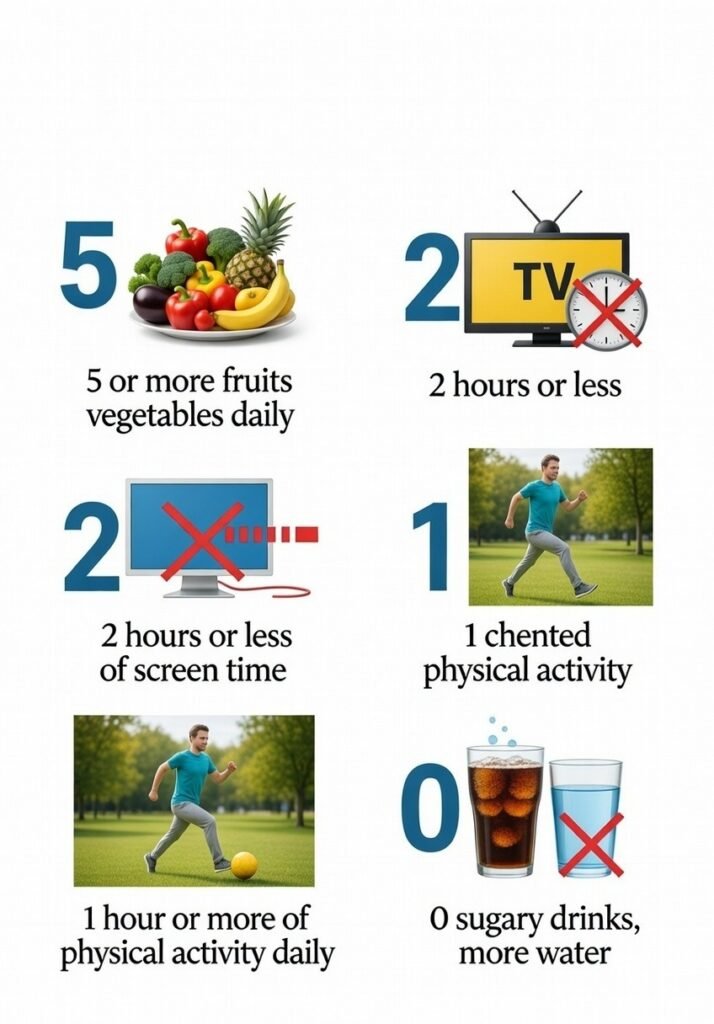
It stands for getting 5 servings of fruits and vegetables, allowing a maximum of 2 hours of recreational screen time, getting 1 hour of physical activity, and drinking 0 sugary drinks daily.
Consequently, this rule is a fantastic, evidence-based baseline for both kids and adults alike. First, the 5 servings of fresh produce provide essential vitamins and antioxidants. Second, strictly limiting screens directly protects your mental health and preserves your sleep quality.
Furthermore, getting that 1 full hour of daily movement keeps obesity and diabetes at bay. Finally, cutting out sugary drinks is probably the absolute fastest way to drop empty calories. Therefore, adopting this specific rule makes family health incredibly simple and highly effective.
Healthy Habits for Kids & Students
Building healthy habits for kids starts right at home with incredibly simple daily routines. Consequently, parents must actively model good nutrition and consistent daily movement. Furthermore, you must establish strict bedtimes to completely protect their rapidly developing brains.
But what about teenagers? Figuring out how to maintain a healthy lifestyle as a teenager involves managing intensely high academic stress. Therefore, prioritizing deep sleep hygiene over late-night social media scrolling is absolutely crucial for their mental health.
Similarly, learning how to maintain a healthy lifestyle as a student requires making incredibly smart cafeteria choices. You must consciously grab lean proteins and fresh salads instead of daily pizza slices. Furthermore, staying highly hydrated during long study sessions actively prevents severe brain fog.
Finally, figuring out how to maintain a healthy lifestyle in college means perfectly balancing your new freedom with biological responsibility. You should definitely join intramural sports to stay active and relieve test anxiety. Most of all, creating a highly consistent weekend sleep schedule directly protects your immune system during midterms.
Age-Specific Guidance
As a medical doctor, I always emphasize that your body’s physiological needs change drastically over time. Therefore, we must aggressively adapt our daily habits as we naturally age. Let’s explore these specific, decade-based health strategies to keep you thriving.
How to Maintain a Healthy Lifestyle at 50
Reaching half a century is a massive, beautiful milestone. To successfully figure out how to maintain a healthy lifestyle at 50, you must aggressively prioritize your cardiovascular health. Consequently, getting a comprehensive lipid panel and a baseline colonoscopy is absolutely mandatory.
At 53 and 58
Furthermore, your vital muscle mass naturally declines rapidly during this specific decade. Therefore, at 53, you should heavily increase your daily dietary protein and begin strict resistance training. Likewise, at 58, focusing intensely on your core strength actively prevents debilitating lower back pain.
At 59 and 63
Bone density becomes a major clinical concern as you rapidly approach your sixties. Hence, at 59, you must ensure adequate dietary calcium and daily vitamin D intake. Similarly, at 63, engaging in weight-bearing exercises like brisk walking directly fortifies your fragile skeletal system.
At 69 and 70
Cognitive health takes absolute center stage as you near your seventies. Therefore, at 69, playing mentally stimulating games and staying highly social actively protects your brain from cognitive decline. Consequently, at 70, prioritizing fall prevention through daily balance exercises is incredibly vital for your independence.
After 60
Ultimately, learning how to maintain a healthy lifestyle after 60 revolves entirely around consistency and daily joy. You should actively pursue low-impact hobbies like gardening, cycling, or swimming laps. Furthermore, staying completely up-to-date on all preventive cancer screenings effectively extends your active, healthy lifespan.
How to Maintain a Healthy Lifestyle for Men
Many of my male patients actively avoid the doctor’s office until something completely breaks. So, how to maintain a healthy lifestyle for men? First of all, you must completely overcome the toxic stigma surrounding mental health and seek professional therapy if you feel overwhelmed.

Furthermore, supporting your natural testosterone levels requires lifting heavy weights and getting adequate, uninterrupted sleep. Consequently, you also need to schedule regular prostate screenings as you age past fifty. Most noteworthy, managing your daily stress aggressively lowers your overall heart disease risk.
Career-Specific Health Strategies
Certain demanding professions require highly tailored, specific medical advice. For example, figuring out how to maintain a healthy lifestyle as a lawyer means directly combating a severely sedentary office culture. Therefore, utilizing a standing desk and doing quick, travel-friendly hotel workouts is essential.
Similarly, learning how to maintain a healthy lifestyle as a pilot presents incredibly unique biological challenges. You must fiercely protect your delicate circadian rhythm against constant, punishing jet lag. Furthermore, passing strict cardiovascular screenings ensures you remain medically cleared to fly safely for years.
10 Benefits of a Healthy Lifestyle
Why should you put in all this hard work every single day? Here are 10 benefits of healthy lifestyle choices backed by extensive, rigorous clinical research.
- Reduced heart disease risk: Actively keeps your arteries clear and flexible.
- Lower diabetes risk: Perfectly stabilizes your daily blood insulin levels.
- Improved mood: Daily exercise releases powerful, mood-boosting endorphins.
- Better cognition: Directly protects your memory and focus long-term.
- Stronger immunity: Helps you fight off seasonal viruses much faster.
- Weight stability: Actively prevents painful, chronic joint stress.
- Longer lifespan: Scientifically adds high-quality years to your life.
- Reduced cancer risk: Significantly lowers dangerous cellular inflammation.
- Improved sleep: Helps you fall asleep faster and stay asleep longer.
- Higher energy: Eliminates that chronic afternoon fatigue.
As a result, investing heavily in your daily health pays massive, lifelong biological dividends.
Healthy Lifestyle Examples (Practical Day Plan)
Do you need some concrete healthy lifestyle examples to easily follow? First of all, a great morning routine involves drinking a large glass of water and doing ten minutes of dynamic stretching. Then, you eat a high-protein breakfast to fully fuel your brain for the day.
During a typical workday, for example, you should actively take a brief walking break every single hour. Furthermore, you pack a nutrient-dense spinach salad for lunch instead of eating greasy fast food. Hence, you avoid the dreaded afternoon energy crash entirely and stay highly productive.
Finally, a solid weekend example includes meal prepping healthy dinners for the upcoming busy week. You also spend quality time outdoors with your family to naturally lower your cortisol levels. Most of all, you strictly limit your alcohol intake while socializing with friends.
Frequently Asked Questions
What are the main components of a healthy lifestyle?
The primary components include eating a whole-food diet, exercising regularly, sleeping deeply, and managing daily stress. Furthermore, completely avoiding toxic habits like smoking directly supports your overall longevity and daily energy.
Can I get healthy without joining a gym?
Yes, you absolutely can achieve great health without an expensive gym membership. First of all, brisk daily walking, home bodyweight exercises, and stretching are incredibly effective. Consistency easily beats expensive equipment every single time.
How much water should I drink daily?
Most healthy adults should aim for roughly eight large glasses of water per day. However, if you exercise heavily or live in a very hot climate, you must drink significantly more to stay fully hydrated.
How quickly will I see results from a healthier lifestyle?
You will likely notice significantly more energy and better sleep within just one week. Furthermore, profound changes like weight loss and lower blood pressure typically take about three to four weeks of strict consistency.
Is taking daily supplements necessary?
Supplements are completely optional if you eat a highly nutritious, perfectly balanced diet. However, I frequently recommend vitamin D or omega-3s if a patient shows a specific, clinically proven deficiency in their blood work.
Final Thoughts
Taking total control of your well-being does not require a miserable, restrictive diet or exhausting workouts. As a medical doctor, I promise you that focusing on simple, daily consistency easily yields the absolute best clinical results.
Therefore, start by picking just two small habits to change this week, like drinking more water or walking after dinner. By following this evidence-based guide, you now know exactly how to maintain a healthy lifestyle for the rest of your vibrant, active life. Please consult your primary care physician today to safely begin your new wellness journey!
Evidence-Based References:
- Centers for Disease Control and Prevention (CDC) — Healthy Living
- American Heart Association (AHA) — Healthy Living Basics
- World Health Organization (WHO) — Healthy Diet Fact Sheet
- National Institutes of Health (NIH) — Wellness Toolkits
- American Academy of Pediatrics (AAP) — Healthy Living for Families
Related Posts






MORE from Author
Read More As a physician specializing in exercise science and public health, I regularly consult patients who feel completely lost in the…
 Just last week, a 34-year-old patient named Clara sat in my clinic, feeling entirely overwhelmed by the modern fitness industry.…


 Hello, I am Dr. Kenji Sato, MD, specializing in sports medicine and performance optimization. In my sports clinic, I constantly…
- In my clinical practice as a physician focused on exercise science, I often tell patients that mastering fitness bench workouts…