Fitness Jump Rope Workout: Beginner Plans, Benefits & Best Routines

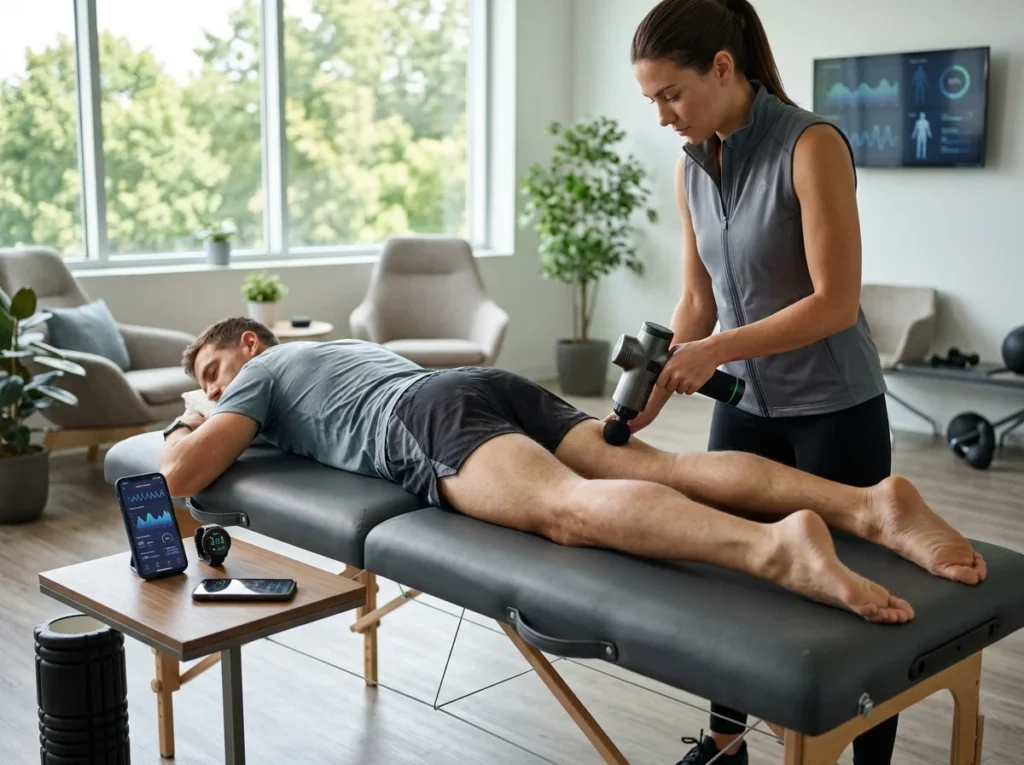
Hello, I am Dr. Kenji Sato, MD. In my sports medicine practice, I often work with patients who want to improve their cardiovascular health but struggle to find time for long workouts. Many ask about a fitness jump rope workout as a quick, effective solution they can do at home.
Recently, a patient named David came to me feeling burned out from long commutes and limited free time. After introducing him to a structured jump rope routine, he saw noticeable improvements within weeks—his resting heart rate dropped, coordination improved, and he found a sustainable way to stay active.
Skipping rope is no longer just a childhood activity—it’s a powerful, science-backed cardiovascular exercise used by athletes and busy individuals alike. Whether your goal is fat loss, improved agility, or efficient daily movement, jump rope training delivers impressive results in minimal time.
In this guide, I’ll show you how to safely and effectively incorporate a jump rope workout into your routine for maximum benefit.
Key Takeaways
- A fitness jump rope workout is a highly efficient, scientifically validated method for improving cardiovascular health and burning fat.
- The exercise is highly scalable; it is suitable for beginners learning basic timing and advanced athletes executing complex intervals.
- Consistency and proper footwear are your best defenses against joint pain and common overuse injuries.
What Is a Fitness Jump Rope Workout?
A fitness jump rope workout is a cardiovascular exercise routine using a skipping rope to improve muscular endurance, coordination, and overall metabolic health. It is a plyometric movement, meaning your muscles exert maximum force in short intervals.
Unlike passive forms of cardio like cycling, jumping rope requires the coordinated engagement of your upper body, core, and lower body simultaneously. It forces your central nervous system to remain highly engaged, making it both a physical and neurological workout.
Jumping Rope Exercise Benefits
From a clinical perspective, the physiological adaptations that occur from consistent jump rope training are remarkable. This single piece of equipment provides a full-body stimulus that rivals much more expensive fitness machines.
Improves Cardiovascular Health
Jumping rope is a phenomenal way to strengthen your heart. Because it involves continuous, rhythmic bounding, it rapidly elevates your heart rate into the aerobic and anaerobic zones.
This consistent cardiovascular stress forces your heart to pump blood more efficiently, lowering your resting heart rate and decreasing your risk of long-term cardiovascular disease.
Burns Calories Efficiently
When it comes to caloric expenditure, skipping rope is top-tier. Depending on your body weight and intensity, you can burn between 15 and 20 calories per minute.
This makes it far more efficient than steady-state jogging. The rapid muscle contractions required to clear the rope demand massive amounts of energy, creating a high metabolic cost.
Enhances Coordination and Balance
Many of my patients lose their proprioception—the awareness of their body in space—as they age. Jumping rope requires extreme synchronization between your eyes, hands, and feet.
This rhythmic coordination strengthens neural pathways, drastically improving your overall balance, agility, and athletic reaction time.
Supports Weight Loss
By combining high caloric burn with muscle engagement, skipping rope directly supports weight loss protocols. Furthermore, the plyometric nature of the exercise builds lean muscle in your calves, quads, and shoulders.
More lean muscle tissue naturally increases your basal metabolic rate (BMR), meaning you burn more calories even when you are resting.
Can Jump Rope Help With Belly Fat?
Patients frequently ask me if they can target their abdominal fat with specific exercises. Medically speaking, “spot reduction” is a myth; you cannot force your body to lose fat from just one specific area.
However, a jump rope routine aggressively supports total-body fat loss by creating a significant caloric deficit. Because jumping rope burns so much energy, it accelerates the reduction of overall body fat percentage, which inevitably includes visceral belly fat.
To see significant changes in your midsection, this exercise works best when combined with a nutrient-dense diet and proper protein intake. The jumping motion also heavily engages your deep core muscles for stabilization, leading to a tighter, more toned appearance as the fat layer diminishes.
Fitness Jump Rope Workout Plan
Consistency is the cornerstone of cardiovascular adaptation. A highly effective fitness jump rope workout plan should seamlessly blend both endurance and high-intensity intervals to keep your body guessing.
Weekly Plan Structure: For most individuals, I recommend 3 to 5 sessions per week. You should alternate between steady-state days (where you jump at a moderate, continuous pace) and high-intensity days. This prevents central nervous system burnout while maximizing metabolic conditioning.
Jump Rope Workout for Beginners
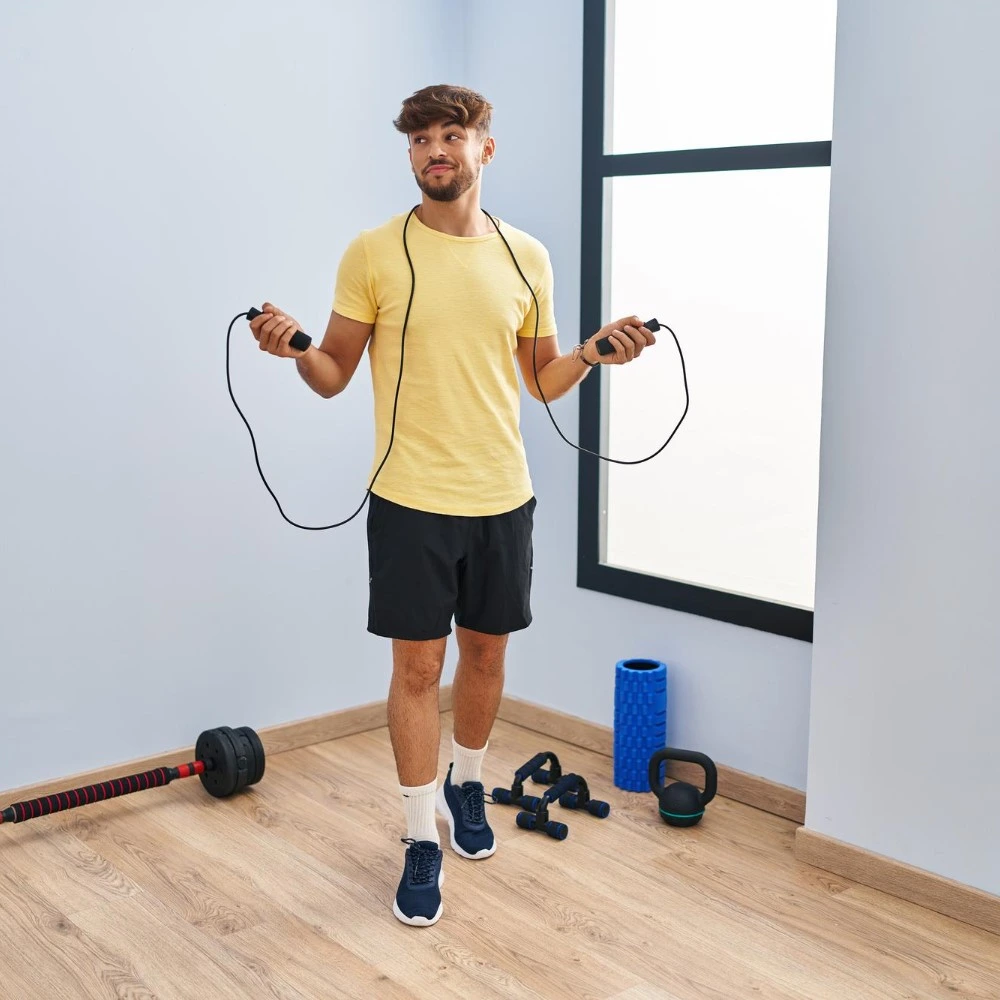
If you are new to plyometric training, you must ease into the impact. Your calves, Achilles tendons, and the arches of your feet need time to adapt to the repetitive bouncing.
The Foundational Beginner Routine
Start with a basic interval structure. Jump at a comfortable, steady pace for 30 seconds, followed immediately by 30 seconds of complete rest. Repeat this cycle for 10 total rounds. This routine takes exactly 10 minutes and provides an excellent cardiovascular stimulus without overloading your joints.
Fitness Jump Rope Workout for Beginners
When establishing a fitness jump rope workout for beginners, the primary goal is not speed; it is mastering the biomechanics. Poor technique leads directly to shin splints and knee pain.
Focus heavily on technique first. Your elbows should be tucked tight against your ribs, and the turning motion should come entirely from your wrists, not your shoulders. You should only jump about one to two inches off the ground—just high enough to let the cable slip under your toes.
Gradually increase the duration of your sessions. Once the 10-minute beginner routine feels easy, add one extra minute per week. Patience during this phase is critical to building bulletproof tendons.
Jump Rope HIIT Workout for Beginners
High-Intensity Interval Training (HIIT) is incredibly effective for maximizing the “afterburn effect”—where your body continues to burn calories long after the workout is over.
Beginner HIIT Sample Routine
After a thorough warm-up, jump as fast as you can with proper form for 20 seconds. This is your maximum effort phase. Immediately drop the rope and rest completely for 40 seconds.
Complete 10 to 15 rounds of this 20/40 split. While it sounds simple, the intense cardiovascular demand of the 20-second sprint will rapidly push you into an anaerobic state, providing massive metabolic benefits in under 15 minutes.
Beginner Jump Rope Workout for Weight Loss
To maximize fat burning, you must strategically pair your cardiovascular effort with a proper nutritional strategy. A beginner jump rope workout for weight loss is most effective when performed in a caloric deficit.
This routine pairs skipping with basic bodyweight movements. Jump at a moderate pace for 60 seconds, then immediately perform 15 bodyweight squats. Rest for 30 seconds and repeat for 10 rounds.
By adding strength training elements like squats, you force your body to shuttle blood between different muscle groups. This drastically elevates your heart rate and increases the total calories burned during your session.
Jump Rope Workout for Beginners Female
In my clinic, I often discuss bone density with female patients. Plyometric exercises like skipping are phenomenal for stimulating bone remodeling. A jump rope workout for beginners female should prioritize building endurance safely.
I recommend starting with lower-impact variations, such as the “boxer skip,” where you shift your weight slightly from one foot to the other instead of jumping with both feet simultaneously.
This alternating step reduces the impact on your knees and pelvic floor while allowing you to sustain the cardiovascular effort for longer periods. Aim for 3-minute intervals of continuous boxing steps, followed by 1 minute of rest, for 5 total rounds.
Jump Rope Workouts for Men
For male patients looking to build explosive athletic power, the focus should shift toward higher intensity and resistance. Effective jump rope workouts for men seamlessly combine heavy cardio with muscular endurance.
Incorporating a weighted rope (typically 1 to 2 pounds) is highly beneficial. The added resistance forces the shoulders, forearms, and lats to contract forcefully during every single rotation.
Try a routine consisting of 45 seconds of fast skipping, followed immediately by 15 push-ups. Rest for 30 seconds and complete 8 rounds. This strength and cardio combination mimics the cardiovascular demands of combat sports.
Jump Rope Only Workout
You do not need a gym full of equipment to achieve peak physical conditioning. A well-structured jump rope-only workout can serve as a comprehensive, standalone cardio session.
To prevent boredom and maximize aerobic capacity, use progressive intervals. Start with 1 minute of jumping, followed by 30 seconds of rest. Then, jump for 2 minutes, resting for 1 minute.
Peak at a 3-minute continuous jump, and then work your way back down the ladder. This progressive overload challenges your lungs and heart to recover under increasing amounts of physical stress.
Fitness Jump Rope Workout Indoors
Many of my patients train in apartments, making weather irrelevant. However, a fitness jump rope workout indoors requires specific safety considerations to protect both your body and your home.
Always use a high-quality, high-density exercise mat. Jumping on concrete or hard tile is the fastest route to developing painful shin splints or micro-fractures in your feet.
Additionally, ensure adequate ceiling clearance and clear away any tripping hazards. You need at least one foot of clearance above your head and a clear 4-by-6-foot radius to rotate the rope safely without snagging furniture.
Fitness Jump Rope Workout Woman
When designing a specialized fitness jump rope workout routine for women, we look at tailored approaches that target stubborn fat stores while promoting lean muscle definition.
Focusing on high-intensity intervals (HIIT) is scientifically proven to optimize hormonal responses, specifically improving insulin sensitivity. Better insulin management directly correlates with improved fat loss, particularly around the midsection.
Incorporate dynamic footwork, like high knees and alternating toe taps, into your skipping routine. These complex movements engage the lower abdominal muscles and tone the calves significantly faster than basic bouncing.
Popular Jump Rope Workouts Online
If you struggle with self-motivation, utilizing guided content can completely change your fitness journey. There are incredibly popular fitness jump rope workouts online that offer structured, instructor-led routines.
Channels like PopSugar Fitness or the Crossrope app provide excellent video-based training. These videos guide you through warm-ups, interval timing, and cool-downs, removing all the guesswork from your session.
Following a virtual coach also helps maintain a higher intensity level than you might achieve on your own. Seeing a professional demonstrate proper wrist mechanics can also rapidly correct your own form.
Best Jump Rope for Exercise
Selecting the right equipment is just as important as the workout itself. The best jump rope for exercise depends entirely on your specific fitness goals and current skill level.
There are two main categories: speed ropes and weighted ropes. Speed ropes are made of thin vinyl or bare wire cables. They rotate incredibly fast and are designed for advanced maneuvers like “double unders” and rapid footwork drills.
Weighted ropes carry extra mass in the cable itself (not just the handles). This slows the rotation down, making it much easier for beginners to feel the timing of the rope. Furthermore, weighted ropes provide a massive burn in the upper body, acting as a mild strength-training tool.
Best Jump Rope for Cardio

If your primary goal is purely cardiovascular endurance and rapid weight loss, you need a rope that allows for prolonged, uninterrupted jumping. The best jump rope for cardio is undoubtedly a lightweight speed rope.
Because the cable is light, your shoulders and forearms will not fatigue prematurely. This allows your heart and lungs to become the limiting factors of the workout, which is exactly what you want for aerobic conditioning.
Best Jump Rope 2025 Buying Guide
When advising patients on fitness investments, I always stress durability. In our best jump rope 2025 buying recommendations, a few key features consistently stand out for maximizing performance and safety.
First, look for an adjustable length mechanism. A rope that is too long will drag and tangle, while a short rope forces you to hunch over, destroying your posture.
Second, prioritize comfortable handles with smooth ball bearings. High-quality bearings prevent the cable from twisting and snapping your toes, ensuring a seamless, fluid rotation during intense interval sessions.
How Long Should I Jump Rope for a Good Exercise?
The ideal duration of your workout shifts as your cardiovascular system adapts to the plyometric stress.
- Beginners: 5 to 10 minutes. This is sufficient to elevate your heart rate and condition your joints without risking severe delayed onset muscle soreness (DOMS).
- Intermediate: 15 to 20 minutes. At this stage, you should be incorporating HIIT intervals to maximize caloric burn.
- Advanced: 20 to 30 minutes. Elite exercisers can sustain complex footwork and weighted rope training for half an hour, achieving massive cardiovascular benefits.
Health Considerations
Is Skipping Good for Your Achilles?
Yes, but it requires caution. Skipping creates a stretch-shortening cycle that can significantly strengthen the Achilles tendon over time. However, sudden overtraining or jumping on extremely hard surfaces can cause severe micro-tears and chronic tendinopathy. Always start slowly.
Can Skipping Help With Cellulite?
Cellulite is structurally linked to connective tissue and fat distribution. While skipping cannot magically erase it, the intense bouncing motion drastically improves lymphatic drainage and localized blood circulation, which can improve the overall appearance of the skin over time.
Can Skipping Rope Reduce High Blood Pressure?
Absolutely. As an aerobic exercise, consistent skipping promotes vasodilation—the widening of blood vessels. Over several weeks, this conditioning reduces the resistance against which your heart must pump, leading to sustained reductions in resting blood pressure.
Common Mistakes to Avoid
The most common mistake I see clinically is jumping entirely too high. You only need to clear the rope by a fraction of an inch; bounding high into the air places catastrophic shock forces on your knees and ankles when you land.
Poor posture is another frequent error. Hunching forward rounds your shoulders and restricts your diaphragm, making it impossible to breathe efficiently. Keep your chest proud, your core braced, and your gaze fixed straight ahead.
Finally, avoid the temptation of overtraining. Because skipping is so efficient, many people do it daily. Your joints require 24 to 48 hours of recovery between intense plyometric sessions to repair collagen and muscle tissue.
Safety Tips
Always wear supportive, proper cross-training shoes. Running shoes often have flared, cushioned heels that can actually catch the rope and cause you to trip. You need a shoe with excellent forefoot cushioning to absorb the repetitive impacts.
Never skip a dynamic warm-up. Spend at least three minutes performing ankle circles, calf stretches, and light jogging in place to lubricate your joints before picking up the rope.
Action Plan
Your Step-by-Step Checklist:
- Choose the Right Rope: Purchase an adjustable speed rope or a mildly weighted rope based on your experience level.
- Start the Beginner Routine: Commit to just 10 minutes (30 seconds on, 30 seconds off) for your first week.
- Track Your Progress: Note how long you can jump without tripping.
- Increase Intensity Gradually: Add one minute to your total time each week to safely enforce progressive overload.
Frequently Asked Questions
Is jumping rope bad for your knees or joints?
When performed with proper technique, jumping rope is actually a lower-impact activity than running. The key is to stay on the balls of your feet and only jump an inch or two off the ground. This “soft landing” utilizes your calves and ankles as natural shock absorbers, protecting your knee joints from significant force.
How can I prevent shin splints when starting a new routine?
Shin splints are usually a sign of “too much, too soon.” To prevent them, never jump on hard concrete; always use a dedicated jump rope mat or a rubberized gym floor. Additionally, ensure you are wearing cross-training shoes with adequate forefoot cushioning and limit your initial sessions to under 10 minutes to allow your bone density to adapt.
What is the correct way to measure a jump rope for my height?
To find your ideal length, stand on the center of the rope with one foot and pull the handles upward toward your shoulders. For beginners, the tips of the handles should reach your armpits. As your coordination improves and your form becomes more compact, you can shorten the rope to increase speed and efficiency.
Is jumping rope more effective than running for weight loss?
In terms of time efficiency, jumping rope often outperforms running. Ten minutes of high-intensity skipping can burn a similar number of calories as a 30-minute light jog. Because it engages more muscle groups—including the core, forearms, and shoulders—it provides a higher metabolic demand and a superior “afterburn” effect.
Can I jump rope if I am significantly overweight or a total beginner?
Yes, but you must prioritize safety. If you have a high BMI, the impact on your joints is magnified. I recommend starting with “shadow jumping”—going through the motions without the rope—to build the necessary calf strength. Gradually transition to a rope once your joints feel stable and you can sustain three minutes of continuous light movement.
Conclusion
David’s progress over the last few months has been a testament to the power of simplicity. By ditching the complicated gym commute and focusing on a high-quality fitness jump rope workout, he transformed his cardiovascular health in just 15 minutes a day.
In my medical opinion, there are few tools that offer a better return on investment than the skipping rope. It challenges your heart, builds bone density, and sharpens your mind all at once.
Remember, you don’t need to be an elite athlete to start. You just need a rope, a supportive pair of shoes, and the patience to trip a few times as you learn the rhythm. Consistency will always beat intensity in the long run.
Trust your body’s signals and prioritize your recovery. I look forward to seeing more patients like David choose these efficient, science-backed methods to reclaim their vitality.
Authoritative References:
- PubMed: Jump Rope Training Effects on Health- and Sport-Related Physical Fitness (Systematic Review & Meta-Analysis)
- PMC: Jumping Rope Improves Physical Fitness of Preadolescents Aged 10-12 Years (Meta-Analysis)
- PMC: Effects of Dance Music Jump Rope Exercise on Pulmonary Function and BMI
- PMC: Jump Rope Training: Balance and Motor Coordination in Preadolescent Soccer Players
- American College of Sports Medicine (ACSM): Physical Activity Guidelines
Related Posts




MORE from Author
Read More As a physician specializing in exercise science and public health, I regularly consult patients who feel completely lost in the…
 Just last week, a 34-year-old patient named Clara sat in my clinic, feeling entirely overwhelmed by the modern fitness industry.…


 Hello, I am Dr. Kenji Sato, MD, specializing in sports medicine and performance optimization. In my sports clinic, I constantly…
- In my clinical practice as a physician focused on exercise science, I often tell patients that mastering fitness bench workouts…