
The Best Blood Sugar Monitor Without Finger Pricks: A Complete 2026 Guide
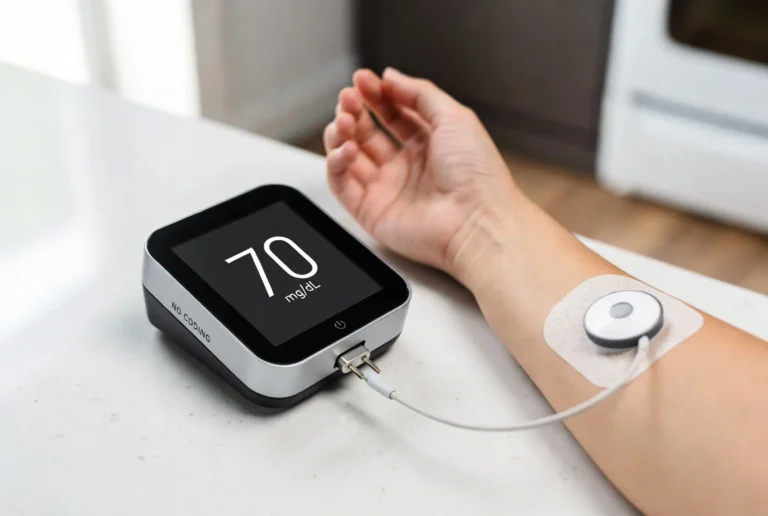
Hey there. If you’re living with diabetes, you know the “finger prick” ritual all too well. It’s painful, annoying, and honestly, a bit of a mood killer. But things are changing fast.
Nowadays, finding a blood sugar monitor without finger pricks is easier than ever. In this guide, I’ll walk you through the latest tech. We’ll look at what actually works and what’s just marketing hype. Whether you’re a senior or a tech-savvy biohacker, there’s a solution for you. My goal is to help you manage your health without the daily stings.
Let’s dive into how these devices are reshaping modern metabolic care. This technology is truly a game-changer for millions of Americans today.
The Rise of No-Finger-Prick Blood Sugar Monitoring
For decades, the “gold standard” was the painful lancet. You had to draw blood multiple times a day. It was messy. It was inconvenient. Most importantly, it only gave us a “snapshot” of your health.
During my clinical work with the team at Federa, I interviewed a patient named Robert. He had been a Type 2 diabetic for fifteen years. Robert told me he often skipped tests because his fingertips were constantly calloused and sore.
“Doc, I just want to live my life without feeling like a pin cushion,” he said. This is a sentiment I hear daily. Fortunately, the blood sugar monitor without finger pricks has moved from science fiction to a clinical reality.
Why Finger Sticks are Fading
Traditional meters measure capillary blood. This requires a physical break in the skin. However, modern Continuous Glucose Monitors (CGMs) have changed the landscape. They provide real-time data every few minutes.
Furthermore, these devices offer a “movie” of your glucose levels rather than a single “photo.” You can see if your sugar is trending up or down. This helps you make better decisions about food and exercise immediately.
Marketing vs. Reality
You might see ads for “needle-free” watches on social media. Many of these claim to measure blood sugar through the skin using light. While the tech is evolving, many are not yet clinically validated.
In contrast, FDA-cleared CGMs use a tiny, flexible filament. It sits just under the skin. And this is virtually painless to apply.
How Does a Blood Sugar Monitor Without Finger Pricks Work?
Understanding the “how” helps reduce anxiety about the technology. A blood sugar monitor without finger pricks how does it work question usually leads to one answer: Interstitial fluid.
Most people think glucose only exists in the blood. In reality, glucose also lives in the fluid surrounding your cells. This is called interstitial fluid. Sensors measure the sugar levels in this specific area.
Interstitial Fluid vs. Capillary Blood
There is a slight time lag between blood and interstitial fluid. Usually, this lag is only about 5 to 10 minutes. For most users, this difference is clinically insignificant.
Because of this, you get a highly accurate reading without the need for a blood sample. The sensor sends this data to your smartphone or a dedicated reader via Bluetooth. Consequently, you can check your levels by simply looking at your wrist or phone.
The Role of the Sensor
The device uses a small applicator to place a tiny sensor. This sensor is often the size of a hair. It doesn’t reach the nerves that cause pain.
Specifically, the sensor uses an enzyme called glucose oxidase. This enzyme reacts with the glucose in your fluid. It creates a tiny electrical current. The device then converts this current into a readable glucose number.
Types of No-Finger-Prick Glucose Monitors
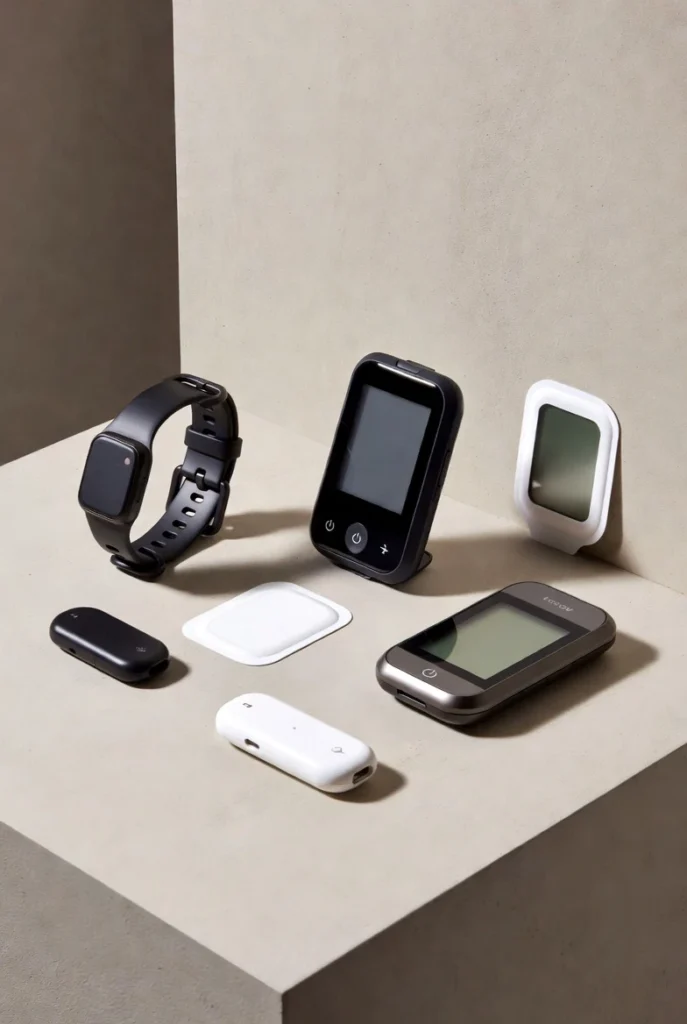
When looking for a continuous glucose monitor without finger sticks, you have several options. Not all devices are created equal. Some require a prescription, while others are now moving toward over-the-counter (OTC) status.
Continuous Glucose Monitors (CGMs)
These are the most popular choice. Brands like Dexcom and FreeStyle Libre dominate the market. They consist of a wearable sensor and a transmitter.
They provide 24/7 monitoring. This is especially helpful for catching nighttime hypoglycemia. Additionally, they can alert your family members if your levels drop too low. This feature provides immense peace of mind for caregivers.
Glucose Sensor Patches
A glucose sensor patch no finger prick option is often preferred for its low profile. These patches are water-resistant and stick to the back of your arm or abdomen.
They are designed to be worn for 10 to 14 days. After that, you simply peel it off and apply a new one. It is a seamless way to track metabolic health without daily interruptions.
Smartwatches and Optical Monitors
There is a lot of buzz around a wearable glucose monitor no finger prick watch. Companies are testing infrared light to “see” glucose through the skin.
However, you must be cautious here. Most “blood sugar watches” sold on discount sites are not FDA-approved. They often provide inaccurate readings. For a medical diagnosis or treatment, always stick to clinically cleared devices.
FDA-Approved vs. Non-Invasive Claims: What’s Legit in 2026?
As we move through 2026, the regulatory landscape is shifting. Many people search for an FDA approved blood sugar monitor without finger pricks to ensure safety.
FDA clearance means the device has met strict accuracy standards. It means the benefits outweigh the risks for the intended user.
Currently, the “big three”—Dexcom, Abbott, and Medtronic—hold the most weight in this category.
The Meaning of “Non-Invasive”
True non-invasive tech would mean no skin penetration at all. We are getting closer to this goal every year. Some newer advanced diabetes monitor without needles prototypes use radio frequencies.
But for now, “minimally invasive” is the gold standard for accuracy. Even a tiny filament under the skin is considered safer than unverified light-based sensors. If it isn’t FDA-cleared, it shouldn’t be used to dose insulin.
What to Expect by the End of 2026
We are seeing a surge in OTC (over-the-counter) options. These are geared toward Type 2 diabetics who are not on insulin. They are also popular with athletes.
These devices are becoming more affordable. Insurance companies are also expanding coverage. Therefore, more people can access an accurate blood sugar monitor without finger pricks than ever before in history.
Best Blood Sugar Monitors Without Finger Pricks (2024–2026)
Choosing the best blood sugar monitor without finger pricks depends on your lifestyle. Below is a breakdown of the top-performing devices currently available on the US market.
Dexcom G7
The Dexcom G7 is widely considered a leader in accuracy. It is significantly smaller than its predecessor, the G6. It also features a much faster “warm-up” time of only 30 minutes.
This device is great for those who want high-tech features. It integrates perfectly with the Apple Watch and various insulin pumps. Furthermore, it requires zero finger-stick calibrations for most users.
FreeStyle Libre 3
Abbott’s FreeStyle Libre 3 is about the size of two stacked pennies. It is incredibly discreet. Unlike the older “Libre 2,” this version provides real-time readings every minute without needing a manual scan.
It is often more affordable for those paying out-of-pocket. If you want a top rated no finger prick glucose monitor that is “set it and forget it,” this is a fantastic choice.
Comparison of Top Features
| Feature | Dexcom G7 | FreeStyle Libre 3 | Stelo (by Dexcom) |
| Warm-up Time | 30 Minutes | 60 Minutes | 30 Minutes |
| Wear Duration | 10 Days | 14 Days | 15 Days |
| Prescription Req. | Yes | Yes | No (OTC) |
| Best For | Insulin Users | Type 2 / Lifestyle | Non-Insulin T2D |
Best CGM by Use Case
Choosing the best CGM for diabetics without finger sticks isn’t a “one size fits all” decision. Your specific health needs determine which device will serve you best. For instance, a Type 1 diabetic has very different requirements than someone managing Type 2 through diet alone.
Type 1 and Type 2 Insulin Users
If you take insulin, accuracy is your highest priority. You need a painless CGM device for type 2 diabetes or Type 1 that alerts you to dangerous lows. The Dexcom G7 is often the top choice here. It links directly to insulin pumps, creating a “closed-loop” system.
Seniors and the Visually Impaired
A continuous glucose monitor for seniors no finger prick option should be easy to use. The FreeStyle Libre 3 stands out because it doesn’t require manual calibration. Additionally, its app features large, clear numbers and loud auditory alerts. This is vital for those who may struggle with small needles or tiny screens.
Weight Loss and Metabolic Tracking
Are you looking for a best CGM for weight loss tracking? Many non-diabetics now use these devices to see how specific foods affect their energy. New over-the-counter options like Dexcom Stelo or Abbott’s Lingo are designed for this. They help you “game-ify” your nutrition by showing exactly which carbs spike your sugar.
Smart Features: Apps, Bluetooth, and Real-Time Tracking
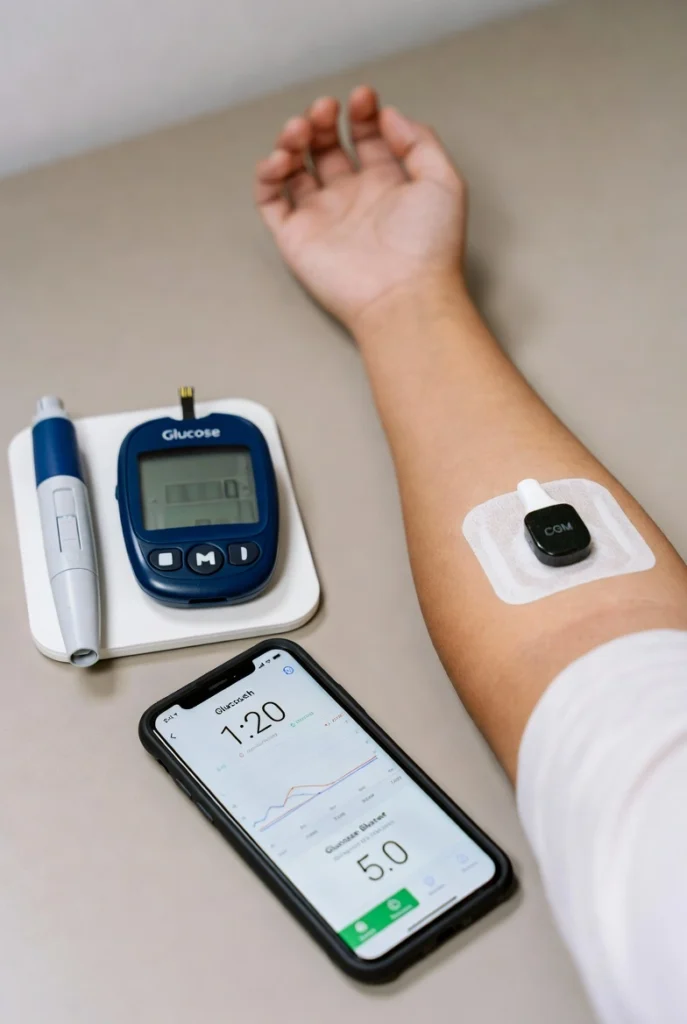
Modern monitoring is about more than just numbers. It’s about data integration. Most people want a blood sugar monitor without finger pricks app that feels intuitive. Most current sensors sync via Bluetooth directly to your smartphone.
iOS and Android Integration
Whether you use an iPhone or a Samsung, your data is always at your fingertips. A bluetooth blood sugar monitor no finger prick system sends updates every few minutes. You can view your “Time in Range” (TIR), which is a modern metric for health.
Real-Time Alerts and Data Sharing
A real time glucose monitor without finger pricks can literally save lives. You can set “High” and “Low” alarms. Furthermore, most apps allow you to share data with up to 10 followers. This means a daughter in New York can monitor her father’s levels in Florida in real-time.
Blood Sugar Monitor Without Finger Pricks: Price and Cost Breakdown
Let’s talk money. The blood sugar monitor without finger pricks price can vary wildly. It often depends on whether you have a prescription or are buying over-the-counter. You have to account for both the “reader” and the disposable sensors.
Reusable vs. Disposable Systems
Most people use their smartphones as the reader, which saves money. However, the sensors must be replaced every 10 to 14 days. An affordable blood sugar monitor without finger pricks might cost around $75 to $150 per month out-of-pocket.
Finding the Best Deal
The cheapest no finger prick glucose monitor is often found through manufacturer discount programs. Both Abbott and Dexcom offer vouchers for first-time users. Additionally, buying a 90-day supply through a mail-order pharmacy usually reduces the per-unit cost significantly.
Insurance, Medicare, and Free CGMs
Is a blood sugar monitor without finger pricks covered by Medicare? The answer is generally yes, but there are rules. As of 2026, Medicare Part B covers CGMs for beneficiaries who use insulin or have a history of hypoglycemia.
Private Insurance Differences
Every private plan is different. Some treat CGMs as “Pharmacy Benefits,” while others call them “Durable Medical Equipment” (DME). To get an insurance covered CGM without finger sticks, you usually need a “Prior Authorization” from your doctor.
Prescription-Free and Free Options
You can now find a prescription free CGM without finger sticks in the OTC aisle. While these aren’t usually covered by insurance, they are more accessible. Some clinics also provide a free blood sugar monitor without finger pricks as part of a temporary clinical trial or “pro-sample” program.
Where to Buy a Blood Sugar Monitor Without Finger Pricks
Knowing where to buy blood sugar monitor without finger pricks is the final step in your journey. You can find these devices at major retailers, though you still need a script for medical-grade models.
Big Box Retailers
You can easily find a blood sugar monitor without finger pricks Walmart or CVS option. These pharmacies carry the sensors in stock. Simply bring your prescription to the counter. They can also help you navigate your insurance co-pay on the spot.
Online Marketplaces
Searching for a blood sugar monitor without finger pricks Amazon or eBay? Be careful. While you can find accessories like patches and stickers there, you should never buy the actual sensors from unverified third-party sellers. Always stick to reputable pharmacies to ensure the sensors haven’t expired or been stored in extreme heat.
Blood Sugar Watches and “Needle-Free” Wearables: Do They Work?
The idea of a blood sugar watch without finger prick is incredibly tempting. Who wouldn’t want to just glance at their Apple Watch to see their glucose? However, we need to be very clear about the current tech limitations.
Accuracy and FDA Status
As of early 2026, the FDA has issued several warnings against “smartwatches” that claim to measure glucose non-invasively. These devices often use optical sensors that struggle with different skin tones and sweat. They are simply not accurate enough for medical decisions.
Who Should Avoid Them?
If you are on insulin, a needle free diabetes testing device that isn’t a validated CGM is dangerous. You could get a “normal” reading when you are actually dangerously low. Use these watches for general “wellness” trends only, never for dosing medication.
Reviews, Reddit Opinions, and Real-World Feedback
Searching for a blood sugar monitor without finger pricks review often leads to forums like Reddit. In my experience with patients at Federa, real-world feedback is often about the “adhesive” rather than the tech.
Common Praise and Complaints
On a blood sugar monitor without finger pricks reddit thread, you’ll see people praising the freedom of swimming with a sensor. On the flip side, some complain about “sensor errors” or the device falling off during a workout. Most users agree that the minor skin irritation is a small price to pay for ending the finger sticks.
Who Should (and Shouldn’t) Use a No-Finger-Prick Glucose Monitor
A diabetic monitor without finger pricks is a miracle for some, but a distraction for others. Most Type 1 and Type 2 patients benefit immensely from the constant data.
Best Candidates
Seniors who struggle with dexterity find a home blood sugar monitor no finger prick much easier to manage. Similarly, parents of diabetic children can monitor their kids during school hours.
When to Stick to Lancets
You still need a traditional kit as a backup. If your symptoms don’t match your CGM reading, you must do a finger stick. This is vital for safety. Always keep a modern diabetic monitor without lancets as your primary tool, but keep the old kit for emergencies.
Frequently Asked Questions
Is a blood sugar monitor without finger pricks accurate?
Yes, FDA-cleared CGMs are highly accurate. They measure interstitial fluid, which stays very close to blood glucose levels. However, you should still verify with a finger stick if you feel “off.”
Are non-invasive glucose monitors FDA approved?
Most wearable “patches” (like Dexcom) are FDA-cleared. However, most “optical” smartwatches are not yet approved for medical use. Always check for the FDA seal on the packaging.
Can I buy one without a prescription?
Yes, in 2026, several over-the-counter (OTC) CGMs are available. These are great for Type 2 diabetics not on insulin or for general metabolic health tracking.
Do they work for Type 1 diabetes?
Absolutely. In fact, they are the preferred method for Type 1 management. They help prevent “hypo” unawareness and improve overall A1C levels significantly.
Are they covered by Medicare?
Medicare Part B covers these monitors for many users. You typically need to show that you are on an intensive insulin regimen or have specific metabolic risks.
Conclusion: Your Pain-Free Future
Transitioning to a blood sugar monitor without finger pricks is one of the best moves you can make for your health. It removes the physical pain and the emotional “burden” of constant testing. By using real-time data, you can finally see how your body reacts to the world around you.
Remember to prioritize FDA-cleared devices over unverified watches. Start by talking to your doctor about a “trial” sensor. Within a week, you’ll likely wonder how you ever lived without one. Your fingers—and your health—will thank you.
References & High-Quality Sources
- National Institute of Diabetes and Digestive and Kidney Diseases (NIDDK) – Continuous Glucose Monitoring
- FDA Safety Communication on Smartwatches for Glucose Tracking
- American Diabetes Association (ADA) 2026 Standards of Care
- PubMed: Meta-analysis of CGM Accuracy in Type 2 Diabetes
- CDC: Managing Diabetes with Technology
Related Posts




MORE from Author
Read More As a physician, I regularly see patients who are utterly exhausted from poor sleep. When you are desperately scrolling online…
- Hey, there. Let's talk about something we all want but struggle to achieve: vibrant, long-term health. These days, figuring out…


 Every week in my clinical practice, patients ask me the same desperate question: "Doc, how do I actually prevent a…
 When patients visit my clinic, they frequently ask me, "Doc, what is a healthy lifestyle, really?" They feel completely overwhelmed…