
Healing Your Microbiome: The Ultimate Guide to Fermented Foods for Gut Health

Hey there. Ever feel like your stomach is staging a protest? Trust me, I get it. As a doctor, I see patients daily struggling with bloating and sluggish digestion.
One simple secret often lies right in your kitchen. We are talking about fermented foods for gut health. These aren’t just trendy snacks from a high-end health store.
They are ancient powerhouses. Think of them as tiny workers cleaning up your digestive tract. This guide will help you navigate the world of probiotics.
We will look at what works and why it matters. Maybe you want better immunity or just less gas. Regardless of your goal, these foods are a game-changer.
Let’s explore how these living cultures can transform your daily wellbeing. Ready to heal your gut naturally?
Understanding Fermented Foods for Gut Health
First of all, what exactly are we eating? Fermentation is a natural process. Bacteria or yeast break down the carbs in food. This creates beneficial acids or alcohol.
Furthermore, this process preserves the food. It also creates “probiotics.” These are the live, friendly bacteria your body loves. Most regular foods lack these active cultures.
The Fermentation Difference
Standard pickles are often just soaked in vinegar. However, true fermented pickles use salt and water. This creates an environment for “good” bacteria to thrive.
Consequently, the food becomes “alive.” These living microbes then travel to your large intestine. There, they support your existing bacterial colony. It seems like a simple swap, but the impact is massive.
Why These Foods Are Vital for Your Microbiome
I recently sat down with Sarah at the Federa clinic. She suffered from chronic brain fog and irregular bathroom habits. Sarah felt like she had tried every supplement on the market.
“Doc, I’m tired of pills,” she told me during our interview. I suggested she swap her morning cereal for real, tart kefir. Within weeks, her energy levels stabilized.
Boosting Bacterial Diversity
A healthy gut is like a diverse rainforest. You want many different species of bacteria living there. Fermented foods for gut health increase this variety significantly.
Studies show that high-fiber diets are great. But adding fermented items is even faster for diversity. They introduce new “strains” that help balance your internal ecosystem.
Production of Essential Compounds
These bacteria don’t just sit there. They produce short-chain fatty acids (SCFAs). These compounds fuel the cells in your colon.
In addition, they create essential B vitamins. They also help produce Vitamin K2. Therefore, eating these foods supports your heart and bone health simultaneously.
Proven Benefits of Fermented Foods for Gut Health
The benefits of fermented foods for gut health go far beyond simple digestion. Science now links your gut to almost every organ in your body.
Enhanced Nutrient Absorption
Maybe you eat a very clean diet. However, your body might not absorb all those nutrients. Fermentation pre-digests some of the food for you.
For instance, it breaks down “anti-nutrients” like phytic acid. This allows your body to soak up more minerals. Especially relevant are iron, zinc, and magnesium.
Stronger Immune Defense
Did you know 70% of your immune system lives in your gut? Healthy bacteria communicate with your immune cells. They teach your body how to spot “bad” germs.
Hence, people eating these foods often get sick less often. They also recover faster from common seasonal bugs. It is a natural shield for your whole family.
The Gut-Brain Connection
Your gut produces about 95% of your serotonin. This is your “feel-good” hormone. A healthy gut often leads to a calmer mind.
Reduced inflammation in the gut also protects the brain. This can help lower anxiety levels. Truly, a happy stomach leads to a happy head.
The Best Fermented Foods for Gut Health
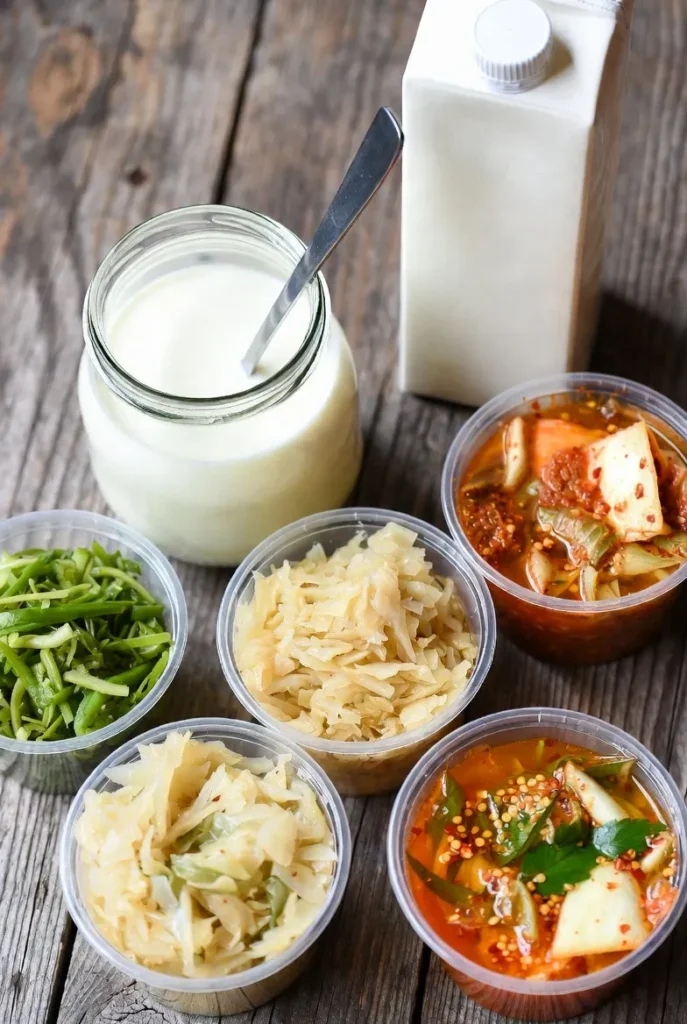
You might wonder, what are the best fermented foods for gut health? Not all jars on the shelf are equal. You need to look for “live and active cultures.”
1. Traditional Yogurt
Yogurt is the most famous choice. It is made from milk fermented by specific bacteria. However, many store brands are loaded with sugar.
Choose plain, unsweetened Greek yogurt. It contains high levels of Lactobacillus. This strain is excellent for regular bowel movements.
2. Lifesaving Kefir
Kefir is a fermented milk drink. It is even more powerful than yogurt. It contains up to 30 different strains of bacteria and yeast.
Furthermore, it is usually 99% lactose-free. Most people with dairy sensitivity can handle it well. It is probably the most potent probiotic drink available.
3. Raw Sauerkraut
This is simply fermented cabbage. But it must be “raw” or “unpasteurized.” If it is on a warm shelf, it is likely dead.
Look for it in the refrigerated section. It provides a massive dose of Vitamin C. Also, it is very low in calories and high in fiber.
4. Spicy Kimchi
Kimchi is the Korean cousin of sauerkraut. It usually includes ginger, garlic, and chili. These ingredients have their own anti-inflammatory benefits.
Research suggests kimchi helps with weight management. It also supports healthy cholesterol levels. It is a flavor bomb for your gut.
5. Savory Miso
Miso is a paste made from fermented soybeans. It is a staple in Japanese cuisine. and it adds a deep, “umami” flavor to soups and dressings.
It contains a specific probiotic called Aspergillus oryzae. This helps reduce the risk of digestive disorders. Just avoid boiling it, as high heat kills the bacteria.
6. Protein-Packed Tempeh
Tempeh is another soy product. Unlike tofu, it is fermented and firm. This process reduces the “bloating” effect some people get from soy.
It is a fantastic meat substitute for vegans. In addition to probiotics, it is high in protein. It also contains bone-strengthening manganese.
7. Bubbling Kombucha
Kombucha is a fermented tea. It is refreshing and often slightly fizzy. It contains B vitamins and antioxidants.
Be careful with the sugar content, though. Some brands use too much fruit juice. Look for varieties with less than 5 grams of sugar per serving.
8. Fermented Vegetables
You can ferment almost any veggie. Carrots, green beans, and cauliflower are great. These provide a crunch along with your “good” bugs.
They are easy to make at home. Plus, they are a very affordable way to stay healthy. Most of all, they make great snacks for kids.
Exploring the Super Six and Most Powerful Options
People often ask me, “What is the most powerful fermented food?” It is a great question. While variety is king, some foods have a higher “colony forming unit” (CFU) count.
The Dominance of Kefir
If we look at raw numbers, kefir wins. A single cup can have trillions of bacteria. This is much higher than most supplement capsules.
Therefore, if you are recovering from antibiotics, start here. It helps rebuild your “inner forest” very quickly.
The Strength of Kimchi
In terms of vegetable ferments, kimchi is a heavyweight. It combines fiber, probiotics, and thermogenic spices. This trio works wonders for metabolic health.
However, don’t ignore the “super six” group. This usually includes yogurt, kefir, sauerkraut, miso, tempeh, and kombucha. Rotating these six ensures you get a wide spectrum of microbes.
Fermented Foods for Specific Gut Conditions
It is vital to understand that your gut is unique. During my time with Federa, I noticed that what helps one person might trigger another. Specifically, if you have a sensitive system, you must choose your ferments wisely.
Managing IBS, Bloating, and Constipation
If you struggle with fermented foods for IBS gut health, start very slowly. Some ferments are high in FODMAPs (fermentable sugars). These can actually cause temporary bloating.
However, plain yogurt or lactose-free kefir often helps reduce constipation and gut health issues. The strains in these dairy products speed up “transit time.” Consequently, you feel lighter and more regular within days.
Healing Leaky Gut and Acid Reflux
For those looking for fermented foods for leaky gut health, focus on miso and sauerkraut. These help strengthen the intestinal barrier. This “tightens” the junctions in your gut lining.
Additionally, many patients ask about fermented foods for acid reflux and gut health. While acidic foods like kombucha might sting initially, the probiotics eventually balance stomach acid. It seems like a paradox, but a balanced microbiome often calms reflux symptoms.
Fermented Foods for Different Groups
Healthy bacteria are for everyone. But the dosage and type should vary based on who is eating.
Focus on Women’s and Men’s Health
Research suggests fermented foods for women’s gut health can prevent yeast infections. The Lactobacillus in yogurt keeps the body’s pH in check.
For men, these foods support heart health by lowering systemic inflammation. Fermented foods for men’s gut health are a simple way to protect the cardiovascular system.
Safety for Kids and Diabetics
When introducing fermented foods for kids gut health, stick to mild flavors. A small yogurt bowl or a “fizzy” kombucha taster is perfect. It builds their immune system early.
For those managing fermented foods for diabetes and gut health, watch the labels. Stick to “low-sugar fermented foods.” Fiber-rich choices like tempeh help stabilize blood sugar levels throughout the day.
Yogurt, Kefir, and Popular Staples Explained
Let’s look closer at the heavy hitters. Yogurt and fermented foods for gut health are the easiest entry point for beginners.
The Magic of Live Cultures
Always look for the “Live and Active Cultures” seal. If the product was heat-treated after fermentation, the bacteria are dead. This is common in some shelf-stable canned krauts.
Kefir fermented foods for gut health are unique because they contain “kefir grains.” These grains are a symbiotic colony of yeast and bacteria. This makes kefir much more resilient than standard yogurt.
Soy-Based Powerhouses
Miso gut health benefits come from its long fermentation time. Some miso is aged for years. Tempeh and gut health benefits also include high fiber, which acts as “prebiotic” fuel for the probiotics.
Fermented Foods vs. Probiotics
A common question in my clinic is: “Should I just take a pill?” While supplements have their place, probiotic fermented foods for gut health are often superior.
Why Food Often Wins
Foods provide a complex “matrix.” This protects the bacteria as they travel through your stomach acid. Furthermore, food gives you extra vitamins and minerals that pills lack.
However, if you have a specific medical need, a supplement might be necessary. But for daily maintenance, fermented foods that contain live probiotics are the most natural choice.
How Often and How Much Should You Eat?
Consistency is more important than quantity. You don’t need to eat a whole jar of kimchi in one sitting.
Daily Intake Guidance
Aim for 1 to 2 small servings of daily fermented foods for gut health. This could be a half-cup of yogurt or a tablespoon of sauerkraut.
The best time to eat fermented foods for gut health is usually with a meal. This helps with the digestion of that specific meal. Start small to avoid “healing crisis” gas or bloating.
Homemade vs. Store-Bought Fermented Foods
Is it worth making your own? Homemade fermented foods for gut health are usually much more potent. They haven’t sat on a truck or a shelf for weeks.
Buying Smart
If buying store bought fermented foods for gut health, read the ingredients. Avoid “vinegar” in pickles or kraut if you want probiotics. True fermentation only needs salt and time. This is also the most affordable fermented foods for gut health strategy.
Fermented Foods Recipes & Beginner Guide

Ready to start? This beginner guide to fermented foods for gut health makes it easy. You don’t need fancy equipment.
Simple Sauerkraut Recipe
- Thinly slice one head of cabbage.
- Mix with 1 tablespoon of sea salt.
- Massage until the cabbage releases its juice.
- Pack tightly into a clean glass jar.
- Ensure the liquid covers the cabbage.
- Let sit at room temperature for 7 days.
Easy Daily Swaps
- Swap mayo for Greek yogurt on sandwiches.
- Use miso paste instead of salt in dressings.
- Add a splash of kefir to your morning smoothie.
Fermented Foods Meal Plan & Diet Plan
Integrating these into a fermented foods diet plan for gut health is simple. Here is a sample day:
- Breakfast: Yogurt bowl with berries and flaxseeds.
- Lunch: Salad topped with a tablespoon of raw sauerkraut.
- Snack: A small glass of low-sugar kombucha.
- Dinner: Stir-fry with tempeh and a side of miso soup.
This fermented foods meal plan for gut health provides a steady stream of microbes. It also supports fermented foods for weight loss and gut health by keeping you full and reducing sugar cravings.
Frequently Asked Questions
What are the top 10 fermented foods?
The list includes yogurt, kefir, sauerkraut, kimchi, miso, tempeh, kombucha, pickles (salt-brined), natto, and traditional buttermilk.
What is the best fermented food for the gut?
Kefir is generally considered the most powerful due to its high diversity of bacterial and yeast strains.
Are fermented foods safe to eat daily?
Yes, for most people. However, start with small amounts to allow your microbiome to adjust without bloating.
Do fermented foods detox the gut?
They don’t “detox” in a medical sense, but they do help crowd out harmful bacteria and support your natural waste removal processes.
Are low sugar fermented foods better?
Absolutely. High sugar can feed the “bad” yeast in your gut, which cancels out the benefits of the probiotics.
Conclusion: Start Your Gut Healing Journey
Embracing natural fermented foods for gut health is one of the kindest things you can do for your body. It is an investment in your long-term immunity and mental clarity.
Start with one food you enjoy. Maybe it’s a cold glass of kefir or a crunchy pickle. Listen to your body and be patient. Your microbiome didn’t change overnight, and it won’t heal overnight either. But with a little “living” food each day, you’ll be amazed at how good you can feel.
References & High-Quality Sources
Related Posts





MORE from Author
Read More As a physician, I regularly see patients who are utterly exhausted from poor sleep. When you are desperately scrolling online…
- Hey, there. Let's talk about something we all want but struggle to achieve: vibrant, long-term health. These days, figuring out…


 Every week in my clinical practice, patients ask me the same desperate question: "Doc, how do I actually prevent a…
 When patients visit my clinic, they frequently ask me, "Doc, what is a healthy lifestyle, really?" They feel completely overwhelmed…