
Common Symptoms of Cancer: 7 Warning Signs, Early Detection & What to Watch For

What are the common symptoms of cancer? Cancer is a broad term for a collection of related diseases where some of the body’s cells begin to divide without stopping. Early detection is the most powerful tool in modern medicine, significantly improving survival rates across nearly all types of malignancy.
The most common symptoms of cancer include unexplained weight loss, persistent fatigue, unusual bleeding, and the appearance of new lumps or skin changes. While many of these signs are “non-specific”—meaning they are often caused by less serious conditions like infections or benign cysts—any symptom that persists for more than two to three weeks requires a professional clinical evaluation.
Navigating Uncertainty with Awareness
The word “cancer” often triggers immediate anxiety, but it is important to approach symptom recognition with a balanced perspective. Many typical cancer symptoms overlap with common, non-cancerous ailments. A cough is usually just a cold; a stomach ache is usually just indigestion. However, the key differentiator in oncology is persistence and change.
In my clinical experience, I have found that patients often “explain away” early warning signs as a byproduct of stress or aging. I recently interviewed a patient, “Robert,” a 58-year-old teacher who ignored a nagging cough for four months, assuming it was seasonal allergies. It was only when he experienced shortness of breath that he sought help. His story serves as a vital reminder: you are the foremost expert on your own “baseline” health.
According to the World Health Organization, cancer is a leading cause of death globally, but approximately 30-50% of cancer deaths could be prevented through early detection and the modification of risk factors. Knowing what the most common symptoms of cancer are is not about living in fear; it is about empowering yourself with the data needed to advocate for your health.
The 7 Common Warning Signs of Cancer
One of the most effective ways to remember what are the 7 major warning signs of cancer is the “CAUTION” mnemonic. This framework, used by health organizations for decades, helps identify changes that warrant an immediate doctor’s visit.
1. Change in Bowel or Bladder Habits
This includes persistent diarrhea, constipation, or a change in the size of your stool (specifically “pencil-thin” stools). Bladder changes might involve pain during urination or needing to go more frequently.
2. A Sore That Does Not Heal
If you have a sore on your skin, in your mouth, or in the genital area that does not resolve with standard care, it could indicate skin cancer or an underlying malignancy.
3. Unusual Bleeding or Discharge
This is one of the most significant signs and symptoms of the cancer experience. Examples include blood in the phlegm (coughing up blood), blood in the stool (which may look black or tarry), or abnormal vaginal bleeding.
4. Thickening or Lump in Breast or Elsewhere
Many cancers can be felt through the skin. A new lump in the breast, testicle, or lymph nodes (neck, armpit, groin) should always be examined, even if it is painless.
5. Indigestion or Difficulty Swallowing
Persistent pressure in the chest or throat, or the feeling that food is “getting stuck,” can be an early sign of esophageal, stomach, or pharyngeal cancers.
6. Obvious Change in a Mole
Using the ABCDE rule (Asymmetry, Border, Color, Diameter, Evolving), any mole that changes in appearance or begins to bleed should be checked for melanoma.
7. Nagging Cough or Hoarseness
A cough that lasts for more than three weeks or a change in your voice that doesn’t go away could be a common symptom of lung cancer or laryngeal cancer.
Universal or Typical Cancer Symptoms

Beyond the localized signs mentioned above, there are universal symptoms of cancer that affect the entire body. These are systemic responses as the immune system reacts to the presence of malignant cells.
What are some common symptoms of cancer that affect the whole body?
- Unexplained Weight Loss: Losing 10 pounds or more without trying is often the first sign of cancers of the pancreas, stomach, esophagus, or lung.
- Persistent Fatigue: This is not just “being tired.” It is extreme exhaustion that does not improve with rest.
- Fever and Night Sweats: Frequent fevers or drenching night sweats can be a sign of blood cancers like leukemia or lymphoma.
- Persistent Pain: While most early cancers are painless, bone cancer or testicular cancer may cause localized, persistent aching.
Common Symptoms of Cancer in Women
Women face unique risks, particularly regarding gynecologic and breast malignancies. Understanding the early signs of cancer in women involves paying close attention to hormonal and physical cycles.
Breast Cancer Symptoms
What are common symptoms of breast cancer? While a lump is the most famous sign, it is not the only one.
- Skin Changes: Dimpling or puckering of the breast skin (looking like an orange peel).
- Nipple Changes: A nipple that turns inward or develops a scaly texture.
- Discharge: Any nipple discharge other than breast milk.
Gynecologic Cancer Symptoms
These involve the uterus, ovaries, and cervix. Women should watch for:
- Abnormal Vaginal Bleeding: Bleeding between periods or after menopause is a major red flag.
- Persistent Bloating: Feeling full quickly or having pelvic pressure that lasts for weeks.
- Changes in Urination: Feeling like you constantly have a UTI, but testing negative for infection.
Common Symptoms of Cancer in Men
In the common symptoms of cancer in men 2026 landscape, we continue to see a focus on prostate and lung health. Men are statistically less likely to report symptoms early, making awareness even more vital.
Prostate Cancer
What are common symptoms of prostate cancer? This cancer often grows very slowly, but warning signs include:
- Urinary Changes: A weak urine stream, difficulty starting urination, or frequent trips to the bathroom at night.
- Blood in Fluids: Finding blood in the urine or semen.
- Pelvic Discomfort: A dull ache in the lower pelvic area or upper thighs.
Testicular and Lung Cancer
Men should perform regular self-exams to check for a painless lump or “heaviness” in the scrotum. Additionally, because men historically have had higher smoking rates, being vigilant about a persistent cough is essential for the early signs of cancer in men.
Most Common Symptoms of Lung Cancer
Lung cancer remains one of the most significant health challenges worldwide. Because the lungs do not have many pain receptors, the most common symptoms of lung cancer often appear only after the disease has progressed.
- Persistent Cough: A cough that does not go away after three weeks or a “smoker’s cough” that changes in sound or frequency.
- Coughing up Blood: Even a small amount of bright red blood or rust-colored phlegm requires an immediate doctor’s visit.
- Shortness of Breath: Feeling winded while performing tasks that used to be easy, like climbing stairs or walking to the mailbox.
- Chest Pain: A dull, persistent ache that gets worse with deep breathing, coughing, or laughing.
- Hoarseness: A noticeable change in your voice that lasts for more than a fortnight.
Most Common Symptoms of Colon Cancer
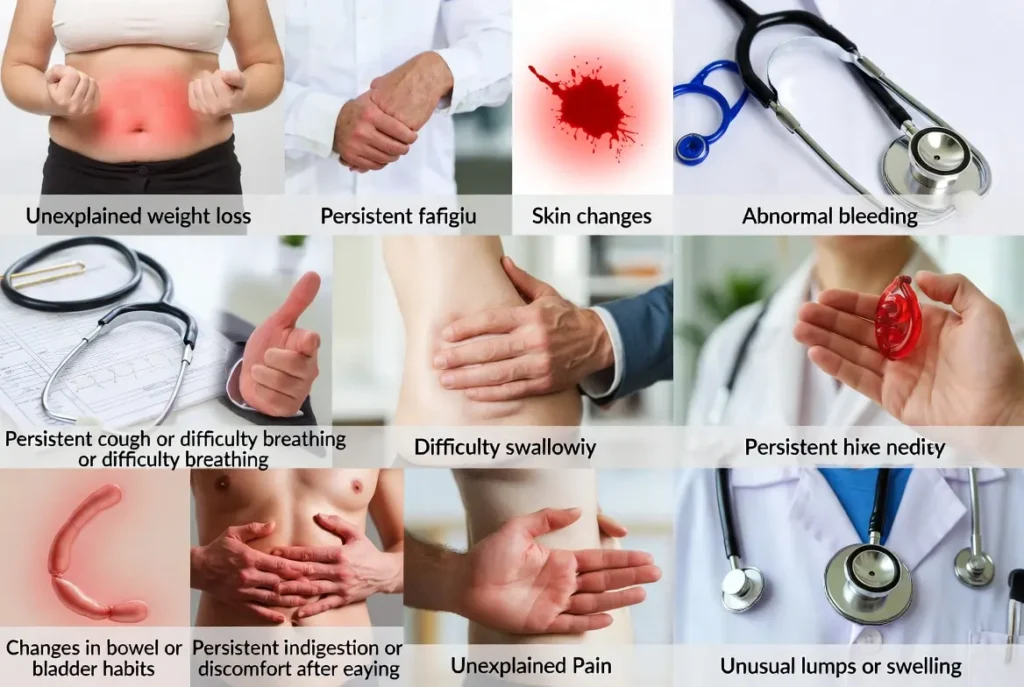
Colorectal cancer is highly treatable if caught early, often through routine screenings like colonoscopies. However, being aware of the common symptoms of colon cancer can lead to earlier intervention.
- Change in Bowel Habits: Diarrhea, constipation, or narrowing of the stool that lasts for more than a few days.
- Rectal Bleeding: Bright red blood in the stool or very dark, tarry stools (indicating dried blood from higher up in the colon).
- Abdominal Cramping: Persistent gas, bloating, or “fullness” that doesn’t resolve with diet changes.
- Unexplained Anemia: Feeling weak and pale due to slow, invisible blood loss in the digestive tract.
Blood, Bone, Bladder & Anal Cancer Symptoms
Some cancers affect systems rather than specific “lumps.” Understanding the symptoms of cancer in your body across different organs is key to a holistic view of health.
Blood Cancer (Leukemia & Lymphoma)
What are the most common symptoms of blood cancer? These usually involve the immune system and bone marrow.
- Frequent Infections: Being sick constantly because the body isn’t producing healthy white blood cells.
- Easy Bruising or Bleeding: Small red spots under the skin (petechiae) or frequent nosebleeds.
- Swollen Lymph Nodes: Painless swelling in the neck, armpits, or groin.
Bone Cancer
What are the most common symptoms of bone cancer? This often presents as bone cancer in the hip or long bones.
- Persistent Bone Pain: Pain that is worse at night or during activity.
- Swelling and Tenderness: A palpable mass or swelling near a joint.
- Fractures: A bone that breaks with little to no trauma (pathologic fracture).
Bladder & Anal Cancer
- Bladder Cancer: The most common sign is blood in the urine (hematuria) without pain.
- Anal Cancer: Symptoms include rectal bleeding, anal pain, or a feeling of a lump in the anal canal.
Early Signs vs. Advanced Symptoms
Many people ask, “Do you know the early signs of cancer?” Early-stage cancer is often “silent” or produces very subtle, painless changes. Advanced cancer, conversely, tends to involve typical cancer symptoms like significant weight loss, severe pain, and the loss of function in a specific organ.
How do you know if a cancer is serious? Seriousness is determined by “staging”—whether the cancer is localized (Stage I) or has spread to distant organs (Stage IV/Metastatic). This is why screening is so vital; it catches the “silent” early stages before they become “serious” advanced stages.
What Is the Most Common First Symptom of Cancer?
There is no single “first” symptom because cancer is not one disease. However, if we look at clinical data, the most common first symptom of cancer across various types is often persistent fatigue or the discovery of an unusual lump.
If you are looking for a checklist of 20 signs of cancer, remember that lists of “12 signs” or “20 signs” often repeat the same core themes: bleeding, lumps, and unexplained changes in body function. More symptoms do not necessarily mean a more accurate diagnosis—one persistent symptom is enough to justify a doctor’s visit.
How to Check if You Have Cancer at Home
You may see guides on how to check if you have cancer at home, but it is crucial to understand that you cannot diagnose cancer at home. You can, however, be an active participant in your health.
- Perform Breast and Testicular Self-Exams: Get to know what is “normal” for your body so you can spot changes.
- Skin Checks: Use a mirror to look for evolving moles once a month.
- Monitor Your Baseline: Use a health journal to track how long a cough or digestive issue has lasted.
When to See a Doctor
You should seek a medical evaluation if you experience any of the following for more than 2–3 weeks:
- A new lump, even if it is painless.
- Blood in your stool, urine, or phlegm.
- Unexplained weight loss (>10 lbs).
- Persistent pain that doesn’t have a clear cause.
- Extreme fatigue that interferes with daily life.
Frequently Asked Questions
What are the 3 warning signs of cancer?
The three most critical warning signs are a new, persistent lump; unusual bleeding or discharge; and unexplained, rapid weight loss.
What are the 7 major warning signs of cancer?
These are summarized by the CAUTION acronym: Change in bowel/bladder habits, A sore that won’t heal, Unusual bleeding, Thickening/Lump, Indigestion, Obvious change in a mole, and Nagging cough.
What are the signs and symptoms of cancer?
Symptoms vary by type but frequently include fatigue, fever, skin changes, persistent pain, and changes in bodily functions (like swallowing or bowel movements).
What are the most common symptoms of lung cancer?
The hallmark signs are a cough that lasts over three weeks, coughing up blood, chest pain, and unexplained shortness of breath.
What are the signs and symptoms of breast cancer?
Beyond a lump, look for skin dimpling, nipple inversion, redness or scaling of the nipple, and any unusual discharge.
Conclusion
Recognizing the common symptoms of cancer is not about fostering hypochondria; it is about developing a high level of “body literacy.” By understanding the 7 common symptoms of cancer and the specific warning signs for organs like the lungs and colon, you can catch issues when they are most treatable. If you notice a change that lasts more than a few weeks, don’t wait for it to “get worse.” Schedule an appointment. Early detection saves lives, and your intuition is often your best diagnostic tool.
References & Authoritative Sources

Related Posts






MORE from Author
Read More As a physician, I regularly see patients who are utterly exhausted from poor sleep. When you are desperately scrolling online…
 Deciding to improve your health is incredibly empowering, but figuring out exactly how to start a healthy lifestyle can quickly…


- Hey, there. Let's talk about something we all want but struggle to achieve: vibrant, long-term health. These days, figuring out…
 Every week in my clinical practice, patients ask me the same desperate question: "Doc, how do I actually prevent a…