
Common Symptoms of Perimenopause: Complete List, Early Signs, and What to Expect
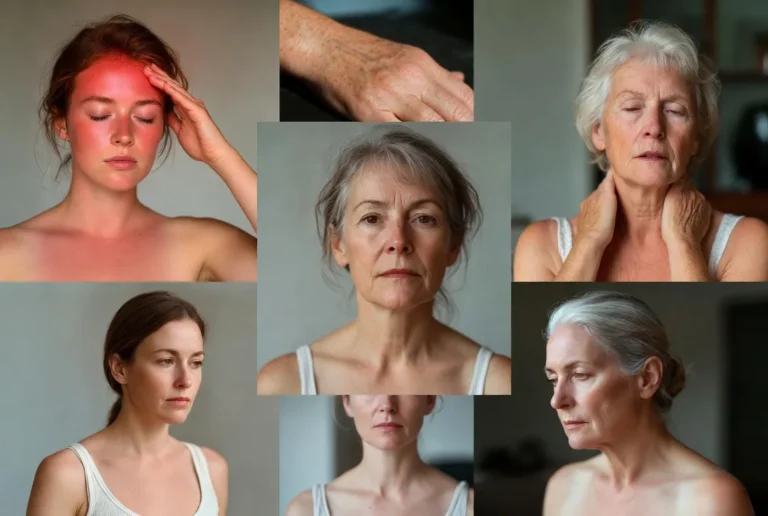
What are the common symptoms of perimenopause? This transition is defined by hormonal volatility, primarily manifesting as irregular periods, hot flashes, sleep disturbances, and mood swings. Unlike menopause, which is a single point in time (12 months without a period), perimenopause is a years-long process.
Early signs often begin in the early 40s and include shortened menstrual cycles and increased PMS. While there is no definitive “perimenopause test,” diagnosis is based on age and clinical symptoms. Managing these changes through lifestyle adjustments or hormone therapy can significantly improve quality of life during this natural transition.
What Is Perimenopause?
Perimenopause, often called the “menopausal transition,” is the period of time leading up to menopause. During this phase, the production of estrogen and progesterone by the ovaries begins to fluctuate wildly rather than dropping in a straight line. This “hormonal rollercoaster” is what triggers the various physical and emotional changes women experience.
Many women ask, what happens during perimenopause? Essentially, your body is preparing to end its reproductive years. Because the brain and ovaries are communicating less efficiently, ovulation becomes irregular. This leads to the unpredictable nature of the transition, where you may feel perfectly fine one month and symptomatic the next.
What Is the Average Age of Perimenopause?
The average age of perimenopause typically falls in the early-to-mid 40s. However, it is not uncommon for women to notice the first symptoms of perimenopause in their late 30s. Genetics, smoking history, and overall health can influence the timing. On average, this stage lasts about four to eight years, though for some, it can span a full decade.
In my clinical work, I’ve found that many women feel “too young” for these changes. I recently spoke with a patient, “Elena,” who was 39 and experiencing intense night sweats. She assumed it was stress-related until we looked at her overall hormonal profile. It’s important to remember that perimenopause is a spectrum, not a light switch.
How Do You Know If You Have Perimenopause?
One of the most frequent questions I hear in my practice is, “How do I know if I have perimenopause?” Because symptoms can mimic other conditions—such as thyroid disorders or clinical depression—the diagnostic process is primarily clinical.
The Myth of the Perimenopause Test
While many companies market a “perimenopause test” (usually checking FSH or LH levels), these are often unreliable. Because hormone levels can swing from “normal” to “menopausal” in a single 24-hour period, a blood test is merely a snapshot in time. It doesn’t tell the whole story.
A diagnosis is usually made by a clinician based on your age, menstrual history, and the presence of vasomotor symptoms like hot flashes. If you are over 40 and your cycles are becoming shorter or more erratic, you are likely in the transition. I recommend keeping a “symptom diary” for three months to provide your doctor with clear data.
First Symptoms of Perimenopause
The very first symptoms of perimenopause are often subtle and easily misattributed to a busy lifestyle. Many women do not realize they are in the “early transition” until they look back in hindsight.
Symptoms of Perimenopause at 44
By age 44, most women are in the thick of the early transition. Common early indicators include:
- Cycle Length Changes: Your 28-day cycle might suddenly become 24 or 21 days.
- Heavy Flow: You may experience “flooding” or heavier periods than usual.
- New or Intense PMS: Feeling significantly more irritable or bloated in the week before your period.
- Sleep Disruption: Waking up at 3:00 AM for no apparent reason, even without hot flashes.
- Mood Variability: Sudden “zaps” of anxiety or a lower threshold for stress.
Lived experience shows that sleep changes often precede menstrual changes. If you are suddenly struggling with insomnia despite a consistent routine, hormones may be the culprit.
10 Common Symptoms of Perimenopause
While there is a complete list of perimenopause symptoms that numbers in the dozens, ten signs stand out as the most prevalent across clinical populations.
1. Irregular Periods
This is the hallmark sign. Periods may be closer together, further apart, heavier, or lighter. Any change from your “normal” baseline is worth noting.
2. Hot Flashes
A sudden wave of heat that starts in the chest and moves to the face. These can last from 30 seconds to several minutes and are often followed by a chill.
3. Night Sweats
These are essentially hot flashes that occur during sleep. They can be severe enough to require changing your pajamas or bedsheets in the middle of the night.
4. Sleep Disturbances
Beyond night sweats, progesterone—the “calming” hormone—declines, making it harder to fall asleep and stay in a deep, restorative sleep state.
5. Mood Swings
Fluctuating estrogen affects serotonin and dopamine levels in the brain. This can lead to irritability, tearfulness, or sudden bouts of rage.
6. Fatigue
This is a deep, systemic tiredness that isn’t always fixed by sleep. It is one of the most reported horrible perimenopause symptoms because it impacts daily productivity.
7. Brain Fog
Difficulty concentrating, losing your train of thought, or feeling like you are “forgetting words” is common. It feels like your cognitive processing speed has slowed down.
8. Vaginal Dryness
As estrogen levels drop, the tissues in the vaginal area become thinner and less lubricated, which can make intercourse uncomfortable or lead to increased UTIs.
9. Decreased Libido
A combination of hormonal shifts, fatigue, and physical discomfort often leads to a noticeable drop in sexual desire.
10. Breast Tenderness
Similar to pregnancy or puberty, the fluctuations in estrogen can cause the breasts to feel sore, swollen, or unusually sensitive.
Complete List of Perimenopause Symptoms
Many women search for the 34 symptoms of perimenopause, menopause, or even a list of “100 symptoms.” While the internet is full of exhaustive lists, it is more helpful to categorize these changes into bodily systems.
Menstrual and Reproductive Changes
- Shorter or longer cycles
- Spotting between periods
- Increased cramping
- Worsening of fibroids or endometriosis
Vasomotor and Physical Body Changes
- Hot flashes and night sweats
- Heart palpitations (feeling like your heart is skipping a beat)
- Weight gain, particularly around the abdomen
- Skin changes (dryness, thinning, or new acne)
- Thinning hair on the head; unwanted hair on the chin or lip
Psychological and Cognitive Changes
- Increased anxiety or panic attacks
- Depressive episodes (even in women with no prior history)
- Difficulty with multi-tasking
- “Word-finding” difficulties
Sexual and Urogenital Changes
- Urinary urgency or frequency
- Loss of vaginal elasticity
- Changes in orgasmic intensity
Less Common Symptoms of Perimenopause
Some symptoms are so unusual that women don’t even think to blame their hormones. If you experience these less common symptoms of perimenopause, consult your doctor to rule out other causes, but keep perimenopause in the conversation.
- Tingling Sensations: Also called “paresthesia,” a feeling of pins and needles in the hands or feet.
- Electric Shock Sensations: A sudden feeling like a rubber band snapping under the skin, usually just before a hot flash.
- Burning Mouth Syndrome: A metallic taste or a burning sensation on the tongue and roof of the mouth.
- Joint and Muscle Aches: Estrogen helps lubricate joints; without it, you may feel stiff or “creaky.”
- Gum Sensitivity: Increased bleeding or sensitivity in the gums due to thinning mucosal membranes.
Can Perimenopause Cause Fatigue?

One of the most debilitating “invisible” symptoms is a profound sense of exhaustion. Many women ask, “Can perimenopause cause fatigue?” and the answer is a resounding yes. This isn’t just “tiredness”—it is often described as a bone-deep lethargy that makes daily tasks feel insurmountable.
There are three primary reasons for this horrible perimenopause symptom:
- Hormonal Volatility: As estrogen levels spike and crash, the body expends an enormous amount of energy trying to maintain internal balance (homeostasis).
- Disrupted Sleep: Even if you don’t wake up fully, “micro-arousals” caused by night sweats or falling progesterone levels prevent you from entering the deep, restorative REM stages of sleep.
- Iron Deficiency: Because cycles can become significantly heavier (flooding) during the early transition, many women become borderline anemic without realizing it.
If your fatigue is accompanied by shortness of breath or a racing heart, it is vital to have your ferritin (iron) levels and thyroid function checked by a clinician.
4 Months No Period — Is It Perimenopause?
As you progress toward the end of the transition, your periods will become increasingly sparse. If you have gone 4 months with no period during perimenopause, you are likely in the “late transition” phase.
However, while “skipping” months is a hallmark of the transition, it is not an official diagnosis of menopause. Menopause is only diagnosed retrospectively after 12 consecutive months without any bleeding. During these gaps, your estrogen levels are likely at an all-time low, but they can still “surge” unexpectedly, which is why pregnancy is still biologically possible until the 12-month mark is reached.
If you go several months without a period and then experience very heavy or prolonged bleeding, you should consult your OB-GYN to ensure the uterine lining is healthy.
Symptoms of Menopause in Women Over 50
By the time women reach their 50s, the symptoms of menopause and perimenopause often begin to merge or stabilize. Once you reach post-menopause (after the 12-month mark), the “rollercoaster” of perimenopause ends, but new health priorities emerge.
Common symptoms of menopause in women over 50 include:
- Vaginal Atrophy: Unlike hot flashes, which may fade over time, vaginal dryness and thinning often persist or worsen without treatment.
- Bone Density Loss: The rapid drop in estrogen can lead to osteopenia or osteoporosis.
- Cardiovascular Changes: Estrogen is heart-protective; after menopause, women’s risk for heart disease begins to match that of men.
- Skin Elasticity: A noticeable decrease in collagen leads to thinner, drier skin.
Signs Perimenopause Is Ending
How do you know when the end is in sight? The signs of perimenopause ending usually involve a shift from “irregularity” to “infrequency.”
You will likely notice that your hot flashes become more consistent rather than random. The gaps between your periods will grow from 60 days to 90 days, then to several months. In my clinical experience, women often report a “calming” of the psychological symptoms like rage or intense anxiety as the brain finally adjusts to a steady, albeit low, level of estrogen.
How Long Does Perimenopause Last?
The timeline is highly individual. When asking, “How long does perimenopause last?” the average answer is 4 to 8 years. However, for about 10% of women, the transition can be as short as two years or as long as twelve.
Factors that influence duration include:
- Smoking: Smokers often reach menopause 1–2 years earlier than non-smokers.
- Genetics: Your mother’s age at menopause is often a strong predictor of your own.
- BMI: Estrogen is stored in fat tissue, which can sometimes moderate the transition.
Treatment for Perimenopause
You do not have to “white-knuckle” your way through these symptoms. Treatment for perimenopause is now more personalized and evidence-based than ever before.
Lifestyle Interventions
Before reaching for medication, focusing on the “foundations” can reduce symptom severity:
- Nutrition: Increasing fiber and reducing sugar helps stabilize insulin, which in turn helps stabilize hormones.
- Exercise: Weight-bearing exercise is non-negotiable for bone health and mood regulation.
- Sleep Hygiene: Keeping the bedroom cool (18°C) and avoiding alcohol can reduce night sweats.
Hormonal and Non-Hormonal Medications
- Hormone Therapy (HT): This is the “gold standard” for treating vasomotor symptoms (hot flashes). Modern HT uses bioidentical hormones that are far safer than older versions when prescribed correctly.
- Low-Dose Birth Control: For women in early perimenopause, the pill can “level out” the hormonal spikes and provide predictable cycles.
- SSRIs/SNRIs: Even if you aren’t depressed, low doses of these medications can significantly reduce hot flashes and anxiety.
- Vaginal Estrogen: A local treatment (creams or rings) that addresses dryness without systemic absorption.
Frequently Asked Questions
What are common symptoms of perimenopause?
The most frequent signs include irregular periods, hot flashes, night sweats, sleep disturbances, mood swings, and “brain fog.” Many women also report weight gain and joint aches.
What are the very first symptoms of perimenopause?
Early signs often include a shortening of the menstrual cycle (e.g., from 28 days to 24 days) and a significant increase in PMS-related anxiety or sleep issues.
How do you know if you have perimenopause?
Diagnosis is primarily based on age and symptoms. Since hormone levels fluctuate daily, blood tests are rarely definitive. If you are over 40 and your periods are changing, you are likely in the transition.
What are the 34 symptoms of perimenopause?
The “34 symptoms” is a popular list that includes everything from hot flashes and irregular periods to less common signs like “electric shock” sensations, brittle nails, and burning mouth syndrome.
Can perimenopause cause fatigue?
Yes. Fatigue is a major symptom caused by sleep-disrupting night sweats, hormonal volatility, and potential iron deficiency from heavy periods.
Conclusion
Navigating the common symptoms of perimenopause requires a shift in how you view your health. This is a season of transition that demands extra grace, better nutrition, and professional support. Whether you are dealing with fatigue, hot flashes, or the frustration of 4 months with no period, remember that these symptoms are temporary markers of a significant biological shift. By identifying the early signs of perimenopause and working with a menopause specialist, you can transition into your next chapter with confidence and vitality rather than exhaustion.
References & Authoritative Sources
Related Posts






MORE from Author
Read More As a physician, I regularly see patients who are utterly exhausted from poor sleep. When you are desperately scrolling online…
- Hey, there. Let's talk about something we all want but struggle to achieve: vibrant, long-term health. These days, figuring out…


 Every week in my clinical practice, patients ask me the same desperate question: "Doc, how do I actually prevent a…
 When patients visit my clinic, they frequently ask me, "Doc, what is a healthy lifestyle, really?" They feel completely overwhelmed…