
Best Fitness Tips for Hiking Preparation (Beginner to Advanced Training Plans)
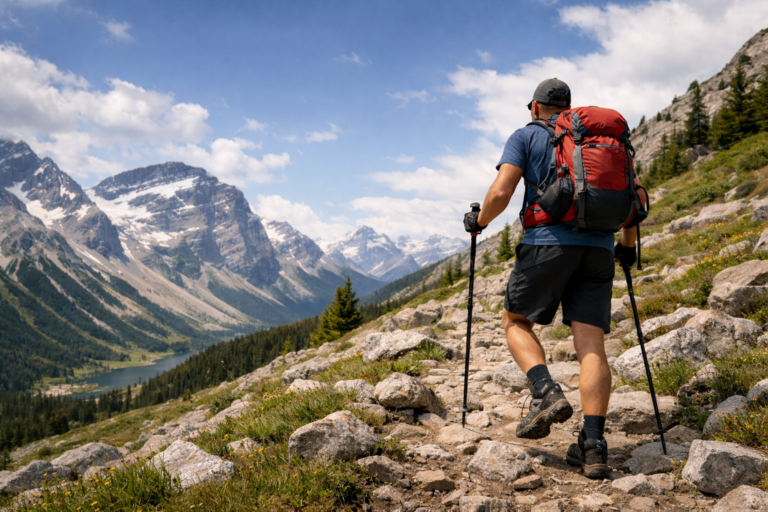
Every spring, patients come to my clinic and ask how to get safely trail-ready. They frequently feel overwhelmed and seek the best fitness tips for hiking preparation. Sarah, a 45-year-old patient, walked into my office last month, limping. She attempted a steep mountain trail with no prior conditioning.
As a result, she developed severe knee strain and deep muscle fatigue. I explained to her that hitting the trails necessitates precise, targeted physical preparation. As a result, I developed a structured hiking training plan for beginners specifically for her recovery.
Following a smart routine actively protects your joints while also increasing your cardiovascular stamina. In this comprehensive guide, I will share the exact medical and physical strategies I use with my patients. Let’s look at the absolute best ways to prepare your body for the great outdoors.
TL;DR: Quick Hiking Fitness Summary
- Top Goal: Build cardiovascular endurance, leg strength, and core stability.
- Best Approach: Start training 6 to 12 weeks before your planned hike.
- Key Exercises: Step-ups, lunges, squats, and loaded backpack walks.
- Medical Benefit: Training prevents severe joint injuries, reduces muscle tearing, and optimizes heart health.
Why You Need Fitness Training Before Hiking
Many people assume walking on a dirt trail requires zero athletic preparation. However, hiking places massive, unpredictable stress on your cardiovascular system and lower body joints. Therefore, you must proactively condition your body to handle uneven terrain and steep elevation changes.

First of all, training significantly enhances your heart and lung capacity. As a result, your body pumps oxygen much more efficiently to your working muscles. This crucial adaptation prevents dangerous exhaustion when you reach high altitudes.
Furthermore, targeted workouts build immense muscular endurance in your legs. You specifically need strong quadriceps to control your descent down steep hills safely. Consequently, building this strength prevents the notorious “hiker’s knee” that plagues so many beginners.
Finally, consistent preparation dramatically improves your physical balance and core stability. You will frequently navigate slippery rocks, loose gravel, and hidden tree roots on the trail. Thus, training your stabilizer muscles actively prevents catastrophic falls and ankle sprains.
Best Fitness Tips for Hiking Preparation
To conquer any trail safely, you must follow a well-rounded conditioning program. I always break the best fitness tips for hiking preparation down into three distinct clinical pillars. You must equally balance cardiovascular work, strength training, and stability exercises.
Build Cardiovascular Endurance
Your heart is the most important muscle you use on any trail. First of all, you should begin with a simple walking progression around your neighborhood. Gradually increase your brisk walking time by ten minutes every single week.
Next, you must simulate the steep inclines you will actually face outdoors. Therefore, stair climbing serves as an absolute game-changer for your lung capacity. You can also use a heavily inclined treadmill at your local gym to mimic mountain grades.
Strengthen Hiking Muscles
You cannot rely purely on your lungs to carry you over a mountain. You absolutely must build resilient, powerful lower-body strength. Specifically, your glutes, quadriceps, and hamstrings absorb massive amounts of physical shock during a hike.
In addition, you must train your abdominal core to carry heavy loads. A strong core directly supports your spine when you wear a loaded backpack. As a result, you will not suffer from agonizing lower back pain after a long day of trekking.
Train Balance and Stability
Uneven trails require constant, rapid adjustments from your ankles and knees. Because of this, you must train your body to balance effectively on single legs. Doing single-leg Romanian deadlifts or standing on a stability cushion works wonders for your joints.
Hiking Exercises You Can Do at Home
You do not need an expensive gym membership to get in peak shape. In fact, you can easily perform the best hiking exercises at home using just your body weight. Here is a clinical breakdown of the exact movements I prescribe to my patients.
| Exercise | Muscle Targeted | Primary Trail Benefit |
| Weighted Step-ups | Glutes and Quads | Builds raw power for climbing steep hills. |
| Walking Lunges | Quads and Hamstrings | Improves single-leg stability and joint control. |
| Goblet Squats | Entire Lower Body | Fortifies knees and strengthens the posterior chain. |
| Planks | Core and Lower Back | Provides vital support for wearing heavy backpacks. |
| Calf Raises | Calves and Ankles | Prevents Achilles tendon strain on sharp inclines. |
Adding these exercises for hiking into your weekly routine changes everything. You should aim to complete three sets of ten to fifteen repetitions for each movement. Furthermore, always prioritize a strict, controlled form over rushing through the exercises.
6-Week Hiking Workout Plan
If you have a moderate day hike approaching quickly, you need a highly focused routine. This specific 6-week hiking workout plan aggressively builds your baseline endurance. However, it still allows your joints adequate time to recover and adapt safely.
During the first two weeks, you must focus entirely on building a solid cardiovascular base. Therefore, briskly walk for forty-five minutes on flat terrain three times a week. In addition, perform the home strength exercises listed above twice a week.
Moving into weeks three and four, you must introduce steep inclines into your routine. Swap two of your flat walks for intense stair-climbing sessions or stadium step workouts. Also, begin wearing a light, five-pound backpack during your weekly walks to condition your spine.
Finally, during weeks five and six, you need to simulate actual trail conditions. You should complete one long, two-hour continuous walk every single weekend. Consequently, your feet will toughen up, actively preventing painful blisters on your actual trip.
8-Week Hiking Training Plan
For those tackling slightly more demanding elevation gains, an 8-week hiking training plan provides better physiological adaptation. This extended timeframe allows your central nervous system to truly master the new movement patterns. Most noteworthy, it drastically lowers your overall risk of overuse injuries.
In the first three weeks, follow the basic conditioning protocols of the six-week plan. However, you should add one dedicated day of active stretching or yoga. Consequently, your hip flexors and ankles will gain the vital mobility needed for rock scrambling.
During weeks four through six, progressive overload becomes your primary focus. You must systematically increase the weight in your training backpack by two pounds each week. As a result, your shoulders and core will adapt to carrying your heavy hiking essentials effortlessly.
In the final two weeks, prioritize active recovery and tapering. You must reduce your overall workout volume to let your muscle fibers heal completely. Therefore, your legs will feel incredibly fresh, powerful, and ready when you finally step onto the dirt trail.
12-Week Hiking Training Program (PDF-Style Plan)
For massive multi-day treks, I highly recommend downloading a structured 12-week hiking training program PDF. This extended timeline completely transforms your cardiovascular system safely. Furthermore, it gives your tendons and ligaments ample time to thicken.
First of all, you divide this comprehensive plan into three distinct, highly focused phases. Phase one covers weeks one through four and prioritizes baseline cardiovascular conditioning. You will walk on flat surfaces for sixty minutes four times a week.
Next, phase two spans weeks five through eight and violently attacks lower-body strength. You must perform intense weighted lunges, squats, and step-ups three days a week. Consequently, your glutes and quadriceps will build the dense muscle fibers needed for climbing.
Finally, phase three encompasses weeks nine through twelve and fully simulates actual trail conditions. You absolutely must wear your fully loaded backpack on steep, uneven terrain twice a week. Therefore, your body perfectly adapts to the exact physical stress of your upcoming adventure.
6-Month Hiking Training Plan (Advanced Treks)
When my patients decide to conquer Mount Kilimanjaro or Everest Base Camp, a standard routine fails them. Instead, they require a highly rigorous 6-month hiking training plan. This extreme timeline safely periodizes your physical stress over an entire half-year.
In the first two months, you focus strictly on losing excess body fat and building aerobic capacity. Every extra pound on your frame acts like a heavy anchor on a steep mountain. Therefore, you must optimize your physical composition before adding heavy backpack weight.
During the middle two months, you aggressively tackle severe elevation training. You must spend hours on the stair-climber machine or hiking local peaks every single weekend. Furthermore, you practice your vital breathing techniques to handle the rapidly thinning air.
In the final two months, you completely master your gear, nutrition, and mental resilience. You go on long, exhausting eight-hour practice hikes to test your boots and test your stamina. As a result, your physical confidence skyrockets right before you step onto the actual mountain.
Hiking Training Plan for Beginners
If you feel completely out of shape, do not panic. I designed this specific hiking training plan for beginners to gently ease you into outdoor fitness. You absolutely must start slow to avoid terrifying early injuries.
First of all, commit to walking just twenty minutes a day around your local park. You do not need a heavy backpack or steep hills yet. Simply prioritize consistent, daily movement to wake up your dormant leg muscles gently.
After two weeks, you can slowly transition to dirt trails with very mild elevation changes. In addition, start doing basic bodyweight squats in your living room. Consequently, your joints will slowly build the necessary tolerance for long, outdoor adventures.
Training for Hiking Over 50
In my sports medicine clinic, older adults constantly ask how to protect their aging joints. Training for hiking over 50 requires a massive, strategic focus on active recovery and cartilage protection. You simply cannot train like a reckless twenty-year-old anymore.

First, you must dedicate at least twenty minutes a day to dynamic stretching and hip mobility. Stiff, tight hips immediately transfer dangerous impact forces directly into your lower back and knees. Therefore, yoga and targeted stretching save you from chronic, nagging pain.
Moreover, you must practice using dual trekking poles during your weekly neighborhood walks. Trekking poles actively transfer up to thirty percent of the impact force into your upper body. As a result, your vulnerable knee cartilage safely avoids catastrophic daily wear and tear.
How to Hike for Beginners
Once you build your physical fitness, you must actually learn the practical skills of the trail. Understanding exactly how to hike for beginners saves you from terrifying wilderness mistakes. The best physical fitness means nothing if you make poor tactical decisions outside.
First of all, you must always start your trek at a remarkably slow, deliberate pace. Many enthusiastic beginners sprint up the first hill and quickly suffer complete physical exhaustion. Instead, you should walk at a pace that allows you to hold a normal conversation.
Furthermore, you must strictly follow the established rules of trail etiquette. Hikers traveling uphill always have the absolute right of way on a narrow path. In addition, you must pack out every single piece of trash you bring into the forest.
Hiking Essentials for Beginners
You can never rely completely on your physical fitness when exploring remote wilderness areas. You absolutely must carry specific, life-saving gear on every single trip. Therefore, I insist my patients purchase these crucial hiking essentials before they leave town.
- Proper Footwear: Buy sturdy, well-fitting trail running shoes or high-top hiking boots.
- Hydration System: Carry at least two liters of water in a hydration bladder or reliable bottles.
- First Aid Kit: Always pack blister pads, sterile bandages, and basic anti-inflammatory medication.
- Navigation Tools: Bring a physical paper map and a fully charged GPS device.
- Emergency Nutrition: Stash extra calorie-dense protein bars and salty trail mix in your bag.
Tips for First-Time Hikers
Your very first outdoor adventure should feel exhilarating, not dangerous. I always share these crucial tips for first-time hikers to ensure complete safety. You must respect the unpredictability of the natural environment.
Most importantly, you must always tell a reliable friend your exact planned route and expected return time. If you suddenly twist an ankle without cell service, this person will alert emergency rescue teams. Never hike a remote, unfamiliar trail completely anonymously.
In addition, you should obsessively check the local weather forecast the morning of your trip. Mountain weather changes violently within minutes, bringing deadly lightning or freezing rain. Consequently, you must always pack a lightweight, waterproof rain jacket in your bag.
What Reddit Hikers Say About Training
I frequently read online forums to see what everyday athletes recommend. Searching for the best fitness tips for hiking preparation on Reddit threads reveals fantastic, real-world advice. The community highly agrees on several incredibly practical training strategies.
First, experienced hikers universally recommend loading a backpack with heavy water jugs. You walk around your neighborhood carrying this uncomfortable weight. Once you reach the top of a practice hill, you can simply dump the water out to save your knees on the descent.
Additionally, many veteran hikers emphasize the extreme importance of breaking in your footwear. You must wear your new hiking boots to the grocery store, around the house, and to the park. Therefore, you aggressively prevent massive, trip-ruining blisters before you ever hit the dirt.
Hiking vs 5K Training—Similarities
Many of my clinic patients wonder if their running routine translates to trail fitness. If you know how to train for a 5k, you already possess a massive advantage. Both activities share incredibly similar cardiovascular and muscular demands.
First of all, both sports require exceptional, sustained aerobic endurance. Running a 5k forces your heart to pump massive amounts of oxygen efficiently. Similarly, climbing a steep mountain trail demands the same elevated heart rate and lung capacity.
Furthermore, both activities demand highly resilient, powerful leg muscles. Runners build incredibly dense calves and strong hamstrings to absorb constant pavement impact. Consequently, this precise leg strength completely protects your joints when you navigate rocky outdoor trails.
Frequently Asked Questions
How long does it take to get fit for hiking?
You typically need at least six to eight weeks of consistent training to see massive physical changes. This timeframe allows your heart to expand its aerobic capacity significantly. Furthermore, your leg muscles gain the vital strength required to conquer steep, uneven hills safely.
What exact muscles should you train?
You must aggressively target your glutes, quadriceps, hamstrings, and calves. These powerful lower-body muscles absorb the extreme physical shock of descending steep mountains. In addition, you must strengthen your core to comfortably support a heavy backpack all day long.
Can you train for hiking at home?
Yes, you can easily build massive trail fitness inside your own living room. You simply perform bodyweight squats, walking lunges, and weighted step-ups onto a sturdy chair. These highly effective movements perfectly simulate the exact physical demands of a steep outdoor climb.
How often should you practice before a trip?
You should aim to complete at least one long, heavily weighted practice walk every single weekend. During the week, you must maintain your baseline fitness with three shorter, brisk neighborhood walks. Consequently, your body fully adapts to the continuous, grueling physical stress.
What are the ultimate preparation secrets?
Ultimately, the best fitness tips for hiking preparation revolve around brutal consistency and progressive overload. You must intentionally train your lungs on steep stairs, fortify your legs with deep lunges, and practice carrying your loaded backpack. By doing so, you will absolutely dominate the trails and protect your heart health simultaneously.
Conclusion
In conclusion, stepping onto a rugged trail requires much more than just enthusiasm. You absolutely must prepare your body for the unpredictable, intense physical demands of the wilderness. By following these best fitness tips for hiking preparation, you actively protect your joints and elevate your cardiovascular health.
Furthermore, dedicating time to targeted exercises for hiking completely transforms your outdoor experience. Instead of suffering through agonizing muscle cramps, you will confidently enjoy the breathtaking summit views. Therefore, your proactive training ultimately guarantees a safer, much more enjoyable adventure.
Finally, always remember that consistent, daily effort beats extreme intensity every single time. You should start your training slowly, listen to your body, and never ignore sharp, sudden pain. Consequently, your heart and legs will carry you safely across countless beautiful trails for decades to come.
Evidence-Based References:

Related Posts






MORE from Author
Read More Just last week, a patient named Sarah walked into my clinic carrying three different boxes of popular gut biome tests.…
 Recently, a frustrated patient named Mark visited my public health clinic. He handed me an expensive, beautifully packaged at-home stool…


- Have you ever felt constantly exhausted and painfully bloated after normal meals? Recently, a patient named Sarah sat in my…
- For most healthy adults, 7 hours of sleep per night is the minimum recommended amount, but 7–9 hours is ideal.…