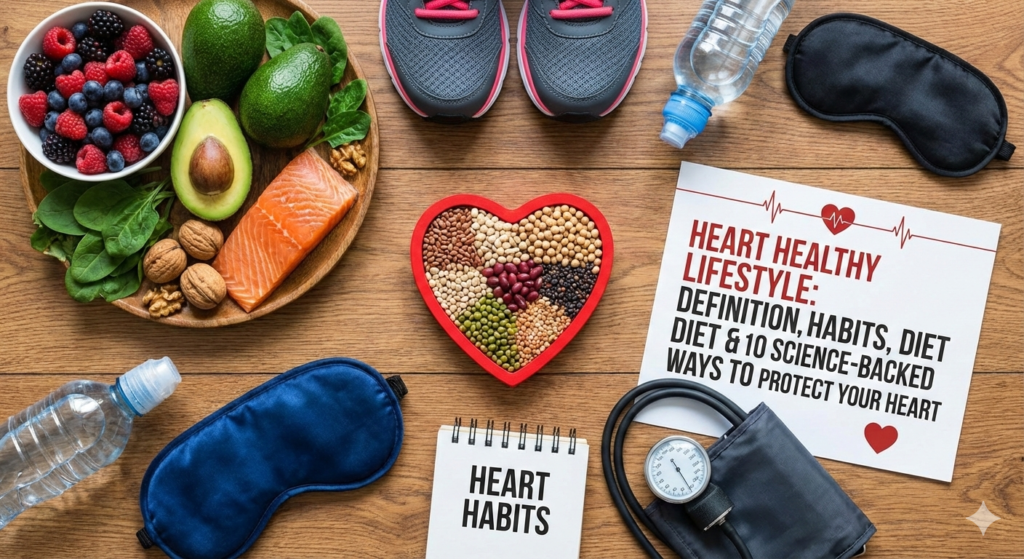
Healthy Lifestyle Habits (2026 Guide): Daily Practices for a Longer, Healthier Life

Patients in my clinical practice are always asking me how to live a long and healthy life. They want either a magic pill or a complicated and expensive biohacking plan. But in real life, true health comes from your daily routine, not from the pharmacy. The best medicine we have right now is to live a healthy lifestyle.
Healthy lifestyle habits are things you do every day that improve your physical, mental, and metabolic health and lower your risk of getting sick. Balanced nutrition, regular exercise, getting enough sleep, managing stress, staying connected with others, and staying away from drugs and alcohol are the most important habits.
You don’t have to be perfect or very disciplined to make a routine that lasts. Instead, you need to make small, consistent choices over the course of many years and decades. In this complete 2026 guide based on evidence, I’ll list the exact healthy habits you need to follow to get better health, lose weight, and keep your heart safe.
TL;DR — Quick Lifestyle Summary
Here is the clinically proven plan for living a long life if you don’t have much time. These specific habits can greatly lower your risk of getting chronic diseases.
- Eat whole, minimally processed foods daily.
- Exercise for at least 150 minutes every week.
- Sleep 7 to 9 hours every single night.
- Maintain a healthy, sustainable body weight.
- Manage daily stress through proven techniques.
- Avoid all tobacco products completely.
- Limit your alcohol consumption.
- Stay actively connected with friends and family.
- Protect your cardiovascular and brain health.
- Focus on building slow, sustainable habits.
What Are Healthy Lifestyle Habits?
Healthy lifestyle habits are things you do every day that help your physical, mental, and metabolic health over the long term. These include eating a balanced diet, getting regular exercise, getting enough sleep, managing stress, not smoking, drinking in moderation, and keeping strong social ties.
These aren’t diets or fitness challenges that only last for a month. They are instead changes in behavior that last and change how your cells work. You actively program your genes for long life and health by choosing to live a healthy life.
10 Healthy Lifestyle Habits (Backed by Science)
When patients ask me for a list of healthy habits that are definitely good for them, I always use evidence-based medicine. We have decades of clinical research that show which behaviors are best for your health and give you the most bang for your buck. The following are the ten most important healthy habits you should make a priority today.
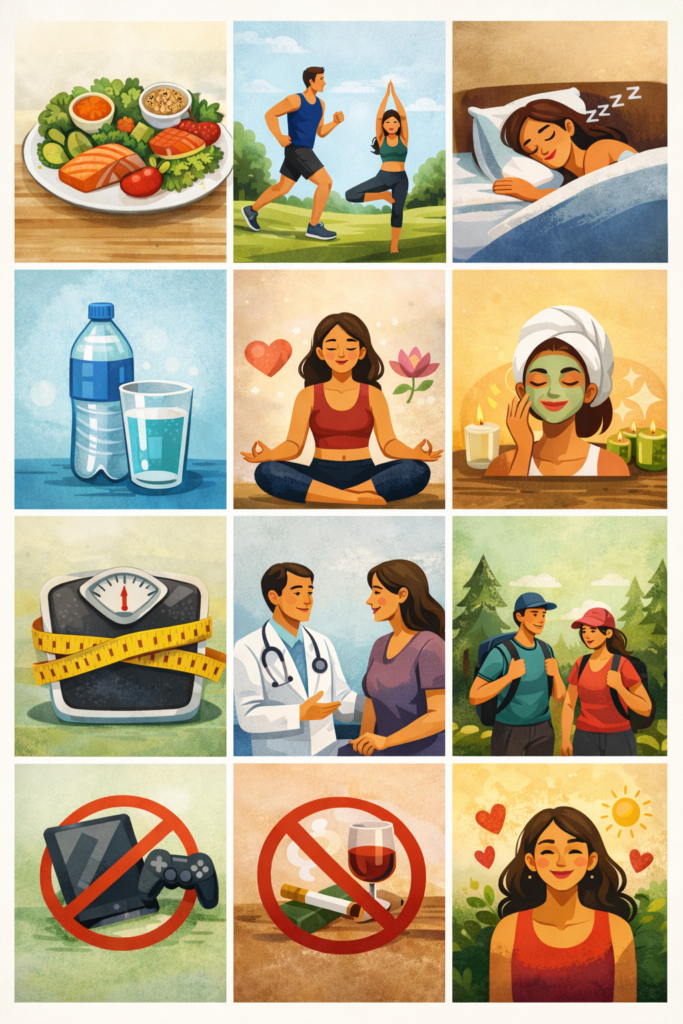
1. Eat a Nutrient-Dense Diet
Your plate is the first step toward a healthy lifestyle. A nutrient-dense diet puts whole vegetables, lean proteins, healthy fats, and complex carbohydrates at the top of the list and limits ultra-processed foods to a very small amount. This way of eating gives your cells the vitamins and minerals they need to work properly.
- Mechanism: Reduces systemic inflammation and stabilizes blood sugar levels.
- Beginner Tip: Try filling exactly half of your plate with colorful vegetables at every single meal.
2. Move Your Body Daily
Physical activity on a regular basis might be the closest thing we have to a pill that stops aging. You don’t have to run marathons; you just need to raise your heart rate on a regular basis. The American Heart Association says that people should do at least 150 minutes of moderate aerobic exercise every week.
- Mechanism: Improves cardiovascular efficiency and increases vital insulin sensitivity.
- Beginner Tip: Commit to a brisk, twenty-minute walk immediately after eating dinner.
3. Prioritize Restorative Sleep
When you sleep deeply, your brain works to get rid of the toxic metabolic waste that builds up during the day. If you don’t get enough sleep for a long time, your chances of getting obesity, dementia, and heart disease go up a lot. So, for long-term health, getting seven to nine hours of good sleep is not up for debate.
- Mechanism: Balances critical hunger hormones (ghrelin and leptin) and repairs cellular damage.
- Beginner Tip: Keep your bedroom completely dark, cool, and free of all electronic screens.
4. Maintain a Healthy Weight
Having too much visceral fat, especially around your stomach organs, is bad for your metabolism. This deep belly fat actively releases inflammatory cytokines that hurt your organs and blood vessels. Keeping a healthy weight greatly lowers the amount of extra stress on your heart and joints.
- Mechanism: Lowers overall systemic inflammation and reduces the risk of type 2 diabetes.
- Beginner Tip: Focus entirely on portion control and building muscle rather than extreme fad dieting.
5. Manage Stress Effectively
When you’re under a lot of psychological stress for a long time, your body is always in “fight or flight” mode, which releases cortisol. High levels of cortisol raise your blood pressure quickly and weaken your immune system over time. So, actively managing stress through mindfulness or meditation is an important part of staying healthy.
- Mechanism: Lowers resting heart rate and reduces stress-mediated vascular damage.
- Beginner Tip: Practice deep, diaphragmatic breathing for just five minutes every morning.
6. Stay Properly Hydrated
Water makes up most of your body, so staying hydrated is important for every metabolic process. Drinking the right amount of fluids helps your kidneys work properly, keeps your body temperature stable, and keeps your joints lubricated. Even mild dehydration can make you very tired, make it hard to think clearly, and cause painful muscle cramps.
- Mechanism: Facilitates efficient cellular waste removal and maintains healthy blood plasma volume.
- Beginner Tip: Carry a reusable water bottle and drink a full glass immediately upon waking.
7. Avoid All Tobacco Products
Smoking is the number one preventable cause of death in the world. It hurts your lungs and heart very badly. No level of tobacco use is safe. The best thing you can do for your health right now and in the future is to stop smoking.
- Mechanism: Eliminates toxic carcinogens and immediately improves endothelial function.
- Beginner Tip: Seek professional medical support and utilize FDA-approved cessation aids.
8. Limit Alcohol Intake
Some studies have suggested that red wine may have mild benefits in the past, but modern clinical consensus is clear. It is known that alcohol is a neurotoxin and a cancer-causing substance that messes up sleep and hurts your liver. If you decide to drink, you have to do it in very small amounts.
- Mechanism: Reduces hepatic (liver) stress and lowers the risk of several digestive cancers.
- Beginner Tip: Designate at least four completely alcohol-free days every single week.
9. Build Strong Social Connections
Loneliness is a huge public health problem that is often ignored and can be just as deadly as smoking. People are naturally social beings, and strong ties to their communities help keep them mentally and physically healthy. Having deep, meaningful relationships greatly lowers your risk of severe depression and cognitive decline.
- Mechanism: Boosts protective oxytocin levels and reduces circulating stress hormones.
- Beginner Tip: Schedule a weekly phone call or coffee date with a close friend or family member.
10. Get Preventive Medical Care
Lastly, you can’t improve your health if you don’t pay attention to your clinical baselines. Regular checkups, blood tests, and cancer screenings that are appropriate for your age can help find dangerous diseases before they get too bad to treat. The best way to stay healthy is to work with a primary care doctor you trust.
- Mechanism: Enables early detection of silent killers like hypertension and high cholesterol.
- Beginner Tip: Schedule your annual physical exam and request a comprehensive lipid panel today.
20 Healthy Habits to Follow Every Day
Here are some more micro-habits that you can easily add to your daily routine if you want to add to your list of healthy habits:
- Drink a glass of water before morning coffee.
- Take the stairs instead of the elevator.
- Read ten pages of a book daily.
- Floss your teeth every night.
- Stretch for five minutes before bed.
- Eat one piece of whole fruit daily.
- Practice gratitude journaling.
- Stand up every hour while working.
- Cook meals at home more often.
- Limit daily social media scrolling.
How to Build Healthy Lifestyle Habits (Beginner’s Guide)
When I see patients who are having trouble changing, I always show them how to make healthy habits a part of their daily lives. You can’t change everything about your life overnight without getting really tired. Instead, you need a beginner’s guide to healthy, practical lifestyle habits that focuses on small, doable steps.
First, use a psychological idea called “habit stacking” to make sure you succeed. This means connecting a new behavior directly to a routine that already exists. For instance, promise yourself that you will do five squats right after you brush your teeth every morning.
Also, make big changes to your physical environment to make it easy to make good choices. Completely get rid of all the ultra-processed junk food in your kitchen. If you only use willpower and not design your environment, you will eventually fail.
Last but not least, make sure to follow the one percent improvement rule every day. Instead of vague goals, make SMART goals that are Specific, Measurable, Achievable, Relevant, and Time-bound. So, use a simple habit worksheet to keep track of your daily progress and build up momentum that will last.
Healthy Lifestyle Habits for Weight Loss
A lot of people come to my clinic looking for healthy ways to lose weight that really work. I always say that losing weight in a healthy way takes a lot more than just cutting back on calories. To balance your hormones and speed up your metabolism, you need to make big changes to your daily routines.
First, keep track of how many calories you eat each day without worrying about being perfect. Also, make sure to eat high-quality protein at every meal to keep your important lean muscle mass. Protein keeps you full, which makes you want to snack on empty carbs much less.
You also need to do resistance training at least twice a week. When you lift weights, your resting metabolic rate goes up, which means you burn more calories even when you’re sleeping. Finally, to get the most out of your NEAT (Non-Exercise Activity Thermogenesis), walk more, take the stairs, and fidget all day.
Heart-Healthy Lifestyle Habits
Cardiovascular disease is still the most common cause of death, but it can be mostly avoided. You need to start doing certain things right away to protect your heart and blood vessels. What are the seven habits I suggest to all of my patients for a healthy heart?
- Follow a Mediterranean-style diet: Focus heavily on olive oil, nuts, and leafy greens.
- Control your daily sodium: Keep your salt intake under 2,300 milligrams daily to protect your vessels.
- Monitor your blood pressure: Check your numbers weekly using a validated home cuff.
- Perform aerobic exercise: Engage in brisk walking or cycling to strengthen your heart muscle.
- Increase your omega-3 intake: Eat fatty fish like salmon twice a week to lower triglycerides.
- Practice active stress reduction: lower your cortisol levels through meditation or deep breathing.
- Maintain strict tobacco avoidance: Never smoke, and completely avoid all secondhand smoke.
Healthy Lifestyle Habits for Brain Health
As we get older, protecting our brain health becomes a top medical priority. Adopting certain healthy lifestyle habits for brain health actively prevents dementia and severe cognitive decline. Your brain needs constant stimulation, good blood flow, and enough rest to work well.
So, you need to learn new, hard skills every day to keep your brain active. Reading, playing an instrument, or learning a new language all help you build up your brain’s cognitive reserve. Aerobic exercise also makes your hippocampus bigger by releasing a protein called BDNF (Brain-Derived Neurotrophic Factor).
Finally, never underestimate the neurological power of deep, uninterrupted sleep. During deep sleep, your brain activates the glymphatic system to actively flush out toxic amyloid plaques.
Anti-Aging Strategies & Healthy Lifestyle Habits for Longevity
Everyone wants to live longer, but you need to make sure those extra years are full of life. Using modern anti-aging techniques and living a healthy lifestyle together can actually slow down your biological clock at the cellular level. You can’t stop time, but you can control how your body reacts to it.
First, try to eat fewer calories to lower the stress on your internal organs. Also, make heavy strength training a priority to keep your bone density up and avoid becoming weak as you get older. Muscle mass is the most important thing to have as you get older because it keeps you independent and able to move around easily.
Also, keep your blood sugar levels under control by staying away from refined sugars, which speed up the aging of cells. Lastly, develop a strong sense of purpose and strong relationships with other people. Research consistently demonstrates that socially engaged seniors exhibit markedly reduced mortality rates compared to their isolated counterparts.
Healthy Lifestyle Habits for Aging Skin
Your skin is always a reflection of your metabolic health and the things you come into contact with every day. To keep your skin looking young, you need to start living a healthy lifestyle when you’re young. A bad daily routine can cause a lot of damage that expensive topical creams can’t fix.
Most importantly, you must apply a broad-spectrum sunscreen every single day, rain or shine. UV radiation physically destroys your skin’s collagen network, causing deep wrinkles and dangerous melanomas. Moreover, maintain rigorous internal hydration by drinking plenty of water to keep your skin plump and elastic.
Also, eat a lot of foods that are high in strong antioxidants like vitamin C and vitamin E. These important nutrients protect your fragile skin cells from free radicals that can harm them. Finally, don’t smoke at all, because tobacco cuts off blood flow to your facial tissues in a big way.
Healthy Lifestyle Habits for Students, Kids & Teens
It is important to start building a foundation of health very early in life. We need to help students develop healthy habits right away to fight the growing problem of childhood obesity. Parents are very important for teaching their kids good habits at home.
Also, teens should focus on getting enough sleep and limiting their screen time to stay healthy. Teenagers need a lot of exercise and good food to help their brains grow quickly. As a public health expert, I strongly suggest that families use the 5-2-1-0 framework, which is based on evidence.
What Is the 5-2-1-0 Rule?
The 5-2-1-0 rule is a scientifically proven way for both kids and adults to live their lives every day.
- 5: Eat five servings of fruits and vegetables daily.
- 2: Keep recreational screen time to two hours or less.
- 1: Get at least one hour of vigorous physical activity.
- 0: Consume zero sugary drinks.
Healthy Lifestyle Habits for Women & Men
Even though the main parts of wellness are the same for everyone, men and women have different physical problems. Women who are going through menopause need to make sure that their healthy lifestyle habits help them keep their bones strong. So, women need to focus on exercises that put a lot of weight on their bones and getting enough calcium when they are young.
On the other hand, men who want to live a healthy lifestyle often need to pay a lot of attention to preventing heart disease early on. Men usually have heart attacks much earlier in life than women do. So, men need to keep a close eye on their cholesterol levels, deal with stress at work, and get regular prostate screenings.
Importance of Healthy Habits & 10 Ways to Maintain a Healthy Lifestyle
In modern medicine, the importance of healthy habits cannot be overstated. According to clinical research, adopting just five basic healthy habits can lower your risk of dying from any cause by more than sixty percent. You really have the power to change your medical future.
If you’re not sure how to keep this up, here are ten ways to live a healthy life for a long time:
- Focus on your underlying “why” (your core motivation).
- Forgive yourself instantly after a minor setback.
- Track your daily progress visually.
- Celebrate small, non-scale victories.
- Surround yourself with health-conscious friends.
- Plan your weekly meals.
- Schedule your workouts like mandatory doctor appointments.
- Keep your home environment incredibly healthy.
- Prioritize sleep above late-night entertainment.
- Continuously educate yourself on nutritional science.
Healthy Lifestyle Habits PDF, Worksheet & Infographic
I made a full digital toolkit to help you successfully follow these clinical guidelines. Downloading our full PDF of healthy lifestyle habits to your phone or computer is easy. It’s much easier to stay consistent when you have something to look at.
Also, every morning, print out our daily healthy habits worksheet to keep track of how you’re doing. Checking off tasks you’ve finished gives you a huge boost of dopamine in your brain. Lastly, hang our infographic about healthy lifestyle habits on your fridge so you can see it every day and remember your goals.
Frequently Asked Questions
What are 10 good daily habits?
Drinking water when you wake up, eating a high-protein breakfast, going for a brisk walk, reading, stretching, practicing gratitude, limiting screen time, cooking at home, avoiding late-night snacks, and getting eight hours of sleep are all great daily habits.
What are some healthy lifestyle habits?
Regular cardiovascular exercise, eating a diet rich in nutrients, using stress-reduction techniques, avoiding all tobacco products, and keeping strong, supportive social relationships are some of the most important healthy lifestyle habits.
What are healthy eating habits and lifestyle?
A healthy lifestyle means eating whole, unprocessed foods like vegetables, lean proteins, and healthy fats. It also means drinking a lot of water every day, watching how much you eat, and staying away from too much sugar and alcohol.
Which statement best describes a lifestyle with healthy eating habits?
The best way to sum up this way of life is, “Always choosing a balanced mix of whole, nutrient-dense foods and being mindful of how much you eat to support your long-term physical and mental health.”
How long does it take to form a new habit?
The common belief is that it takes twenty-one days to change a behavior, but clinical psychology shows that it actually takes an average of sixty-six days. So, you need to be very patient and consistent during the first two months.
Conclusion
To sum up, you don’t have to make a big, stressful change to your health overnight to make it better. The small, steady choices you make every day are what really make you healthy. You actively protect your heart, brain, and overall health by following these healthy lifestyle habits that are backed by research.
So, I really think you should only work on one or two small habits this week. You can start by walking for twenty minutes after dinner or drinking an extra glass of water. Also, always keep in mind that trying to be perfect is the enemy of long-term, sustainable progress.
Your physical health is your most important asset, and you have the amazing ability to make it much better. Please talk to your primary care doctor about these specific changes to your lifestyle at your next appointment. Last but not least, download our free PDF of healthy lifestyle habits below to start living a full, active life today.
Evidence-Based References:
- Harvard T.H. Chan School of Public Health — The Nutrition Source
- American Heart Association (AHA) — Healthy Living Guidelines
- National Institute on Aging (NIA) — Cognitive Health and Older Adults
- Centers for Disease Control and Prevention (CDC) — Physical Activity Basics
- World Health Organization (WHO) — Healthy Diet and Lifestyle Facts
Related Posts





MORE from Author
Read More As a physician, I regularly see patients who are utterly exhausted from poor sleep. When you are desperately scrolling online…
- Hey, there. Let's talk about something we all want but struggle to achieve: vibrant, long-term health. These days, figuring out…


 Every week in my clinical practice, patients ask me the same desperate question: "Doc, how do I actually prevent a…
 When patients visit my clinic, they frequently ask me, "Doc, what is a healthy lifestyle, really?" They feel completely overwhelmed…