
How to Reduce Healthcare Costs: The Ultimate 2026 Guide

Rising medical expenses are a massive source of stress for families and businesses alike. Navigating premiums, deductibles, and surprise bills can feel like a second full-time job. Finding a realistic solution to high health care costs is more important than ever.
Whether you are managing a chronic condition or just trying to protect your family’s savings, making health care more affordable requires a proactive approach.
The burden of medical debt does not just affect your wallet; it heavily impacts your overall mental and physical well-being.
Fortunately, there are actionable steps you can take today. In this guide, we will explore exactly how to make health care affordable.
We will cover practical solutions for individuals, long-term strategies for employers, and the policies shaping the future of our medical system.
What Are the Most Effective Healthcare Cost Reduction Strategies?
When looking at the big picture, there is no single magic bullet for lowering medical bills. Instead, the most effective strategies to reduce health care costs involve a combination of personal choices and systemic navigation.
If you are wondering what are the methods of cost reduction, they generally fall into four main categories:
- Prevention: Investing in nutrition and wellness to avoid illness.
- Price Transparency: Shopping around for procedures and medications before committing.
- Insurance Optimization: Choosing the right health plans and utilizing tax-advantaged accounts.
- Administrative Efficiency: Catching billing errors and utilizing cost-saving technologies like telehealth.
What is one technique that helps to control health care costs immediately? Asking for an itemized bill. This simple habit routinely uncovers administrative errors that artificially inflate patient balances.
Ultimately, cost reduction strategies in health care require you to be an active consumer rather than a passive patient. By understanding what are three ways to reduce health care costs—prevention, negotiation, and smart plan selection—you can reclaim control over your medical budget.
How a Healthy Lifestyle Reduces Healthcare Costs Long-Term
As a passionate advocate for wholesome nutrition at Healthy Food for Living, I cannot overstate the financial power of food. How does a healthy lifestyle reduce cost of care? By actively preventing the chronic illnesses that drain bank accounts.
A few months ago, I interviewed a long-time reader named Sarah. She was spending over $400 a month on medications for pre-diabetes and hypertension.
By radically changing her diet to focus on anti-inflammatory, whole foods and prioritizing daily movement, her doctor eventually safely tapered her off two of her prescriptions.
Her story proves that chronic disease management cost savings are entirely real and accessible.
Preventive care to reduce healthcare costs is the ultimate long-term investment. Routine wellness visits, cancer screenings, and a nutrient-dense diet keep you out of the hospital.
The financial benefits of reducing healthcare costs through lifestyle changes are undeniable.
You spend less on co-pays, experience fewer sick days, and enjoy a significantly higher quality of life without the burden of constant medical intervention.
Ways to Lower Healthcare Expenses for Individuals and Families
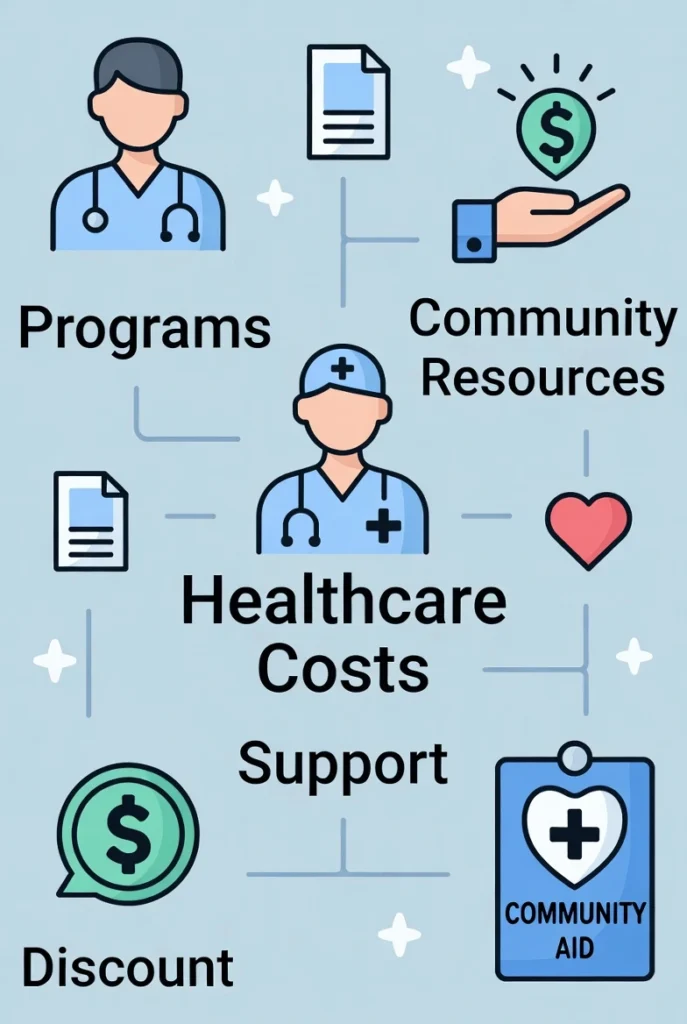
When you are actively facing medical bills, you need practical, immediate solutions. Finding the best ways to save money on healthcare means learning how to navigate the complex billing system.
Cutting Medical Bills Legally
You do not have to accept the first number on your invoice. One of the most effective ways to lower healthcare expenses is to request an itemized bill with billing codes.
Hospitals frequently make coding errors, charging for supplies you never used or services you did not receive. Reviewing these codes allows you to spot and dispute incorrect charges legally.
Lowering Out-of-Pocket Expenses
Strategies to reduce healthcare costs for families must include maximizing your insurance benefits. Always stay in-network whenever possible. If your doctor prescribes a new medication or orders a scan, immediately ask if there is a cheaper, in-network alternative.
Knowing how to lower out of pocket medical expenses often just requires having brief, transparent conversations with your provider about your budget.
Reducing Costs Without Insurance
If you are currently uninsured, you still have options. You can reduce healthcare costs without insurance by seeking out federally qualified health centers (FQHCs) that operate on a sliding fee scale based on your income. Additionally, always inform your doctor that you are paying out of pocket; most clinics offer substantial discounts for patients who pay directly rather than billing an insurance company.
How to Reduce Hospital Bills and Surgery Costs
Hospital stays and surgeries are notoriously the most expensive medical events you can endure. However, the sticker price is rarely the final price if you know how to advocate for yourself.
Negotiating After Surgery
If you are wondering how to reduce hospital bills after surgery, start by offering a lump-sum payment. Hospitals spend significant resources chasing down unpaid debts. Because of this, many billing departments will accept a 20% to 40% discount if you can pay the negotiated balance upfront. If negotiations fail, look up medical bill negotiation services near me to hire a professional advocate.
Securing Cash-Pay Discounts
You do not always have to use your insurance, especially if you have a massive deductible. Ask the billing department about cash pay discounts at hospitals. In many instances, the cash price for an MRI or minor procedure is significantly lower than the insurance-negotiated rate.
Finding Financial Assistance Programs
Non-profit hospitals are legally required to offer charity care. If you meet specific income thresholds, you can learn how to apply for hospital financial assistance to have your bill reduced or completely forgiven.
Furthermore, if you spot mistakes, you must know how to dispute incorrect medical bills quickly. Medical billing errors and how to fix them should be a priority; call the billing department immediately and request a formal audit of your account.
Emergency Room vs Urgent Care: Major Cost Differences
One of the easiest ways to incur massive medical debt is to visit the ER for a non-life-threatening issue. The urgent care vs ER cost comparison is staggering. A basic visit to the emergency room can cost upwards of $1,500, whereas an urgent care visit for the exact same issue might only cost $150.
Emergency room bill reduction tips start with avoiding the ER entirely unless you are facing a true medical emergency, like chest pain or severe trauma. For minor fractures, stitches, or severe colds, urgent care facilities are equipped to handle the problem at a fraction of the cost.
Knowing exactly where to go before an illness strikes is how to avoid surprise medical bills. Keep a list of in-network urgent care centers on your fridge so you do not make an expensive, panicked decision in the middle of the night.
Prescription Drug Cost Reduction Strategies
Medication is one of the largest ongoing expenses for chronic disease management. If you need tips to reduce prescription drug costs, always start by asking your physician if a generic version of your medication is available. Generics contain the exact same active ingredients as brand-name drugs but cost a fraction of the price.
Learning how to lower prescription medication costs also involves looking outside your traditional insurance. Sometimes, paying the cash price using a discount card is cheaper than your insurance co-pay. The best discount prescription programs, like GoodRx or Cost Plus Drugs, negotiate directly with pharmacies to offer massive consumer savings.
Finally, consider switching to a mail-order pharmacy for your daily, long-term medications. Many insurance plans offer a 90-day supply of maintenance medications through the mail for the same price as a 30-day supply at a local retail pharmacy.
Insurance, HSAs & Tax Strategies to Lower Healthcare Costs
Navigating the financial side of medicine is crucial for protecting your family’s budget. To secure affordable health insurance plans for families, you must evaluate both the monthly premium and the out-of-pocket maximum.
Comparing Health Plans
During open enrollment, always compare health insurance plans to save money based on your actual medical history, not just the lowest premium. If you visit specialists frequently, a plan with a higher premium but lower co-pays might actually save you thousands over the year.
Maximizing HSAs and FSAs
If you have a high-deductible health plan, utilizing the best health savings account strategies is essential. An HSA allows you to contribute pre-tax money, grow it tax-free, and withdraw it tax-free for medical expenses. Knowing how to use HSA to reduce medical costs means treating it as a long-term investment vehicle for future healthcare needs.
Utilizing Medical Tax Deductions
According to the Internal Revenue Service (IRS), you can deduct qualified out-of-pocket medical expenses that exceed a certain percentage of your adjusted gross income.
Keeping meticulous receipts is critical for claiming tax deductions for medical expenses 2026. This can significantly lower your overall tax burden, putting money back into your pocket.
Programs like Medicare and Medicaid also have specific guidelines on what expenses can be optimized for tax purposes.
Programs & Community Resources That Reduce Healthcare Costs
No one should have to choose between buying groceries and seeing a doctor. Fortunately, there are many programs that help reduce healthcare costs for underserved populations.
Local health departments often run community health clinics low cost services, providing immunizations, dental care, and basic checkups on a sliding income scale.
If you are facing severe financial hardship, it is vital to learn how to qualify for Medicaid financial help in your state.
Medicaid provides comprehensive coverage for low-income individuals and families. If you do not qualify for government aid, explore medical crowdfunding alternatives, such as patient assistance programs offered directly by pharmaceutical companies to cover drug costs.
How Employers Can Reduce Healthcare Costs
Businesses are feeling the sting of rising medical premiums just as much as their employees. Therefore, discovering how employers can reduce healthcare costs is a top priority for human resource departments. Effective employee healthcare cost reduction strategies must focus on proactive wellness rather than just reactive sick care.
When advising organizations, I always emphasize implementing wellness programs that reduce healthcare expenses.
By subsidizing gym memberships, offering healthy catering options, and promoting mental health days, employers see fewer sick days and lower insurance claims.
Understanding how to reduce healthcare costs for employers ultimately translates to knowing how to reduce healthcare costs for employees through shared savings.
Furthermore, integrating telehealth cost savings benefits into corporate plans allows employees to consult doctors virtually, avoiding expensive urgent care visits. Moving toward value based care cost savings—where providers are paid for patient health outcomes rather than the volume of services—also helps companies control their annual healthcare spending.
Hospital & System-Level Cost Reduction Strategies

For the medical system to become sustainable, hospitals must also tighten their belts. Figuring out how to reduce healthcare costs in hospital settings requires massive operational shifts.
Administrators are constantly researching how to reduce clinical costs and achieve reduced medical overhead costs without compromising patient safety.
A major focus is learning how to reduce administrative costs in healthcare. The billing and coding process is notoriously complex.
By automating these systems, hospitals can discover how to reduce administrative costs healthcare facilities face daily. Additionally, optimizing staff scheduling is a key method for how to reduce labor costs in healthcare without causing nurse burnout.
Hospitals must also protect their infrastructure. Knowing how to reduce healthcare data breach costs through robust cybersecurity saves millions in potential HIPAA fines.
Finally, optimizing the supply chain and discovering how to reduce inbound freight costs healthcare systems incur for medical supplies can drastically lower the operational bottom line.
Government & Policy Solutions to High Healthcare Costs
Systemic change requires legislative action. When voters ask how can the government reduce healthcare costs, the focus turns to federal regulation and market transparency.
Policies to reduce healthcare costs often target the pharmaceutical industry and hospital billing practices.
One of the primary solutions to healthcare costs in America is allowing federal agencies like the Centers for Medicare & Medicaid Services to aggressively negotiate drug prices directly with manufacturers.
Furthermore, enforcing strict price transparency laws ensures that patients can comparison-shop for medical procedures.
If we want to know how can the U.S. lower healthcare costs, we must pivot toward preventive medicine.
Expanding coverage for nutritional counseling and obesity management is how to reduce us healthcare costs long-term, shifting the focus from treating late-stage diseases to preventing them entirely.
U.S. vs Canada: Different Healthcare Cost Models
The debate over healthcare financing often looks across borders. Figuring out how to reduce healthcare costs in canada looks very different than in the United States.
Canada operates a publicly funded, single-payer system where the government covers core medical services, meaning patients do not face massive hospital bills.
However, Canadians still seek ways to reduce costs for prescription drugs and dental care, which are often covered by private supplemental insurance. Conversely, learning how to reduce healthcare costs in the us or how to reduce healthcare costs in america heavily relies on individual insurance optimization, aggressive billing negotiation, and out-of-pocket shopping.
Modern & Innovative Ways to Reduce Healthcare Costs
Technology and new business models are changing how we pay for medicine. There are many innovative ways to reduce healthcare costs that bypass traditional insurance entirely. For instance, direct primary care cost savings are becoming highly popular; patients pay a flat monthly fee to their doctor for unlimited basic care.
When looking at a healthcare subscription plans cost comparison, many patients find that a $70/month membership is cheaper than a high-deductible insurance plan for routine visits.
Additionally, patients are utilizing healthcare cost transparency tools to look up the exact price of an MRI before booking an appointment.
Downloading the best apps to manage medical expenses can also help you track your deductible and HSA spending from your smartphone.
Final Takeaway: How to Reduce Healthcare Costs Without Sacrificing Care
Navigating the medical system is intimidating, but you have more power than you think. Understanding how to reduce costs in healthcare starts with focusing on a nutrient-dense, healthy lifestyle to prevent disease before it starts.
If you are already facing medical bills, you can reduce healthcare debt fast by demanding itemized bills, negotiating directly with hospitals, and using cash-pay discounts.
By utilizing the best ways to save money on healthcare—from prescription discount cards to telehealth—you can protect your health and your financial future simultaneously.
Frequently Asked Questions
What are the best ways to save money on healthcare?
The best ways include staying in-network, using urgent care instead of the ER for minor issues, asking for generic prescriptions, and reviewing every medical bill for coding errors.
How can I lower my hospital bill fast?
Request an itemized bill to check for overcharges. Then, contact the billing department to ask for a cash-pay discount or offer a lump-sum payment to settle the debt at a reduced rate.
Are cash pay discounts at hospitals real?
Yes. Many hospitals and imaging centers offer significant discounts (sometimes up to 50%) if you pay cash upfront, as it saves them the administrative hassle of billing your insurance.
How do I qualify for hospital financial assistance?
Non-profit hospitals are legally required to offer charity care. You must apply through their billing department and provide proof of income; if you fall below a certain poverty threshold, your bill may be reduced or forgiven.
Does a healthy lifestyle really lower healthcare costs?
Absolutely. Eating a nutrient-dense diet and exercising regularly prevents expensive chronic conditions like type 2 diabetes and heart disease, drastically reducing your need for daily medications and frequent doctor visits.
Disclaimer: This article is for educational and informational purposes only. It does not constitute formal medical, legal, or financial advice.
Always consult with a qualified healthcare provider, insurance broker, or financial advisor before making significant changes to your medical coverage or treatment plans.
References
- Centers for Medicare & Medicaid Services (CMS) – Hospital Price Transparency: https://www.cms.gov/hospital-price-transparency
- Internal Revenue Service (IRS) – Medical and Dental Expenses: https://www.irs.gov/taxtopics/tc502
- Centers for Disease Control and Prevention (CDC) – Health and Economic Costs of Chronic Diseases: https://www.cdc.gov/chronicdisease/about/costs/index.htm
- Healthcare.gov – Using a Health Savings Account (HSA): https://www.healthcare.gov/glossary/health-savings-account-hsa/
- American Hospital Association (AHA) – Financial Assistance and Charity Care: https://www.aha.org/fact-sheets/2020-01-28-fact-sheet-hospital-billing-and-collection-practices
Related Posts






MORE from Author
Read More As a physician, I regularly see patients who are utterly exhausted from poor sleep. When you are desperately scrolling online…
- Hey, there. Let's talk about something we all want but struggle to achieve: vibrant, long-term health. These days, figuring out…


 Every week in my clinical practice, patients ask me the same desperate question: "Doc, how do I actually prevent a…
 When patients visit my clinic, they frequently ask me, "Doc, what is a healthy lifestyle, really?" They feel completely overwhelmed…