How Much Deep Sleep Do You Need? (By Age, Sleep Stage, and Health Goals)
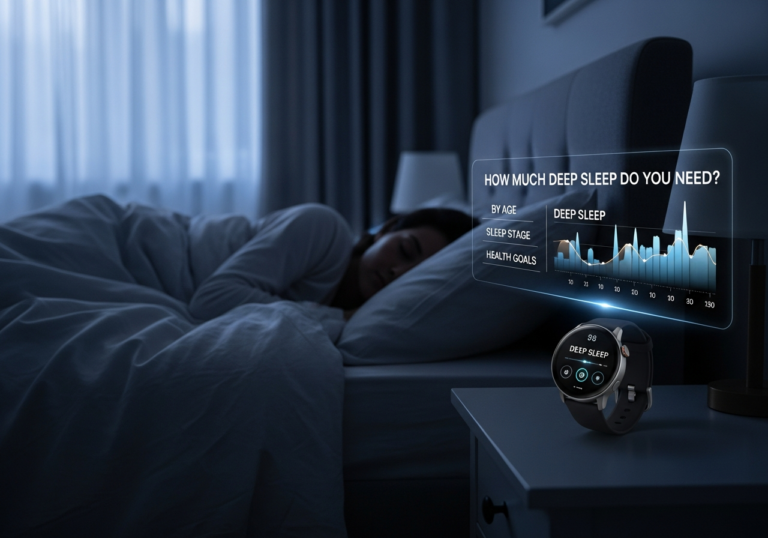
Do you wake up exhausted after eight hours in bed? You’re probably wondering why you still feel tired. The key is often to focus on the quality of your sleep rather than the quantity.
Specifically, how much deep sleep do you require to fully recharge your mind and body? Many of my patients ask this same question. They use smartwatches to track their sleep and are concerned about the results. As a result, they become concerned about their sleep, exacerbating the situation.
In my practice, I see firsthand how important the restorative stages of sleep are. First and foremost, we must consider factors other than total hours worked. Instead, we need to focus on sleep architecture. So, let’s look at what your body requires to function optimally.
Quick Answer — How Much Deep Sleep Do You Need?
Need a quick response? Adults typically require one to two hours of deep sleep each night. This usually accounts for about 13% to 23% of your total sleep time.
The majority of this restorative rest occurs during the first half of the night. As a result, sleeping at the same time every night is critical for recovery.
Here’s a brief overview of healthy adult sleep architecture:
- Light sleep: 45% to 55%.
- Deep Sleep (Stage N3): 13%–23%
- REM Sleep: 20-25%
As a doctor, I constantly remind patients that this stage is non-negotiable. This sleep phase is also referred to as slow-wave sleep or stage N3. During this time, your brain waves slow dramatically.
Your breathing and heart rate both decrease to their lowest levels. In fact, it becomes increasingly difficult to wake you up. If someone does awaken you, you will most likely feel extremely groggy and disoriented.
What Is Deep Sleep?
Before diving deeper into the numbers, let us define what this sleep stage actually does. During the N3 stage, your body performs massive physical repairs.
For example, your pituitary gland releases human growth hormone. This vital hormone rebuilds muscle tissue and repairs daily cellular damage.
Furthermore, your brain essentially washes itself during this phase. A mechanism called the glymphatic system actively clears out metabolic waste. This process includes clearing amyloid-beta proteins, which researchers link to Alzheimer’s disease.
Therefore, missing out on this stage affects your immediate energy and long-term health. Due to its vital restorative nature, your body heavily prioritizes it. If you stay up late, your brain will try to catch up on this specific stage the very next night.
How Much Deep Sleep Do You Need by Age?
You might naturally wonder how much deep sleep you need by age. The simple truth is that your requirements change drastically as you get older.
I see many patients in their 60s worrying about their sleep tracker data. They unfairly compare their numbers to when they were in their 30s. However, aging naturally alters our entire sleep architecture.
Here is a clear guide on how much deep sleep you need by age:
| Age Group | Deep Sleep Needed | Total Sleep Needed |
| Children | 25% – 30% | 9 – 12 hours |
| Teens | 20% – 25% | 8 – 10 hours |
| Adults (18-60) | 13% – 23% | 7 – 9 hours |
| Older Adults (60+) | 10% – 15% | 7 – 8 hours |
As a result of normal aging, slow-wave sleep naturally declines. You produce less growth hormone as you age. Consequently, your brain generates fewer slow brain waves at night.
By the time you reach 60, getting 10% to 15% is perfectly normal. Please do not panic if your wearable device shows lower numbers as you age. Always discuss your daytime energy levels with your doctor rather than just looking at an app.
REM vs Deep Sleep: Stage Comparisons
Many people ask me how much REM and deep sleep they actually need together. Both stages are crucial, but they serve completely different biological purposes.
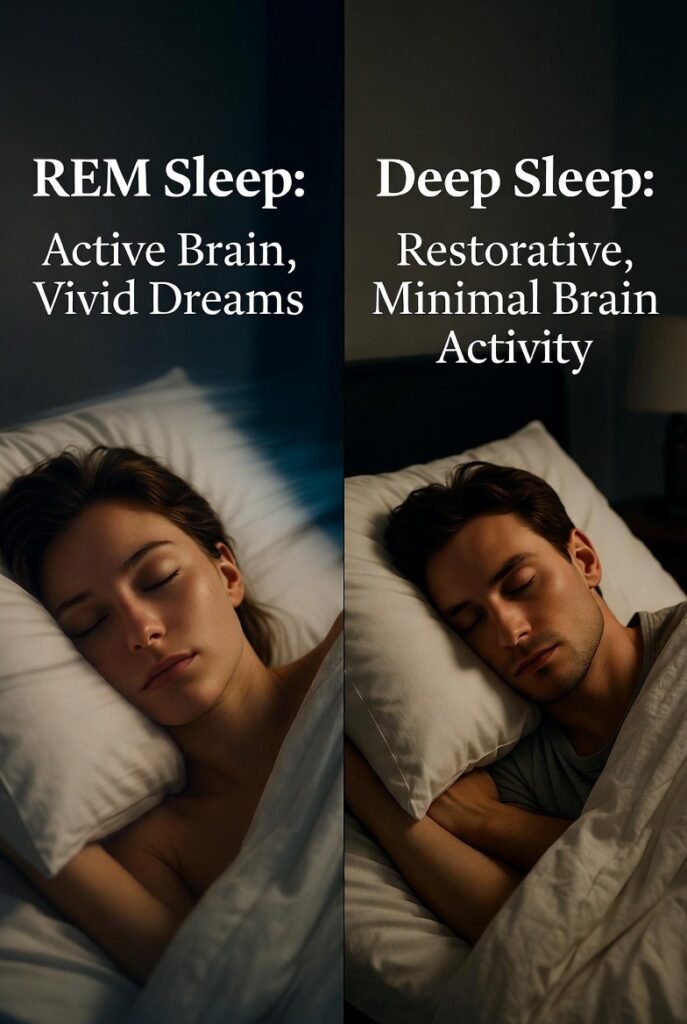
Let us briefly compare these two vital stages.
| Sleep Stage | Percentage | Primary Function |
| Light Sleep | 45% – 55% | Transitioning, motor memory |
| Deep Sleep | 13% – 23% | Physical recovery, immunity |
| REM Sleep | 20% – 25% | Emotion regulation, memory |
Functions of Different Sleep Stages
While slow-wave sleep focuses on the physical body, REM sleep handles the mind. REM stands for Rapid Eye Movement.
During REM, your brain becomes highly active, almost like being awake. This is precisely when you experience vivid, complex dreams. Your brain processes emotions and stores new memories during this active time.
Meanwhile, your skeletal muscles become temporarily paralyzed during REM. This safety mechanism prevents you from physically acting out your dreams.
Ultimately, you need a healthy balance of both stages. In my clinical experience, patients lacking REM report severe brain fog and mood swings. Conversely, patients lacking stage N3 report intense physical fatigue and frequent minor illnesses.
How Sleep Trackers Measure Sleep Stages
Patients frequently show me their smartphone apps during annual checkups. They specifically ask, “How much deep sleep should your sleep tracker show?”
Devices like the Apple Watch or Bellabeat provide great visual estimates. However, they are not flawless medical-grade devices. They primarily rely on heart rate variability and movement sensors.
As a result, commercial trackers often underestimate slow-wave sleep. They might easily confuse light sleep with deep sleep if you simply lie very still.
Typically, a healthy adult’s tracker will show 45 to 90 minutes. If your Bellabeat or Apple Watch shows slightly less, do not stress immediately. The CDC focuses primarily on your total rest and daytime functioning.
If you wake up feeling refreshed, your tracker’s data might just be slightly off. You should use these popular wearables to spot long-term trends. Do not obsess over a single night’s random data points.
If your device consistently shows very low numbers over several months, take note. That is a highly appropriate time to bring the data to your primary physician.
Is 40 Minutes of Deep Sleep Enough?
If your tracker shows 40 minutes, you might feel concerned. Honestly, 40 minutes is usually below the optimal range. Most adults need at least an hour to feel fully rested. Therefore, you might experience brain fog or physical fatigue during the day.
In my clinical practice, I see patients panic over these low numbers. However, a single night of 40 minutes is not dangerous. Your body will likely recover the lost time the very next night. Yet, chronic low numbers strongly suggest ongoing sleep fragmentation.
This fragmentation means you keep waking up before reaching the restorative N3 stage. Consequently, your body never fully repairs its worn-out tissues. If this low number happens often, you must investigate the root causes. Ultimately, you want to figure out why your sleep cycle is breaking down.
Why You Might Be Getting Too Little Deep Sleep
Many patients ask me why they get so little slow-wave sleep. Several common factors disrupt this highly vital stage. First of all, chronic daily stress keeps your cortisol levels artificially high.

High cortisol physically prevents your brain waves from slowing down completely. Furthermore, alcohol is a massive and hidden sleep disruptor. A glass of wine might indeed help you fall asleep initially. However, it severely fragments your rest later in the night.
Additionally, untreated sleep apnea constantly pulls you out of stage N3. You stop breathing briefly, which forces your brain back into light sleep. As a result, your body fights all night just to get oxygen.
Blue light from evening screen time also suppresses your natural melatonin production. In fact, staring at a phone tricks your brain into thinking it is daytime. Therefore, your brain refuses to initiate the deep recovery phases.
How to Increase Deep Sleep Naturally
When patients ask how to increase their restorative rest, we look directly at daily habits. You actually have massive control over your nightly sleep architecture. Therefore, you can actively boost your slow-wave sleep through highly targeted lifestyle changes.
First, you must optimize your bedroom temperature completely. Your core body temperature absolutely needs to drop for stage N3 to occur. I always recommend keeping your room between 60 and 67 degrees Fahrenheit. Consequently, this cool environment clearly signals your brain that it is time to shut down and recover.
Furthermore, daytime exercise significantly boosts your nighttime recovery. Engaging in vigorous cardiovascular exercise actively breaks down muscle tissue. As a result, your body physically demands more slow-wave sleep to repair those specific muscles. However, you should finish heavy workouts at least three hours before bed to avoid evening adrenaline spikes.
In addition, strategic dietary supplementation can sometimes help improve sleep architecture. Many of my patients find great success using magnesium glycinate before bed. Magnesium effectively helps calm the central nervous system down. It also regulates neurotransmitters directly involved in the sleep cycle. Always consult your personal doctor before starting any new dietary supplement.
Next, you must strictly limit your evening blue light exposure. As mentioned earlier, glowing screens suppress your natural melatonin surge. Therefore, I strongly advise putting away all electronic screens an hour before bed. Instead, try reading a physical book or practicing gentle stretching routines.
Finally, stick to a rigid and unwavering sleep schedule. Going to bed at the same time every single night regulates your circadian rhythm. Your brain eventually learns exactly when to initiate the N3 stage automatically. Consistency is truly the most powerful tool for sleep optimization.
How Much Total Sleep Do You Need?
You might also wonder how much total rest you require overall. People frequently ask me how much sleep you need a day. The Centers for Disease Control and Prevention (CDC) provides very clear medical guidelines for this.
Healthy adults need seven to nine hours of total rest nightly. If you consistently get less than seven hours, your entire health suffers. You simply do not give your brain enough time to cycle through all the necessary stages.
So, exactly how many hours a night should you sleep? You should aim for a solid eight hours in bed. This allows enough buffer time to fall asleep and complete several full 90-minute sleep cycles. Ultimately, a longer total duration protects your specific stage N3 requirements.
When to See a Doctor
Sometimes, lifestyle changes are just not enough to fix your broken rest. If you constantly wake up exhausted, you absolutely need professional medical help. Furthermore, loud snoring or gasping for air are massive red flags.
These frightening symptoms strongly indicate obstructive sleep apnea. Untreated apnea destroys your sleep architecture and heavily strains your heart. Therefore, you must schedule an immediate evaluation with a certified sleep specialist. We can order a simple home sleep study to see exactly what is happening in your brain.
Frequently Asked Questions
How Much Deep Sleep Is Normal for Adults?
You probably wonder exactly how much deep sleep you need nightly. Generally, healthy adults require one to two hours. This equals roughly 13% to 23% of your total resting time.
Therefore, tracking this baseline helps you optimize your physical recovery. Consistency is truly the key to hitting these numbers.
Can You Get Too Much Deep Sleep?
Can you actually get too much restorative rest? Honestly, it is very rare for healthy individuals. Your body tightly regulates this specific biological stage every night.
However, unusually high amounts might simply indicate rapid recovery from severe sleep deprivation. Furthermore, extreme changes could occasionally signal an underlying medical condition.
Do Sleep Trackers Measure Sleep Stages Accurately?
Do commercial smartwatches measure your sleep stages perfectly? They mostly use basic heart rate and movement sensors. Consequently, they are highly helpful for spotting long-term lifestyle trends.
Still, they cannot flawlessly replace clinical medical sleep studies. Therefore, you should use them as a helpful guide rather than the absolute truth.
How Do You Know If Your Deep Sleep Is Low?
How do you tell if your restorative rest is dangerously low? You will definitely feel it physically every single day. Common signs include severe daytime fatigue and thick brain fog.
Furthermore, you might experience chronic muscle aches. You could also catch common colds more frequently due to lowered daytime immunity.
What Is the Fastest Way to Improve Sleep Quality?
What is the absolute fastest way to fix poor rest? First of all, you must fix your daily sleep schedule. Going to bed at the same time consistently works wonders.
Additionally, keep your bedroom very cool and completely dark. Consequently, your brain will naturally optimize its own sleep architecture.
Conclusion: Prioritize Your Nightly Recovery
In the final analysis, understanding how much deep sleep you need completely empowers your daily health decisions. You must actively aim for seven to nine hours of total rest nightly. As a result, you naturally secure that vital physical recovery window.
Furthermore, you should focus heavily on improving your daily sleep hygiene. Keep your room cool, limit evening screen time, and manage your daily stress. Consequently, your brain will naturally optimize its own sleep architecture over time.
Finally, never ignore chronic daytime exhaustion. If you constantly wake up feeling totally drained, please consult a board-certified sleep specialist. We can easily help you find the root cause and restore your natural energy.
Evidence-Based References:
- National Institutes of Health (NIH) – National Heart, Lung, and Blood Institute
- Centers for Disease Control and Prevention (CDC) – Sleep and Sleep Disorders
- Sleep Foundation – Deep Sleep: How Much Do You Need?
- American Academy of Sleep Medicine (AASM) – Sleep Education
- National Library of Medicine (PubMed) – The Neuroprotective Aspects of Sleep

Related Posts





MORE from Author
Read More Just last week, a patient named Sarah walked into my clinic carrying three different boxes of popular gut biome tests.…
 Recently, a frustrated patient named Mark visited my public health clinic. He handed me an expensive, beautifully packaged at-home stool…


- Have you ever felt constantly exhausted and painfully bloated after normal meals? Recently, a patient named Sarah sat in my…
- For most healthy adults, 7 hours of sleep per night is the minimum recommended amount, but 7–9 hours is ideal.…