How Much REM Sleep Do You Need? (By Age, Percentage & Nightly Targets)

Have you ever woken up and felt like your head was in a thick fog? You look at your Oura ring or Garmin and see a small blue line for REM. It’s annoying to sleep for eight hours and still feel tired. You might start to wonder how much REM sleep do you need to feel like a person again.
With all these percentages and stages, sleep science can be a lot to take in. A lot of the people who come to my clinic are worried that their “core sleep” is too high or their dreaming time is too low.
We will explain what your brain needs in this guide. We want to help you make sense of the data from your wearable and get better sleep at night. Are you ready to learn about the science of your dreams?
TL;DR: The Quick Answer
Adults generally require 20–25% of their total sleep duration to be spent in REM sleep. If you sleep for 7 to 8 hours, this is about 90 to 120 minutes per night. The amount of REM sleep we need changes with age and naturally goes down as we get older.
- Adult Target: 1.5–2 hours nightly.
- Percentage: 20–25% of total sleep.
- Deep Sleep Target: ~13–23% of total sleep.
- Note: Wearables are estimates, not medical diagnoses.
What Is REM Sleep?
During the special stage of sleep called Rapid Eye Movement (REM), your brain is very busy. At this point, your eyes move quickly behind your closed lids. Your heart rate speeds up, and your breathing gets uneven. Most people have the most vivid dreams during this time.
Your body goes into a state of temporary paralysis. This is what we call muscle atonia. But don’t mix this up with sleep paralysis. Muscle atonia and sleep paralysis are closely related but not identical.
This safety feature stops you from acting out your dreams. Your brain is working harder than it does when you are awake. It gets rid of mental “clutter” from the day and helps you deal with your feelings.
From a clinical standpoint, REM sleep entails intricate neural signaling. Your limbic system, which controls your feelings, becomes very busy. Your prefrontal cortex, which is the part of your brain that controls logic, stays mostly quiet. This is why dreams often feel very real but don’t make much sense.
REM is also very important for something called synaptic plasticity. This process helps your brain make new connections. Learning new skills is much harder without it. It is like a “save button” for your daily memories and feelings.
How Important Is REM Sleep?
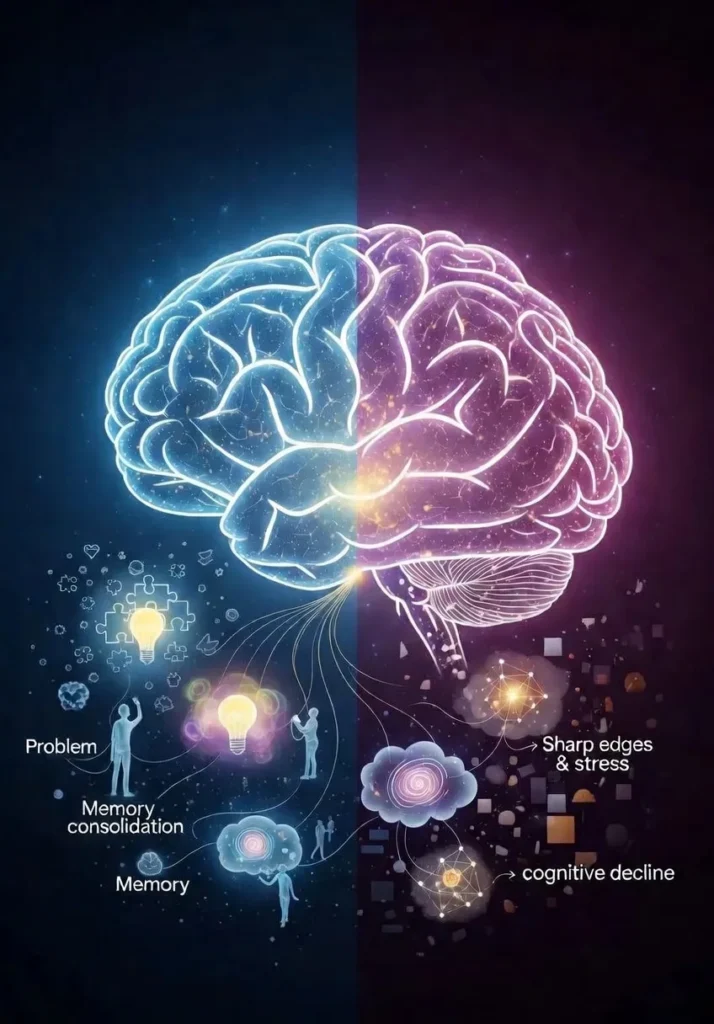
Some people say that REM sleep is the most important stage for your personality. It helps you deal with hard feelings and stressful situations. Without it, the “sharp edges” of the things that stress you out every day stay sharp. REM is like therapy that happens while you sleep.
It’s important for creative problem-solving in more ways than one. Have you ever “slept on a problem” and then found the answer the next day? That’s what REM sleep does. It helps you come up with new ideas by linking ideas that don’t seem to be related.
Is REM sleep necessary for your body to survive? Of course. Research on animals has demonstrated that complete REM deprivation results in significant health deterioration. You can’t change it; it’s a part of your biology. It keeps your nervous system in check and your mind sharp.
How Long Does REM Sleep Take to Start?
Your sleep cycle follows a specific rhythm. Usually, you won’t hit REM the moment you close your eyes. The first REM period typically starts about 70 to 100 minutes after you fall asleep. This is why short naps usually don’t include dreaming.
As the night goes on, the cycles change. Early in the night, REM periods are short, lasting only a few minutes. By the morning, a single REM period can last nearly an hour. This explains why you often wake up right in the middle of a vivid dream.
How Much REM Sleep Do You Need Per Night?
The total amount of sleep you get has a big effect on how much REM sleep you get. Most healthy adults should try to get about two hours of REM sleep. But this only happens if you sleep long enough. Cutting your sleep short hurts REM the most because REM periods get longer as the night goes on.
You might only get 70 minutes of REM sleep if you sleep for six hours. That number goes up a lot if you hit eight hours. In the last few hours of the morning, your REM cycles are at their longest. So, getting to eight hours is very important for brain health.
| Total Sleep Time | Recommended REM Range | Percentage of Total |
| 6 Hours | 70–90 Minutes | ~20–25% |
| 7 Hours | 85–110 Minutes | ~20–25% |
| 8 Hours | 90–120 Minutes | ~20–25% |
| 9 Hours | 110–135 Minutes | ~20–25% |
How do you know if you’re hitting these goals? Most people don’t need to know exactly how many minutes have passed. Instead, think about how you feel when you wake up.
Do you feel emotionally stable and sharp? If so, you probably get enough REM sleep every night.
How Much REM Sleep Do You Need by Age?
Your sleep patterns change a lot as you get older. Almost half of the time babies sleep is spent in REM. This is because their brains are growing very quickly. These needs become stable as we grow up.
You might notice a small drop after you turn 60. This is often normal and doesn’t mean you should panic. Your brain just doesn’t spend as much time in the dream state. The goal, however, is still the same: quality over quantity.
| Age Group | REM % of Total Sleep | Primary Function |
| Newborns | ~50% | Brain development |
| Children | 25–30% | Learning & growth |
| Adults (18–60) | 20–25% | Memory & mood |
| Adults 60+ | 17–22% | Cognitive maintenance |
Have you noticed that your sleep patterns change as you get older? A lot of older people say they wake up more often at night. This fragmentation can cut down on the total amount of time spent in REM sleep. Because of this, older people may need to pay more attention to sleep hygiene to keep their REM cycles safe.
What Is Too Little REM Sleep?
It can be a problem if you don’t get enough REM sleep for a long time. You might feel it if you don’t get enough sleep for more than 60 minutes a night. Some common signs are being irritable, forgetting things, and having trouble concentrating. Your brain just won’t feel “clicked in.”
There are many things that can take away your REM. Alcohol is a big problem because it stops the REM stage early in the night. Sleep apnea also messes up sleep cycles by making you wake up to breathe. Also, some drugs, like antidepressants, can greatly cut down on REM time.
- Memory Issues: You may struggle to remember new information.
- Mood Swings: REM helps regulate the amygdala.
- Brain Fog: Processing speed slows down without enough REM.
Don’t worry if you think you have “REM debt.” Your body is very good at catching up. This causes something called “REM rebound.” Your brain will prioritize REM sleep to make up for the lack of it when you finally get a good night’s sleep.
Is 3 Hours of REM Sleep Too Much?
Is it possible to have too much of a good thing? If your tracker says you had three hours of REM sleep, that’s about 37.5% of an eight-hour night. This is higher than normal, but it’s usually not dangerous. It happens a lot when your body is healing.
For instance, your brain might work too hard if you didn’t get enough sleep all week. We also see a lot of REM sleep when people stop drinking. Some people naturally have longer cycles of REM sleep. A high REM number is rarely a medical emergency unless you feel very sleepy during the day.
How Can I Improve My REM Sleep?
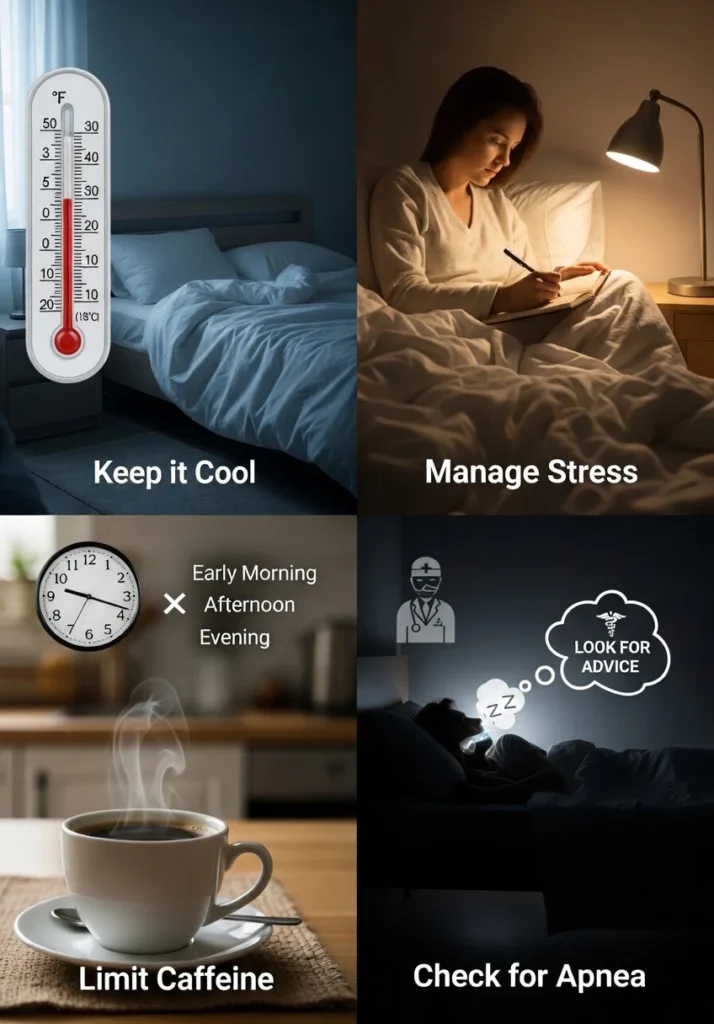
Usually, if you improve your REM sleep, you also improve the quality of your sleep as a whole. You can’t “force” your brain to stay in one stage. You can, however, make the perfect setting for it to happen on its own. When you are in the dream stage, being consistent is your best friend.
First, try to stick to a strict schedule for sleeping. Your circadian rhythm will be better if you go to bed and wake up at the same time every day. Second, stop drinking at night. It might help you sleep, but it hurts the quality of REM sleep. You will probably wake up feeling tired.
- Keep it Cool: A room temperature around 65°F (18°C) is ideal.
- Manage Stress: Try journaling before bed to “dump” your worries.
- Limit Caffeine: Avoid coffee at least 8 hours before bedtime.
- Check for Apnea: If you snore loudly, talk to a doctor.
Can supplements be helpful? Some people do well with low doses of melatonin, but be careful with it. It won’t fix bad habits. Before starting any new supplements, you should always talk to a doctor. They can make sure that your current medications don’t interact with them.
Does Your Body Need REM Sleep Every Day?
Yes, the short answer is yes. Sleep is a biological necessity every night. You can’t “bank” REM sleep on the weekend to make up for a busy week. It doesn’t take long for REM deprivation to build up. This causes what we call a “sleep debt” that has an effect on your brain.
When you ask, “How much REM sleep do you need each day?” Keep in mind that it happens every 24 hours. Every night, your brain needs this reset. Your cognitive performance will suffer if you miss it. Make sure you get enough sleep, as if it were your most important meeting of the day.
Deep Sleep vs REM Sleep: How Much Do You Need?
People often mix up REM sleep and deep sleep. Both are important, but they do very different things. Slow-wave sleep (SWS), also called deep sleep, is when your body heals. It is when your body heals itself and makes your immune system stronger.
REM, on the other hand, focuses on the mind. The first half of the night is when deep sleep usually happens. In the second half, REM takes over. To feel completely better, you need a good mix of both. Most experts say that all stages of sleep should be in a “sleep sandwich.”
| Sleep Stage | Normal % for Adults | Main Benefit |
| REM | 20–25% | Emotional & Mental Health |
| Deep (SWS) | 13–23% | Physical Repair & Growth |
| Light | 45–55% | Mental Refresh & Transition |
Is one more important than the other? No, not really. Think of deep sleep as a place to fix things and REM as a way to update your software. You need both to run a machine that works well. People who use the Apple Watch often call light sleep “core sleep,” which is interesting.
What Is Core Sleep? How Much Core Sleep Do You Need?
You have probably seen the word “Core Sleep” if you have an Apple Watch. A lot of patients ask me if they are missing something important. We don’t really use this word in medicine. It usually means light sleep, which is Stages N1 and N2.
Light sleep is actually very useful. It takes up most of your night. Your heart rate slows down and your body temperature drops while you sleep. It is the link that makes it possible to go from being awake to going into deep sleep or REM sleep.
You usually need this “core” or light stage for about 45–55% of your night. If your tracker says you sleep a lot, don’t give up. It’s a normal part of a healthy sleep cycle. It still gives your mind a big break and refreshment.
How Much Light Sleep Do You Need?
Light sleep is the most common stage, as was said. You will spend about half of the night here. Some people think that light sleep is a waste of time. That’s a complete lie! Light sleep is still good for memory and motor skills.
You might feel physically restless if you don’t get enough light sleep. Most adults need between 3.5 and 4.5 hours of light sleep in an eight-hour period. It’s very easy to wake up during this time because it’s a transition phase. This is why it’s important to have a quiet place.
Garmin, Apple Watch & Reddit — Can You Trust REM Data?
There are endless arguments about how accurate trackers are on Reddit. A lot of people are worried because their Garmin says they didn’t get any REM sleep. Is the device not working? Not always. Wearable devices can guess what stage of sleep you’re in by looking at your heart rate and movement.
Technology is getting better, but it’s not perfect. You can only really measure REM with an EEG in a sleep lab. Polysomnography is what this is. Your watch could get confused and think that a very still “light sleep” phase is REM, or the other way around.
Instead of seeing your wearable as an absolute truth, see it as a way to keep up with trends. Over the course of a few weeks, look at the big picture. If your REM sleep is always low and you feel tired, you should look into it more. Don’t let one night of “bad data” stress you out more!
Frequently Asked Questions
How much REM sleep do you need per night?
Most healthy adults require between 90 and 120 minutes of REM sleep each night. This generally accounts for 20% to 25% of your total time spent asleep.
What is too little REM sleep?
Consistently getting less than 15% of your total sleep in the REM stage is considered low. This can lead to issues with memory, emotional regulation, and focus.
Is 3 hours of REM too much?
Getting 3 hours of REM is higher than average but usually not a health risk. It often occurs during “REM rebound” after a period of poor sleep.
How much deep sleep do you need?
Adults typically need between 1.5 and 2 hours of deep sleep per night. This represents about 13% to 23% of your total sleep time.
What is core sleep?
“Core sleep” is a term used by some wearables to describe light sleep stages. It is a normal transition phase and usually makes up 50% of your night.
Conclusion
The first step to better health is knowing how much REM sleep you need. The magic number is usually between 90 and 120 minutes, but you should look at the big picture. Your body is a complicated machine that needs both physical and mental repair.
You can protect the most important rest stage of your brain by drinking less alcohol, managing stress, and sticking to a routine. Keep in mind that your dreams are the “save button” for everything you’ve done.
Put them first tonight, and your brain will thank you tomorrow. If you still feel tired after making these changes, please see a doctor for a formal sleep study.
Medical and Evidence-Based References:

Related Posts





MORE from Author
Read More Just last week, a patient named Sarah walked into my clinic carrying three different boxes of popular gut biome tests.…
 Recently, a frustrated patient named Mark visited my public health clinic. He handed me an expensive, beautifully packaged at-home stool…


- Have you ever felt constantly exhausted and painfully bloated after normal meals? Recently, a patient named Sarah sat in my…
- For most healthy adults, 7 hours of sleep per night is the minimum recommended amount, but 7–9 hours is ideal.…