
How to Sleep Better: Science-Backed Ways to Fall Asleep Fast and Improve Deep Sleep
In my clinical practice, one of the most common complaints I hear is sheer exhaustion. Patients sit in my office, desperate to know how to sleep better at night naturally without relying on heavy prescription sedatives. They are tired of staring at the ceiling, watching the clock tick past 3:00 AM.
The medical reality is that sleep is not a passive luxury; it is an active, vital biological process. During those crucial nighttime hours, your brain clears out toxic metabolic waste, and your cardiovascular system repairs itself. Figuring out how to get better sleep is arguably the most important step you can take for your long-term health.
However, building a healthy sleep architecture requires more than just buying a new mattress. It requires actionable, science-backed strategies to calm your nervous system and align your circadian rhythm. In this comprehensive guide, we will explore exactly how to sleep properly, fall asleep quickly, and maximize your restorative deep sleep.
TL;DR — Quick Sleep Optimization Summary
If you need immediate, actionable advice tonight, follow these core medical recommendations to optimize your rest:
- Maintain a consistent sleep schedule, even on weekends.
- Implement the highly effective 10-3-2-1-0 rule for evening routines.
- Try the 4-7-8 breathing method to calm your nervous system.
- Optimize your bedroom temperature, keeping it cool (60–67°F).
- Limit all caffeine intake at least eight hours before bedtime.
- Get immediate morning sunlight exposure to set your circadian clock.
How to Fall Asleep Fast (Even If You’re Wide Awake)
When patients ask me how to go to sleep when their mind is racing, I focus heavily on autonomic nervous system regulation. You cannot bully your brain into falling asleep through sheer willpower. Instead, you must send biological safety signals to your body that it is time to power down.
If you want to know how to sleep fast, you need a toolkit of proven relaxation techniques. These methods physically lower your heart rate and shift your brainwaves out of an active, anxious state. Here are the most effective, clinically studied methods to help you fall asleep quickly.
The 2-Minute Military Method
The military method was originally developed to help fighter pilots fall asleep in highly stressful, noisy environments. It focuses on progressive physical relaxation combined with a specific mental visualization. First, you must consciously relax every single muscle in your face, including your jaw and the muscles around your eyes.
Next, drop your shoulders as low as possible and let your arms fall completely loose at your sides. Exhale deeply to relax your chest, then progressively relax your thighs, calves, and feet. Finally, clear your mind for ten seconds by picturing yourself lying in a canoe on a calm, glassy lake.
4-7-8 Breathing Technique
If you are wondering how to sleep instantly, mastering your breath is the closest biological hack we possess. The 4-7-8 breathing method, popularized by Dr. Andrew Weil, actively stimulates the vagus nerve. This powerful nerve acts as the brake pedal for your body’s stress response, immediately lowering your heart rate.
To perform this technique, inhale quietly through your nose for four seconds. Hold your breath gently for seven seconds. Finally, exhale forcefully through your mouth, making a “whoosh” sound, for a full eight seconds. Repeat this specific cycle four times to significantly calm your nervous system.
Cognitive Shuffle Technique
Many people struggle to fall asleep because their brain gets stuck in an anxious, logical thought loop. The cognitive shuffle technique is designed to safely scramble these thoughts, mimicking the random imagery of early sleep stages. It tricks your brain into thinking it is already transitioning into a dream state.
To do this, pick a random letter, such as “B,” and visualize objects starting with that letter. Picture a bear, a balloon, a bicycle, and a banana, visualizing each item for a few seconds. This simple cognitive task occupies your brain’s processing power, preventing it from stressing about tomorrow’s deadlines.
Progressive Muscle Relaxation
Progressive muscle relaxation (PMR) is a fantastic tool for releasing deeply held physical tension. When you are stressed, you unconsciously clench your jaw, neck, and shoulders. PMR teaches your body to recognize the stark difference between tension and deep relaxation.
Start by intensely clenching the muscles in your toes for five seconds, then release them completely. Slowly work your way up your body, isolating and tensing your calves, thighs, abdomen, arms, and face. By the time you reach your head, your body will feel incredibly heavy and ready for sleep.
How to Sleep Fast in 5 Minutes (Realistic vs Myth)
We constantly see internet searches for “how to sleep fast in 1 second” or “how to sleep fast in 2 minutes.” As a medical professional, I must clarify the scientific reality of sleep onset latency. The truth is, your brain chemically cannot transition from wide awake to deep sleep in a single second.
A healthy individual typically takes between ten and twenty minutes to fall asleep after turning off the lights. Therefore, trying to force sleep in under five minutes often creates “sleep anxiety,” which actually keeps you awake longer. If you consistently fall asleep the instant your head hits the pillow, you are likely severely sleep-deprived.
Conversely, if it regularly takes you more than thirty to forty-five minutes to fall asleep, this is a clinical red flag. This extended sleep onset latency is a primary symptom of chronic insomnia. If this happens frequently, you should step out of bed, do a quiet activity in dim light, and return only when sleepy.
What Is the 10-3-2-1-0 Rule for Sleep?
One of the most effective frameworks I teach my patients is the 10-3-2-1-0 rule. This structured countdown system systematically removes biological and psychological sleep disruptors from your evening routine. It is a highly practical way to guarantee your body is chemically prepared for rest.
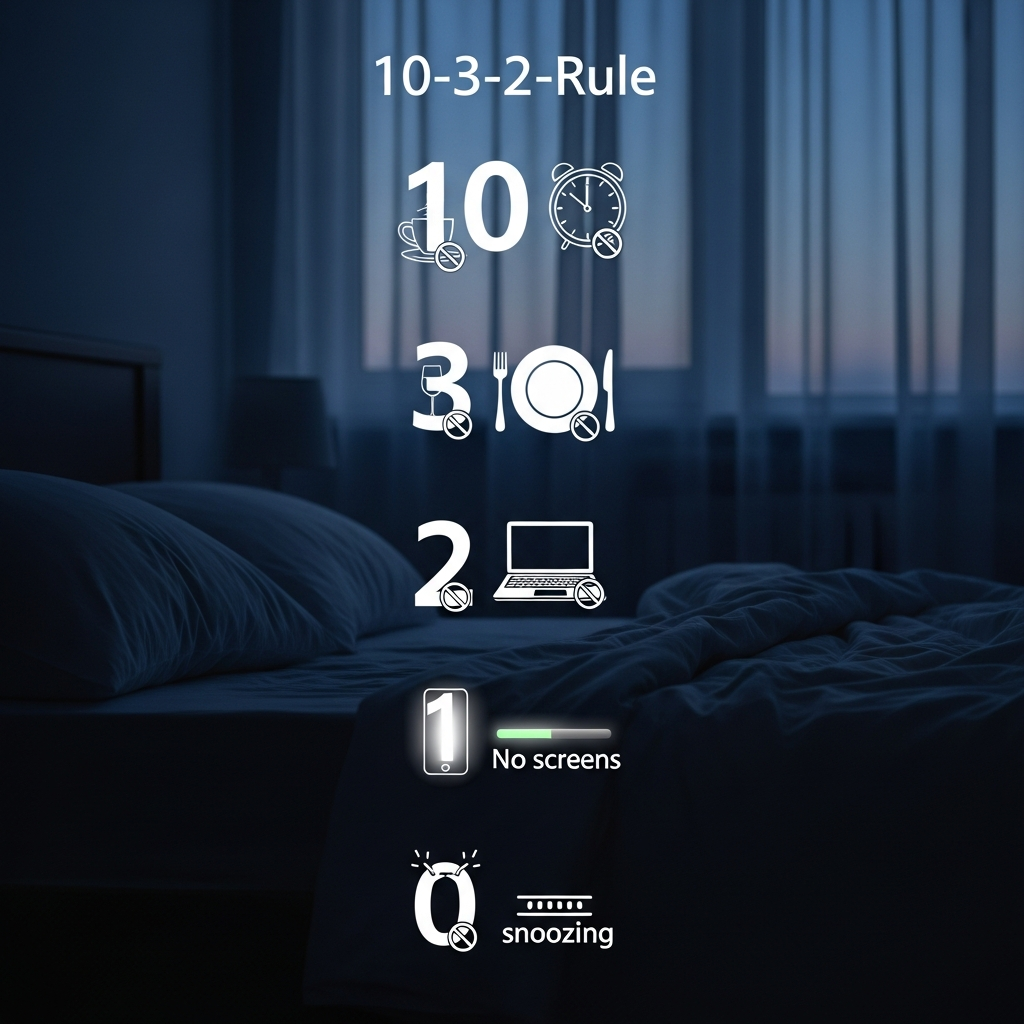
First, stop consuming caffeine 10 hours before bed, as it takes that long to clear from your adenosine receptors. Stop eating heavy meals or drinking alcohol 3 hours before bed to prevent acid reflux and fragmented sleep. Stop all work-related tasks 2 hours before bed to let your cortisol levels drop.
Turn off all screens (phones, TVs, tablets) 1 hour before bed, as blue light severely suppresses natural melatonin production. Finally, the 0 represents the number of times you should hit the snooze button in the morning. Waking up immediately upon your alarm anchors your circadian rhythm for the entire day.
How to Fix Your Sleep Schedule
In our modern, constantly illuminated world, circadian rhythm dysregulation is incredibly common. Patients often ask me how to fix sleep schedule issues after traveling across time zones or working late shifts. You cannot simply force a new schedule in one night; you must gradually manipulate your biological clock.
First, lock in a strict, non-negotiable wake-up time, and stick to it even on weekends. When you wake up, seek immediate exposure to bright, natural sunlight for at least fifteen minutes. This morning light halts melatonin production and signals to your brain that a new day has officially started.
Additionally, aggressively avoid long daytime naps, keeping them under thirty minutes if necessary. If you need a temporary reset, a very low dose of melatonin (0.5 to 1 mg) taken two hours before your target bedtime can help. However, melatonin is a chronobiotic clock-shifter, not a heavy sedative, so massive doses are counterproductive.
How to Get More Deep Sleep & Increase REM
Understanding how to get more deep sleep and increase your REM cycles is crucial for total body recovery. Deep sleep is when your body physically repairs tissue, builds bone and muscle, and strengthens the immune system. Conversely, REM (rapid eye movement) sleep is essential for cognitive processing, memory consolidation, and emotional regulation.
Many patients track their sleep and panic when they see low deep sleep numbers. However, you can actively manipulate your lifestyle to boost these restorative sleep stages. Here is a clinical breakdown of the best science-backed interventions to enhance your sleep architecture.
First, vigorous strength training dramatically increases your need for deep sleep, forcing your brain to prioritize physical recovery. Additionally, keeping your bedroom temperature between 60 and 67°F physically lowers your core body temperature, which is a biological requirement for deep sleep. Finally, avoiding alcohol completely before bed is the single most effective way to protect your fragile REM cycles.
Sleep Intervention Evidence Table
| Intervention | Impact on Deep Sleep | Impact on REM Sleep | Clinical Evidence Level |
| Vigorous Exercise | Massive Increase | Moderate Increase | Very Strong |
| Alcohol Consumption | Initial Increase | Massive Decrease | Very Strong |
| Magnesium Glycinate | Modest Increase | Neutral | Moderate |
| Cool Room (60-67°F) | Strong Increase | Moderate Increase | Strong |
| Treating Sleep Apnea | Strong Increase | Strong Increase | Very Strong |
Best Sleep Positions (Back vs Side)
Your sleep position heavily dictates your spinal health, airway patency, and overall sleep quality. Patients frequently ask me about the definitive best sleep position for long-term health. The medical consensus heavily favors either sleeping on your side or sleeping on your back, depending on your specific anatomy.
Sleeping on your side is highly recommended for patients with obstructive sleep apnea, heavy snoring, or acid reflux. If you suffer from severe heartburn, sleeping on your left side prevents stomach acid from entering the esophagus. Conversely, sleeping flat on your back is excellent for maintaining strict spinal neutrality and preventing facial wrinkles.
How to Sleep with Pain Conditions
Chronic pain and insomnia often create a vicious, debilitating cycle that ruins your quality of life. Knowing exactly how to position your body to relieve joint stress is critical for pain management. Here are the specific orthopedic adjustments I recommend for common musculoskeletal complaints.
Lower Back Pain Relief
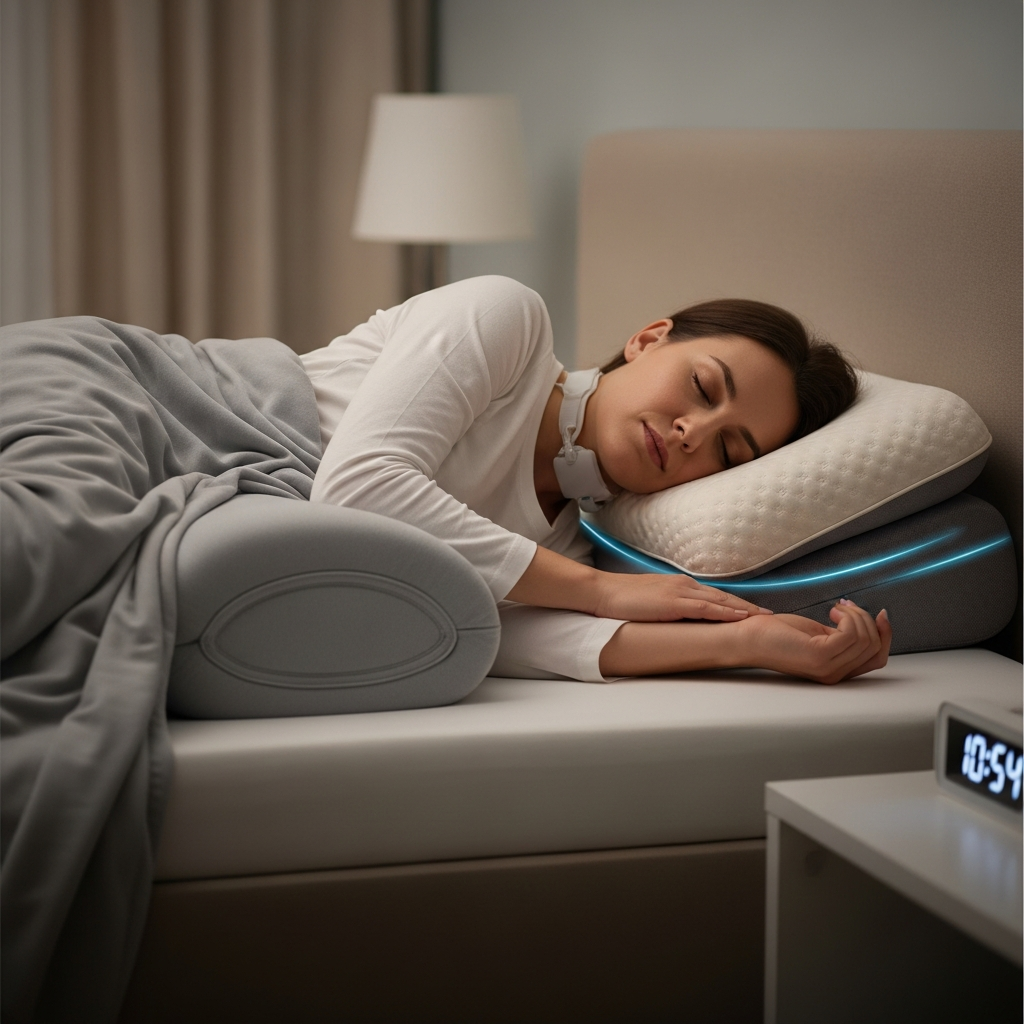
If you are wondering how to sleep with lower back pain, the goal is to neutralize your lumbar spine. If you sleep on your back, place a thick pillow directly under your knees to flatten your lower back against the mattress. If you sleep on your side, pull your knees up slightly and place a firm pillow exactly between your knees.
Sciatica Management
Sciatica causes severe, shooting nerve pain down your leg, often exacerbated by twisting your hips in bed. To sleep safely with sciatica, you must avoid sleeping on your stomach, which severely compresses the lumbar nerve roots. Sleep on your unaffected side, and use a full-length body pillow to prevent your top leg from crossing over your body.
Neck Pain Support
When patients ask how to sleep with neck pain, I immediately examine their current pillow height. Your pillow should only fill the exact gap between your neck and the mattress, keeping your head perfectly level. I highly recommend investing in a contoured cervical support pillow made of dense memory foam.
Baker’s Cyst Comfort
A Baker’s cyst causes painful swelling directly behind your knee joint, making leg extension uncomfortable. The best way to sleep with a Baker’s cyst is to sleep on your back with a soft wedge pillow under your calf. This slight elevation reduces localized swelling and prevents you from painfully hyperextending the inflamed knee capsule.
How to Sleep with Medical Devices
Navigating sleep with an implanted medical device requires specific postural adjustments and clinical care. Please note that these are general medical guidelines, and you must always consult your primary treating physician or surgeon first.
Chemo Port Protection
If you need to know how to sleep with a chemo port, avoiding direct pressure on the chest wall is paramount. Absolutely avoid sleeping on your stomach to prevent dislodging the needle or irritating the sensitive port site. Most oncology patients find comfort sleeping slightly elevated on their back using a large, U-shaped pregnancy pillow for lateral support.
Kidney Stent Positioning
Learning how to sleep with a kidney stent can be highly frustrating due to the constant flank discomfort and bladder spasms. Sleep on the side exactly opposite to your stent to minimize direct gravity pressure on the affected kidney. Furthermore, stop drinking fluids at least three hours before bed to reduce painful nighttime urination urges.
How to Sleep with Congestion
A severe upper respiratory infection or intense seasonal allergies can make breathing through your nose impossible. If you want to know how to sleep with a stuffy nose, you must utilize gravity and humidity. First, elevate the head of your bed by roughly thirty degrees using wedge pillows to promote sinus drainage.
Additionally, run a cool-mist humidifier directly next to your bed to keep your nasal passages highly moisturized. Finally, perform a sterile saline sinus rinse about one hour before getting into bed to manually flush out thickened mucus.
How to Sleep After Wisdom Teeth Removal
Recovering from oral surgery requires specific sleep modifications to prevent painful complications like dry sockets. When figuring out how to sleep after wisdom teeth removal, keeping your head elevated above your heart is crucial. Sleep strictly on your back, propped up by two or three thick pillows for the first three nights.
This strict elevation significantly reduces throbbing facial swelling and minimizes postoperative bleeding. Additionally, apply a cold compress to your jaw for twenty minutes directly before going to sleep to numb the surgical site.
How to Sleep for Heart Health
The American Heart Association recently added sleep duration to its “Life’s Essential 8” cardiovascular guidelines. If you are researching how to sleep for heart health, the clinical target is exactly seven to nine uninterrupted hours. Chronic sleep deprivation aggressively raises your resting blood pressure and increases systemic arterial inflammation.
Furthermore, you must aggressively treat severe snoring and obstructive sleep apnea if you want to protect your heart. Sleep apnea causes your oxygen levels to plummet repeatedly, placing massive, dangerous stress on your cardiac muscle every single night.
Myths & Misconceptions
The internet is flooded with dangerous biohacking myths regarding sleep optimization. I frequently see patients trying to learn how to sleep 8 hours in 4 hours using extreme “polyphasic” sleep schedules. Medically, you cannot compress your biological need for sleep; polyphasic schedules inevitably lead to severe cognitive decline and microsleeps.
Another bizarre myth is learning how to sleep with your eyes open. Unless you suffer from a rare medical condition called nocturnal lagophthalmos, your eyes must be closed to properly secrete melatonin. Finally, attempting to fake sleep does not provide any of the restorative neurological benefits of actual, measured brainwave sleep.
How to Track Sleep (Apple Watch & Others)
Many patients utilize an Apple Watch or an Oura Ring to learn how to track sleep accurately. While these devices are fantastic for monitoring long-term lifestyle trends, their exact sleep stage estimations are not clinically perfect. They cannot replace a medical-grade EEG used in a clinical sleep lab.
Therefore, do not obsess over a single night of “poor” deep sleep data on your smartwatch. Instead, look at your rolling weekly averages, your resting heart rate, and your heart rate variability (HRV). A steadily increasing HRV is a phenomenal indicator that your nervous system is recovering properly overnight.
When to See a Doctor
While lifestyle optimization is incredibly powerful, some sleep issues require immediate clinical intervention. You must schedule an appointment with a sleep medicine specialist if you experience loud snoring accompanied by choking or gasping. This is the hallmark diagnostic sign of severe obstructive sleep apnea.
Additionally, seek medical care if you experience chronic insomnia lasting more than three months despite practicing excellent sleep hygiene. Uncontrollable urges to move your legs at night (Restless Legs Syndrome) and severe daytime sleepiness also warrant a thorough medical evaluation.
Frequently Asked Questions
What are 5 tips for better sleep?
Five essential tips for better sleep include keeping a strict wake-up time, keeping your bedroom cool (65°F), blocking all ambient light, eliminating afternoon caffeine, and removing electronic screens one hour before bed.
How to fix a sleep schedule quickly?
You can fix your sleep schedule by forcing yourself to wake up at your target time and immediately getting bright sunlight exposure. Avoid daytime naps, and use a low dose of melatonin (0.5 mg) two hours before your desired bedtime to shift your internal clock.
Can you naturally increase deep sleep?
Yes, you can naturally increase your deep sleep by engaging in vigorous aerobic or resistance training during the day. Furthermore, taking a hot shower before bed, which subsequently drops your core body temperature, acts as a powerful trigger for deep sleep.
Why do I wake up at 3 AM every night?
Waking up consistently at 3 AM is often related to a natural drop in your blood sugar or a sudden spike in cortisol. Limiting alcohol, managing daily stress, and eating a small, high-protein snack before bed can help stabilize your nighttime hormones.
Conclusion
In conclusion, learning how to sleep better is one of the most profound investments you can make in your physical and mental health. True restorative rest is not an accident; it is the direct result of intentional daily habits and a highly optimized evening routine. By implementing the 10-3-2-1-0 rule and mastering your bedroom environment, you can actively reclaim your nights.
Therefore, I strongly encourage you to pick just one strategy from this guide to implement tonight. Whether you decide to lower your thermostat or practice the 4-7-8 breathing method, consistency is your ultimate key to success. Finally, if you continue to struggle with chronic exhaustion, please do not hesitate to consult a board-certified sleep specialist.
Evidence-Based References:
- National Sleep Foundation — Sleep Hygiene and Architecture
- American Academy of Sleep Medicine (AASM) — Clinical Sleep Guidelines
- Centers for Disease Control and Prevention (CDC) — Sleep and Sleep Disorders
- National Heart, Lung, and Blood Institute (NHLBI) — Sleep Deprivation and Health
- Mayo Clinic — Adult Sleep Tips and Insomnia Management
Related Posts


MORE from Author
Read More As a physician, I regularly see patients who are utterly exhausted from poor sleep. When you are desperately scrolling online…
- Hey, there. Let's talk about something we all want but struggle to achieve: vibrant, long-term health. These days, figuring out…

 Every week in my clinical practice, patients ask me the same desperate question: "Doc, how do I actually prevent a…
 When patients visit my clinic, they frequently ask me, "Doc, what is a healthy lifestyle, really?" They feel completely overwhelmed…