What Causes Sleep Paralysis? (Scientific Explanation and How to Stop It)
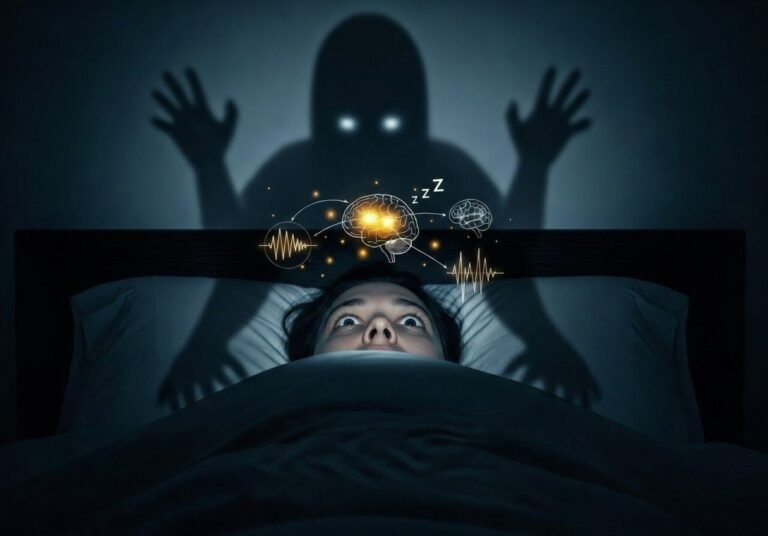
It’s scary to wake up in the middle of the night and not be able to move or talk. People have been wondering what causes sleep paralysis for hundreds of years. They often think that the scary feelings are caused by supernatural forces or vivid nightmares. Today, modern sleep medicine gives a much clearer, science-based explanation for this event.
You’re not the only one who has ever felt like they were stuck in bed while fully awake. The first step toward getting rid of your fear and stopping future episodes of sleep paralysis is to learn what causes it scientifically. This complete guide explains the exact biological processes, common causes, and proven ways to stop it.
TL;DR — Quick Start Summary
Sleep paralysis happens when your brain wakes up during REM (Rapid Eye Movement) sleep, but your body stays still for a short time. Severe sleep deprivation, psychological stress, irregular sleep schedules, and underlying sleep disorders often cause it. Sleep paralysis is a medically harmless condition that can cause scary, vivid hallucinations.
What Is Sleep Paralysis?
It is important to first explain what sleep paralysis is and what causes it before going into the deeper causes. Sleep paralysis is a type of parasomnia, which is a sleep disorder that causes strange things to happen while you sleep. It means that you can’t move your voluntary muscles or talk for a short time.
This scary feeling usually happens at two times: when you are about to fall asleep or when you are just waking up. You are completely aware of your surroundings and awake, but your body won’t do what your brain tells it to do.
Most people call this isolated sleep paralysis, which means it happens now and then and isn’t caused by a serious neurological condition like narcolepsy. The episode only lasts a few seconds to a few minutes, but the intense panic it causes can make it feel like it lasts forever.
What Causes Sleep Paralysis? (Scientific Explanation)
To fully comprehend the primary causes of sleep paralysis, it is essential to examine the human sleep cycle in detail. There are two stages of sleep: non-REM and REM (Rapid Eye Movement). The scientific explanation for this phenomenon is entirely based on the changes that occur in your muscles during the REM stage.
Your brain is very active during REM sleep, which is when you have the most vivid dreams. Your brainstem sends a signal to your spinal cord to turn off your motor neurons so that you don’t hurt yourself by acting out these dreams. REM atonia is the name of this process, and it causes a temporary, natural paralysis of the muscles.
What makes sleep paralysis happen when you’re awake? It is basically a problem with the nervous system or a mismatch between the mind and the body. Your conscious mind “wakes up” and becomes fully aware of your bedroom, but your brainstem hasn’t turned off the REM atonia yet. Your body is still stuck in dream-mode paralysis biologically.
Medical professionals categorize these incidents according to the timing of the discrepancy. A hypnagogic (or predormital) episode happens when you are about to fall asleep. It is called a hypnopompic (or postdormital) episode if it happens when you wake up in the morning or in the middle of the night.
What Triggers Sleep Paralysis?
The direct cause is a disconnect between the brain and body during REM sleep, but some lifestyle choices make it much more likely that this will happen. Experts in sleep medicine have found a number of very common triggers. If you want to know what causes sleep paralysis at night, take a close look at what you do every day.
- Severe Sleep Deprivation: Not getting enough sleep is the most common cause. If you are always tired, your body may quickly go into REM sleep out of order, which makes it more likely that you will wake up in a strange way.
- Irregular Sleep Schedules: Shift workers, college students, and individuals suffering from severe jet lag are highly susceptible. Erratic sleep patterns deeply confuse your brain’s circadian rhythm and REM cycle timing.
- High Stress and Anxiety: Elevated daytime stress severely impacts your sleep architecture. Anxiety disorders keep your nervous system highly stimulated, making a smooth transition between sleep stages much more difficult.
- Trauma and PTSD: Individuals with Post-Traumatic Stress Disorder experience much higher rates of parasomnias, as their brains remain in a hyper-vigilant state even during rest.
- Underlying Sleep Disorders: Conditions like obstructive sleep apnea (which constantly interrupts breathing) or narcolepsy frequently trigger these episodes. In fact, frequent sleep paralysis is a primary screening criterion for narcolepsy.
What Causes Sleep Paralysis and Hallucinations?
Not being able to move is scary enough, but the experience is often made worse by scary sights, sounds, or feelings. What makes sleep paralysis hallucinations happen, and why do they seem so real?
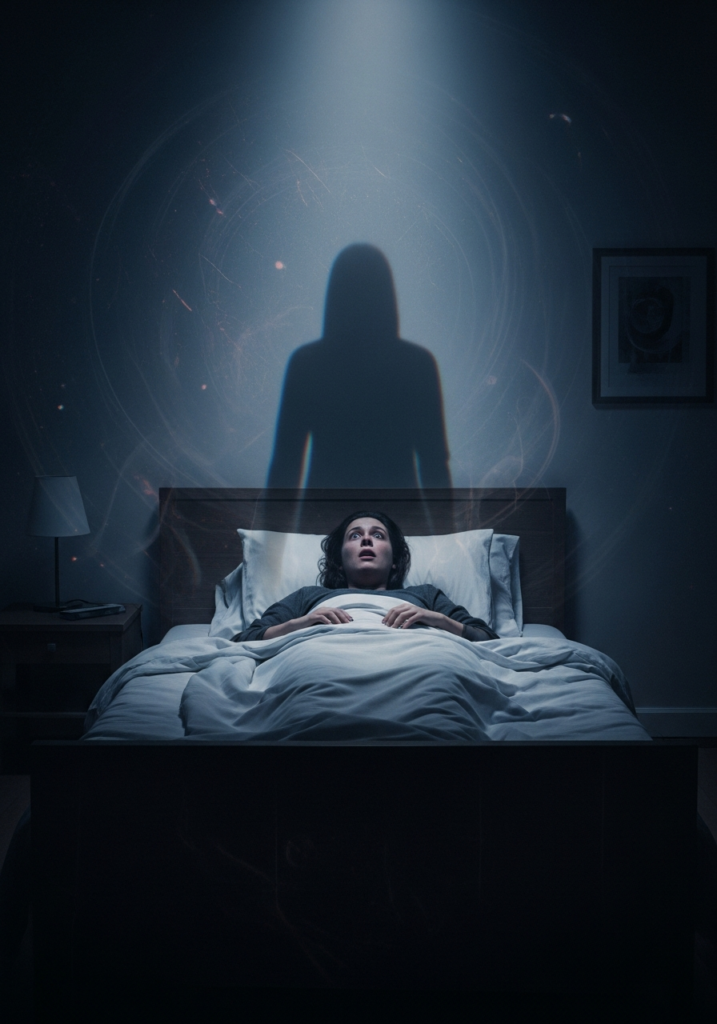
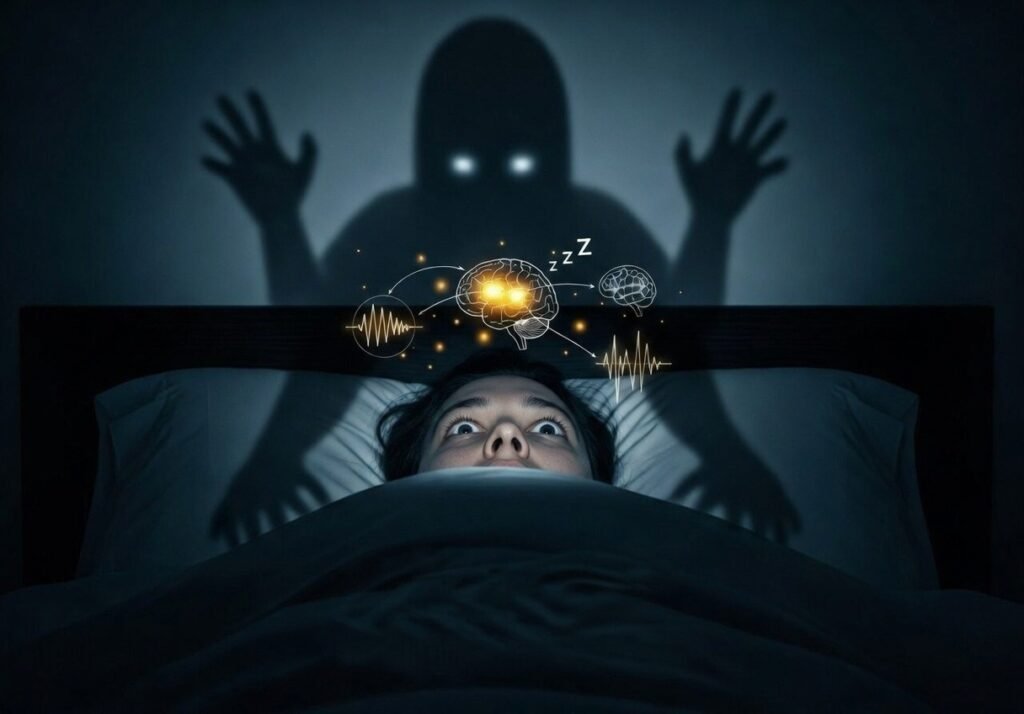
Your brain is still in the REM cycle when you wake up paralyzed. This means that vivid, active images from your dreams start to mix with your waking thoughts. Your eyes are open, but your brain is basically putting a dream on the walls of your real bedroom.
Also, when you suddenly realize you can’t move, your amygdala, which is the part of your brain that controls fear, goes into overdrive. The amygdala goes into overdrive, looking for a huge threat in the area. Your brain makes up a threat to explain the overwhelming fear because it can’t find a logical reason for the paralysis.
Doctors usually divide these hallucinations into three main groups:
- Intruder Hallucinations: The distinct, terrifying feeling of an evil presence, footsteps, or a shadowy figure standing in the corner of your room.
- Incubus Hallucinations: A heavy, crushing pressure on your chest or throat, often accompanied by the feeling that you are being suffocated or strangled.
- Vestibular-Motor Hallucinations: The sensation of floating, flying, spinning, or having an out-of-body experience (which is closely linked to what causes lucid dreams and sleep paralysis).
What Causes “Sleep Paralysis Demons”?
To understand what causes sleep paralysis demons, we need to look at how the brain handles extreme fear. People have been saying for hundreds of years that they see a dark figure or “demon” sitting on their chest during an episode. This scary picture is actually a well-known psychological and neurological event, not something that happens in the supernatural world.
When you wake up paralyzed, your amygdala, which is the part of your brain that controls fear, is very active. Your mind tries to figure out what the danger is. To explain the overwhelming feeling of fear and the pressure on your chest, your brain basically makes up a visual threat, or “demon.”
Cross-cultural research shows that this hallucination is a universal human experience, though it is named differently worldwide. For instance, it is called the “Old Hag” in Newfoundland and “Kanashibari” in Japan. Recognizing that this “demon” is merely a temporary dream projection is crucial for reducing your panic during an episode.
What Causes Sleep Paralysis Spiritually?
Because these hallucinations are so vivid and scary, it’s easy to see why so many people want to know what causes sleep paralysis spiritually. Many cultures and religions have thought of this scary physical paralysis as a direct attack on the spirit or a visit from an evil being throughout history.
For instance, when looking into why sleep paralysis happens in Islam, many traditional scholars and cultural beliefs say that the heavy chest pressure and dark figures are caused by jinn.
Different Christian, folk, and indigenous traditions around the world have similar spiritual interpretations of the event, seeing it as a supernatural encounter.
It is very important to recognize and respect these cultural frameworks, but sleep medicine gives us a reassuring physiological context. From a clinical standpoint, the spiritual cause of sleep paralysis is the same as the medical cause: a brief interruption in the brain’s cessation of REM-related muscle atonia.
What Causes Sleep Paralysis in Adults vs Children?
Age and developmental phases substantially influence the prevalence of parasomnias. If you’re curious about what makes adults more likely to have sleep paralysis than kids, the main differences are stressors in their daily lives and changes in their hormones. The highest rate of isolated sleep paralysis usually happens in the teenage years and early twenties.
During puberty and early adulthood, people often go through big changes in their circadian rhythms, a lot of stress at school, and not enough sleep. These lifestyle choices have a big effect on the REM cycle, which makes young adults very likely to have a mismatch between their body and mind.
On the other hand, sleep paralysis in children is frequently associated with genetic predispositions or initial manifestations of other sleep disorders. An occasional episode in a child is typically benign and stress-induced; however, frequent occurrences necessitate a professional medical evaluation for childhood narcolepsy.
What Sleeping Position Causes Sleep Paralysis?
How you sleep can have a big effect on your breathing and how quickly you move through the different stages of sleep. When patients ask sleep specialists what sleeping position causes sleep paralysis, they almost always say the supine position.
Sleeping flat on your back is strongly linked to a higher risk of episodes. This happens because when you sleep on your back, gravity pulls your tongue and soft palate down, which makes it hard for air to flow through your airway and wakes you up a little.
When your breathing is a little off, your brain may wake up for a short time to make adjustments. This can cause you to wake up while your body is still in REM paralysis. Changing your sleep position to your side can greatly cut down on how often you wake up in a scary way.
Is Sleep Paralysis Dangerous?
When you feel trapped and unable to breathe deeply, your immediate thought is often about your physical safety. If you are frantically wondering, “Is sleep paralysis dangerous?” or “Can sleep paralysis kill you?” the medical answer is highly reassuring.
Sleep paralysis is not inherently dangerous, and it absolutely cannot cause death. Your autonomic nervous system continues to automatically control your breathing and your heartbeat, even when your voluntary muscles are completely paralyzed.
However, the intense panic it induces can temporarily spike your heart rate and cause severe anxiety about falling asleep again. While the episodes themselves are medically harmless, the resulting sleep anxiety can lead to chronic insomnia if left unaddressed by a healthcare provider.
How Common Is Sleep Paralysis?
Many people suffer in silence because they think they are the only ones who have these scary hallucinations at night. How often does sleep paralysis really happen? Clinical studies show that it is surprisingly common among people all over the world.
Studies indicate that around 20% to 30% of the general population will encounter at least one episode of sleep paralysis during their lifetime. It is not an uncommon psychiatric anomaly; it is a relatively prevalent neurological dysfunction.
Moreover, prevalence rates surge within particular demographics. Up to 35% of people with panic disorder and a large number of college students who are severely sleep-deprived say they have panic attacks often.
How to Stop Sleep Paralysis in the Moment
When you wake up frozen, your first instinct is to fight the paralysis with all your strength, but this only makes your panic worse. To stop sleep paralysis right away, you need to have a calm, strategic mind.
First, pay close attention to your breathing. You can’t control your arms and legs, but you can control your breathing. Taking slow, deep breaths tells your amygdala that you are safe, which quickly makes the scary hallucinations go away.
Next, instead of trying to move your whole body, just focus on moving one small muscle. Try to gently move your big toe, make a fist, or blink your eyes quickly. Sending a strong signal to a small part of the body can quickly “break” the neurological atonia.
How to Avoid Sleep Paralysis
This parasomnia is very closely related to sleep hygiene and lifestyle, so you need to make a daily effort to learn how to avoid sleep paralysis. There is no quick, magical “cure” or medicine that works just for sleep paralysis that happens on its own.
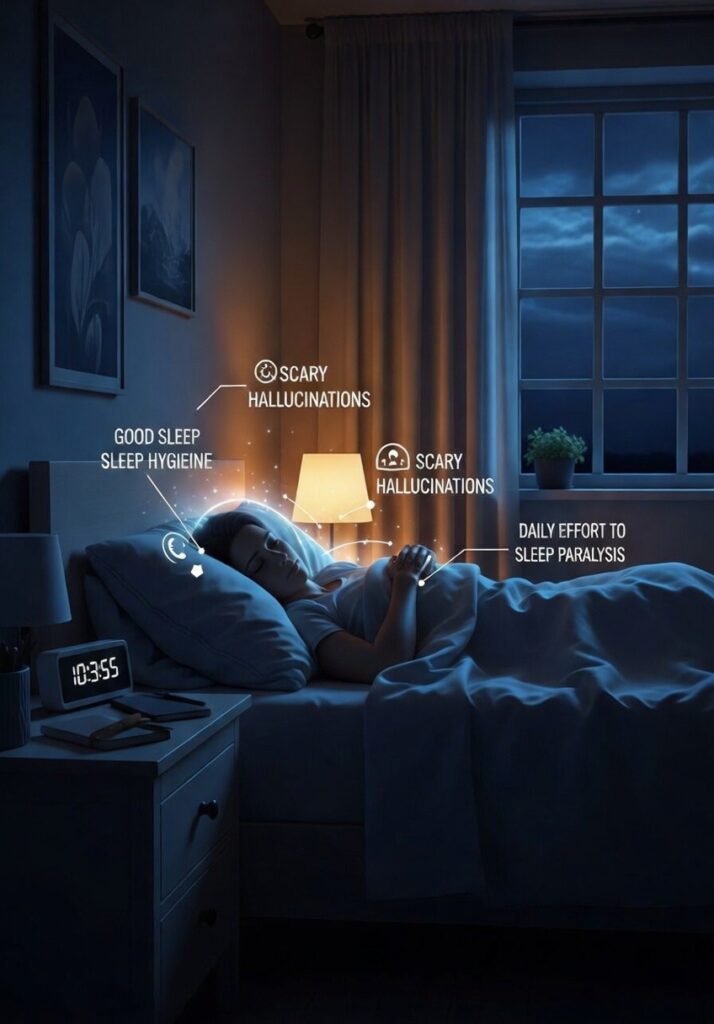
Instead, the best medical strategy is to stop the REM cycle disruptions that cause the episodes from happening in the first place. This is a detailed, evidence-based way to stop it from happening:
- Enforce a Strict Sleep Schedule: You must go to bed and wake up at the same time every single day, including weekends. This stabilizes your circadian rhythm and ensures your brain transitions smoothly between sleep stages.
- Prioritize Sleep Quantity: Aim for a non-negotiable 7 to 9 hours of sleep per night. Sleep deprivation is the primary driver of REM rebound, which causes your brain to plunge into intense dream states too quickly.
- Manage Evening Stress: Implement a relaxing pre-bedtime routine. Chronic anxiety fragments your sleep architecture. Consider cognitive behavioral therapy for insomnia (CBT-I) to actively manage bedtime rumination.
- Limit Alcohol and Caffeine: Avoid caffeine at least 8 hours before bed, and do not use alcohol as a sleep aid. Alcohol artificially suppresses REM sleep early in the night, leading to unstable, intense REM cycles closer to morning.
- Treat Underlying Disorders: If you snore loudly or gasp for air at night, you must be evaluated for sleep apnea. Treating airway obstructions with a CPAP machine often eliminates sleep paralysis.
Difference Between Sleep Paralysis and Sleepwalking
It’s easy to mix up different sleep disorders, but sleepwalking and sleep paralysis are actually the opposite of each other in terms of brain function. Knowing the difference between sleep paralysis and sleepwalking shows how the brain messes up the lines between sleeping and waking.
| Feature | Sleep Paralysis | Sleepwalking (Somnambulism) |
| Sleep Stage | Occurs during REM sleep | Occurs during deep Non-REM sleep |
| Muscle Control | Muscles are temporarily paralyzed | Muscles are fully active and mobile |
| Consciousness | You are fully awake and aware | You are deeply asleep and unaware |
| Memory | Vivid, clear memory of the terror | Typically zero memory of the event |
When to See a Doctor
An occasional episode is not a cause for concern, but chronic occurrences necessitate professional medical assessment. If you have episodes every week, you should make an appointment with a board-certified sleep medicine doctor.
If you have sleep paralysis and also feel very sleepy during the day, suddenly weak muscles when you laugh or get angry (cataplexy), or vivid hallucinations during the day, you should also get medical help right away. These are classic signs of narcolepsy that need medical attention.
Frequently Asked Questions
Is sleep paralysis dangerous?
No, sleep paralysis doesn’t hurt your body. Your autonomic nervous system keeps you safe and breathing normally the whole time, even though it feels scary not to be able to move or take deep breaths.
Can sleep paralysis kill you?
You can’t die from sleep paralysis. There are no medical records of anyone dying directly from an episode of isolated sleep paralysis. The phenomenon is merely a transient, innocuous interruption in muscular function.
What makes sleep paralysis demons show up?
The “demon” is a strong hallucination brought on by an overactive amygdala. When you wake up paralyzed, your brain’s fear center goes into overdrive and sends a scary image into your room to explain why you can’t move.
How to quickly stop sleep paralysis?
Don’t try to thrash or scream to end an episode quickly. Instead, close your eyes to block out hallucinations, concentrate on taking slow, steady breaths, and try to keep wiggling just your big toe or a single finger to break the paralysis.
Do I have sleep paralysis?
Sleep paralysis is when you often wake up or fall asleep and suddenly can’t move your arms, legs, or torso, but you are still fully aware of your bedroom.
Conclusion: Taking Back Control of Your Sleep
Sleep paralysis can be one of the scariest things that can happen to you in the dark, but knowing what to do is the best way to protect yourself. Once you realize that these episodes are just a temporary biological glitch in your REM cycle, the nighttime panic goes down a lot.
Keep in mind that you are completely safe during an episode, and the scary hallucinations are just your brain trying to figure out what is going on with the temporary paralysis. You can stop these random awakenings by making sure you get enough sleep and managing your stress during the day.
If your episodes keep making your life worse or making you scared to go to bed, you should see a board-certified sleep specialist. You don’t have to suffer in silence or be afraid to go to sleep.
Evidence-Based References:
- Sleep Foundation — Sleep Paralysis: Causes, Symptoms, and Treatment
- Cleveland Clinic — Sleep Paralysis: What It Is, Causes & Treatment
- National Health Service (NHS) — Sleep Paralysis
- American Academy of Sleep Medicine (AASM) via SleepEducation.org — Sleep Paralysis
- WebMD — Sleep Paralysis: Causes, Symptoms, and Treatments

Related Posts


MORE from Author
Read More It's scary to wake up in the middle of the night and not be able to move or talk. People…
 Have you been searching for a way to boost your cellular health? You may have encountered the question, what is…

- Did you know that muscle loss can begin as early as your 30s? As a physician, I often see patients…
- As a physician, I regularly see patients who are utterly exhausted from poor sleep. When you are desperately scrolling online…