What Is Sleep Paralysis? (Complete 2026 Guide)
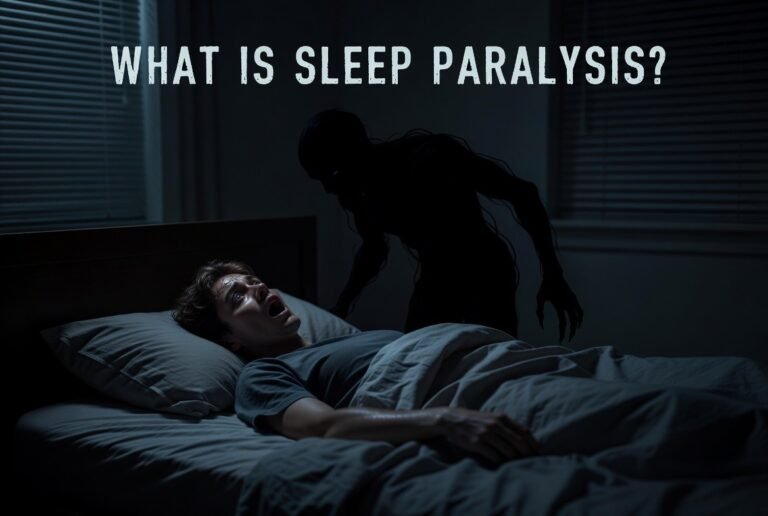
Have you ever woken up in the middle of the night, unable to move a single muscle? If so, you might be wondering, what is sleep paralysis, and why does it feel so incredibly terrifying?
As a medical professional, I have spoken with many patients who describe feeling a heavy weight on their chest or seeing dark shadows in their room.
While these experiences feel like something out of a horror movie, there is actually a fascinating biological explanation behind them. This phenomenon is quite common and, fortunately, it is usually not a sign of a major health problem.
In this guide, we will break down the science of why your brain wakes up before your body, the truth about “demons,” and how you can stop these episodes for good. Understanding what sleep paralysis is is the best way to take away its power and finally get some peaceful rest.
What Is Sleep Paralysis?
What does sleep paralysis mean for the average person? Essentially, it is a temporary state where you are conscious but physically unable to move or speak. This typically occurs at two specific times: when you are falling asleep or just as you are waking up.
- Temporary Paralysis: You cannot move your limbs, head, or trunk.
- Vivid Hallucinations: Seeing or hearing things that aren’t there.
- Brief Duration: Most episodes last only a few seconds to a few minutes.
- REM Connection: It happens when the brain skips a transition during sleep.
- Breath Awareness: You remain aware of your breathing, though it may feel labored.
What Happens During Sleep Paralysis?
To understand what happens during sleep paralysis, we have to look at how your brain protects you every night. When you enter REM (Rapid Eye Movement) sleep, your brain paralyzes your muscles. This state is called REM atonia.
How does sleep paralysis work? Normally, this paralysis shuts off before you wake up. However, during an episode, your mind “wakes up” while your body is still in atonia. Consequently, you are fully alert, but your muscles are still in a deep sleep lockdown.
During my time researching sleep health, I interviewed a patient named Sarah who described what sleep paralysis is like for her. She felt like someone was sitting on her chest, making it hard to breathe. This sensation is common because your chest muscles are also relaxed during REM, even though your diaphragm continues to work.
Sleep Paralysis Symptoms
The sleep paralysis symptoms can be deeply distressing if you don’t know what to expect. While the inability to move is the primary sign, other sensory experiences often follow.
- Muscle Immobility: An absolute inability to speak or move your body.
- Intense Fear: A feeling of impending doom or extreme anxiety.
- Chest Pressure: The sensation of a heavy weight pressing down on you.
- Visual Hallucinations: Seeing shadow figures or “demons” in the corner of the eye.
- Auditory Hallucinations: Hearing buzzing, whispering, or footsteps approaching the bed.
If you are asking, what are the symptoms of sleep paralysis, remember that these are all temporary. Your brain is simply trying to make sense of why you are awake but paralyzed.
What Is the Science Behind Sleep Paralysis?
Technically, is sleep paralysis a REM parasomnia? Yes, it is. A parasomnia is a category of sleep disorders that involves unusual behaviors or experiences.
What is the science behind sleep paralysis? Under normal conditions, your brain chemicals (GABA and glycine) signal your motor neurons to shut down during dreams. This prevents you from acting out your dreams and hurting yourself. In an episode of sleep paralysis, the timing of these chemicals gets slightly out of sync with your consciousness.
Because your “threat detection” center—the amygdala—is highly active during REM, your brain interprets the paralysis as a threat. This is why you feel such intense fear. It is your body’s “fight or flight” system activating while you are still physically unable to move.
What Is Sleep Paralysis Caused By?
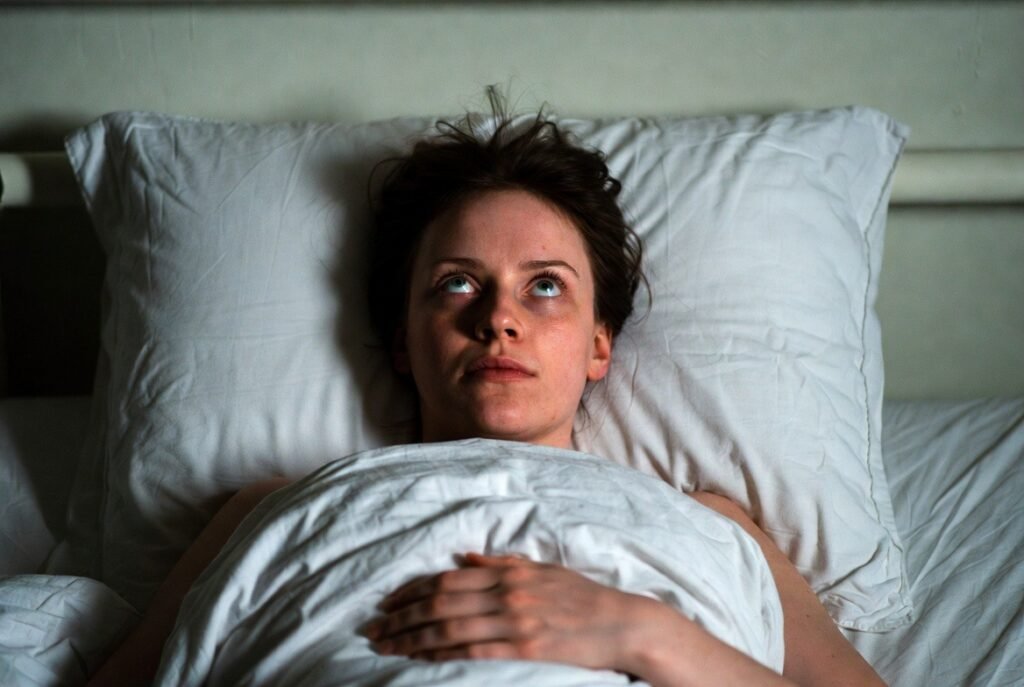
Many people worry about what is the cause of sleep paralysis and if it means they have a brain tumor. Rest assured, the causes are usually much more mundane and related to your lifestyle.
Main Reasons for Episodes
The most frequent reason for sleep paralysis is sleep deprivation. When you don’t get enough rest, your brain enters REM sleep more quickly and erratically. This “REM rebound” makes it much more likely that your sleep cycles will overlap awkwardly.
Common Risk Factors
- Irregular Schedules: Shift work or jet lag can trigger episodes.
- Sleeping on Your Back: Research shows that the supine position is a major trigger.
- High Stress: Anxiety and PTSD are strongly linked to increased frequency.
- Narcolepsy: Frequent paralysis is often a hallmark of this neurological disorder.
- Substance Use: Alcohol or certain medications can disrupt REM transitions.
If you are wondering how to get sleep paralysis, it is often a combination of these factors. Most of my patients find that improving their sleep hygiene significantly reduces their symptoms.
What Is a Sleep Paralysis Demon?
Perhaps the most searched topic is what the sleep paralysis demon is, and why so many people see the same thing. Across different cultures, people report seeing a dark, shadowy figure standing over them.
What is the sleep paralysis demon?
Medically, this is known as a hypnagogic hallucination. Because your brain is in a “dream state” but your eyes are open, your mind projects dream imagery into the real world. Since you are already terrified by the paralysis, your brain creates a visual “villain” to explain that fear.
What is sleep paralysis demon look like? Most people describe a tall, thin shadow, a hag, or a blurry figure. These are not real entities. Instead, they are your brain’s way of processing the intense electrical activity happening in your sensory cortex while you are paralyzed.
What Is Sleep Paralysis Spiritually?
While science has many answers, many people search for what sleep paralysis is spiritually. Different cultures have interpreted this state for centuries before modern medicine existed.
What is sleep paralysis in Islam? In many Islamic traditions, these episodes are sometimes attributed to “Jinn.” Similarly, in Western folklore, it was called the “Old Hag.” It is important to respect these cultural views while also acknowledging the medical reality.
What is the spiritual meaning of sleep paralysis? Some people view it as a sign of spiritual awakening or a thinning of the veil. However, as a medical professional, I encourage you to look at the physical health markers first. Most “spiritual” episodes resolve once the person gets on a regular sleep schedule and reduces their stress.
Is Sleep Paralysis Dangerous?
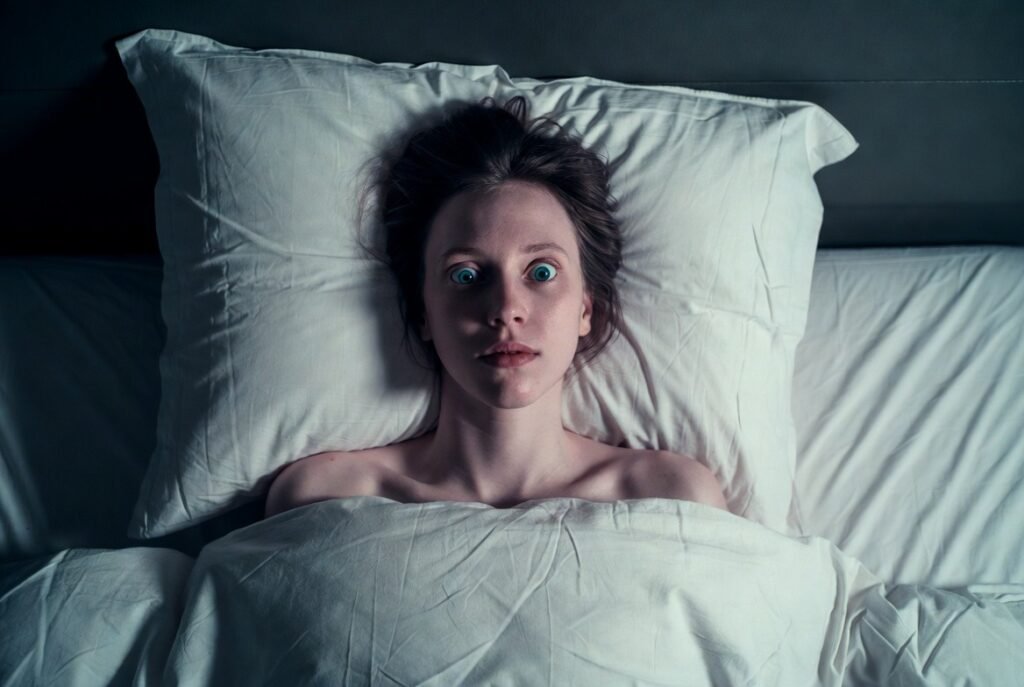
The most common fear I hear is, is sleep paralysis dangerous? Patients often ask, can sleep paralysis kill you? The answer is a definitive no.
Can sleep paralysis cause death? There has never been a recorded case of someone dying from an episode of sleep paralysis. While your heart rate may spike because of the fear, your body is not in actual danger. You are still breathing, even if it feels shallow.
Is sleep paralysis good or bad? It is neither. It is simply a biological “glitch.” It is not a sign that you are going crazy, nor is it a sign of demonic possession. It is just your brain and body being out of sync for a few moments.
How to Stop Sleep Paralysis in the Moment
If you find yourself stuck, you need to know how to get out of sleep paralysis. You don’t have to just wait for it to end.
How to stop sleep paralysis in the moment:
- Focus on small movements: Try to wiggle your pinky finger or your toes.
- Control your breathing: Take slow, deep breaths to signal to your brain that you are safe.
- Warp your focus: Try to cough or make a small sound.
- Stay calm: Remind yourself, “This is just sleep paralysis; it will be over in a minute.”
By focusing on a single small muscle, you can often “break” the paralysis and wake your body up completely.
What Is the Treatment for Sleep Paralysis?
Most people do not need a “cure” because episodes are infrequent. However, if they happen often, you might wonder what the treatment for sleep paralysis?
How to cure sleep paralysis:
The most effective treatment is improving your sleep hygiene. This means going to bed at the same time every night and avoiding caffeine late in the day.
For severe cases, doctors may prescribe specific medications. These are usually antidepressants that suppress REM sleep. By reducing the amount of time you spend in REM, the chances of an episode occurring drop significantly. Cognitive Behavioral Therapy (CBT) is also highly effective for reducing the anxiety that often triggers these events.
Sleep Paralysis vs. Sleep Apnea vs. Insomnia
It is easy to get these conditions confused.
| Condition | Primary Feature | Main Cause |
| Sleep Paralysis | Unable to move while waking | REM/Atonia glitch |
| Sleep Apnea | Breathing stops during sleep | Airway collapse |
| Insomnia | Difficulty falling asleep | Stress or biological factors |
While what is sleep apnea involves a physical blockage of air, sleep paralysis is purely a timing issue in the brain. They are separate conditions, though sleep apnea can sometimes trigger paralysis because it disrupts the sleep cycle.
Frequently Asked Questions
What is sleep paralysis?
It is a state where you are conscious but unable to move, occurring during the transitions of the sleep cycle.
Is sleep paralysis dangerous?
No, it is physically harmless. While the experience is scary, it does not cause any long-term physical damage to the body.
What causes sleep paralysis?
The main causes include sleep deprivation, stress, irregular sleep schedules, and sleeping on your back.
What is the sleep paralysis demon?
It is a common visual hallucination caused by the brain being in a dream state while the person is conscious.
How do I stop sleep paralysis?
You can stop an episode by focusing on moving a small muscle, like a finger or toe, and maintaining calm, steady breathing.
Conclusion
In the final analysis, discovering what sleep paralysis is often provides immediate relief from the fear that surrounds it. While the experience can feel like a spiritual battle or a terrifying haunting, we now know it is simply a biological mistiming. Your brain is a complex machine, and occasionally, its transition out of REM sleep hits a temporary snag. By focusing on consistent sleep schedules and managing your daily stress, you can effectively lower the frequency of these episodes.
Furthermore, remember that you are in control even when your body feels like it isn’t. Since these episodes are physically harmless, the “demon” loses its power as soon as you recognize it as a mere hallucination. If your episodes become frequent or prevent you from getting enough rest, consider speaking with a sleep specialist. They can help you investigate underlying factors like narcolepsy or sleep apnea. Most noteworthy is the fact that once you improve your sleep
hygiene, you can finally close your eyes without the fear of being stuck. Sleep should be a sanctuary, and with the right knowledge, you can make it one again.
References:

Related Posts




MORE from Author
Read More Just last week, a patient named Sarah walked into my clinic carrying three different boxes of popular gut biome tests.…
 Recently, a frustrated patient named Mark visited my public health clinic. He handed me an expensive, beautifully packaged at-home stool…


- Have you ever felt constantly exhausted and painfully bloated after normal meals? Recently, a patient named Sarah sat in my…
- For most healthy adults, 7 hours of sleep per night is the minimum recommended amount, but 7–9 hours is ideal.…