Fitness HIIT Training: Benefits, Workouts & Beginner Plans (2026 Guide)

In modern exercise science, finding a routine that balances maximum physiological results with minimal time commitment is the ultimate goal for most busy adults. For many of my patients, starting a dedicated fitness HIIT training program is the exact breakthrough they need to overcome stubborn weight loss plateaus and dramatically improve their metabolic health.
Just last month, I consulted with a patient named Marcus, a 45-year-old executive struggling with prediabetes and a severe lack of free time. He assumed he needed to spend hours on a treadmill every single day to see any real cardiovascular improvement, which was completely unsustainable for his lifestyle.
By introducing him to short, highly focused interval sessions, we completely transformed his lipid panel and lowered his resting heart rate in just three months. He was exercising for less than an hour a week in total.
This guide will break down the exact science of how these protocols work, the medical benefits, and how you can safely implement them into your own life.
TL;DR: The Core of Interval Training
HIIT (High-Intensity Interval Training) alternates short bursts of intense exercise with periods of complete rest or low-intensity recovery. It effectively improves cardiovascular fitness, accelerates fat loss, and boosts metabolic health in significantly less time than traditional steady-state workouts.
Beginners can easily start with simple, equipment-free bodyweight routines at home, gradually increasing the intensity as their endurance builds.
What Is HIIT Training? (Meaning & Explanation)
HIIT is a workout method that alternates brief, high-intensity effort (pushing your heart rate to 80-95% of its maximum) with short, structured recovery periods. This cyclical stress is designed to maximize cardiovascular efficiency and calorie burn.
At its core, this training philosophy is about quality and intensity rather than sheer duration. Instead of jogging at a comfortable pace for 45 minutes, you might sprint as hard as you can for 30 seconds, followed by 60 seconds of slow walking to catch your breath.
This cycle is typically repeated for anywhere from 15 to 30 minutes. The primary goal is to push your body completely out of its comfort zone during the “work” phase. Because the intensity is so high, the workouts must remain relatively short to prevent central nervous system fatigue and muscle breakdown.
How High-Intensity Interval Training Works
To truly understand why this method is so effective, we have to look at the cellular level and understand how the body utilizes different energy systems. Your body primarily relies on two pathways to generate energy: the aerobic system and the anaerobic system.
Aerobic and Anaerobic Energy Systems
During traditional, steady-state cardio (like a light jog), your body uses the aerobic system, which relies on a steady supply of oxygen to convert fat and carbohydrates into energy. It is highly efficient and can be sustained for long periods.
However, during the intense bursts of a HIIT session, your demand for energy skyrockets instantly. Your lungs simply cannot deliver oxygen fast enough to fuel the muscles aerobically. Your body is forced to switch to the anaerobic system, pulling readily available glycogen (stored carbohydrates) directly from the muscles without using oxygen.
Operating in this anaerobic zone creates an immense metabolic stress. Your muscles accumulate lactic acid quickly, causing that familiar burning sensation. This forced shift between aerobic recovery and anaerobic sprinting essentially trains your heart and lungs to become incredibly efficient at delivering oxygen and clearing metabolic waste.
The EPOC Effect (Excess Post-Exercise Oxygen Consumption)
The most powerful mechanism behind this training style is what exercise physiologists call EPOC, commonly referred to as the “afterburn effect.”
Because interval training puts your body into such a deep oxygen deficit during the workout, your system has to work overtime to restore its resting state once you finish.
It takes a massive amount of energy (calories) for your body to cool down, clear out lactic acid, repair micro-tears in the muscle fibers, and restore cellular oxygen levels.
Unlike a brisk walk, where your calorie burn drops the moment you stop moving, a proper interval session elevates your resting metabolic rate for hours—sometimes up to 24 hours—after you leave the gym. You are quite literally burning calories while sitting on the couch recovering.
HIIT Training Benefits (Evidence-Based)
In sports medicine, we rely heavily on clinical data to prescribe exercise, and the research supporting interval training is overwhelmingly positive across several health markers.
Rapid Cardiovascular Improvement
One of the most profound benefits is the rapid improvement in VO2 max, which is the maximum amount of oxygen your body can utilize during exercise. Studies consistently show that interval training improves VO2 max significantly faster than traditional, moderate-intensity continuous training (MICT).
Optimized Fat Loss and Muscle Retention
Traditional long-duration cardio can sometimes lead to muscle loss if not fueled properly. High-intensity intervals, however, mimic the explosive movements of weightlifting. This signals the body to preserve lean muscle mass while aggressively targeting visceral fat stores for energy during the extended EPOC recovery phase.
Enhanced Insulin Sensitivity
For patients like Marcus, this is the most critical benefit. Intense muscle contractions quickly empty the muscles of stored glycogen. To replenish these stores, the muscles become highly sensitive to insulin, effectively pulling glucose out of the bloodstream. This makes interval training an incredibly powerful tool for managing or preventing type 2 diabetes.
Does HIIT Lower Triglycerides?
A common question in my clinic is how exercise impacts specific lipid profiles. The clinical evidence strongly suggests that consistent interval training leads to a marked improvement in overall lipid panels, including lowering triglycerides.
High triglycerides are essentially unused calories stored as fat in the blood, often resulting from a diet high in refined carbohydrates and a sedentary lifestyle. The sheer energy demand of explosive interval training rapidly metabolizes these circulating fats.
This is particularly effective in patients dealing with metabolic syndrome. By utilizing both stored muscle glycogen and circulating blood lipids for recovery energy, patients often see a significant drop in fasting triglyceride levels after just a few months of consistent, structured training.
Can HIIT Lower Blood Pressure?
Hypertension is a silent killer, and exercise is a frontline prescription. Clinical studies show that high-intensity intervals produce modest but significant reductions in both systolic and diastolic blood pressure.
When you push your heart rate to near-maximum levels, your blood vessels must rapidly dilate to accommodate the massive increase in blood flow. This cyclical stretching and relaxing of the vascular walls acts like a workout for the blood vessels themselves, improving arterial stiffness and endothelial function over time.
In many meta-analyses, interval training has proven to be comparable, and in some cases superior, to moderate steady-state exercise for reducing resting blood pressure in formerly sedentary adults.
Can HIIT Raise Cortisol Levels?
This is a nuanced topic that requires a medical perspective. Yes, pushing your body to its absolute physical limit will cause a short-term, acute spike in cortisol, the body’s primary stress hormone.
This acute spike is perfectly normal and actually beneficial; it signals the body to release stored energy for the workout and triggers the adaptation process that makes you stronger. A healthy body efficiently clears this cortisol once the workout is complete.
However, chronic overtraining is a real danger. If you perform extreme intervals every single day without adequate recovery, your cortisol levels can remain chronically elevated. This can lead to immune suppression, persistent fatigue, and even weight gain. Proper programming and rest days are non-negotiable.
HIIT Training for Beginners

Jumping straight into an elite-level sprint protocol when you haven’t exercised in years is a guaranteed recipe for injury. For those new to this methodology, fitness HIIT training for beginners must focus on building a foundational baseline of movement mechanics and cardiovascular tolerance.
The key for beginners is to redefine “high intensity.” Intensity is highly relative to your current fitness level. For an Olympic sprinter, it means running at 25 miles per hour. For someone just starting out, a brisk, uphill walk might be enough to push their heart rate into that necessary 80% maximum zone.
I always advise my patients to start with a 1:2 work-to-rest ratio. This means if you work hard for 30 seconds, you must actively rest (like walking slowly) for a full 60 seconds. This ensures your heart rate has enough time to recover, allowing you to maintain proper physical form during the next strenuous interval.
HIIT Workouts for Beginners (Simple Routine)
When designing HIIT workouts for beginners, I strip away complex equipment and focus entirely on fundamental bodyweight movements. The goal is to elevate the heart rate safely without risking joint strain or muscle tears from lifting heavy weights under fatigue.
Here is a highly effective, low-impact routine I frequently prescribe in my sports medicine practice. Perform this circuit three times, resting for 90 seconds between each full circuit:
- Modified Jumping Jacks (or Step Jacks): 30 seconds of work, 60 seconds of rest.
- Bodyweight Squats: 30 seconds of work (focus on depth, not speed), 60 seconds of rest.
- Incline Push-ups (hands on a sturdy chair or wall): 30 seconds of work, 60 seconds of rest.
- Stationary High Knees (or marching in place): 30 seconds of work, 60 seconds of rest.
Fitness HIIT Training Plan (Beginner to Advanced)
Structuring your weekly schedule is just as important as the workout itself. Because this training is incredibly taxing on the central nervous system, doing it every single day will quickly lead to overtraining syndrome and potential injury.
Beginner Phase (Weeks 1-4):
Start with just 2 sessions per week. Space them out with at least two days of active recovery (like yoga or light walking) in between. Focus entirely on mastering the form of the exercises rather than speed.
Intermediate Phase (Weeks 5-8):
Increase to 3 sessions per week. You can now begin adjusting your work-to-rest ratio to 1:1. For example, 40 seconds of intense work followed by 40 seconds of rest. You can also start incorporating light resistance, such as dumbbells or kettlebells.
Advanced Phase (Weeks 9+):
At this stage, you can perform 4 sessions per week, occasionally pushing into a 2:1 work-to-rest ratio (e.g., 40 seconds of work, 20 seconds of rest). Advanced trainees often use specialized equipment like assault bikes or rowing machines to maximize their cardiovascular output.
HIIT Workout Plan (Sample Weekly Schedule)
To help visualize how to integrate this into a busy life, here is a balanced weekly schedule. It perfectly blends high-intensity days with necessary recovery and strength training.
| Day | Workout Focus | Duration | Intensity Level |
| Monday | Bodyweight HIIT Cardio | 20 Minutes | High (85% Max HR) |
| Tuesday | Active Recovery (Walking/Stretching) | 30 Minutes | Low |
| Wednesday | Strength-Based Interval Circuit | 25 Minutes | Moderate-High |
| Thursday | Complete Rest Day | N/A | N/A |
| Friday | Full-Body Power Intervals | 20 Minutes | Very High (90% Max HR) |
| Saturday | Steady-State Cardio (Cycling/Jogging) | 45 Minutes | Moderate |
| Sunday | Active Recovery (Yoga/Mobility) | 30 Minutes | Low |
HIIT Training Examples (Real Workouts)
To truly understand the versatility of this method, we need to look at HIIT training examples across different exercise modalities. You are not restricted to just jumping around in your living room; the protocol can be applied to almost any physical activity.
Track Sprint Intervals:
This is the purest form of interval training. After a thorough 10-minute dynamic warm-up, sprint at maximum effort on a track for 15 seconds.
Immediately slow down to a gentle walk for 45 seconds to catch your breath. Repeat this cycle 8 to 10 times. It builds explosive power in the lower body and torches visceral fat.
Stationary Cycling (The Wingate Protocol):
Cycling is phenomenal for patients with knee or hip issues who need low-impact options. Hop on a stationary bike and pedal at a comfortable pace for 5 minutes.
Then, crank up the resistance and pedal as fast as humanly possible for 20 seconds. Drop the resistance and pedal slowly for 2 minutes. Repeat 5 times.
Kettlebell Circuit Complexes:
For those looking to combine cardiovascular endurance with muscular hypertrophy, kettlebell complexes are ideal. Perform 30 seconds of kettlebell swings, rest for 30 seconds. Then perform 30 seconds of goblet squats, rest 30 seconds.
Finish with 30 seconds of kettlebell push presses, and rest for 60 seconds before repeating the whole block.
HIIT Workouts at Home (No Equipment)
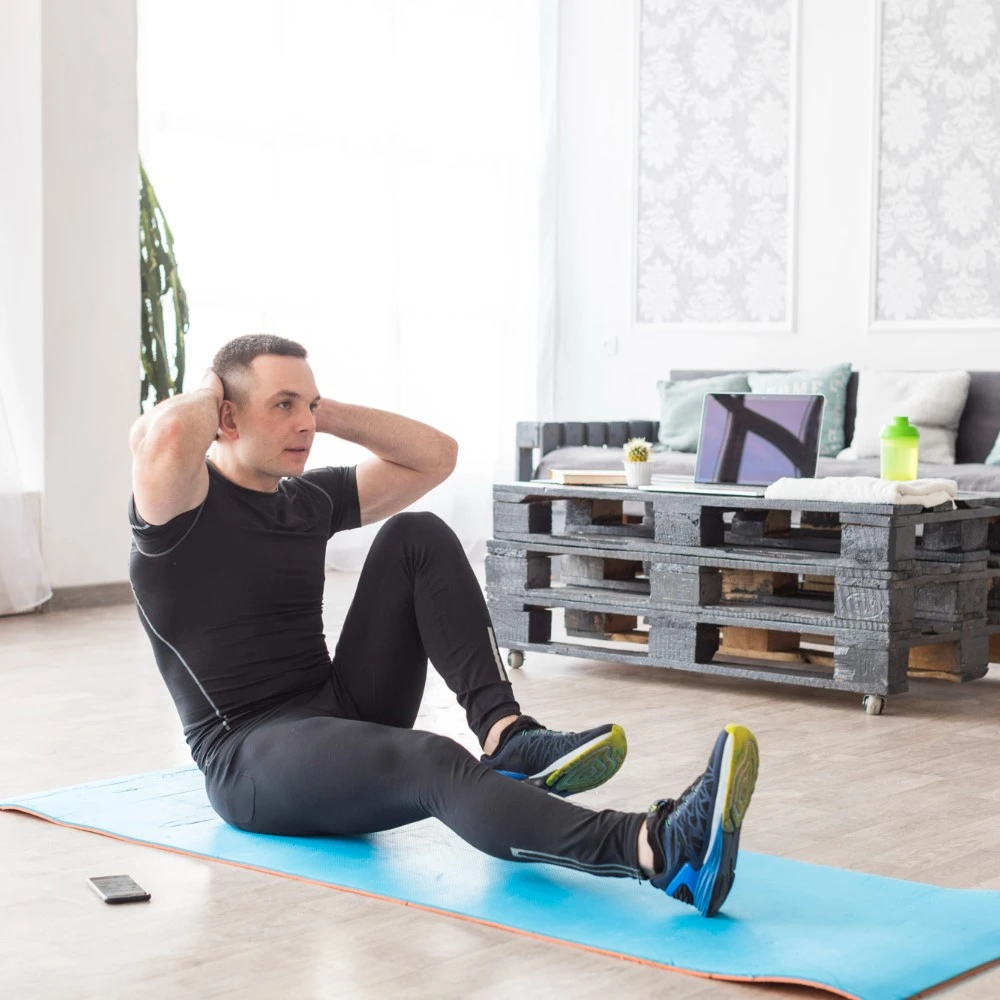
One of the greatest advantages of this training style is accessibility. You do not need an expensive gym membership or heavy weights to achieve a world-class workout. HIIT workouts at home utilizing plyometrics and bodyweight resistance can be just as effective.
The secret to home workouts is compound movements—exercises that recruit multiple large muscle groups simultaneously. The more muscle mass you engage, the higher your heart rate climbs, and the greater the metabolic demand on your body.
For example, a burpee engages the chest, triceps, core, quads, and calves all in one fluid motion. By stringing compound movements together, you can create a massive cardiovascular response in a very small physical space, like an apartment living room or a hotel room.
Fitness HIIT Training at Home (Complete Routine)
If you have 15 minutes and enough space to lie down on the floor, you have everything you need. Here is a comprehensive home routine designed to target the entire body while maximizing your EPOC (afterburn) effect.
Set an interval timer for 40 seconds of work and 20 seconds of rest. Move sequentially through these five exercises. Once you finish all five, rest for 60 seconds, and then repeat the entire block for a total of three rounds:
- Alternating Reverse Lunges: Focus on keeping your chest up and driving through the front heel.
- Plank Shoulder Taps: Hold a strict push-up position and tap your opposite shoulder, keeping your hips perfectly still to engage the core.
- Squat Jumps: Explode upward from the bottom of the squat, landing softly to protect the knees.
- Mountain Climbers: Drive your knees toward your chest rapidly while holding a strong plank position.
- Bicycle Crunches: Rotate your torso to bring your elbow to the opposite knee, focusing on abdominal contraction rather than speed.
What Is the 3-3-3 Rule at the Gym?
You may have seen the “3-3-3 rule” trending on fitness platforms recently. It is a highly popular, simplified structure for building a quick, effective interval workout without needing a complex training app.
The rule stands for 3 exercises, 3 sets, and 3 rounds. You choose three distinct movements (ideally an upper-body, a lower-body, and a core exercise). You perform each exercise back-to-back for a set amount of time (usually 30-40 seconds).
Once you complete all three exercises, that equals one set. You rest, and then repeat those same three exercises for a total of three sets. It is a foolproof way to guarantee you are hitting multiple muscle groups while keeping your heart rate elevated and your gym session incredibly time-efficient.
Disadvantages of HIIT Training
While I heavily advocate for this training style, it is my medical duty to highlight the disadvantages of HIIT training. It is an extreme stressor on the body, and it is not a magic bullet without risks.
The most prominent disadvantage is the high risk of musculoskeletal injury. When you are exhausted and fighting for breath during the final 10 seconds of an interval, your physical form inevitably breaks down.
Performing complex movements like box jumps or heavy snatches under severe fatigue drastically increases the risk of rolled ankles, torn ligaments, or lower back sprains.
Additionally, it is incredibly demanding on the central nervous system. If you use it to replace all your low-intensity cardio, you may experience burnout, disrupted sleep patterns, and prolonged muscle soreness that hinders your daily life.
Who Should Avoid or Modify HIIT
This intense methodology is not universally appropriate. Patients with pre-existing cardiovascular conditions, such as uncontrolled high blood pressure, recent heart attacks, or arrhythmias, must strictly avoid pushing their heart rate to maximum capacity without direct cardiologic clearance.
Absolute beginners who are severely deconditioned or significantly overweight should also modify the approach. The impact forces of jumping movements can cause severe damage to unconditioned knee and hip joints.
They should begin with low-impact, moderate steady-state cardio to build a baseline before attempting high-intensity intervals.
Women who are pregnant, particularly in their second or third trimesters, should avoid high-impact intervals and any exercises that drastically raise core body temperature or risk abdominal trauma. Always consult an OB/GYN for safe prenatal exercise routines.
Tips for Safe & Effective HIIT Training
Prioritize a Dynamic Warm-Up:
Never sprint on cold muscles. Spend at least 5 to 8 minutes doing dynamic stretches like leg swings, arm circles, and light jogging to increase synovial fluid in your joints and prepare your nervous system for explosive movement.
Form Always Dictates Speed:
The moment you feel your lower back rounding during a squat or your shoulders sagging during a push-up, you must slow down or stop the interval. An extra five seconds of work is never worth a six-week injury.
Respect the Recovery Process:
The physiological changes—muscle growth, fat burning, improved endurance—happen during the rest periods, not during the workout. Prioritize high-quality protein intake, hydration, and 7 to 8 hours of sleep to allow your body to rebuild stronger.
HIIT vs Traditional Cardio
Understanding the difference between interval training and steady-state cardio helps you choose the right tool for your specific health goals. Both have a vital place in a well-rounded fitness regimen.
| Feature | HIIT (High-Intensity Intervals) | Traditional Steady-State Cardio (LISS) |
| Time Commitment | Very Short (15–30 minutes) | Longer (45–60+ minutes) |
| Effort Level | Near Maximum (80-95% Max HR) | Moderate & Conversational (50-70% Max HR) |
| Primary Energy System | Anaerobic (Carbohydrate/Glycogen dominant) | Aerobic (Oxygen/Fat oxidation dominant) |
| Fat Loss Efficiency | Highly efficient (Massive post-workout EPOC burn) | Effective, but burn stops when exercise stops |
| Recovery Needs | High (Requires 24-48 hours between sessions) | Low (Can be performed daily safely) |
Frequently Asked Questions
How long should a standard interval workout last?
A true high-intensity session should only last between 15 and 30 minutes. If you are able to perform these intervals for 45 minutes or an hour, your intensity is simply not high enough. The goal is maximum effort in a condensed timeframe.
Is this training method safe for complete beginners?
Yes, but with crucial modifications. Beginners should utilize low-impact exercises (like stationary cycling or modified bodyweight squats) and implement a generous 1:2 or 1:3 work-to-rest ratio to ensure adequate cardiovascular recovery between bouts of effort.
How many times per week should I do this type of training?
For optimal results and to prevent overtraining syndrome, aim for 2 to 4 sessions per week. Your central nervous system and muscle tissues require rest days in between intense sessions to properly repair and grow stronger.
Can interval training specifically help with stubborn weight loss?
Absolutely. When combined with a caloric deficit, interval training is one of the most effective tools for fat loss. The intense exertion forces the body to burn calories at an accelerated rate for hours after the workout has finished due to the EPOC effect.
Do I need heavy gym equipment to get a good workout?
No equipment is necessary. Utilizing explosive bodyweight movements like burpees, jump squats, and high knees is more than enough to elevate your heart rate to the necessary anaerobic threshold required for metabolic adaptation.
Conclusion
As we have explored throughout this guide, fitness HIIT training is far more than a passing gym trend; it is a scientifically validated physiological tool for improving longevity, cardiovascular efficiency, and metabolic health.
By leveraging the body’s anaerobic systems and the power of the “afterburn effect,” you can achieve medical-grade results in a fraction of the time required by traditional methods.
In my practice, I often remind patients like Marcus that the goal isn’t to survive the most grueling workout possible once a month. The goal is to find an intensity level that challenges your heart and lungs while allowing you to recover and return to the mat two or three times a week.
Consistency is the primary driver of the structural changes we want to see in your blood pressure, triglyceride levels, and insulin sensitivity.
If you are just starting out, please resist the urge to compare your pace to what you see on social media. Your high intensity is personal to you. Listen to your body, prioritize your recovery just as much as your effort, and don’t be afraid to modify movements to protect your joints.
When done with respect for human biology, interval training is one of the most empowering investments you can make in your physical future.
Authoritative References:
- [National Institutes of Health / PubMed] The Effects of HIIT on Glucose Regulation
- [British Journal of Sports Medicine] Interval Training vs. Continuous Training for Fat Loss
- [Mayo Clinic] Interval Training for Heart Health
- [Harvard Health Publishing] High-Intensity Interval Training for Fitness and Health
Related Posts





MORE from Author
Read More As a physician specializing in exercise science and public health, I regularly consult patients who feel completely lost in the…
 Just last week, a 34-year-old patient named Clara sat in my clinic, feeling entirely overwhelmed by the modern fitness industry.…

 Hello, I am Dr. Kenji Sato, MD, specializing in sports medicine and performance optimization. In my sports clinic, I constantly…
- In my clinical practice as a physician focused on exercise science, I often tell patients that mastering fitness bench workouts…