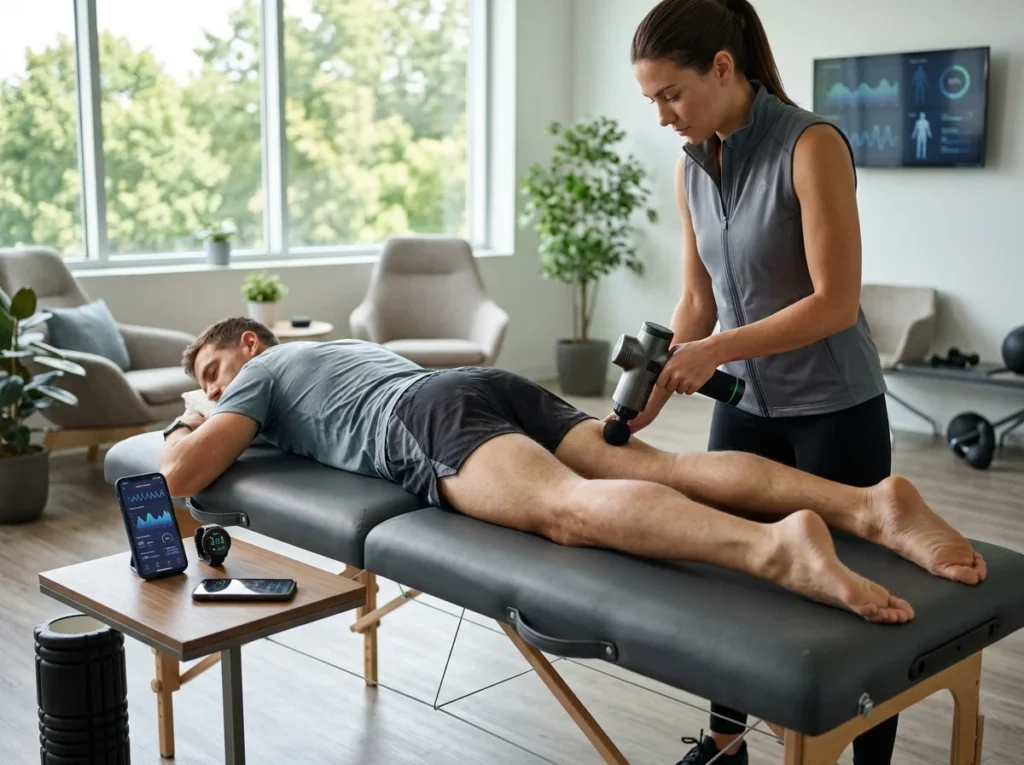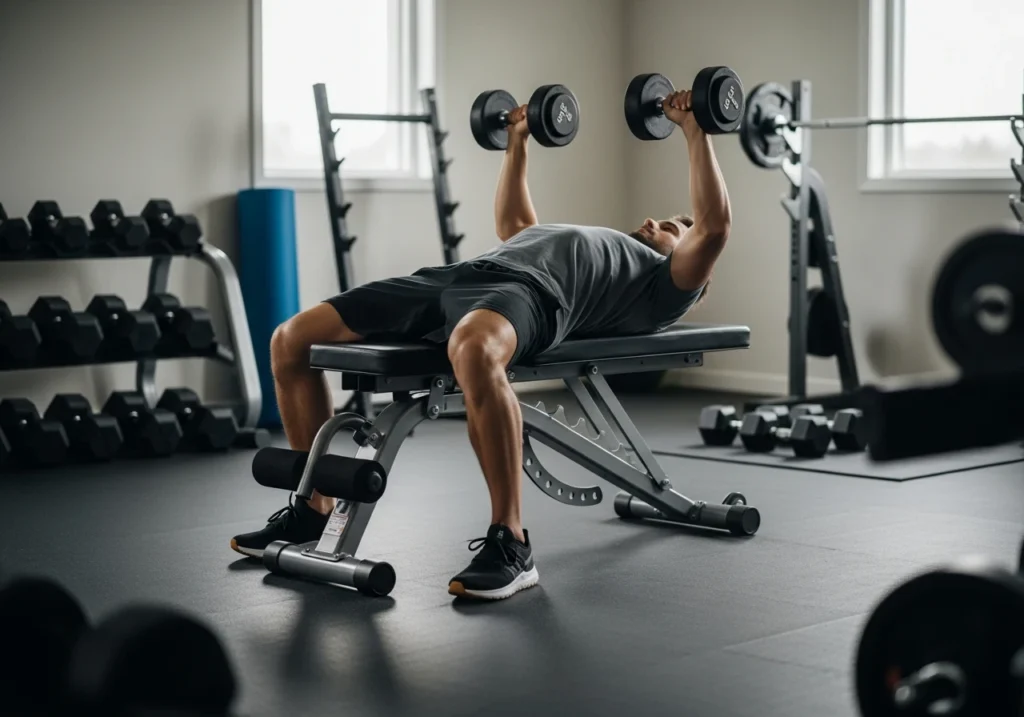
Fitness Abs Exercises: Best Core Workouts for Men & Women (Home & Gym Guide)
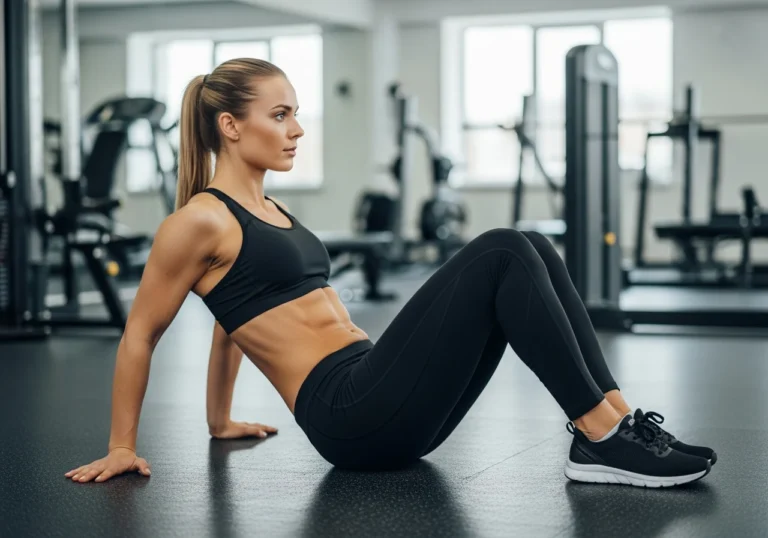
Building a resilient midsection is about much more than achieving a sculpted aesthetic. As a sports medicine physician, I constantly emphasize that fitness abs exercises are the critical foundation for every physical movement you make. A strong core acts as the central transfer point for energy between your upper and lower body.
Just last week in my clinic, I treated a 35-year-old amateur powerlifter named Mark. He presented with a severe lumbar strain despite having incredibly strong legs and shoulders. During his biomechanical assessment, I discovered he couldn’t hold a basic plank for more than 20 seconds.
His superficial muscles were strong, but his deep core was completely neglected. By halting his heavy lifts and prescribing a strict, progressive routine of targeted core stabilization, we completely rehabilitated his back in eight weeks. His story is a common reminder that true fitness starts from the inside out.
TL;DR: The Foundation of Core Strength
Abs exercises strengthen the core muscles, significantly improving posture, stability, and overall physical fitness. The most effective routines combine bodyweight, weighted, and functional movements targeting the upper, lower, and oblique muscles.
Both beginners and advanced users can train effectively at home or in the gym with structured, consistent routines.
What Are Core & Abs Exercises?
Core and abs exercises are targeted physical movements designed to strengthen the muscles in the abdomen, lower back, and pelvis. These exercises build the foundational musculature that supports spinal stability, protects internal organs, and facilitates functional human movement.
Many people mistakenly use the terms “abs” and “core” interchangeably, but they are different. Your abs are just one component of the broader core system. Proper training must engage the entire cylinder of muscles wrapping around your midsection.
When you perform these movements correctly, you are not just building muscle tissue. You are training your central nervous system to fire those muscles in a coordinated sequence, bracing your spine against external forces and preventing injury during daily activities.
Types of Abs Exercises
To build a truly functional and balanced midsection, you must understand the different types of abdominal muscles and the specific exercises required to train them. The core is a complex, multi-layered structure, and neglecting any single area can lead to muscular imbalances and orthopedic issues over time.
Upper Abs (Upper Rectus Abdominis)
The rectus abdominis is the long, flat muscle that runs vertically down the front of your abdomen, famously known as the “six-pack.” The upper portion of this muscle is primarily responsible for flexing the spine forward, bringing your ribcage closer to your pelvis.
Exercises that target this area typically involve lifting your upper torso off the floor. Standard crunches, sit-ups, and cable crunches are classic upper ab movements.
Lower Abs (Lower Rectus Abdominis)
While the rectus abdominis is technically one continuous muscle, you can emphasize the lower portion by reversing the movement pattern. Instead of bringing your ribs to your pelvis, lower ab exercises require bringing your pelvis toward your ribcage.
This area is notoriously difficult to isolate and strengthen. Effective exercises for the lower segment include hanging leg raises, reverse crunches, and flutter kicks, which demand significant control to prevent the lower back from arching.
Obliques (Internal and External)
Your obliques run diagonally along the sides of your torso. They act as a muscular corset, allowing you to twist your torso and bend side to side. More importantly, they act as anti-rotational stabilizers, stopping your spine from twisting violently when you carry uneven loads.
To train the obliques effectively, you must incorporate rotational movements. Russian twists, bicycle crunches, side planks, and woodchoppers are essential for building thick, powerful oblique muscles.
Deep Core (Transverse Abdominis)
The transverse abdominis (TVA) is the deepest layer of abdominal muscle. It sits horizontally beneath the rectus abdominis and obliques, acting like a built-in weightlifting belt. You cannot see the TVA, but it is the most critical muscle for spinal health.
It activates fractions of a second before you move your limbs to brace the spine. Exercises like the stomach vacuum, dead bugs, and extended plank holds are paramount for developing transverse abdominis strength and endurance.
Erector Spinae (The Lower Back Connection)
While not traditionally considered “abs,” the muscles running up your lower spine are half of your core equation. If you only train the front of your body, you will pull your posture forward into a hunched position.
Balanced core routines must include posterior chain work, such as back extensions or Superman holds, to maintain spinal neutrality and prevent the exact type of lower back pain my patient Mark experienced.
Benefits of Fitness Abs Exercises
The medical and functional benefits of a strong core extend far beyond the gym. Proper abdominal training creates a protective shield for your internal organs and your central nervous system.
Improved posture is one of the most immediate benefits. A strong transverse abdominis and lower back pull your shoulders back and stack your vertebrae naturally. This prevents the “slouched” posture common in office workers and reduces chronic neck and shoulder tension.
Furthermore, a strong core is the ultimate injury prevention tool. Whether you are swinging a golf club, picking up a toddler, or slipping on an icy sidewalk, a rapid, reflexive core contraction is what stops your spine from moving past its safe range of motion.
Best Abs Exercises at Home (No Equipment)
You do not need a commercial gym to build elite-level core strength. Some of the most effective movements use nothing but gravity and your own body weight.
Crunches: The staple of home workouts. Focus on contracting the abs to lift the shoulder blades just a few inches off the floor. Keep the neck neutral and avoid pulling on your head to protect the cervical spine.
Leg Raises: Lie flat on your back, press your lower back firmly into the floor, and slowly lift straight legs toward the ceiling. Lower them with strict control. If your back arches off the floor, shorten your range of motion immediately.
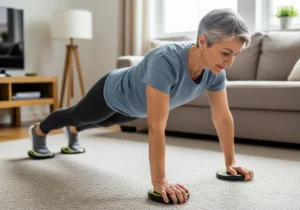
Planks: The ultimate isometric hold. Rest on your forearms and toes, keeping your body in a perfectly straight line from head to heel. Squeeze your glutes and actively pull your belly button toward your spine.
Mountain Climbers: This combines core stabilization with cardiovascular conditioning. Start in a push-up position and rapidly drive alternating knees toward your chest, keeping your hips as stable as possible.
Abs Workout at Home (Beginner Routine)
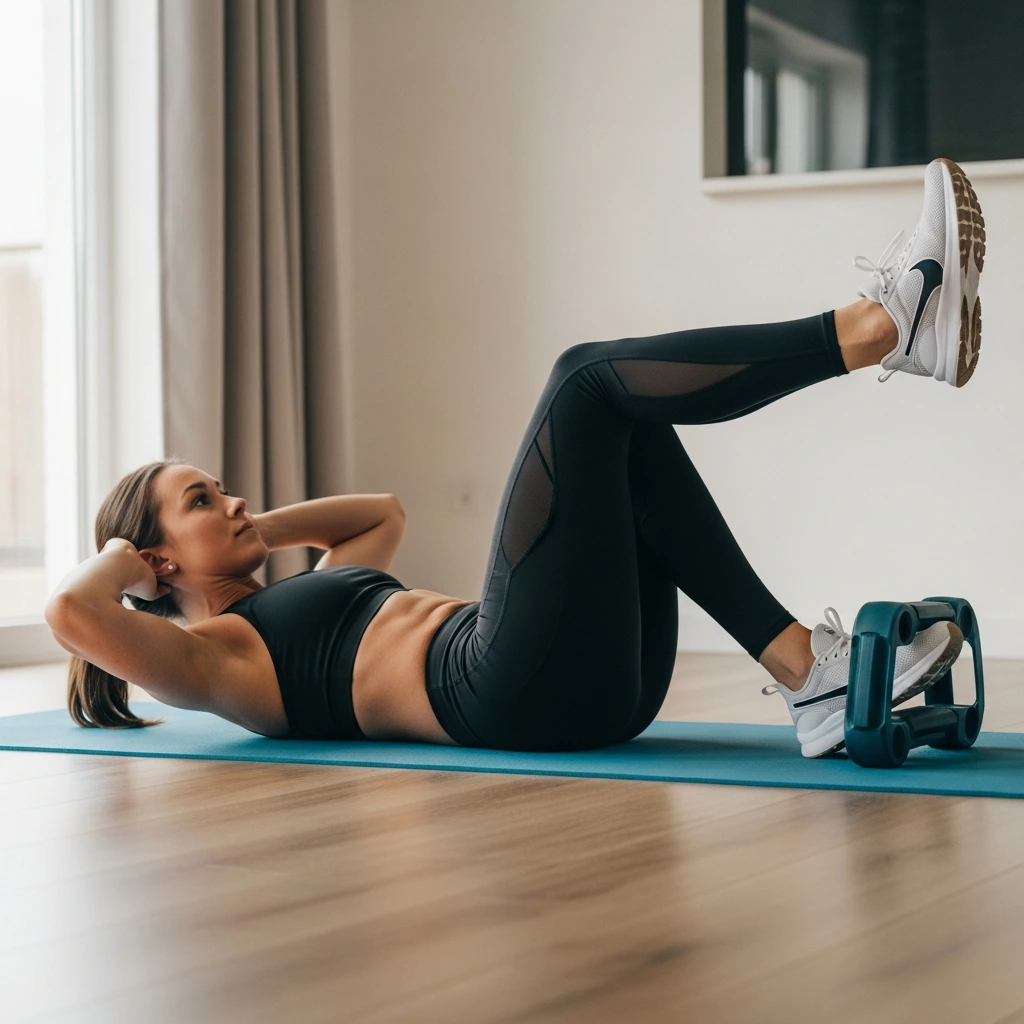
For those just starting, consistency is more important than intensity. This beginner routine focuses on establishing a strong mind-muscle connection without overloading the lumbar spine.
Perform this circuit three times, resting for 60 seconds between each full round. Focus entirely on the quality of the contraction rather than rushing through the repetitions.
- 10 standard crunches (pause for 1 second at the top of each rep)
- 10 lying leg raises (bend knees slightly if necessary)
- 20-second forearm plank (focus on deep, controlled breathing)
- 10 bird-dogs (alternating arm and leg extensions on all fours)
Fitness Abs Exercises Without Equipment
Relying on bodyweight-only training is not a limitation; it is an advantage for mastering biomechanics. It forces you to rely entirely on muscular tension rather than using momentum to move external weights.
These routines are ideal for beginners because they carry a very low risk of injury. You can safely practice these movements daily until the neurological pathways become highly efficient.
As you progress, you make bodyweight exercises harder not by adding weight, but by manipulating leverage. Moving your arms further above your head during a crunch or extending the length of a plank drastically increases the mechanical difficulty.
Best Abs Exercises at the Gym
When you transition from home workouts to a commercial facility, you gain access to tools that provide progressive overload. The best abs exercises at the gym utilize cables and structural frames to apply constant tension to the core muscles.
Cable Crunches: This is arguably the king of gym-based upper ab exercises. Kneeling in front of a cable pulley with a rope attachment, you crunch your torso downward. The cable provides continuous, heavy resistance throughout the entire range of motion, which is impossible to achieve with body weight alone.
Hanging Leg Raises: Utilizing a pull-up bar or a captain’s chair, this exercise aggressively targets the lower abs and hip flexors. Because your body is suspended, your core must work twice as hard to prevent you from swinging, making it an elite stabilization movement.
Abdominal Crunch Machine: While free weights and cables are preferred for functional strength, seated crunch machines are excellent for isolating the rectus abdominis. They allow you to safely load a massive amount of weight, which is essential for building blocky, visible abdominal muscle bellies.
Abs Workout Using Gym Equipment
To build a comprehensive abs workout using gym equipment, you should focus on mixing heavy resistance with instability training. The gym offers the perfect environment to challenge your core from multiple angles.
Start with heavy resistance using the cable tower for 3 sets of 12-15 kneeling cable crunches. This builds the primary muscle tissue. Next, move to a pull-up bar for 3 sets of hanging leg raises to target the lower abdominal fibers.
Finish your routine with instability work using a Swiss stability ball. Performing crunches or plank roll-outs on a stability ball forces your deep transverse abdominis to fire rapidly to keep you from falling off, bridging the gap between strength and functional balance.
Abs Workout Gym Routine (Male & Female)
From a pure anatomical standpoint, male and female abdominal muscles are exactly the same. However, an abs workout gym routine often differs based on specific aesthetic or athletic goals my patients express in the clinic.
For men, the focus is often on strength and hypertrophy (muscle growth) to build a thick, deeply separated six-pack. Their routines should prioritize weighted resistance, lower rep ranges (8-12 reps), and explosive movements like medicine ball slams.
For women, the goal is frequently core endurance, pelvic floor integration, and a toned, streamlined midsection. These routines often prioritize higher volume (15-20 reps), isometric holds, and Pilates-based movements like the hollow body hold or stability ball pikes.
Fitness Abs Exercises for Men
In my sports medicine practice, I find that men often neglect their core until a lower back injury forces them to pay attention. Fitness abs exercises for men must counteract the heavy spinal compression caused by heavy squats and deadlifts.
The focus should be on building a rigid, unyielding midsection. Ab rollouts using an ab wheel are phenomenal for this. As you extend your arms forward, your core must engage maximally to prevent your lower back from collapsing toward the floor.
Additionally, weighted carries (like the Farmer’s Walk) should be a staple. Carrying heavy dumbbells at your sides while walking forces the obliques and transverse abdominis to contract fiercely to keep the spine perfectly upright.
Best Abs Exercises for Men
When filtering down to the absolute best abs exercises for men, high-intensity resistance is the deciding factor. You must treat the abs like any other muscle group, such as the chest or biceps, which require heavy loads to grow.
Weighted decline sit-ups hold the top spot for upper ab development. By holding a weight plate across your chest on a decline bench, you force the rectus abdominis to lift a significantly heavier load against gravity.
For the obliques, heavy cable woodchoppers are unbeatable. They mimic the functional, twisting power required in sports like golf, baseball, and martial arts, building functional athletic power alongside dense muscle tissue.
Fitness Abs Exercises for Women
Postural alignment and pelvic stability are incredibly common focal points in my clinic for female patients, especially postpartum. Fitness abs exercises for women should emphasize repairing and strengthening the deep inner corset of the core.
Bicycle crunches are a superb starting point, as they engage the upper abs, lower abs, and obliques simultaneously without requiring heavy weights. Proper form is crucial; the movement should be slow and deliberate, not a frantic pedaling motion.
Pilates-based core work, such as “The Hundred” or controlled toe taps from a tabletop position, is highly effective. These movements teach the central nervous system to engage the deep transverse abdominis before moving the limbs, which flattens the stomach and protects the lower back.
Lower Abs Exercises (Targeted Training)
The lower rectus abdominis is the most frustrating area for many people to develop. Lower abs exercises require you to stabilize your upper body while pulling your pelvis upward.
Reverse crunches are the gold standard here. Lying flat on your back, you bend your knees and contract your abs to lift your hips directly off the floor. The key is to use pure abdominal strength to lift the pelvis, rather than swinging your legs to generate momentum.
Another excellent targeted movement is the flutter kick. Keeping your lower back glued to the floor, you hover your legs a few inches above the ground and flutter them up and down. This creates intense, sustained time-under-tension for the lower abdominal fibers.
Standing Abs Exercises
Not everyone is comfortable getting down on the floor, particularly older patients or those with mobility issues. Standing abs exercises are a highly functional alternative that trains the core in the upright position we use in daily life.
Standing bicycle crunches (bringing an elbow to the opposite lifting knee) improve balance while engaging the obliques. Standing cable twists also provide fantastic rotational strength while keeping the load off the cervical spine.
Weighted Abs Exercises (Advanced)

Once you can easily perform 20 bodyweight crunches or hold a two-minute plank, you have reached a plateau. To continue progressing, you must introduce weighted abs exercises.
Dumbbell sit-ups and weighted Russian twists force the core to adapt to external resistance. Remember, adding weight increases the risk of injury, so strict form must be maintained. If your lower back starts to ache, the weight is too heavy.
Physical Fitness Abs Exercises (Functional Core Training)
True physical fitness abs exercises move beyond aesthetics and focus on how the body operates as a single unit. Functional core training involves stabilizing the spine while the limbs are in dynamic motion.
Exercises like the TRX suspended plank or single-arm kettlebell presses require the core to actively resist rotation and extension. This is the exact type of strength required to prevent sports injuries and improve athletic performance on the field.
24 Hour Fitness Abs Exercises (Gym-Based Example)
If you frequent large commercial gyms, building a 24 Hour Fitness abs exercises routine is easy due to the variety of equipment. You want to utilize the machines that provide the smoothest resistance profiles.
Start at the cable tower for standing cable crunches. Then, move to the roman chair for back extensions (remembering to train the posterior core). Finish in the turf area with medicine ball Russian twists to fully exhaust the obliques.
Men’s Health Style Abs Workouts (Media-Inspired)
Many patients ask me about the intense, circuit-style routines popularized by fitness magazines. A Men’s Health style abs workout typically combines high-intensity interval training (HIIT) with core isolation.
These routines are characterized by back-to-back exercises with minimal rest. For example: 30 seconds of mountain climbers, immediately followed by 30 seconds of V-ups, followed by a 30-second hollow hold. It is highly effective for cardiovascular conditioning and core endurance.
Common Mistakes in Abs Training
The most common mistake I see clinically is overtraining. Your abs are a relatively small muscle group; doing 500 crunches a day will not yield faster results, but it will likely cause cervical spine (neck) strain.
Ignoring your diet is another massive error. You can have the strongest, most well-developed abdominal muscles in the world, but if they are covered by a layer of subcutaneous adipose tissue (fat), they will never be visible.
Finally, poor form—specifically arching the lower back during leg raises or pulling on the neck during crunches—negates the effectiveness of the exercise and actively damages the spinal discs.
How Often Should You Train Abs?
Your core muscles recover faster than larger muscle groups like the chest or legs, but they still require rest. I generally recommend training the abs directly 2 to 4 times per week.
On the days you are not doing isolated ab exercises, your core is still getting a workout if you are performing heavy compound lifts like squats, deadlifts, or overhead presses. Ensure you leave at least 48 hours of recovery between intense, weighted core sessions.
Do Abs Exercises Burn Belly Fat? (Myth vs Fact)
Let me address the most pervasive myth in fitness: spot reduction. Doing hundreds of crunches will not burn the fat directly over your stomach. Biologically, the body does not work that way.
When you exercise, your body mobilizes stored fat from all over the body systemically, dictated largely by genetics and hormones. To reveal your abdominal muscles, you must achieve an overall caloric deficit through a combination of proper nutrition, cardiovascular exercise, and total-body strength training.
Frequently Asked Questions
What are the absolute best abs exercises for a beginner?
For absolute beginners, safety and core activation are the priorities. The standard forearm plank, basic floor crunches, and the bird-dog exercise are the best starting points. These movements teach you how to properly brace your spine without placing dangerous sheer force on your lower back.
Can I train my abs every single day?
While you can, it is generally not recommended from a sports medicine perspective. Like any skeletal muscle, the abs need time to repair micro-tears to grow stronger. Training them intensely every day leads to overtraining, poor form, and diminishing returns. Aim for 3 to 4 dedicated sessions a week.
Why does my lower back hurt when I do leg raises?
If your lower back hurts during leg raises, it means your core is not strong enough to keep your pelvis tilted backward. Consequently, your lower back arches off the floor, transferring the load from your abs to your lumbar spine. To fix this, bend your knees or shorten your range of motion until you can keep your back completely flat.
Do I need to use weights to get a six-pack?
No, you do not need weights to achieve visible abs. Visible abs are primarily a result of low body fat percentage. However, if you want your abs to look blocky, deep, and heavily muscular, adding resistance (like cable crunches) will force the muscle bellies to grow thicker (hypertrophy), just like your biceps.
Are abs exercises different for men and women?
Anatomically, the core muscles are identical in men and women, meaning the exercises function the exact same way. The only differences in routines usually stem from personal goals: men often prefer weighted exercises for muscle thickness, while women frequently lean toward Pilates-based movements for core endurance and pelvic floor stability.
Conclusion
Mastering your fitness abs exercises is the single most important investment you can make in your long-term physical health. Throughout my career in sports medicine, I have never seen a patient regret building a stronger core, but I have treated thousands who suffered the consequences of neglecting it.
Whether your goal is to achieve a chiseled six-pack, improve your athletic performance, or simply wake up without lower back pain, the principles remain the same.
You must train the entire core cylinder—upper, lower, obliques, and the deep transverse abdominis—using a mix of bodyweight stability and progressive resistance.
Remember that consistency in your training, strict adherence to proper form, and a dedicated approach to your overall nutrition are the true keys to success.
Start incorporating these routines into your weekly schedule, respect your body’s need for recovery, and you will build a midsection that is as functionally strong as it is aesthetically pleasing.
Authoritative References:
- PubMed – Core Muscle Activity During Physical Fitness Exercises: A Systematic Review
- PubMed – Electromyographic analysis of traditional and nontraditional abdominal exercises: implications for rehabilitation and training
- Harvard Health – The real-world benefits of strengthening your core
- Mayo Clinic – Core exercises: Why you should strengthen your core muscles
- American Council on Exercise (ACE) – Beginner Ab & Core Exercises to Increase Stability and Mobility
Related Posts

MORE from Author
Read More As a physician specializing in exercise science and public health, I regularly consult patients who feel completely lost in the…
 Just last week, a 34-year-old patient named Clara sat in my clinic, feeling entirely overwhelmed by the modern fitness industry.…
 Hello, I am Dr. Kenji Sato, MD, specializing in sports medicine and performance optimization. In my sports clinic, I constantly…
- In my clinical practice as a physician focused on exercise science, I often tell patients that mastering fitness bench workouts…