Shoulder Pain Fitness: Causes, Treatment & Safe Exercises for Recovery

As a sports medicine physician, I see athletes struggling with upper-body injuries almost every single day. Navigating shoulder pain fitness requires a deep understanding of your body’s anatomy and biomechanics.
Just last week, I interviewed a patient named Marcus, a dedicated weightlifter who could barely raise his arm to comb his hair.
Marcus had completely ignored the early warning signs of joint distress during his routine overhead presses. He tried to push through the discomfort, which ultimately resulted in severe, chronic inflammation.
My goal as a medical professional is to help you understand these physical signals so you can recover safely.
TL;DR (Quick Summary)
- Shoulder pain during workouts is often due to overuse, poor form, or rotator cuff strain.
- Do not ignore sharp or persistent pain; it indicates tissue damage.
- Rest, mobility work, and proper technique are key to recovery.
- Some exercises must be avoided completely during pain flare-ups.
- Seek medical care immediately if symptoms worsen or involve weakness.
Why Does Shoulder Pain Happen During Workouts?
The shoulder is the most mobile joint in the human body, but this incredible flexibility comes at the cost of structural stability. When you experience shoulder pain while lifting weights, it is usually your body’s alarm system signaling mechanical failure. The joint relies heavily on a delicate network of muscles and tendons to stay centered.
If your shoulder hurts when lifting weights, overuse injuries are often the primary culprit. Repeating the exact same pressing motions day after day without adequate rest prevents your cellular tissues from repairing. This constant micro-trauma slowly degrades the tendon fibers over time, leading to inflammation.
Poor lifting form also heavily contributes to joint degradation and acute pain. When you lift heavy weights with compromised posture, you force the smaller stabilizing muscles to handle loads they weren’t designed for. This improper mechanical leverage creates severe wear and tear on the cartilage.
Muscle imbalances are another massive factor I see in my clinical practice. Many gym-goers overtrain their chest and front deltoids while completely neglecting their upper back muscles. This pulls the shoulder joint forward, decreasing the space within the joint and causing painful friction.
Finally, rotator cuff strain is incredibly common among dedicated fitness enthusiasts. The rotator cuff is a group of four small muscles that keep the upper arm bone securely in the shoulder socket. When these tiny muscles are fatigued or weak, the entire shoulder structure becomes heavily compromised.
Common Causes of Shoulder Pain After Lifting
Identifying the exact physiological issue is the first step toward lasting recovery. If you regularly experience shoulder pain after lifting weights, you might be dealing with tendinitis. This occurs when the tendons become painfully inflamed due to repetitive stress and heavy mechanical loading.
Impingement syndrome is another frequent diagnosis I give to patients with shoulder pain after heavy lifting. This happens when the shoulder blade painfully pinches the underlying rotator cuff tendons when you raise your arm. It often creates a sharp, catching pain during overhead movements.
You must also distinguish between joint pain and a sore shoulder from lifting weights caused by standard muscle fatigue. Muscle strain happens when muscle fibers tear from excessive force. While delayed onset muscle soreness (DOMS) is normal, sharp, localized tendon pain is a medical red flag.
Shoulder Pain After Pull-Ups: Why It Happens
Pull-ups are a phenomenal compound exercise, but they place immense stress on the upper body. Experiencing shoulder pain after pull-ups usually points to weak scapular (shoulder blade) stabilizers. If your back muscles fail, the shoulder joint absorbs the entire pulling force.
Additionally, dead-hanging at the bottom of a pull-up with relaxed shoulders puts dangerous tension on your ligaments. You must keep your shoulders “active” and pulled down slightly to protect the joint capsule. Failing to do so causes extreme overhead stress and joint laxity.
Is It Normal to Not Feel Sore After Shoulder Workouts?
Many patients worry if they experience their shoulders not sore after workout sessions. Let me be clinically clear: extreme muscle soreness is not a requirement for an effective workout. Soreness simply indicates that your body experienced a novel stimulus.
As your central nervous system adapts to a routine, you will naturally experience much less soreness. This neuromuscular adaptation is actually a sign of physical progress and recovery efficiency. Focus on progressive overload and strength gains rather than chasing painful soreness.
Is It Okay to Workout Through Shoulder Pain?
This is the most critical question I get asked in my medical practice. Is it okay to work out despite shoulder pain? The short answer is a definitive no, especially if the pain is sharp, stabbing, or alters your lifting mechanics.
Mild, dull discomfort might just be standard fatigue, which can be managed with lighter weights. However, pushing through sharp or worsening pain will almost certainly escalate a minor inflammation into a severe tear. You must prioritize rest, ice, and proper medical evaluation.
Warning Signs of a Serious Shoulder Injury
Recognizing clinical red flags can save you from requiring extensive orthopedic surgery. If you are wondering what two warning signs of a rotator cuff tear are, the first is sudden, profound weakness. You may physically be unable to lift your arm above your waist.
The second major warning sign is severe pain that wakes you up from a deep sleep. Night pain is heavily correlated with significant rotator cuff pathology. If you experience these symptoms or a visible deformity, stop exercising immediately and seek professional medical care.
How to Fix Shoulder Pain from the Gym
When patients ask me how to fix shoulder pain from gym routines, my first prescription is always active rest. This does not mean completely immobilizing your arm, which can lead to a frozen shoulder. Instead, you must stop the specific movements that trigger the pain while maintaining gentle mobility in pain-free ranges of motion.
Ice and heat therapy are foundational tools for early recovery. During the first 48 hours of an acute flare-up, applying ice for 15-minute intervals drastically reduces swelling. After the initial inflammation subsides, switching to a heating pad increases blood flow, which brings essential nutrients to the damaged tendon tissues.
A gradual return to lifting is non-negotiable. Once your daily pain subsides, you cannot immediately jump back to your previous lifting weights. You must start with light resistance bands and bodyweight movements, systematically rebuilding the tissue tolerance before touching a barbell again.
Shoulder Pain After Workout Treatment

Proper shoulder pain after workout treatment relies on the clinically proven RICE protocol (Rest, Ice, Compression, Elevation), slightly modified for the upper body. While you cannot easily elevate a shoulder, compression sleeves can provide proprioceptive feedback and gentle support to the inflamed joint capsule.
Over-the-counter NSAIDs (Non-Steroidal Anti-Inflammatory Drugs) like ibuprofen can be highly effective for managing acute tendon pain. However, as a physician, I strictly advise against using NSAIDs simply to mask the pain so you can continue lifting. They are a recovery aid, not a performance enhancer.
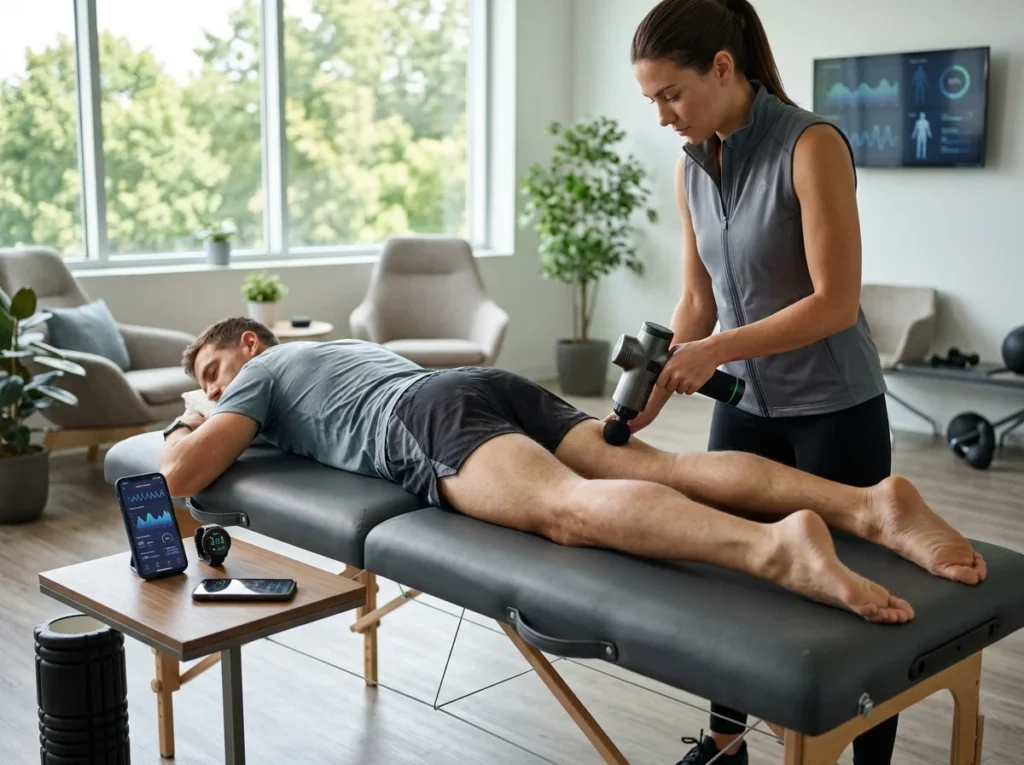
For stubborn or chronic pain, targeted physical therapy is the gold standard of treatment. A licensed therapist will use techniques like manual tissue mobilization and ultrasound therapy to break down scar tissue. They will also identify your specific biomechanical flaws to prevent the injury from recurring.
Quick Relief from Shoulder Pain
Sometimes you need quick relief from shoulder pain just to get through your workday or sleep comfortably. Gentle pendulum swings are highly effective for immediate relief. Bend at the waist, let your painful arm dangle freely, and use your torso momentum to swing the arm in small circles, decompressing the joint.
Therapeutic massage, specifically cross-friction massage on the rotator cuff tendons, can also provide rapid pain reduction. If you do not have access to a therapist, using a lacrosse ball against a wall to gently massage the rear deltoid and scapula region can release tight muscle knots and relieve tension.
Best Exercises for Shoulder Pain and Weakness
Rehabilitation is an active process. The best exercises for shoulder pain and weakness focus entirely on the stabilizing muscles rather than the primary movers. Resistance band pull-aparts are my top recommendation. Hold a light band in front of you and squeeze your shoulder blades together to pull the band apart, strengthening the upper back.
Scapular push-ups (or “push-up plus”) are another vital movement. Start in a standard plank position with straight arms. Without bending your elbows, let your chest sink toward the floor by retracting your shoulder blades, then push the floor away to spread them apart. This builds immense serratus anterior strength.
Physiotherapy Exercises for Shoulder Pain
Clinical physiotherapy exercises for shoulder pain almost always prioritize the rotator cuff. External rotations are mandatory for most recovery protocols. Lie on your side with a light dumbbell (1-3 lbs) or stand using a resistance band. Keep your elbow tucked against your ribs and rotate your forearm outward.
Isometric holds are also phenomenal for tendons that are too painful for dynamic movement. Stand facing a wall, bend your elbow to 90 degrees, and push your fist into the wall without actually moving your arm. Hold this maximal contraction for 10 seconds to build strength without grinding the joint.
Shoulder Pain Exercises at Home
You do not need a clinical setting to rehabilitate your joints. Effective shoulder pain exercises at home can be done with zero equipment. The “Y-T-W” prone raise is highly effective. Lie face down on the floor and raise your arms to form the letters Y, T, and W, pausing at the top of each movement.
The “Wall Angel” is another exceptional home exercise for postural correction. Stand with your back, head, and heels flat against a wall. Raise your arms to 90 degrees (like a goalpost) against the wall, and slowly slide them upward without letting your lower back arch off the surface.
Shoulder Pain Stretches
Restoring flexibility is just as important as building strength. Effective shoulder pain stretches should never cause sharp pain, only a mild pulling sensation. The cross-body stretch is a classic: pull your affected arm across your chest using your opposite hand, holding the stretch for 30 seconds to release the rear capsule.
The doorway stretch is essential for combating the hunched posture caused by heavy chest workouts. Stand in a doorway, place your forearms on the doorframe at shoulder height, and gently lean your torso forward. This opens up the tight pectoral muscles that pull the shoulder joints out of alignment.
Exercises to Avoid with Shoulder Pain
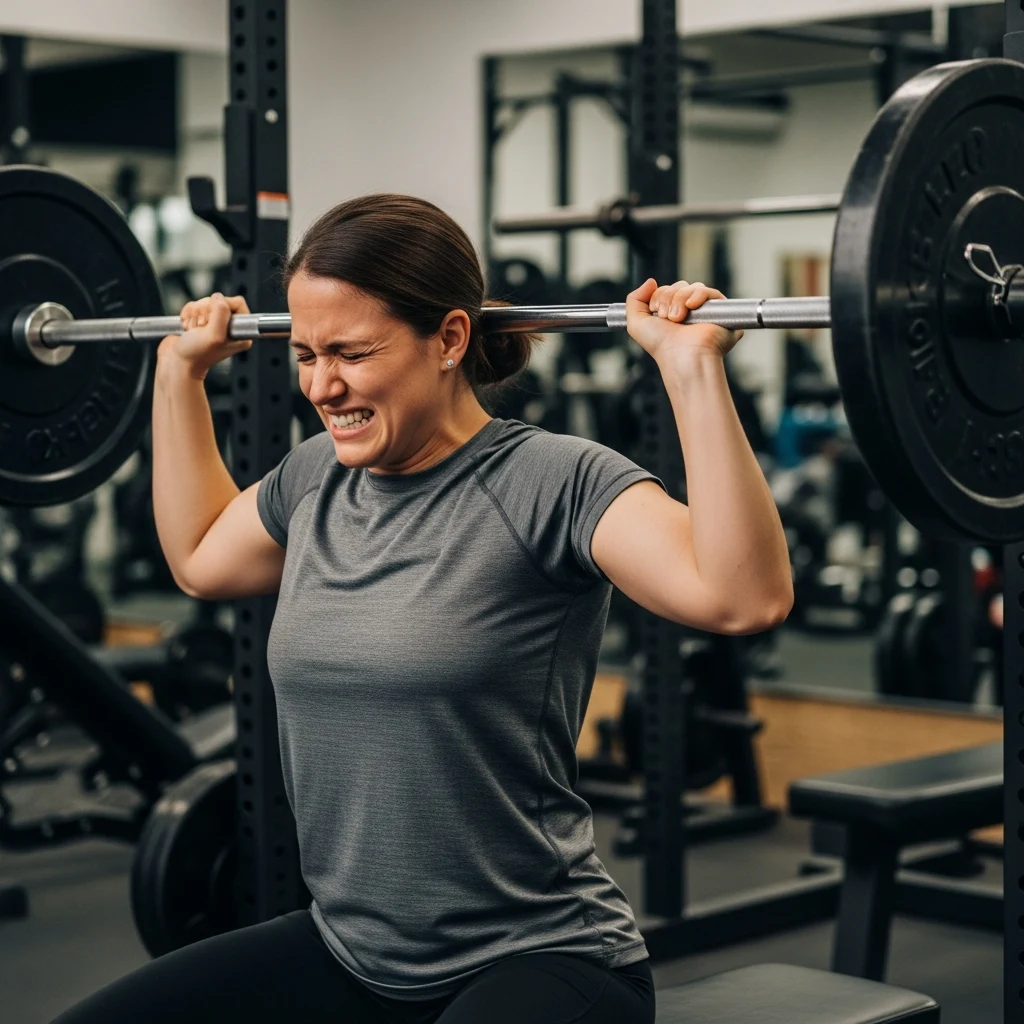
Knowing what not to do is half the battle. There are specific shoulder pain exercises to avoid entirely until you are fully healed. Heavy barbell overhead presses are the most dangerous, as they require perfect mobility and stability that an injured joint simply lacks.
Behind-the-neck lat pulldowns and behind-the-neck military presses force the shoulder joint into extreme external rotation and abduction. This anatomically vulnerable position heavily pinches the rotator cuff tendons against the acromion bone. Avoid these variations permanently if you have a history of impingement.
Upright rows with a narrow grip are equally destructive to the shoulder capsule. Pulling a barbell up to your chin internally rotates the shoulder while elevating it, which is the exact mechanical mechanism used in orthopedic tests to intentionally provoke impingement pain.
Can You Lift Weights with Bad Shoulders?
Many aging athletes ask about weight lifting with bad shoulders. You absolutely can, but your exercise selection must evolve. You must swap straight barbells for dumbbells, which allow your wrists and shoulders to move in a natural, individualized arc rather than being locked into a fixed path.
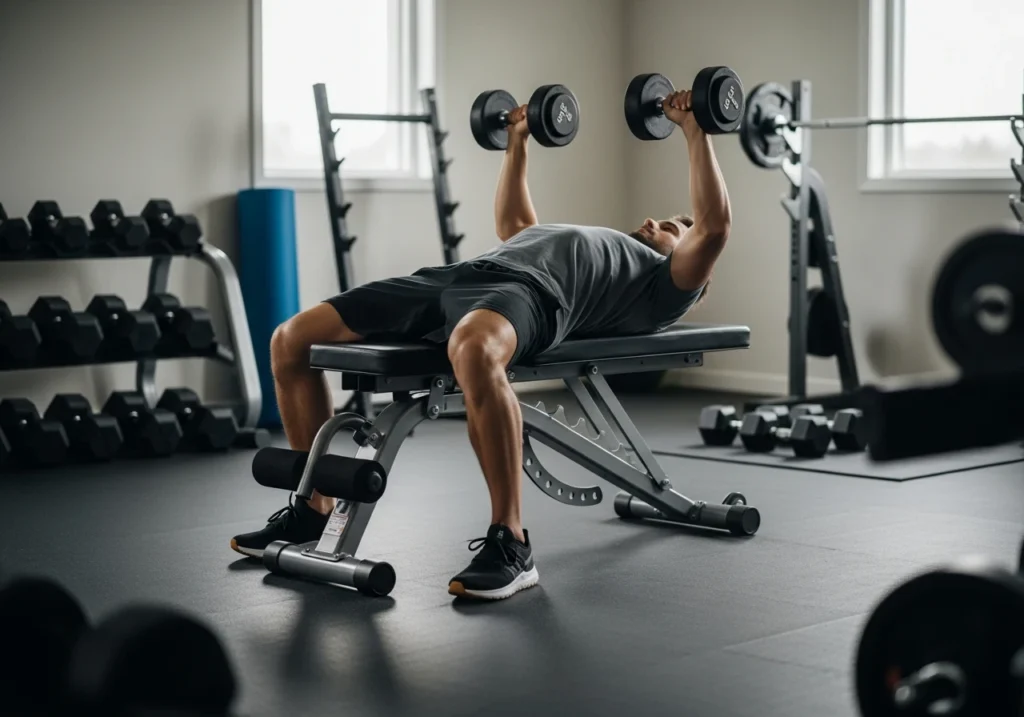
Neutral grip pressing (palms facing each other) is a game-changer for compromised shoulders. Using a Swiss bar for bench pressing or keeping your elbows tucked tightly to your sides during dumbbell presses drastically reduces the shearing forces placed on the anterior shoulder capsule.
Does Weightlifter’s Shoulder Go Away?
“Weightlifter’s shoulder” (distal clavicular osteolysis) is a condition where repetitive heavy lifting actually causes micro-fractures and bone deterioration at the collarbone joint. When patients ask, “Do weightlifters’ shoulders go away?”, I explain that it requires strict modification of your routine.
With prolonged rest from heavy bench pressing, dips, and overhead movements, the bone tissue can often remodel and heal itself. However, if a patient ignores the pain for years, the joint may degenerate to the point where an outpatient arthroscopic surgery is required to shave down the damaged bone.
Prevention Tips for Shoulder Pain
Preventing injuries is vastly easier than rehabilitating them. A comprehensive warm-up is your primary defense. Never start a heavy lifting session without 5-10 minutes of dynamic mobility work, such as arm circles, band dislocations, and light cable face-pulls to lubricate the joint.
You must also balance your training volume. For every “pushing” exercise you perform (bench press, overhead press), you must perform at least two “pulling” exercises (rows, pull-ups, face-pulls). This 2:1 ratio ensures your posterior chain is strong enough to anchor the shoulder joint securely.
When to See a Doctor
While conservative management works for many strains, certain symptoms require immediate medical intervention. You should schedule a visit with a sports medicine physician if your shoulder pain persists for more than two weeks despite resting and icing the joint.
Seek immediate emergency care if the pain is the result of a sudden, traumatic pop or tear during a heavy lift. A visible bulge in the muscle belly, profound bruising down the bicep, or a complete inability to lift a coffee cup are signs of a catastrophic tendon rupture that may require prompt surgical repair.
Frequently Asked Questions
Why does my shoulder hurt after lifting?
Post-lifting pain is usually caused by micro-tears in the rotator cuff tendons or acute inflammation of the bursa sac (bursitis). This happens when lifting mechanics are poor or when the shoulder stabilizers are too fatigued to keep the joint centered during heavy loads.
Can I still work out with shoulder pain?
You should never train the injured shoulder directly while experiencing sharp pain. However, you can safely perform lower-body exercises (like leg presses) or core work, provided these movements do not require you to brace or stabilize heavily with the painful arm.
What exercises help with shoulder pain?
Exercises that strengthen the scapular retractors and rotator cuff provide the most relief. Resistance band pull-aparts, face-pulls, and isometric external rotations help pull the shoulder joint back into a healthy alignment, reducing painful friction within the joint capsule.
How long does shoulder pain take to heal?
A minor muscle strain may resolve in 7 to 10 days with proper rest and ice. However, severe tendinitis or a mild rotator cuff tear can take anywhere from 6 to 12 weeks of dedicated physical therapy to fully heal and remodel the damaged tissue.
What should I avoid with shoulder pain?
You must strictly avoid all overhead pressing, heavy flat bench pressing, dips, and any behind-the-neck pulling movements. Sleeping directly on the injured shoulder can also severely compress the inflamed tissues, so try to sleep on your back or the opposite side.
Conclusion
Navigating shoulder pain fitness requires a delicate balance between the desire for progress and the necessity of preservation. In my years as a sports medicine physician, I have learned that the most successful athletes are not those who push through every pain, but those who possess the wisdom to pause and recalibrate.
Your shoulders are the biomechanical hinges of almost every upper body movement, and treating them with respect is the ultimate secret to lifting longevity.
I recently saw Marcus, the patient mentioned earlier, for a follow-up appointment three months after his initial injury. He had fully embraced the “stabilizer-first” philosophy and spent twelve weeks focusing on the physiotherapy exercises we discussed.
Not only had his pain vanished, but he was actually pressing more weight than before. By fixing his underlying muscle imbalances, he had created a more stable, powerful platform for his heavy lifts.
If you are currently struggling with discomfort, remember that resting today is an investment in your ability to train for the next twenty years.
Listen to your body’s signals, prioritize your warm-ups, and don’t be afraid to swap a barbell for dumbbells if it feels better for your joints. Fitness is a marathon of consistency, and a healthy shoulder is your most valuable asset on that long road to strength and vitality.
Authoritative References:
- PMC: Exercise Into Pain in Chronic Rotator Cuff-Related Shoulder Pain (RCT)
- PMC: Shoulder-Specific Exercise Therapy for Chronic Shoulder Pain (Network Meta-Analysis)
- PubMed: Leisure-Time Physical Activity and Shoulder Pain Protection
- American College of Sports Medicine (ACSM): Physical Activity Guidelines
Related Posts


MORE from Author
Read More As a physician specializing in exercise science and public health, I regularly consult patients who feel completely lost in the…
 Just last week, a 34-year-old patient named Clara sat in my clinic, feeling entirely overwhelmed by the modern fitness industry.…

 Hello, I am Dr. Kenji Sato, MD, specializing in sports medicine and performance optimization. In my sports clinic, I constantly…
- In my clinical practice as a physician focused on exercise science, I often tell patients that mastering fitness bench workouts…