Bicep Fitness: Best Workouts, Machines, and Injury Prevention Tips
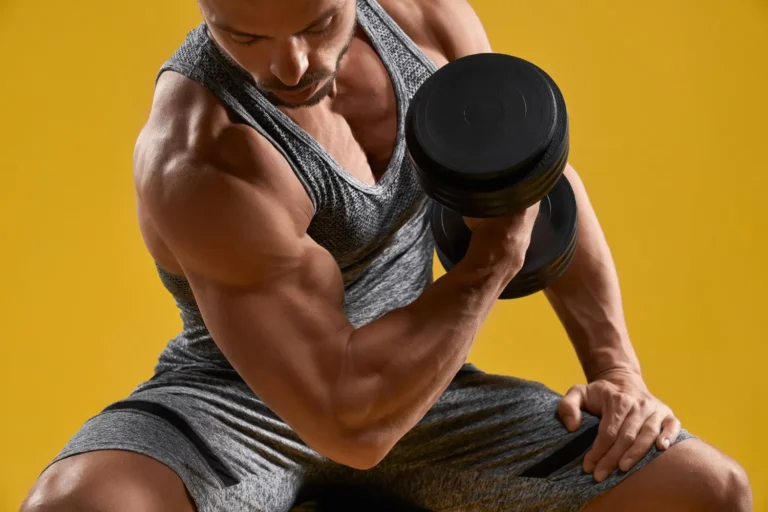
Hello, I am Dr. Kenji Sato, MD. As a physician specializing in sports medicine and exercise science, I spend a significant portion of my clinic hours treating preventable lifting injuries. Just last week, a dedicated gym-goer named Mark came to my office complaining of a sharp, persistent ache in his front shoulder.
He thought he had a rotator cuff issue, but an examination revealed severe bicep tendonitis caused by poor lifting mechanics.
Mark’s story is incredibly common. Many lifters aggressively chase arm growth without understanding the underlying mechanics of bicep fitness.
True bicep fitness is not just about isolated muscle hypertrophy; it is about building functional strength while rigorously protecting your tendons and elbow joints from unnecessary wear and tear.
In this comprehensive medical and fitness guide, we will break down exactly how to train your biceps effectively. Whether you are lifting heavy in a commercial gym or using bodyweight at home, applying evidence-based biomechanics will help you achieve your goals safely.
Key Takeaways
- Train your biceps with a variety of tools: dumbbells, machines, and bodyweight.
- Focus aggressively on strict form and a slow, controlled lowering phase to prevent injuries.
- Recovery (sleep and protein) is just as critical as the workout itself.
- Never sacrifice proper biomechanics just to lift a heavier weight.
What Is Bicep Fitness?
Bicep fitness refers to the structured training and strengthening of the biceps brachii muscles through highly targeted exercises, specialized equipment, and proper biomechanical technique. It encompasses both the aesthetic goal of muscle growth and the functional goal of improving pulling power.
From a clinical perspective, maintaining fitness in your biceps is crucial for daily living. These muscles are responsible for elbow flexion and forearm supination (turning your palm upward).
When you neglect proper training principles, you risk creating muscle imbalances that pull your shoulders forward, leading to chronic postural issues and joint pain.
What Component of Fitness Are Bicep Curls?
When we evaluate exercise in sports medicine, we categorize it by its physiological impact. Bicep curls primarily target two distinct components of physical fitness, depending on how you structure your sets and repetitions.
Muscular Strength
If you are performing bicep curls with a heavy weight that you can only lift for 4 to 6 repetitions, you are training for muscular strength. This approach thickens the muscle fibers and strengthens the connective tissue, allowing you to lift heavier loads over time.
Muscular Endurance
Conversely, if you select a lighter weight and perform 15 to 20 repetitions, you are training muscular endurance. This component improves your muscles’ ability to sustain repeated contractions over a prolonged period without succumbing to immediate fatigue, which is vital for athletic performance.
Bicep Anatomy (Quick Guide)
To train effectively, you must understand what you are actually moving. The term “biceps” literally means “two heads,” referring to the two distinct muscle bundles that make up the front of your upper arm.
The long head runs along the outside of your arm and forms the “peak” of the bicep when flexed. It is heavily activated when your arms are positioned slightly behind your body, such as during incline dumbbell curls.
The short head runs along the inside of your arm, contributing to the overall width and thickness of the muscle.
Understanding the biomechanics of the curl is crucial for maximizing tension without stressing the joint. Let’s look at how the angle of your elbow changes the physical tension on your muscle. Use the interactive tool below to adjust the elbow angle and observe where the bicep must work the hardest.
Best Bicep Gym Exercises
A commercial gym provides the optimal environment for progressive overload. By utilizing free weights, you force your stabilizer muscles to engage, promoting a more holistic arm development. Here are the core movements every routine should include.
Barbell Curls
The strict standing barbell curl is the undisputed king of mass building. Because you are using both arms simultaneously on a fixed bar, you can move significantly more weight than with dumbbells. To perform this safely, brace your core, keep your glutes tight, and absolutely refuse to use momentum to swing the bar upward.
Dumbbell Curls
Dumbbells offer a superior range of motion and allow for wrist supination. By rotating your wrists outward as you lift the weight, you force the bicep into a maximum contraction. Furthermore, using independent weights instantly highlights if your dominant arm is overcompensating for your weaker arm.
Hammer Curls
This variation requires you to maintain a neutral grip (palms facing each other) throughout the entire movement. Hammer curls target the brachialis—a muscle that sits underneath the bicep.
Developing the brachialis actually pushes the main bicep up, creating the illusion of a much larger arm, while also drastically improving your forearm strength.
Biceps Workout with Dumbbells
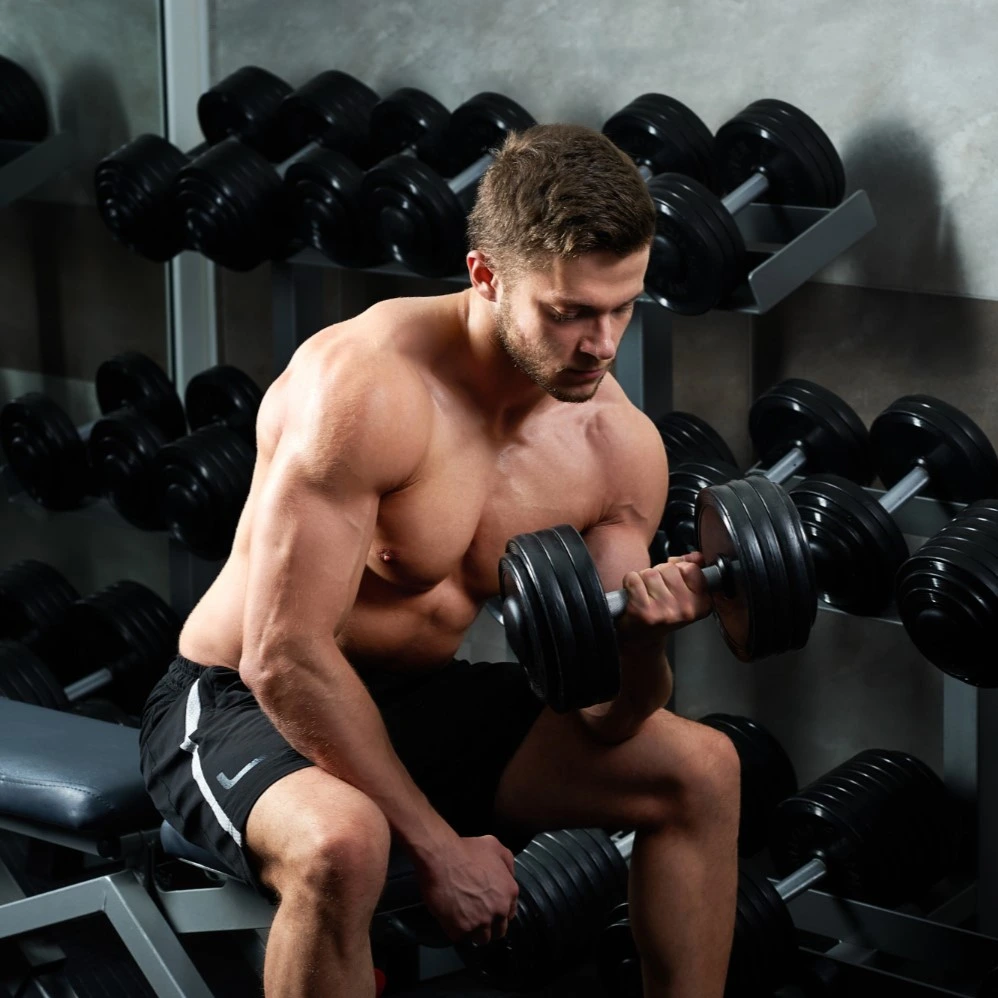
If you only have access to a set of dumbbells, you can still achieve elite-level arm development. This focused biceps workout with dumbbells is designed to hit the muscle from three completely different angles.
Alternating Curls (3 Sets of 10-12 Reps per arm)
Stand perfectly straight and curl one arm at a time. By alternating, you allow one arm a brief micro-rest while the other works, enabling you to use slightly heavier weights. Focus heavily on a slow, three-second eccentric (lowering) phase to maximize muscle fiber micro-tears.
Concentration Curls (3 Sets of 10 Reps)
Sit on a bench, lean forward, and press the back of your working arm firmly against the inside of your thigh. This completely isolates the bicep, preventing any shoulder momentum from assisting the lift. This is an exceptional movement for targeting the short head.
Hammer Curls (3 Sets of 12 Reps)
Finish the dumbbell routine with standing hammer curls. At this point, your primary bicep fibers will be fatigued. Shifting to a neutral grip recruits the forearms and brachialis, allowing you to push past standard failure and completely exhaust the arm complex.
Biceps Workout at Home
You do not need a gym membership to build incredible arm strength. A highly effective biceps workout at home requires minimal space and relies heavily on consistency rather than complex machinery.
The primary equipment needed for a home routine is a set of adjustable dumbbells or a few high-quality resistance bands.
Resistance bands are particularly excellent for home training because they provide “accommodating resistance”—meaning the exercise gets harder the higher you pull, matching the natural strength curve of the muscle.
Biceps Workout at Home Without Equipment
For those traveling or without access to any gear, you can still execute a brutal biceps workout at home without equipment. You simply have to leverage your own body weight and the concept of isometric tension.
Bodyweight Curls (Using Resistance)
You can use a heavy backpack filled with books or water bottles as a makeshift weight. Grip the top handle securely and perform strict, slow curls. Alternatively, if you have a sturdy horizontal bar or a secure table edge, you can perform inverted rows with an underhand grip, which heavily recruits the biceps.
Isometric Holds
Isometric training involves contracting the muscle without changing its length. To do this, grasp your right wrist with your left hand. Attempt to curl your right arm upward while simultaneously pushing down with your left hand to completely block the movement. Hold this maximum tension for 15 seconds, release, and switch arms.
Bicep Gym Machines Guide
While free weights are excellent for stabilizer muscles, a dedicated bicep gym machine provides something dumbbells cannot: constant tension. When you use a dumbbell, gravity only pulls straight down, meaning the tension on your muscle drops at the top and bottom of the movement.
Machines use cables and cams to redirect that resistance, ensuring your bicep is under maximum load throughout the entire range of motion. For patients recovering from minor wrist or shoulder tweaks, machines are often the safest starting point.
The two most effective machines are the preacher curl machine (which locks your elbows in place to prevent swinging) and the cable curl machine (which allows for multiple grip attachments and constant, smooth resistance).
How to Use the Bicep Curl Machine at Planet Fitness
Planet Fitness and similar commercial gyms typically use selectorized (pin-loaded) bicep machines. If you are learning how to use the bicep curl machine at Planet Fitness, follow these clinical biomechanics steps to protect your elbows.
First, adjust the seat height. Your chest should rest comfortably against the top pad, and your armpits should sit snugly over the top edge. Set a conservative weight using the pin.
Grip the handles firmly. The most critical step is to keep your elbows completely stable on the pad. Exhale and curl the weight upward in a smooth, controlled motion, squeezing hard at the top. Slowly lower the weight back to the starting position without letting the weight stack slam together.
How to Adjust the Bicep Curl Machine
Incorrect machine setup is a leading cause of joint pain. Knowing how to adjust a bicep curl machine is entirely about aligning your body’s natural pivot points with the machine’s mechanical pivot points.
Look at the side of the machine; there is usually a red or yellow dot indicating the axis of rotation. Your elbow joint must align perfectly with this dot.
If your elbows are too far forward or backward, the machine will create shear force across your elbow joint rather than loading the bicep muscle. Adjust the pad height until this alignment is perfect before lifting a single pound.
Biceps Workout Gym with Machine
Incorporating machines into your routine allows you to safely push your muscles to absolute failure. Here is an effective biceps workout gym with a machine routine that I often recommend for intermediate lifters.
Cable Curls (3 Sets of 15 Reps)
Attach a straight bar to the lowest pulley setting. Stand slightly back from the machine so the cable is taut from the very beginning. Perform slow, high-repetition sets to pump nutrient-rich blood into the muscle tissue.
Machine Preacher Curls (3 Sets of 10-12 Reps)
Move to the seated preacher machine. Because your arms are locked in, you can safely use a slightly heavier weight. Focus purely on the contraction, pausing for one full second at the top of every single repetition.
Biceps Workout Chart
To ensure progressive overload, you must track your volume. Use this foundational biceps workout chart to structure your routine, aiming to slightly increase the weight or reps every two weeks.
| Exercise | Sets | Reps | Primary Target |
| Dumbbell Curl | 3 | 10–12 | Overall Mass |
| Hammer Curl | 3 | 10 | Brachialis / Forearm |
| Cable Curl | 3 | 12 | Constant Tension |
| Machine Preacher | 3 | 10–12 | Short Head Isolation |
Short Head Bicep Exercises
If your arms look thin from the front, you need to focus on short head bicep exercises. The short head provides the width and thickness to the inner part of your upper arm.
To target the short head, your elbows need to be positioned in front of your body. Preacher curls are the absolute best movement for this. By resting your arms on the angled pad, you eliminate long head activation and force the short head to do all the work.
Concentration curls are another excellent option. By curling the dumbbell between your legs while seated, the angle naturally shifts the mechanical load directly onto the short inner muscle fibers.
Bicep Fitness Exercises (Complete List)
A truly comprehensive routine utilizes both compound and isolation movements. While direct bicep fitness exercises are important, do not ignore heavy pulling motions.
Compound Movements: Chin-ups (underhand grip), barbell rows, and lat pulldowns heavily recruit the biceps as secondary movers.
Isolation Movements: Barbell curls, dumbbell hammer curls, incline bench curls, and cable rope curls specifically target the arm fibers.
Free Biceps Workout Videos
Visualizing proper form is critical for injury prevention. I always advise my patients to utilize free biceps workout videos before attempting a new movement in the gym.
YouTube fitness channels led by certified physical therapists or exercise scientists are invaluable. Look for trainer-led routines that explicitly break down elbow positioning and wrist mechanics, rather than videos that just show heavy lifting.
Bicep Fitness Tracker Tools
In the age of modern sports science, guessing your progress is obsolete. Utilizing a bicep fitness tracker or app can drastically improve your long-term results.
Wearables like smartwatches track your heart rate and rest periods, ensuring you aren’t rushing your sets. Workout apps allow you to log your precise weights and repetitions, automatically calculating your progressive overload targets for the following week.
Prevent Muscle Tears: Bicep Fitness Safety
As a sports medicine physician, repairing a distal bicep tendon tear is a severe surgery I perform far too often. You must prioritize preventing muscle tears and bicep fitness prevention tips to stay healthy.
The primary cause of a tear is “ego lifting”—attempting to curl a weight that is far too heavy, which forces you to violently swing your hips and jerk the bar upward. This jerking motion places a catastrophic, sudden force on the tendon.
Always warm up properly with light resistance bands. Never use a weight so heavy that you cannot control the eccentric (lowering) phase of the lift. If you cannot lower the weight slowly for three seconds, it is too heavy for you.
How to Prevent Bicep Tear
Understanding how to prevent a bicep tear involves respecting your body’s biological limits. Tendons adapt to stress much more slowly than muscle tissue does.
Even if your muscles feel strong enough to lift a heavier dumbbell, your tendons may need a few more weeks to strengthen. Practice gradual progression. Never increase your lifting weight by more than 5% to 10% per week.
Ensure adequate recovery. Tendons repair themselves during deep sleep and rest days. Training your biceps heavily every single day is a guaranteed path to severe tendinopathy and eventual rupture.
Signs of Bicep Injury
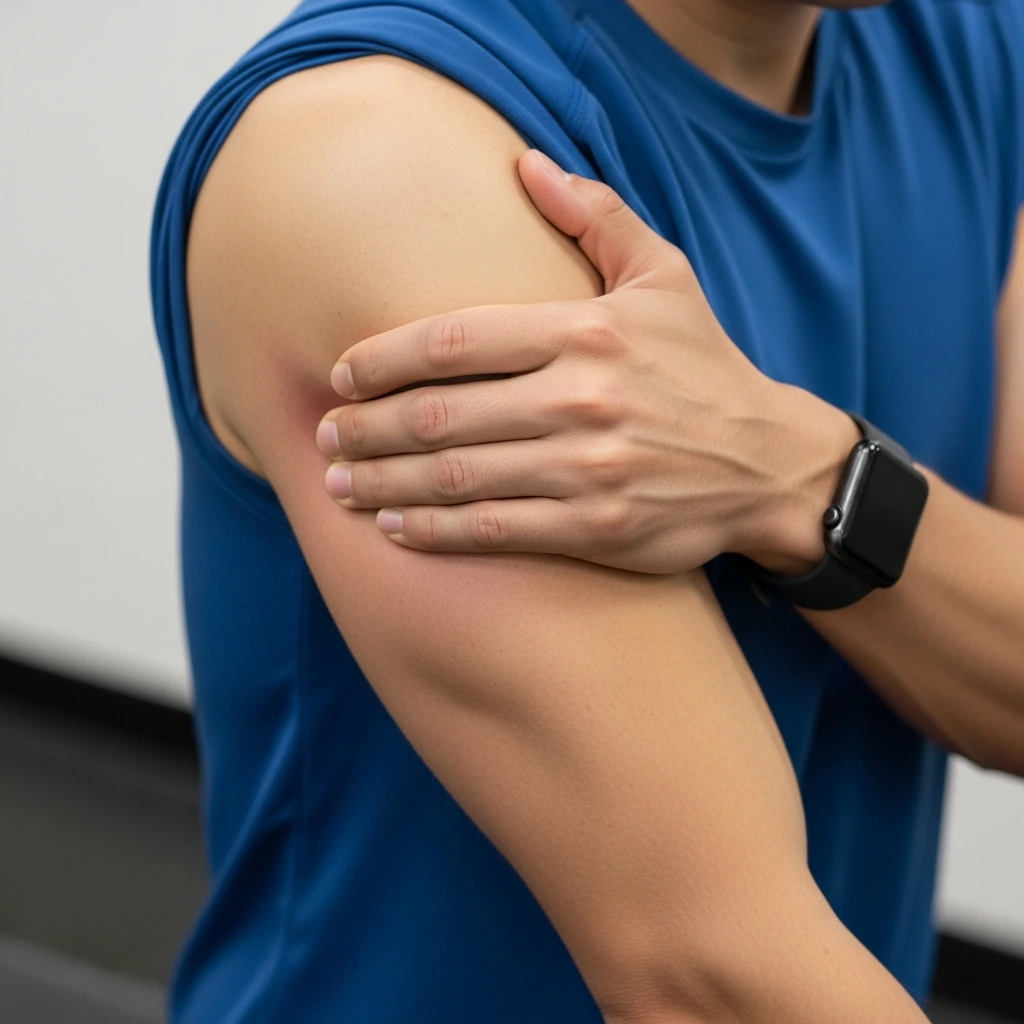
You must learn to distinguish between normal muscle soreness (DOMS) and structural damage. If you experience sudden pain at the front of your shoulder or deep in the crook of your elbow during a lift, drop the weight immediately.
Other severe signs include profound weakness when trying to turn a doorknob (supination) or visible swelling and bruising traveling down your forearm.
If your bicep muscle suddenly rolls up toward your shoulder like a window blind (a “Popeye” deformity), you have suffered a complete tendon rupture and need immediate emergency medical imaging.
Recovery & Muscle Growth
Lifting weights simply breaks the muscle down; recovery is when the muscle actually grows. You must provide your body with the biological building blocks required for tissue repair.
Protein intake is non-negotiable. Aim for roughly 0.8 to 1 gram of protein per pound of body weight to facilitate muscle protein synthesis.
Sleep is your most powerful recovery tool. Human Growth Hormone (HGH) is primarily released during deep REM sleep. Furthermore, strictly enforce your rest days; your arms need at least 48 hours of recovery between intense sessions.
By Shapes Workout at the Gym
Many lifters look for highly structured aesthetic routines, often referred to as a byshapes workout at the gym. This approach focuses heavily on symmetry and muscle proportion rather than just raw strength.
To achieve aesthetic proportion, ensure you are hitting the long head (incline curls) for the peak, the short head (preacher curls) for width, and the brachialis (hammer curls) for overall arm thickness.
Best Weekly Bicep Workout Plan
Training frequency depends entirely on your central nervous system’s ability to recover.
Beginner (2x/week): Focus on 2 to 3 exercises per session, 3 sets each. Concentrate entirely on mastering your form and establishing a mind-muscle connection.
Intermediate (2–3x/week): Increase the volume slightly. You can incorporate heavier barbell work on one day, and lighter, high-repetition machine work on the second day.
Action Plan
Your Next Steps in the Gym:
- Choose Your Exercises: Select one barbell, one dumbbell, and one machine exercise.
- Track Your Progress: Log your weights in a notebook or app today.
- Progress Gradually: Aim to add just 2.5 to 5 pounds to your lifts next week to safely apply progressive overload.
Frequently Asked Questions
How many times per week should I train my biceps for maximum growth?
For the majority of lifters, training your biceps two to three times per week is the “sweet spot” for muscle protein synthesis. This frequency allows for enough volume to stimulate growth while providing the necessary 48 hours of recovery between sessions.
Why are my biceps not growing despite consistent training?
If you have hit a plateau, you likely need to apply stricter progressive overload or vary your angles. Your muscles adapt quickly to the same stimulus, so you must gradually increase the weight or incorporate movements like incline curls to target the long head differently.
Can I train my biceps every day to see faster results?
I strongly advise against daily bicep training. Unlike smaller muscle groups that recover quickly, your bicep tendons are prone to overuse injuries. Training every day prevents the tissue repair that occurs during rest, which can actually lead to muscle atrophy and tendonitis.
Which is better for building arm mass: dumbbells or barbells?
Both tools serve a unique purpose in a complete routine. Barbells allow you to move heavier loads for raw strength, while dumbbells offer a superior range of motion and prevent the dominant arm from overcompensating for the weaker one.
How can I tell the difference between normal muscle soreness and a bicep tear?
Normal muscle soreness (DOMS) is a dull ache that peaks 24 to 48 hours after a workout. A bicep tear is characterized by a sudden, sharp “popping” sensation, immediate weakness, and often a visible “Popeye” deformity where the muscle rolls up toward the shoulder.
Conclusion
When Mark, the patient I mentioned earlier, finally returned to my clinic for a three-month follow-up, the transformation was evident. He hadn’t just built larger arms; he had developed a deep respect for his own biomechanics.
By switching to a high-tension, controlled-rep approach, his chronic tendonitis had completely vanished, and his strength numbers were higher than ever.
Bicep fitness is a marathon of consistency, not a sprint of heavy, swinging repetitions. Whether you are training for aesthetics at the gym or functional health at home, remember that your connective tissues dictate your progress just as much as your muscle fibers do.
Listen to your body, prioritize the eccentric phase of your lifts, and never sacrifice your long-term joint health for a momentary ego boost. If you train with intelligence and patience, the results will follow—safely and sustainably.
Authoritative References:
Related Posts

MORE from Author
Read More As a physician specializing in exercise science and public health, I regularly consult patients who feel completely lost in the…
 Just last week, a 34-year-old patient named Clara sat in my clinic, feeling entirely overwhelmed by the modern fitness industry.…
 Hello, I am Dr. Kenji Sato, MD, specializing in sports medicine and performance optimization. In my sports clinic, I constantly…
- In my clinical practice as a physician focused on exercise science, I often tell patients that mastering fitness bench workouts…