
When to See a Doctor: Warning Signs for Common Health Symptoms

Deciding when to see a doctor is a dilemma most of us face at least a few times a year. We often find ourselves balancing the hope that a symptom will “just go away” with the nagging fear that it might be something serious.
In my years of clinical practice as Dr. Julian, I have observed that many patients wait until a condition is severe before seeking help. Conversely, others worry unnecessarily over minor, self-limiting issues.
I remember a patient named Sarah who waited three weeks to address an “annoying” cough, assuming it was just seasonal allergies. By the time I saw her, a simple viral issue had progressed into a secondary bacterial pneumonia that required aggressive treatment.
Recognizing the subtle shift from a minor nuisance to a medical necessity is key. This guide will help you understand when to seek medical help for common symptoms and identify the red flags that require immediate attention.
How to Know When You Should See a Doctor
The most fundamental way to determine when to seek medical advice is to evaluate the duration and intensity of your symptoms. Most minor illnesses, like a common cold, show signs of improvement within three to five days.
If your symptoms are persistent, worsening over time, or interfering with your ability to perform daily tasks, it is time to call your doctor. High fevers that do not respond to over-the-counter medication or unexplained weight loss are also clear indicators.
Another important factor is your baseline health. If you have underlying conditions like diabetes or asthma, your threshold for seeking care should be much lower. What might be a simple cold for others could quickly become a complication for you.
Symptoms You Should Never Ignore
There are certain “red flag” symptoms that warrant immediate medical evaluation, regardless of how long they have lasted. These signs often point to acute issues that require rapid intervention to prevent long-term damage.
Chest pain or pressure, sudden confusion, and difficulty breathing are non-negotiable reasons to seek emergency care. Similarly, sudden weakness or numbness on one side of the body can be a sign of a stroke and requires an immediate 911 call.
Severe, “thunderclap” headaches—the kind that feel like the worst pain of your life—should never be ignored. These can indicate a neurological emergency. When in doubt, it is always safer to be evaluated and sent home than to ignore a life-threatening signal.
When to See a Doctor for Respiratory Symptoms
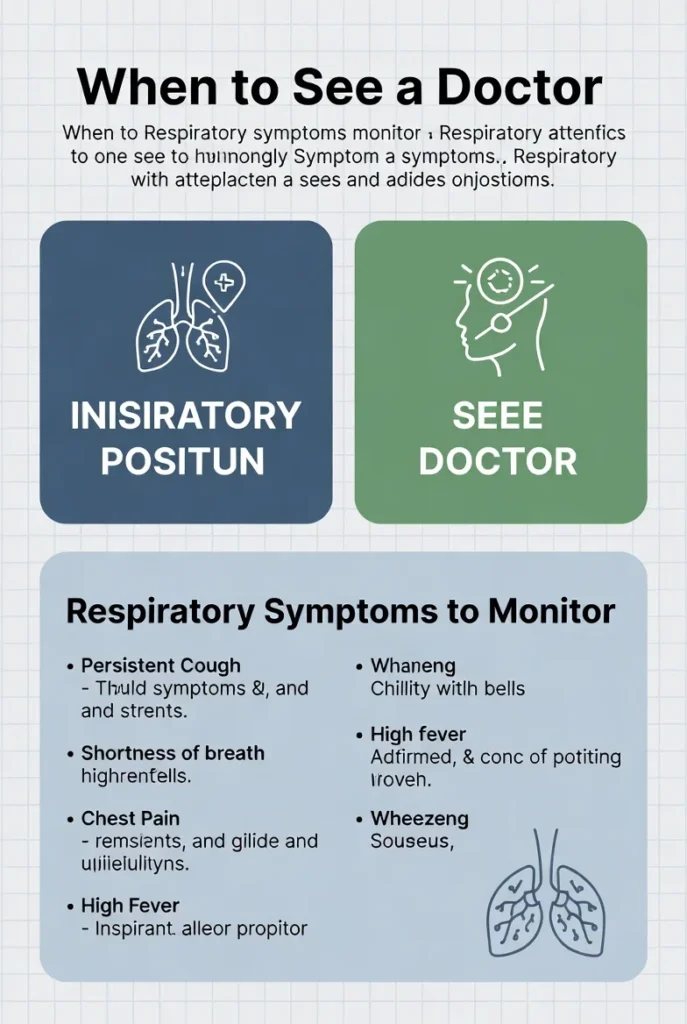
Respiratory issues are among the most common reasons for primary care visits. However, knowing the difference between a “waiting game” and a “doctor visit” can be tricky.
Cough and Sore Throat
If you are wondering when to see a doctor for a cough, the general rule is the three-week mark. Most viral coughs resolve by then. However, if your cough is accompanied by wheezing, shortness of breath, or coughing up blood, you should seek help much sooner.
For a sore throat, a visit is recommended if the pain is so severe that you cannot swallow liquids or if it is accompanied by a high fever and swollen glands. This could indicate strep throat, which requires antibiotics to prevent complications like rheumatic fever.
Cold, Flu, and Post-COVID Concerns
A standard cold or flu usually runs its course in 7 to 10 days. You should seek medical help if your symptoms initially get better but then suddenly “rebound” with a higher fever and worse cough, as this suggests a secondary infection.
Regarding a post-COVID cough, many patients experience lingering irritation for weeks. You should see a professional if this cough is getting worse rather than better or if you feel a new heaviness in your chest that wasn’t there during the initial infection.
When to See a Doctor for Digestive Problems
Digestive upsets are frequent, but “red flag” symptoms in the GI tract should not be overlooked. The primary concern with digestive issues is often dehydration and internal inflammation.
Diarrhea and Constipation
You should see a doctor for diarrhea if it lasts more than 48 hours without improvement or if you show signs of dehydration, such as extreme thirst and dark urine. Blood in the stool or severe abdominal cramping are also reasons for a prompt appointment.
When considering when to see a doctor for constipation, look at the one-week mark. If you haven’t had a bowel movement in seven days, or if the constipation is accompanied by a bloated, painful abdomen and vomiting, you may have a bowel obstruction.
When to See a Doctor for Urinary Symptoms
Urinary tract infections (UTIs) are notoriously uncomfortable and can lead to kidney infections if left untreated. Knowing when to see a doctor for a UTI is mostly about recognizing the early burning sensation.
If you experience painful urination, a frequent and urgent need to go, or cloudy, foul-smelling urine, you need a medical evaluation. Women are particularly prone to these, but men should seek help immediately for urinary symptoms, as they often indicate a more complex underlying issue.
Early treatment with antibiotics usually resolves the issue within days. If you begin to feel pain in your mid-back (flank pain) or develop a fever and chills, the infection may have reached your kidneys, making it a medical emergency.
When to See a Doctor for Pain
Pain is the body’s alarm system. While minor aches from exercise are normal, persistent or structural pain requires a professional eye to prevent chronic disability.
Back and Lower Back Pain
For back pain, seek care if the discomfort lasts more than two weeks despite rest and ice. Immediate help is needed if the pain radiates down your leg, causes numbness or tingling, or—most critically—is associated with a loss of bladder or bowel control.
Extremity Pain (Ankle, Heel, and Wrist)
- Ankle Pain: If you cannot put weight on the foot or if the swelling is significant and bruising appears quickly, you may have a fracture or a high-grade tear.
- Heel Pain: Persistent heel pain, especially in the morning, often indicates plantar fasciitis. A doctor can provide orthotics or physical therapy to prevent chronic inflammation.
- Wrist Pain: If pain follows a fall and is accompanied by a “dinner fork” deformity or an inability to rotate the wrist, an X-ray is necessary to rule out a scaphoid or distal radius fracture.
When to See a Doctor for Headaches
Most headaches are tension-related or due to dehydration. However, the frequency and “flavor” of the headache matter. You should see a doctor for a headache if your patterns change.
If you are over age 50 and start getting a new type of headache, or if your headaches are triggered by coughing or exertion, you need an evaluation. Headaches accompanied by a stiff neck and a fever can indicate meningitis, a serious infection of the brain lining.
If you find yourself reaching for over-the-counter painkillers more than twice a week, you should speak with a doctor. You may be experiencing “rebound” headaches, and a preventative strategy would be more effective and safer for your liver and stomach.
When to See a Doctor for Hemorrhoids
Hemorrhoids are a sensitive topic for many, but they are a very common clinical issue. You should see a doctor about hemorrhoids if you experience significant rectal bleeding or if the pain becomes sharp and unbearable.
While most hemorrhoids can be managed with fiber and over-the-counter creams, a “thrombosed” hemorrhoid (a blood clot in the vein) can cause extreme pain and may require a simple surgical procedure for relief. Furthermore, it is essential to ensure that any rectal bleeding is actually from a hemorrhoid and not a more serious colon issue.
When to See a Doctor After a Head Injury
Head injuries require a high level of vigilance because symptoms of a serious brain injury don’t always appear immediately. In my clinical experience, the “wait and see” approach can be dangerous if you don’t know exactly what you are waiting for.
You should seek immediate medical help for a concussion if the person experiences even a brief loss of consciousness, shows signs of confusion, or cannot remember the incident itself. Persistent vomiting, slurred speech, or a headache that gets progressively worse are critical red flags.
If a person seems fine initially but becomes increasingly drowsy or difficult to wake up several hours later, this is a medical emergency. A professional evaluation is the only way to rule out internal bleeding or swelling that could lead to long-term neurological damage.
When to See a Doctor for Reproductive Health
Reproductive health symptoms are often dismissed as “hormonal,” but certain changes require a formal diagnosis. I often tell my patients that their menstrual cycle is like a “fifth vital sign”—a window into their overall systemic health.
Spotting and Menstrual Changes
If you are wondering when to see a doctor for spotting between periods, the answer is usually after two consecutive months of irregularity. While often caused by stress or a change in birth control, it can also signal polyps, fibroids, or, in rarer cases, cervical issues.
Fertility and Pregnancy
Knowing when to see a fertility doctor depends largely on age. If you are under 35 and have been trying to conceive for a year, or over 35 and have been trying for six months, a consultation is recommended. Early intervention can often identify simple hormonal imbalances that are easily corrected.
Once you have a positive pregnancy test, you should visit a doctor for your first prenatal appointment, usually between 8 and 12 weeks. However, if you experience sharp abdominal pain or heavy bleeding early on, you should seek medical advice immediately to rule out an ectopic pregnancy.
When to See a Virtual Primary Care Doctor

The rise of telehealth has made it easier than ever to seek medical advice without leaving your home. However, it is important to know which situations are appropriate for a virtual visit and which require an in-person exam.
Telehealth works exceptionally well for:
- Mild Infections: Such as pink eye, minor rashes, or suspected UTIs.
- Medication Management: Discussing side effects or requesting refills.
- Mental Health: Consultations for anxiety, depression, or stress management.
- Follow-ups: Reviewing lab results or discussing the progress of a known condition.
If your condition requires a physical maneuver (like checking for a hernia) or diagnostic imaging (like an X-ray for a possible fracture), an in-person visit remains the gold standard.
How Often Should You Go to the Doctor?
Preventive care is the best way to avoid the “emergency” scenarios we have discussed. Even if you feel perfectly healthy, how often you go to the doctor matters for long-term longevity.
For most healthy adults under 50, an annual checkup is sufficient. These visits allow us to track trends in your blood pressure, cholesterol, and blood sugar before they become symptomatic problems. As you age, the frequency may increase to accommodate screenings like colonoscopies or mammograms.
By establishing a relationship with a primary care physician while you are well, you ensure that when you do get sick, your doctor already knows your medical history, your baseline “normal,” and how best to treat you.
Frequently Asked Questions
How do you know when you should see a doctor?
You should see a doctor if your symptoms are severe, worsening over 48 hours, or lasting longer than two to three weeks for minor issues like a cough. If a symptom interferes with your daily life, it requires professional review.
What are two symptoms you should never ignore?
Chest pain (which can signal heart issues) and sudden weakness or numbness on one side of the body (which can signal a stroke) are the two most critical symptoms requiring immediate emergency care.
When should you see a doctor for a cold?
Seek medical attention if cold symptoms last more than 10 days, if you have a fever higher than 103°F, or if you experience significant difficulty breathing or wheezing.
What are three conditions when you should see a doctor?
You should seek help for a persistent high fever, unexplained weight loss, and any sudden, severe pain that does not resolve with rest or basic first aid.
Can I use telehealth for a sinus infection?
Yes, for a sinus infection, seeing a doctor via telehealth is a great option. A virtual provider can assess your symptoms and, if the infection appears bacterial, prescribe the necessary treatment.
Conclusion
Recognizing when to see a doctor is a vital skill in self-care. While our bodies are resilient and many symptoms resolve with rest, the “red flags” mentioned in this guide—such as persistent pain, high fevers, and neurological changes—should never be ignored.
Early intervention is almost always more effective and less invasive than treating a condition that has been allowed to progress. As I tell my patients, you are the world’s leading expert on your own body. If something feels “off” or different from your usual baseline, trust that instinct and seek medical help.
Ultimately, your doctor is your partner in health. By knowing when to call, you ensure that you are getting the right care at the right time, protecting your well-being for the years to come.
References

Related Posts






MORE from Author
Read More Have you been searching for a way to boost your cellular health? You may have encountered the question, what is…
- Did you know that muscle loss can begin as early as your 30s? As a physician, I often see patients…


 As a physician, I regularly see patients who are utterly exhausted from poor sleep. When you are desperately scrolling online…
 Deciding to improve your health is incredibly empowering, but figuring out exactly how to start a healthy lifestyle can quickly…