Arms Fitness Exercises: Best Workouts for Strength, Toning & Muscle Growth
As a physician specializing in exercise and public health, I see daily how upper-body strength impacts long-term longevity. Just last week, I worked with a 55-year-old patient named Robert who was struggling to lift groceries without severe elbow pain.
I explained to him that incorporating consistent arm fitness exercises is not just about aesthetics; it is a critical medical necessity for maintaining functional independence. By introducing a highly structured, biomechanically safe routine, he completely rebuilt his functional capacity within weeks.
Whether your goal is building dense muscle mass, preventing joint decay, or improving daily mobility, training your upper body is essential. Many people skip isolated arm days or perform exercises with poor form, risking chronic injury.
This comprehensive guide will break down the physiology of arm training to help you safely achieve your goals.
TL;DR (The Quick Answer)
- The best arm exercises target biceps, triceps, and shoulders evenly.
- Use a strategic mix of bodyweight and weighted movements.
- Train arms 2–3 times per week for optimal cellular recovery.
- Combine strength and endurance exercises for longevity.
- Progressive overload builds muscle safely and effectively over time.
What Are Arm Fitness Exercises?
If you are wondering what arm workouts are, structurally, they are specific movement patterns designed to strengthen and tone the muscles of the arms, including the biceps, triceps, and forearms. These workouts utilize various forms of resistance to stimulate muscle fibers, forcing them to adapt and grow stronger.
In my clinical practice, I define these workouts as essential functional movements. They are the physiological foundation of pulling, pushing, and lifting actions we perform daily. Without regular arm conditioning, individuals often suffer from premature muscle wasting (sarcopenia) as they age.
Major Arm Muscles You Need to Train
To build an effective routine, you must understand the underlying anatomy of your arms. The upper body is composed of several intersecting muscle groups that require targeted isolation. Neglecting one area can lead to muscular imbalances and severe joint issues.
- Biceps: Located on the front of the upper arm, the biceps brachii consists of two heads. Its primary function is elbow flexion, which is the action of bending your arm toward your body.
- Triceps: Making up roughly two-thirds of your upper arm mass, the triceps brachii sits on the back of the arm. It contains three heads and is responsible for extending or straightening the elbow.
- Forearms: The lower arm muscles govern grip strength and wrist flexion. Strong forearms are crucial for safely holding heavy weights during other exercises without dropping them.
- Shoulders (Deltoids): While technically a separate group, shoulders play a massive supporting role. They stabilize the shoulder joint during heavy arm movements to prevent dangerous rotator cuff injuries.
Types of Arm Workouts
Understanding the different types of arm workouts allows you to tailor your routine to your specific physiological goals. Not all resistance training is created equal. The way you structure your sets, reps, and rest periods heavily dictates how your nervous system and body adapt to the physical stress.
Strength Training
This type of workout focuses on raw power and neurological adaptation. When you perform heavy arm strength training, you are teaching your central nervous system to recruit more muscle fibers simultaneously.
This usually involves lifting heavier resistance in the 4 to 6 repetition range, with longer rest periods of up to three minutes between sets.
Hypertrophy (Muscle Building)
If your goal is to increase the physical size of your arms, you must train for hypertrophy. This involves inducing controlled metabolic stress and microscopic muscle damage.
You typically use moderate weight for 8 to 12 repetitions, keeping the muscle under tension for a longer period. Proper nutrition, particularly high protein intake, is vital for repairing these micro-tears.
Endurance Training
For athletes or individuals seeking long-term stamina, endurance training is key. This focuses on increasing the capacity of your muscles to work for extended periods without fatiguing.
You use lighter weights or resistance bands, performing 15 to 20 or more repetitions per set. This type of training greatly improves local blood flow and cellular efficiency.
Bodyweight Workouts
You do not always need heavy external weights to create necessary resistance. Bodyweight arm workouts utilize gravity and your own body mass to safely challenge the muscles.
These are highly effective for building stabilizing strength and core engagement alongside arm power. They are incredibly accessible for those recovering from injuries or starting a new fitness journey.
List of the Best Arm Exercises
When curating a list of arm exercises, I focus heavily on movements that offer the highest return on investment for joint health and muscular development. Performing a wide variety of these movements ensures balanced, symmetrical growth.
Here is a comprehensive list of workouts for arms to include in your weekly routine.
- Standard Bicep Curls: The most fundamental bicep builder. Using dumbbells or a barbell, you flex the elbow to bring the weight toward your shoulders, strictly isolating the front of the arm.
- Tricep Dips: A powerful bodyweight movement using parallel bars or a sturdy chair. You lower your body by bending the elbows and then press back up, heavily targeting the triceps and chest.
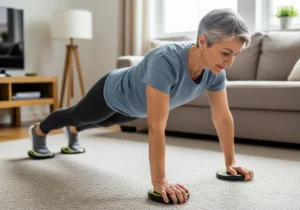
- Traditional Push-Ups: While known as a chest exercise, push-ups require massive triceps and shoulder engagement. They are one of the best compound movements for overall upper body functional strength.
- Hammer Curls: Similar to a standard curl, but your palms face each other in a neutral grip. This specifically targets the brachialis, a muscle that pushes the bicep up, making the arm look thicker.
- Overhead Tricep Extensions: Holding a single weight with both hands behind your head, you extend your arms upward. This provides an excellent stretch to the long head of the tricep.
- Concentration Curls: Performed seated with your elbow resting on your inner thigh. This prevents swinging and forces the bicep to work completely isolated.
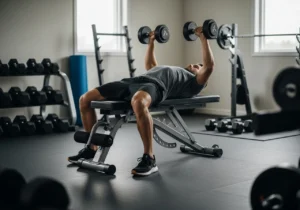
- Skull Crushers (Lying Tricep Extensions): Lying on a bench, you lower a barbell or dumbbells toward your forehead and press back up. It is a premier exercise for overall tricep mass.
- Diamond Push-Ups: By placing your hands close together under your chest, you shift the resistance from the pectoral muscles directly onto the triceps.
- Reverse Curls: Holding a barbell with an overhand grip, you curl the weight upward. This specifically targets the brachioradialis muscle in the forearm.
- Cable Tricep Pushdowns: Using a cable machine with a rope or straight bar attachment, you push the weight downward until your arms are fully locked out.
The 5 Best Arm Exercises
If you are short on time and need to know what the 5 best arm exercises are for a quick, highly effective session, focus on these movements. They hit every major muscle group efficiently.
- Standard Bicep Curls
- Tricep Dips
- Traditional Push-Ups
- Hammer Curls
- Overhead Tricep Extensions
Arm Workout Names and Pictures
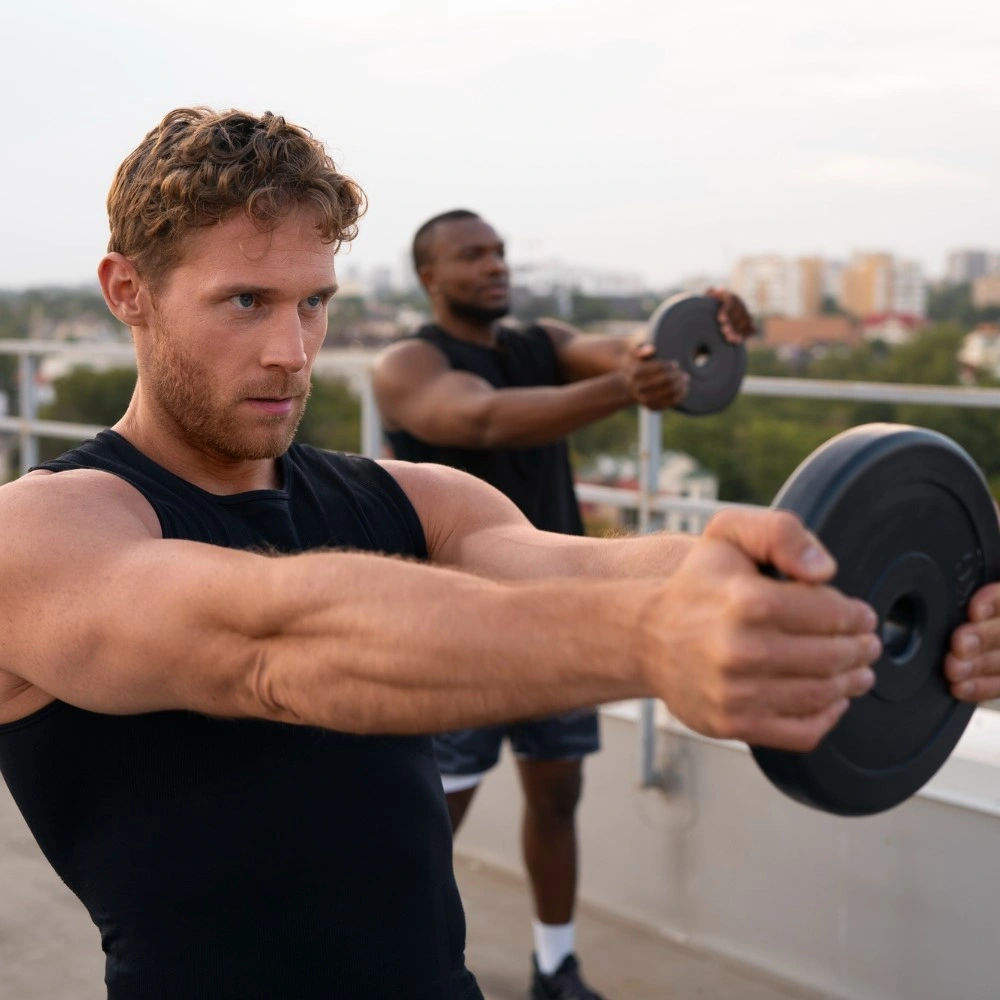
Proper biomechanics are essential to prevent severe injury. In a clinical setting, I often rely on visual aids so patients understand exactly how a movement should look. When searching online for arm workout names and pictures, always reference authoritative anatomical guides.
Visualizing the muscle contracting during these movements heavily enhances the mind-muscle connection. This neurological focus has been clinically shown to improve muscle fiber recruitment and accelerate strength gains.
Arm Strength Training Exercises
When prescribing arm strength training exercises, the focus must be on progressive overload. This means systematically increasing the weight, frequency, or number of repetitions in your training routine to continuously challenge the musculoskeletal system.
You must use heavy resistance that pushes your muscles close to failure within 4 to 6 repetitions. Adequate rest between these heavy sets is crucial, allowing ATP (cellular energy) to fully replenish in the muscle tissues before the next effort.
Arm Muscle Building Exercises
Arm muscle-building exercises focus strictly on hypertrophy. To trigger cellular growth, you must apply mechanical tension and metabolic stress simultaneously. I recommend a repetition range of 8 to 12 reps per set for these exercises.
Control the eccentric (lowering) phase of the lift. Clinical studies show that slowing down the lowering portion of a bicep curl or tricep extension creates more micro-tears in the muscle fibers, leading to far greater growth during recovery.
Arms Fitness Exercises With Weights
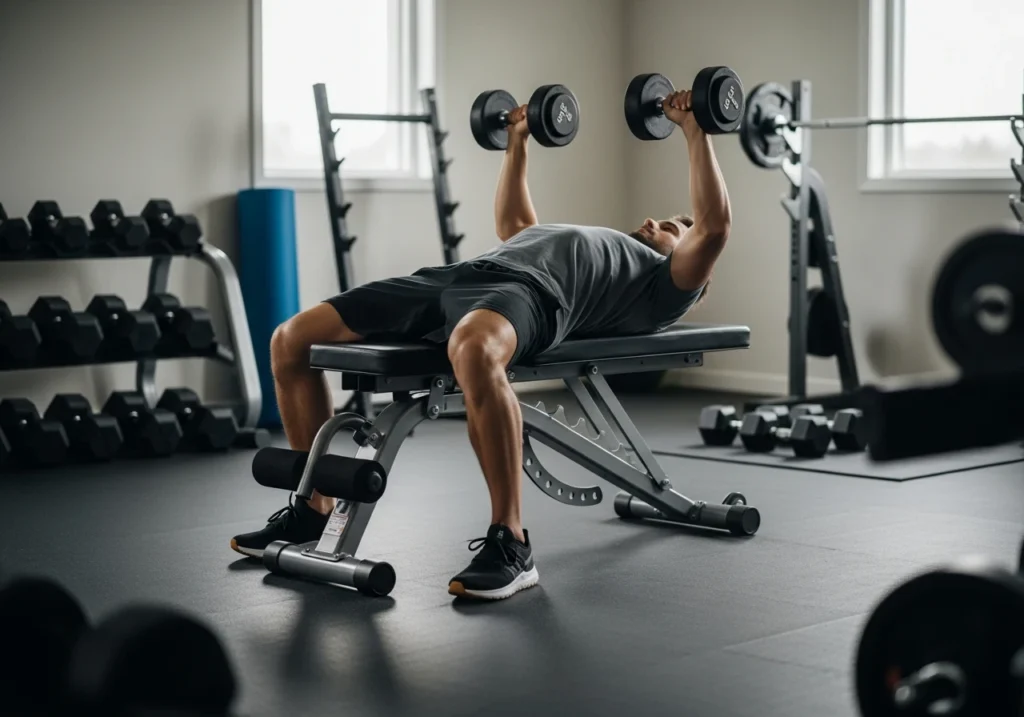
Performing arms fitness exercises with weights allows for precise, easily measurable progressive overload. Dumbbells provide excellent unilateral training, ensuring both arms work equally and preventing one side from compensating for the other.
Barbells allow you to safely move heavier total loads, which is excellent for overall central nervous system stimulation. Resistance bands offer variable resistance, meaning the tension increases as the band stretches, providing a unique challenge at the peak of the contraction.
Arms Fitness Exercises Without Equipment
You do not need a commercial gym membership to build strength. Arms fitness exercises with no equipment rely purely on body weight and gravity. These arm exercises without weights are incredibly effective for joint stability and connective tissue health.
Push-ups are the absolute gold standard, engaging the triceps heavily alongside the chest. Planks, while primarily a core exercise, require immense isometric shoulder and forearm strength. Chair dips are a highly accessible way to isolate the triceps using furniture you already own.
Arms Fitness Exercises at Home
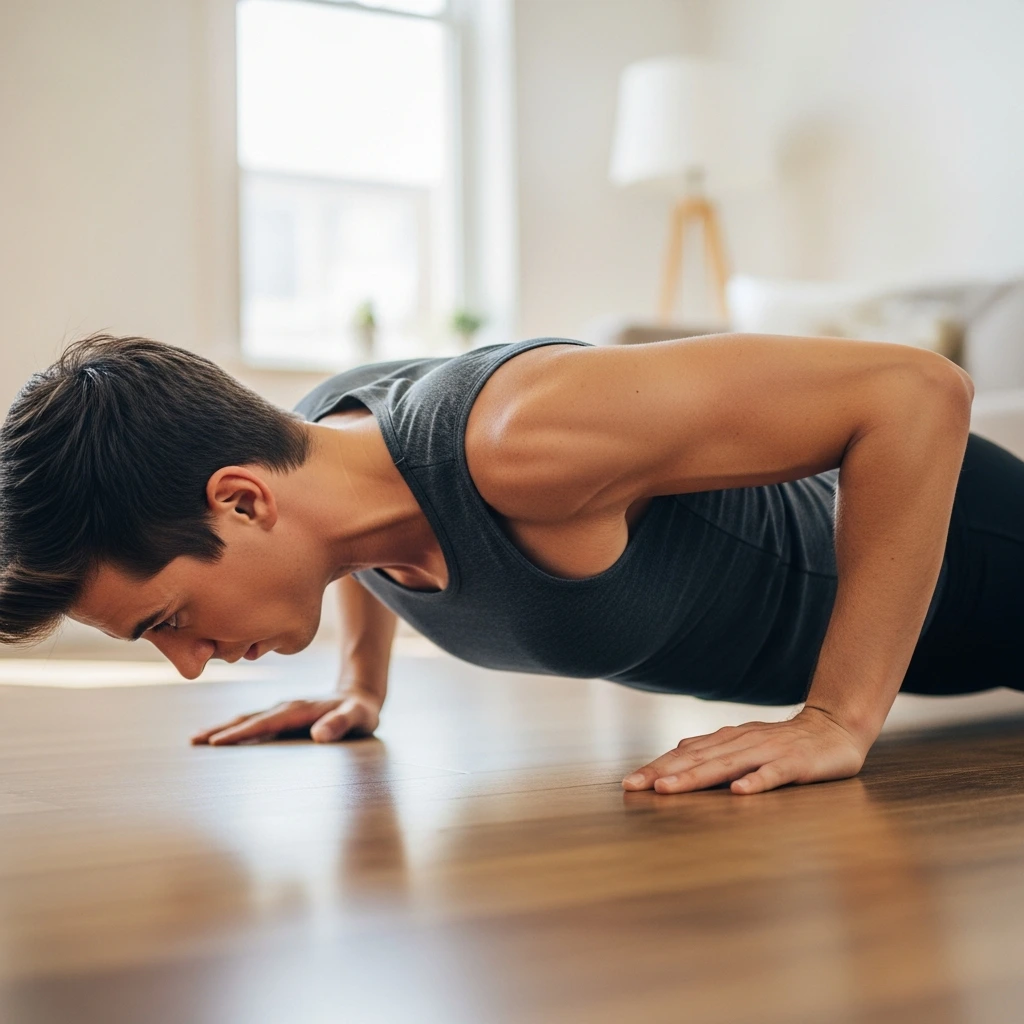
For patients with incredibly busy schedules, mastering arm fitness exercises at home removes the barrier of commuting to a gym facility. You can achieve phenomenal physiological results with bodyweight movements or a simple set of adjustable dumbbells.
Creating good arm workouts at home requires a structured, consistent plan. A highly effective session might include three sets of push-ups, three sets of chair dips, and three sets of resistance band curls, taking no more than twenty minutes to complete.
Arm Workout Gym Routine (Female-Friendly)
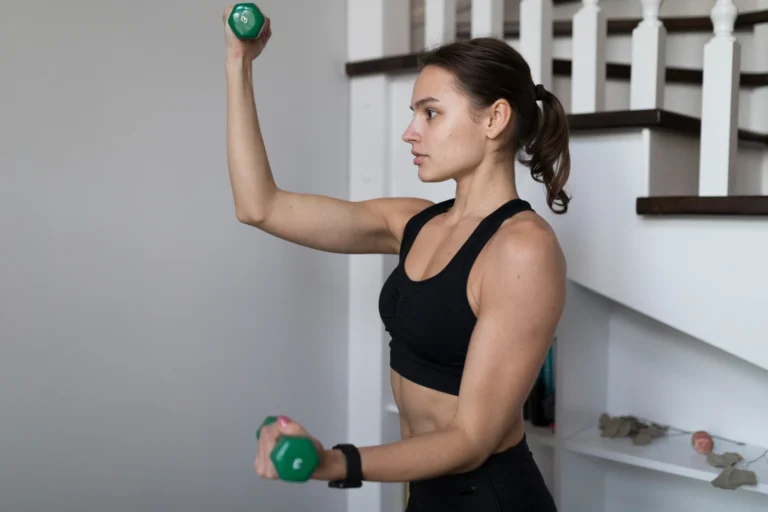
Many female patients ask me for an arm workout gym female guide that builds lean, toned muscle without excessive bulk. The key to arm toning exercises for females with weights is utilizing moderate resistance and slightly higher repetitions, typically 12 to 15 reps.
A great routine includes dumbbell shoulder presses, cable tricep pushdowns, and alternating dumbbell bicep curls. This strategic combination tightens the connective tissues and builds beautiful, functional, everyday strength.
Arms Fitness Exercises for Men
When programming arm fitness exercises for men, the primary goal often leans toward maximum hypertrophy and structural arm thickness. Men generally respond very well to heavy, compound movements followed by high-volume isolation work.
A typical protocol should include heavy barbell curls and weighted dips to stimulate maximum natural testosterone and growth hormone release, followed by lighter, blood-pumping isolation exercises like cable curls.
Sample Arm Workout Routine
Patients constantly ask, “What’s a good workout routine for arms?” I recommend splitting routines strictly based on your experience level to prevent central nervous system fatigue and joint strain.
Beginner Routine: Focus on foundational movements. Perform 3 sets of 10-12 reps of dumbbell bicep curls, followed by 3 sets of 10-12 reps of tricep chair dips. End with 2 sets of standard push-ups to failure.
Intermediate Routine: Introduce supersets to increase metabolic intensity. Superset a barbell bicep curl (4 sets of 8 reps) immediately with overhead dumbbell tricep extensions (4 sets of 10 reps). Finish with reverse curls for total forearm development.
The 3-3-3 Rule in the Gym Explained
If you are wondering what the 3-3-3 rule is in the gym, it is a highly structured concept I often teach for safely managing exercise volume. It stands for selecting 3 exercises, performing 3 sets of each, and resting for exactly 3 minutes between heavy compound sets.
This strict rule provides a clear, manageable framework that aggressively prevents overtraining. By strictly limiting the workload, you ensure high-quality, intense repetitions rather than performing junk volume that only damages joints and tendons.
Exercise and Blood Pressure Benefits
When patients ask what exercise is good for high blood pressure, resistance training is a critical component alongside aerobic work. Consistent arm fitness exercises help significantly improve vascular function and reduce arterial stiffness over time.
However, if you have severe hypertension, you must breathe continuously during your lifts. Holding your breath (the Valsalva maneuver) during heavy arm curls can cause temporary, dangerous spikes in blood pressure that must be avoided.
How Often Should You Train Arms?
Physiological muscle growth happens during recovery, not during the workout itself. I advise training arms directly 2 to 3 times per week, allowing at least 48 hours of complete rest between sessions for the exact same muscle group.
Overtraining the arms is a massive clinical mistake that leads to severe tendonitis, particularly in the elbows. Listen to your body’s pain signals and prioritize high-quality sleep and protein intake to facilitate rapid tissue repair.
Common Mistakes in Arm Training
The most prevalent clinical issue I see is severe overtraining. Constantly bombarding the small arm muscles with extreme exercise volume leads to chronic inflammation, not faster muscular growth.
Poor form is another major issue that fills my clinic. Using momentum to forcefully swing a heavy weight during a bicep curl places dangerous shear force on the lower back and shoulder joints, completely bypassing the intended arm muscles.
Frequently Asked Questions
What are the best arm exercises?
The absolute best exercises incorporate both compound and isolation movements into a single session. Standard bicep curls, tricep dips, push-ups, and overhead extensions provide the most balanced, comprehensive muscular development for the upper body.
Can you build arm muscle without weights?
Yes, targeted bodyweight exercises are highly effective. Push-ups, pull-ups, and chair dips use your body’s natural resistance to create the mechanical tension necessary for substantial muscle hypertrophy and functional strength.
How often should I train my arms?
For optimal muscle growth and safe systemic recovery, train your arms 2 to 3 times per week. Ensure you have at least 48 hours of complete rest between targeting the same specific muscle groups to prevent tendonitis.
What is a good arm workout routine?
A highly effective routine safely pairs antagonistic muscles together. For example, supersetting a bicep pulling exercise (like dumbbell curls) directly with a tricep pushing exercise (like cable pushdowns) maximizes blood flow and saves immense time.
Are bodyweight arm exercises effective?
Absolutely. Bodyweight exercises engage multiple stabilizing muscles simultaneously throughout the entire movement, greatly improving core strength and joint health alongside arm development, making them superior for overall functional longevity.
Conclusion
In my years of medical practice, I have witnessed firsthand how arm fitness exercises serve as a cornerstone for both physical independence and long-term health.
Whether I am helping a patient recover from a shoulder injury or guiding an athlete toward their next strength milestone, the principles remain the same: consistency, proper biomechanics, and strategic recovery.
Strengthening your arms is an investment in your future self, ensuring you can perform daily tasks with ease and maintain a robust metabolic rate as you age.
As a medical expert, I cannot stress the importance of the mind-muscle connection. When you lift, do not just move a weight from point A to point B; focus on the contraction of the tissue and the stability of your joints.
This intentionality, combined with a structured routine that hits the biceps, triceps, and forearms, is what separates a mediocre workout from a transformational one.
Remember that your fitness journey is a marathon, not a sprint. Start with foundational movements, master your form without weights if necessary, and gradually embrace the challenge of progressive overload.
By prioritizing your arm health today, you are building a stronger, more resilient foundation for the decades to come. Stay active, stay disciplined, and listen to your body—it is the most advanced piece of gym equipment you will ever own.
Authoritative References:
- PMC: Muscle Activity in Upper-Body Single-Joint Resistance Exercises
- PubMed: Arm Strength Training Improves Activities of Daily Living
- PMC: Resistance Training Load Effects on Muscle Hypertrophy and Strength
- Journal of Human Kinetics: Regional Hypertrophy—Effect of Exercises at Long vs. Short Muscle Lengths
- American College of Sports Medicine (ACSM): 2026 Resistance Training Guidelines
Related Posts

MORE from Author
Read More As a physician specializing in exercise science and public health, I regularly consult patients who feel completely lost in the…
 Just last week, a 34-year-old patient named Clara sat in my clinic, feeling entirely overwhelmed by the modern fitness industry.…

 Hello, I am Dr. Kenji Sato, MD, specializing in sports medicine and performance optimization. In my sports clinic, I constantly…
- In my clinical practice as a physician focused on exercise science, I often tell patients that mastering fitness bench workouts…