
Where Is the Heart Located in the Human Body?
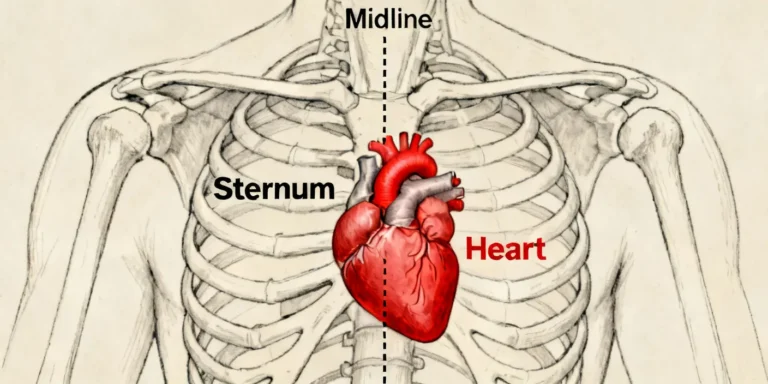
When patients sit in my examination room, they often place their hand flat over their left breastplate to indicate chest pain. This physical gesture almost always leads to the fundamental question: where is the heart located in the human body?
Understanding your own anatomy is the very first step in recognizing potential health emergencies.
As a physician, I have guided countless patients through anatomical models to clear up common misconceptions about their cardiovascular system. Discovering where exactly is the heart located surprises many people, because pop culture falsely places it far to the left.
Want to know where the human heart is located? It sits in the center of your chest. It rests safely between your lungs. This guide explores its exact location and internal structures. Understanding this anatomy can save your life.
Where Is the Heart Located in the Chest?
People frequently search to find out exactly where the heart is located in the chest. Your heart sits behind the sternum (your hard breastbone), and your rib cage heavily protects it. According to the Cleveland Clinic, the heart rests securely between your right and left lungs.
Do you wonder where the heart is located, left or right? The main mass actually sits directly in the middle of your chest. However, the bottom tip points are left. That is why you feel the strongest beats on your left side. This is why people mistakenly believe the entire organ sits fully on the left side of their body.
So, where is your heart located, left or right, in terms of functional feeling? You will always feel the thumping predominantly on the left side of your breastbone. This specific positioning actually creates a small indentation in your left lung, known as the cardiac notch, allowing the heart to fit perfectly.
Where Is the Heart Located in the Thoracic Cavity?
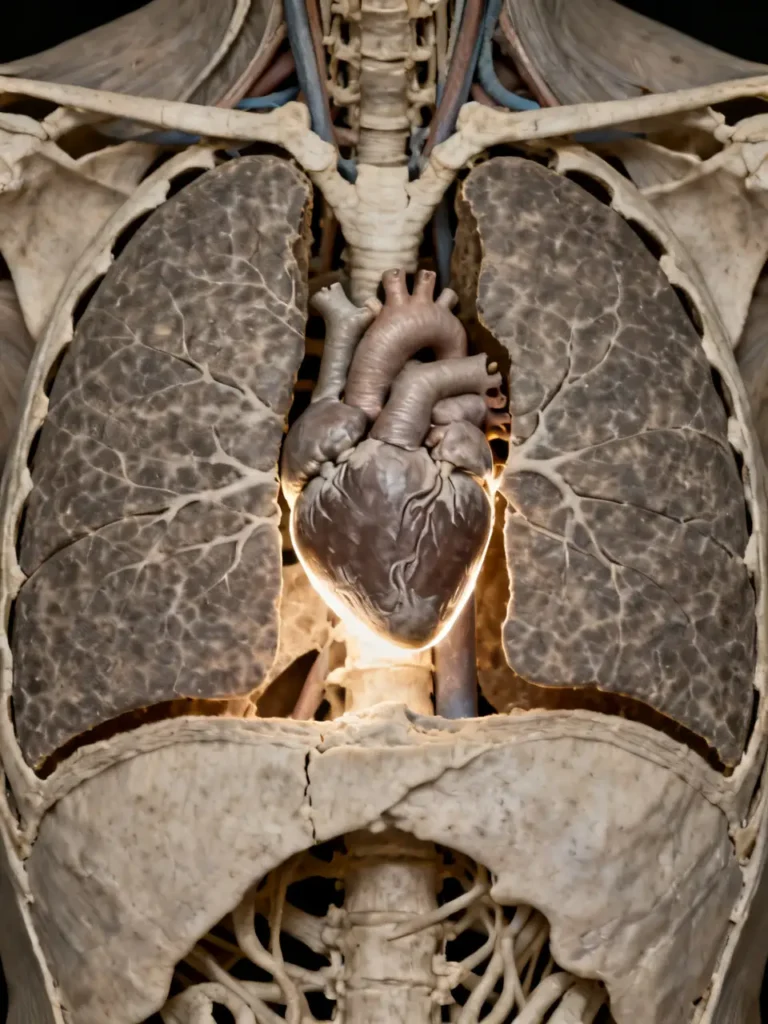
To understand the anatomy from a clinical perspective, we must look at the thoracic cavity. Where is the heart located in the thoracic cavity? It resides in a highly specialized, central compartment called the mediastinum.
This medical term describes the space in the middle of the chest that separates the two pleural cavities, which house the lungs. When students ask where is the heart located, the mediastinum is the precise, textbook answer.
Within this mediastinum, the heart is further enclosed in a protective, double-layered sac called the pericardium. This tough, fibrous sac anchors the heart to the surrounding structures, including the diaphragm at the bottom.
The pericardium also contains a small amount of lubricating fluid. This fluid is crucial because it reduces friction, allowing the heart to beat smoothly and continuously inside the thoracic cavity without rubbing against your lungs or ribs.
Is the Heart Located Differently in Women and Men?
A very common question I encounter in my practice involves gender differences in anatomy. Patients frequently ask, Where is the heart located on a woman compared to a man?
The anatomical truth is that where is the heart located in the female body is exactly the same as in the male body.
So, where is your heart located on a woman versus where is your heart located on a man? There is no difference in the central, thoracic positioning behind the sternum.
The only notable differences lie in the overall size and mass of the organ. On average, a woman’s heart is slightly smaller and beats a few times faster per minute than a man’s heart, but the geographic coordinates within the human body remain strictly identical.
Where Exactly Is the Apex and Base of the Heart Located?
To truly grasp cardiac anatomy, you need to understand its orientation, which is somewhat counterintuitive. Let us address where the apex of the heart is located.
Unlike a pyramid, where the apex is at the top, the heart’s apex is its pointed, lower tip. This apex points downward, forward, and to the left, resting directly on the diaphragm.
Conversely, where is the base of the heart located? The base is actually the broad, flat, top portion of the heart. It is situated higher up in the chest, pointing slightly upward, backward, and to the right.
The base is incredibly important because it is the connection point for the body’s major blood vessels. The aorta, the vena cava, and the pulmonary arteries all emerge from this broad, upper base, securing the heart deep within the chest cavity.
Where Are Key Structures Located Inside the Heart?
The internal geography of the heart is just as important as its external placement. According to the National Institutes of Health, the heart is divided into four distinct chambers, separated by a crucial wall.
Where is the septum located in the heart? The septum is the thick, muscular wall running straight down the middle of the heart, effectively dividing it into a right and left side to prevent oxygen-rich and oxygen-poor blood from mixing.
Another vital structure is the body’s largest artery. Where is the aorta located in the heart? It arises directly from the top of the left ventricle, arching upward and over the heart before descending down the center of the body.
Finally, patients often ask where the heart’s pacemaker is located. The natural pacemaker, known as the sinoatrial (SA) node, is a tiny cluster of specialized cells located in the upper wall of the right atrium. It generates the electrical impulses that keep your heart beating in a steady rhythm.
How Blood Flows Through the Heart
Understanding the physical location of the heart is only half the battle; we must also look at blood flow through the heart. The organ functions as a dual-pump system, running two synchronized circuits simultaneously.
What does the right atrium do? It acts as the primary receiving chamber for all the oxygen-depleted blood returning from your body via the superior and inferior vena cava.
From the right atrium, blood is pushed down into the right ventricle. The right ventricle then pumps this oxygen-poor blood out through the pulmonary artery and directly into the lungs, where it picks up fresh oxygen.
This newly oxygenated blood travels back to the left atrium. It is then squeezed into the left ventricle, the strongest chamber of the heart, which forcefully ejects the blood out through the aorta to nourish the entire body.
How Big Is the Heart Compared to Other Organs?
When patients view their X-rays, they are frequently curious about the size of their cardiovascular organs. How big is the heart compared to other organs?
As a general rule of thumb, an adult’s heart is roughly the size of two large hands clasped together or a single clenched fist for a child. It is relatively small considering the massive workload it handles every second.
In terms of weight, the human heart typically weighs between 250 and 350 grams (about 9 to 12 ounces). While it is much smaller than the liver or the lungs, it is a dense, incredibly powerful block of solid muscle.
Unlike your stomach or bladder, which expand and contract based on their contents, your heart maintains a relatively consistent size, only enlarging pathologically if it is forced to work too hard against high blood pressure over many years.
Where Should You Feel Heart Pain?
This is perhaps the most critical section of this guide. As a doctor, I have seen too many patients ignore symptoms because the pain wasn’t exactly where they expected it to be.
Where should you feel heart pain? While classic angina (chest pain) is usually felt as a crushing weight directly under the sternum, heart pain is notoriously deceptive.
Where do you feel pain if you have heart problems? It frequently radiates outward. I recently treated a patient who insisted he just had a pulled shoulder muscle, but his left arm pain and jaw ache were actually signs of a severe blockage.
What are four signs your heart is in trouble? Watch for central chest pressure, sudden unexplained shortness of breath, pain shooting down the left arm or up into the jaw, and unprovoked, cold, clammy sweating.
Never ignore these radiating symptoms, as the heart’s nerve pathways often refer pain to other areas of the upper body.
Heart Diagram and Visual Explanation
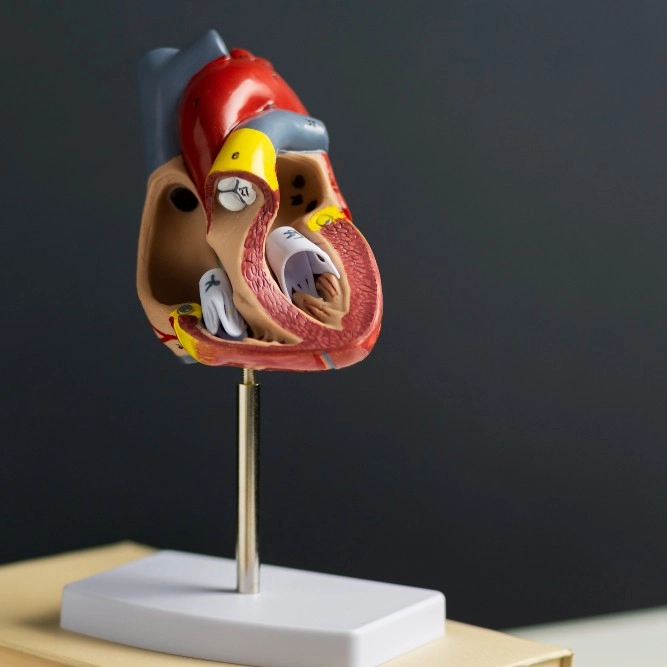
Visualizing the heart makes understanding its location much easier. If you were to look at a “Where is the heart located?” In the diagram, the first thing you would notice is the central placement.
A proper heart diagram will show the sternum directly over the middle of the organ. You would see the right and left lungs flanking it on either side, with the left lung showing a distinct inward curve to make room for the heart’s leftward-pointing apex.
On this diagram, the large blue vessels (vena cava) will be entering the upper right side, while the massive red arch of the aorta will sprout from the top center.
When studying a diagram, always remember that the right side of the heart is drawn on the left side of the page, because medical illustrations are always drawn from the perspective of looking at a patient facing you.
What Is the Function of the Heart?
The structure of the heart dictates its ultimate purpose in the body. The fundamental function of the heart is to maintain a continuous, unidirectional flow of blood throughout the entire circulatory system.
It acts as the central engine of human life. Without this tireless muscle, oxygen cannot reach your brain, and vital nutrients cannot be delivered to your organs and tissues.
Furthermore, the heart is responsible for waste management. It ensures that carbon dioxide and cellular byproducts are constantly shuttled back to the lungs and kidneys for immediate removal from the body.
In an average lifetime, this remarkable organ will beat roughly 2.5 billion times. Its exact central location in the chest ensures that it is perfectly protected and efficiently positioned to distribute life-sustaining blood to every single extremity.
Frequently Asked Questions
Exact Location of the Heart in the Body?
The heart is located centrally in the chest, inside the thoracic cavity (specifically the mediastinum), directly behind the breastbone, and nestled safely between the right and left lungs.
Left or Right Placement of the Heart?
The heart sits in the middle of the chest, but its lower tip (the apex) points slightly to the left side of the body, which is why you feel your heartbeat more strongly on the left side of your chest.
Location of the Heart’s Pacemaker?
The heart’s natural pacemaker, medically known as the sinoatrial (SA) node, is located in the upper wall of the right atrium. It controls the electrical signals that regulate your heartbeat.
The Heart Chakra Position?
In spiritual and holistic traditions, the heart chakra (Anahata) is located exactly in the center of the chest, at the heart level, aligning conceptually with the physical organ’s central placement.
Typical Locations for Heart-Related Chest Pain?
Heart pain is typically felt as a heavy pressure in the center of the chest, but it can frequently radiate outward, causing referred pain in the left arm, neck, jaw, or between the shoulder blades.
Conclusion
Knowing exactly where the heart is located provides much more than a simple anatomy lesson; it grants you the power of health awareness. As we have explored, this vital, fist-sized muscle sits centrally in your chest, slightly favoring the left, protected by the sternum and ribs.
By understanding its internal structures, like the septum and aorta, and recognizing how pain can radiate from its central location to the jaw or arm, you are better equipped to listen to what your body is telling you.
Always remember that chest pain should never be ignored. Your heart works tirelessly for you every single second—knowing its exact position and function is the first step in giving it the lifelong care it deserves.
Authoritative References
Related Posts






MORE from Author
Read More As a physician specializing in exercise science and public health, I regularly consult patients who feel completely lost in the…
 Just last week, a 34-year-old patient named Clara sat in my clinic, feeling entirely overwhelmed by the modern fitness industry.…


 Hello, I am Dr. Kenji Sato, MD, specializing in sports medicine and performance optimization. In my sports clinic, I constantly…
- In my clinical practice as a physician focused on exercise science, I often tell patients that mastering fitness bench workouts…