
Fasting Blood Sugar: Normal Levels, Chart, Causes & How to Lower It

As an endocrinologist, I see patients panic over their morning numbers every single day. Just last Tuesday, a patient named Sarah sat in my clinic. She was nearly in tears because her fasting blood sugar was 115 mg/dL.
First of all, I reassured her that this single reading does not mean she has full-blown diabetes. Consequently, we sat down and mapped out a clear metabolic plan.
Understanding your morning glucose is the very first step toward true metabolic health. When you know your baseline, you can take immediate action to protect your long-term wellness.
Therefore, in this comprehensive guide, I will explain exactly what your numbers mean, why they fluctuate, and how you can safely take control of them.
TL;DR (The Bottom Line)
- Normal Range: 70–99 mg/dL.
- Prediabetes Range: 100–125 mg/dL.
- Diabetes Range: 126 mg/dL or higher.
- Testing Rule: A true test requires 8 to 12 hours of strict fasting (only water).
- Common High Causes: High morning sugar is often due to the “dawn phenomenon” or underlying insulin resistance.
What Is Fasting Blood Sugar?
So, what is fasting blood sugar exactly? Simply put, it is the amount of glucose circulating in your bloodstream after you have not consumed any calories for at least 8 to 12 hours. Usually, doctors measure this first thing in the morning before you eat breakfast or drink your morning coffee.
Why is this specific baseline so critical? When you eat food, your digestive system breaks carbohydrates down into glucose. Next, your pancreas releases insulin to move that sugar out of your blood and into your cells for energy.
However, when you sleep and fast overnight, your digestive system rests. Therefore, what is a fasting blood sugar test actually checking? It actively measures your body’s baseline metabolic function. If your baseline remains elevated even without food, it clearly signals insulin resistance.
Ultimately, this makes the morning check a crucial diagnostic tool. Healthcare providers use it daily to catch prediabetes early or formally diagnose type 2 diabetes. By testing this baseline, we see exactly how well your liver and pancreas communicate while you sleep.
What Is a Normal Fasting Blood Sugar Level?
Patients constantly ask me, “Dr. Sato, what is normal fasting blood sugar?” The medical community maintains very strict guidelines for these ranges to ensure patient safety. A normal fasting blood sugar range sits strictly between 70 and 99 mg/dL for healthy adults.
If your morning number reads 85 mg/dL, that is fantastic. This is exactly what a good fasting blood sugar level looks like. Your body is managing its energy perfectly.
Clinical Ranges Table
To make things crystal clear, here is the standard diagnostic table. I use this exact chart in my clinic to classify patient health.
| Category | Fasting (mg/dL) | Fasting (mmol/L) |
| Normal | 70–99 | 3.9–5.5 |
| Prediabetes | 100–125 | 5.6–6.9 |
| Diabetes | 126 or higher | 7.0 or higher |
In contrast, numbers hovering between 100 and 125 mg/dL indicate prediabetes. This is a warning sign. Furthermore, a result of 126 mg/dL or higher on two separate occasions officially diagnoses diabetes. Hence, you must track these numbers closely and honestly.
Fasting Blood Sugar Levels Chart (By Condition & Time)
Visualizing your daily targets removes a lot of the anxiety. Consequently, I always give my patients a fasting blood sugar levels chart to pin on their refrigerators. This normal blood sugar levels chart breaks down exactly where you should aim based on your unique health profile.
The fasting blood sugar levels normal range chart varies slightly based on your current diagnosis. For healthy adults, the absolute goal is always under 100 mg/dL.
However, for a patient already managing diagnosed diabetes, the American Diabetes Association (ADA) recommends a morning fasting target of 80 to 130 mg/dL. As a result, your specific clinical target depends entirely on your medical history. Pushing a diabetic’s fasting glucose down to 75 mg/dL using heavy medication often introduces a dangerous risk of severe hypoglycemia.
Fasting vs Non-Fasting Blood Sugar
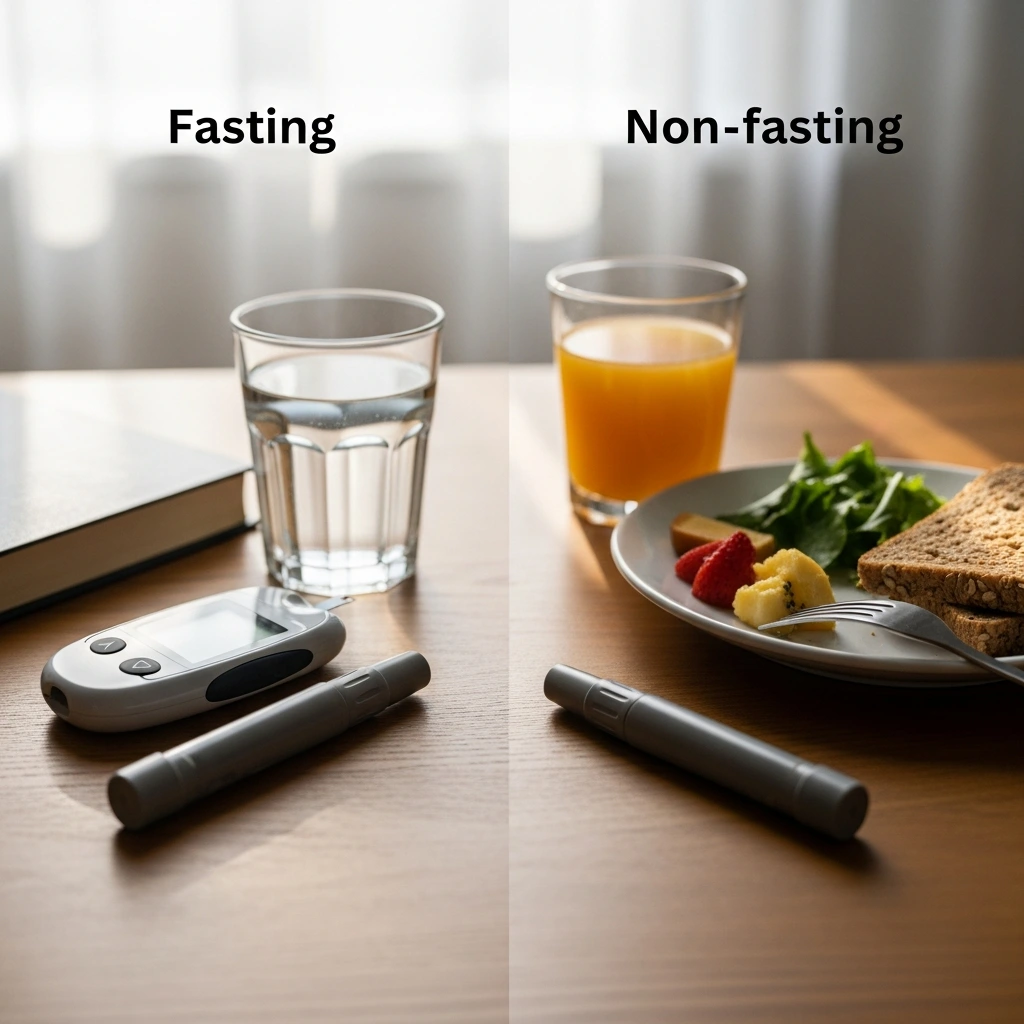
Another massive source of confusion in my office is comparing morning numbers to post-meal numbers. Understanding non-fasting blood sugar is just as important as your morning readings.
When you test your blood two hours after finishing a meal, you are checking your post-prandial glucose. This is entirely different from your fasting baseline.
Fasting vs Post-Meal Targets
Here is a quick comparison table to help you differentiate the two states:
| Type of Test | Normal Range Target |
| Fasting (8-12 hours) | 70–99 mg/dL |
| Non-Fasting (2 hours after eating) | Under 140 mg/dL |
Your non-fasting blood sugar levels will naturally spike after eating a meal. This is a perfectly normal, expected biological response. Your blood sugar after eating should ideally peak and then seamlessly return to below 140 mg/dL within exactly two hours.
Conversely, your fasting reading shows your body’s ability to maintain balance without any new food entering the system. Both tests provide invaluable puzzle pieces to your doctor. A normal fasting number combined with a massive non-fasting spike still indicates early metabolic dysfunction.
Why Is My Fasting Blood Sugar High?
Patients frequently wake up frustrated and ask me, “Dr. Sato, why is my fasting blood sugar high when I haven’t eaten anything?” First of all, this is an incredibly common physiological puzzle. High fasting blood sugar rarely means you failed your diet the night before.
In fact, the primary culprit is usually the “dawn phenomenon.” Every morning, between 3 AM and 8 AM, your body releases a natural surge of awakening hormones like cortisol and growth hormone. Consequently, these hormones signal your liver to dump stored glucose into your bloodstream to give you morning energy.
Why does blood sugar go up when fasting? If you have underlying insulin resistance, your body simply cannot handle this natural morning glucose dump. Furthermore, late-night snacking on heavy carbohydrates leaves residual sugar lingering in your blood overnight.
Additionally, chronic stress and poor sleep elevate your nighttime cortisol levels. Therefore, fixing your morning numbers often requires looking deeply at your evening habits and sleep hygiene.
Does Fasting Raise or Lower Blood Sugar?
A highly logical question I hear in the clinic is, “Does fasting lower blood sugar automatically?” The clinical answer is nuanced. Short-term fasting usually allows your body to clear out excess glucose and lowers your overall levels effectively.
However, prolonged or extreme fasting can actually trigger the exact opposite reaction. Does fasting raise blood sugar in some cases? Yes, it certainly can.
When your body senses starvation over long hours, your liver begins a survival process called gluconeogenesis. As a result, the liver manufactures and releases brand new glucose into your blood to keep your brain functioning.
Therefore, balanced, structured fasting is beneficial, but extreme starvation often backfires metabolically.
How to Lower Fasting Blood Sugar (Evidence-Based)
Taking true control of your morning numbers requires a proactive evening routine. Therefore, learning how to lower fasting blood sugar is truly about managing your pre-bedtime lifestyle habits.
First of all, you must critically evaluate your dinner plate. I advise my diabetic patients to eat a low-carb, high-protein dinner. Replacing heavy starches with lean meats and fibrous vegetables drastically reduces the amount of glucose your body must process overnight.
Furthermore, you need to eliminate late-night snacking completely. If you eat a heavy bowl of cereal at 10 PM, your body is still fighting that massive glucose spike at 6 AM. Consequently, learning how to control fasting blood sugar means officially closing your kitchen at least three hours before bedtime.
Another incredibly powerful metabolic tool is evening exercise. Taking a brisk 15-minute walk immediately after dinner forces your leg muscles to absorb excess sugar from your bloodstream. As a result, your pancreas does not have to work overtime while you sleep.
Moreover, never underestimate the healing power of deep, restorative sleep. Sleep deprivation directly spikes your morning cortisol, which inevitably spikes your morning glucose. Thus, prioritizing seven to eight hours of quality sleep is a clinically proven, vital intervention.
Finally, if you are diagnosed with diabetes, medication adherence is paramount. Taking your prescribed Metformin or evening basal insulin exactly as directed by your physician is essential for long-term safety.
Fasting Blood Sugar in Pregnancy

Pregnancy completely alters a woman’s metabolic landscape. Consequently, fasting blood sugar levels during pregnancy targets are significantly stricter than standard adult ranges.
During gestation, the placenta produces massive amounts of hormones that naturally cause severe insulin resistance. Therefore, obstetricians want a pregnant woman’s morning fasting glucose to remain strictly below 95 mg/dL to prevent gestational diabetes complications.
If levels remain elevated, it heavily increases the risk of macrosomia (delivering an overly large baby) and preterm birth. Thus, knowing how to control fasting blood sugar during pregnancy is absolutely critical for fetal health.
Pregnant mothers should focus on frequent, small, protein-rich meals and gentle daily movement. Ultimately, if diet and exercise fail, safe medical interventions like temporary insulin are utilized to protect both mother and baby.
Fasting Blood Sugar Test: How It Works
Getting a perfectly accurate baseline requires following the laboratory rules strictly. So, for a proper fasting blood sugar test, you must absolutely avoid all food and caloric beverages before the blood draw.
Patients often ask about fasting blood sugar: how many hours are actually required? The strict clinical standard dictates an absolute minimum of 8 hours, though 10 to 12 hours is optimal for perfect accuracy.
You are entirely allowed, and encouraged, to drink plain water during this window. In fact, staying hydrated helps prevent artificially concentrated blood readings. Furthermore, scheduling your lab draw for the first thing in the morning prevents prolonged, uncomfortable daytime hunger.
What Is Considered High Fasting Blood Sugar?
Understanding what fasting blood sugar should be keeps you safely out of the danger zone. Ideally, what is a good fasting blood sugar level? Anything safely sitting under 100 mg/dL is excellent.
So, what happens when it creeps higher? If your morning reading consistently lands between 100 and 125 mg/dL, you are officially in the prediabetes zone. Consequently, this is a major warning to change your lifestyle immediately before the disease progresses.
If your morning reading consistently hits 126 mg/dL or higher, this is clinically considered a diabetic reading. At this point, your doctor will likely formally diagnose you with type 2 diabetes and immediately initiate medical treatment.
Risks of High Fasting Blood Sugar
Ignoring elevated morning numbers is incredibly dangerous for your longevity. Consistently high glucose silently acts like microscopic shards of glass inside your blood vessels.
First of all, it dramatically accelerates the rapid progression from prediabetes into full-blown type 2 diabetes. Furthermore, chronic hyperglycemia slowly destroys the delicate blood vessels in your eyes, kidneys, and heart.
As a result, untreated high morning glucose drastically increases your lifetime risk of cardiovascular disease, kidney failure, and permanent neuropathy (loss of feeling) in your feet.
When to See a Doctor
You must never attempt to self-diagnose severe metabolic issues at home. Therefore, if your home glucometer repeatedly shows morning numbers above 126 mg/dL, schedule a medical appointment immediately.
Additionally, if you experience sudden symptoms like unquenchable thirst, frequent urination, or blurred vision, seek urgent medical care. These are classic, undeniable signs of severe hyperglycemia requiring immediate clinical intervention.
Frequently Asked Questions (FAQs)
What is a normal fasting blood sugar level?
For a healthy adult without metabolic dysfunction, a normal morning reading is strictly between 70 and 99 mg/dL. Reaching this target indicates your body processes insulin efficiently.
Is a fasting blood sugar test 8 or 12 hours?
The medical standard requires an absolute minimum of 8 hours of fasting. However, fasting for 10 to 12 hours overnight provides the most accurate, reliable clinical baseline.
Is 135 blood sugar high in the morning?
Yes, a morning reading of 135 mg/dL is significantly high. Because it is over the 126 mg/dL threshold, it officially falls into the diagnostic range for diabetes and requires medical evaluation.
What are 5 signs your blood sugar is too high?
The five most common clinical signs include frequent urination, unquenchable excess thirst, profound chronic fatigue, sudden blurred vision, and recurring morning headaches.
Can severe stress cause high morning blood sugar?
Absolutely. Severe physical or emotional stress triggers a massive release of cortisol and adrenaline. Consequently, these hormones force your liver to dump extra glucose into your blood, ruining your morning readings.
Conclusion
In conclusion, waking up to high morning numbers can feel incredibly overwhelming. However, your fasting blood sugar is simply a tool, not a final judgment on your health. By understanding these metrics, you take the very first step toward a healthier life.
Consequently, you must focus on the lifestyle factors you can control today. Eat a high-protein dinner, take a brisk evening walk, and prioritize your nightly sleep. Most importantly, track your daily morning numbers honestly and consistently.
Therefore, if your readings consistently sit in the prediabetes or diabetes range, do not wait. Schedule an appointment with your healthcare provider immediately to discuss a tailored metabolic plan. Ultimately, managing your fasting blood sugar actively protects your heart, your kidneys, and your long-term future.
Medical References:
- American Diabetes Association (ADA) – Diagnosis of Diabetes
- Centers for Disease Control and Prevention (CDC) – Diabetes Testing
- National Institute of Diabetes and Digestive and Kidney Diseases (NIDDK) – Diabetes Tests & Diagnosis
- Mayo Clinic – The dawn phenomenon: What can you do?
- World Health Organization (WHO) – Diabetes Fact Sheet
Related Posts






MORE from Author
Read More As a physician specializing in exercise science and public health, I regularly consult patients who feel completely lost in the…
 Just last week, a 34-year-old patient named Clara sat in my clinic, feeling entirely overwhelmed by the modern fitness industry.…


 Hello, I am Dr. Kenji Sato, MD, specializing in sports medicine and performance optimization. In my sports clinic, I constantly…
- In my clinical practice as a physician focused on exercise science, I often tell patients that mastering fitness bench workouts…