Upper Body Fitness Workout: Best Exercises, Programs & Weekly Plans

Welcome to your definitive, medically backed guide to building a stronger, healthier torso. Whether you are aiming to improve your posture, carry groceries without pain, or build visible muscle, a properly structured upper body fitness workout is absolutely essential.
As a sports medicine physician, I prescribe upper body strength protocols to patients daily.
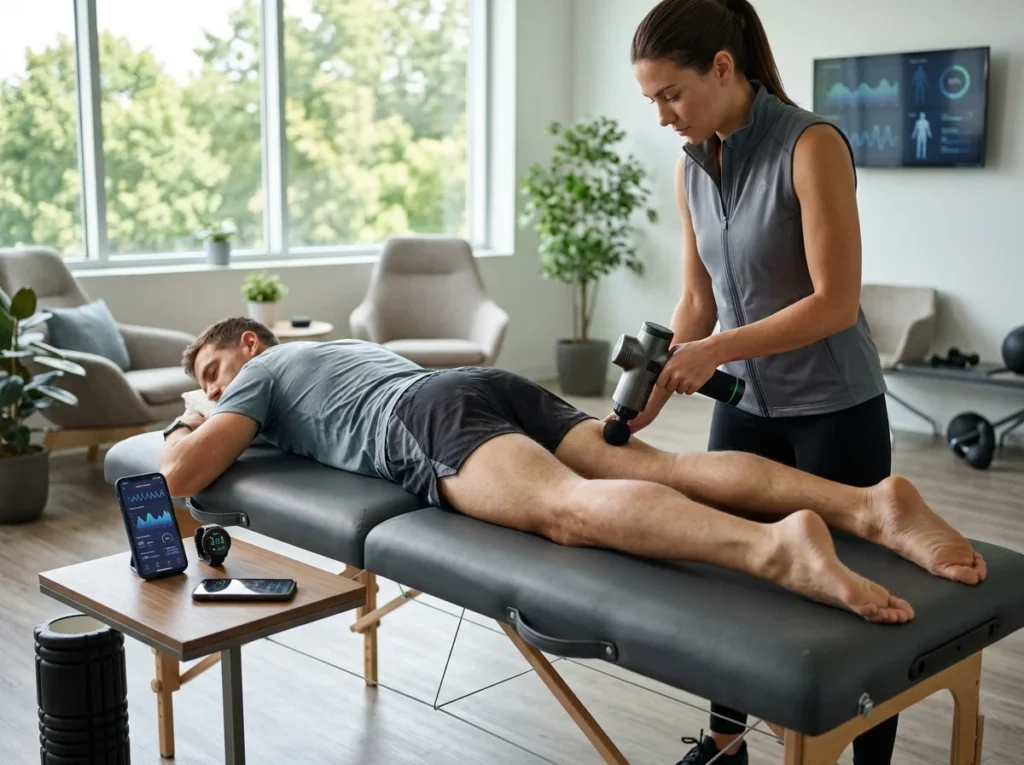
Just recently, I treated a patient named Mark, a 35-year-old software developer suffering from chronic, debilitating neck and shoulder pain.
He spent eight hours a day hunched over a keyboard, completely neglecting his physical health. My clinical evaluation revealed severe weakness in his upper back and over-tightened chest muscles.
Instead of just prescribing pain medication, I guided Mark through a dedicated resistance training program focused on posture correction. Within eight weeks of consistently pulling and pressing weights, his chronic pain vanished.
His rounded shoulders pulled back into place, proving the incredible, restorative power of clinical strength training.
What Is an Upper Body Fitness Workout?
What exactly defines this type of physical training? Fundamentally, an upper body fitness workout is a structured exercise routine designed exclusively to stimulate the muscle groups above your waist.
This specific training modality heavily targets your pectorals (chest), latissimus dorsi and rhomboids (back), deltoids (shoulders), and your biceps and triceps (arms). It is a highly efficient way to organize your weekly training.
Many patients utilize an upper-body-only workout when recovering from lower-body injuries, such as knee surgery or ankle sprains. It allows you to build incredible strength, muscular endurance, and dense tone without placing any dangerous load on your legs.
Benefits of Upper Body Training
Why is training your chest and back so incredibly vital for your daily life? The physical benefits extend far beyond simply looking good in a t-shirt. First, it aggressively builds functional muscle strength, making daily tasks like lifting heavy boxes or children significantly easier.
Second, it drastically improves your spinal posture. By strengthening the muscles in your mid-back, you naturally counteract the “slouched” position caused by staring at phones and computer screens.
Finally, intense upper body resistance training heavily supports systemic fat loss and metabolic health. Building dense muscle tissue raises your resting metabolic rate, meaning your body naturally burns more calories even while you are sleeping.
What Are the 5 Best Upper Body Exercises?
Patients constantly ask me, “What are the 5 best upper body exercises?” If you want to completely transform your physique efficiently, you must focus on heavy, multi-joint movements. These five foundational exercises provide the absolute highest return on your physical investment.
The Classic Push-Up
The push-up is arguably the greatest bodyweight exercise in human existence. It intensely forces your chest, anterior shoulders, and triceps to move your entire body weight while your core stabilizes your spine. To protect your rotator cuffs, you must keep your elbows tucked at a 45-degree angle rather than flared out wide.
The Pull-Up
The pull-up is the ultimate, undisputed king of back development. By hanging from a bar and pulling your chin over it, you aggressively engage your latissimus dorsi, rhomboids, and biceps. If you cannot perform a strict pull-up yet, clinically supervised resistance band assistance is a perfectly safe starting point.
The Barbell Bench Press
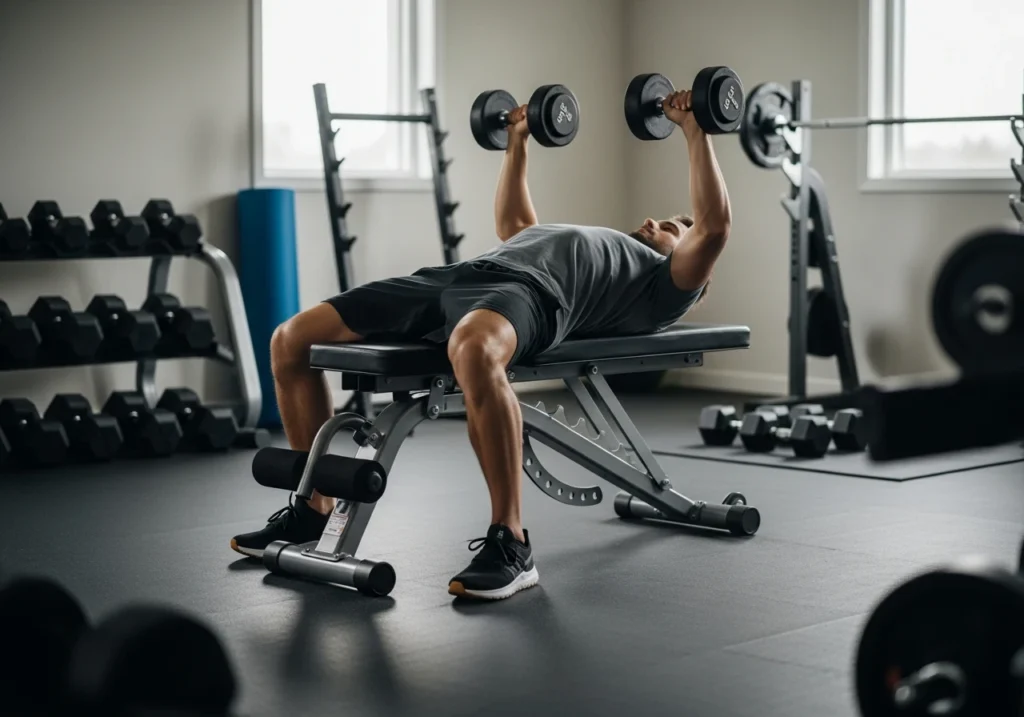
For raw, heavy pushing power, the bench press is absolutely non-negotiable. Lying flat on a stable bench allows you to safely load maximum weight onto your pectoral muscles. You must actively squeeze your shoulder blades perfectly together against the bench to protect your fragile shoulder joints during the pressing motion.
The Overhead Shoulder Press
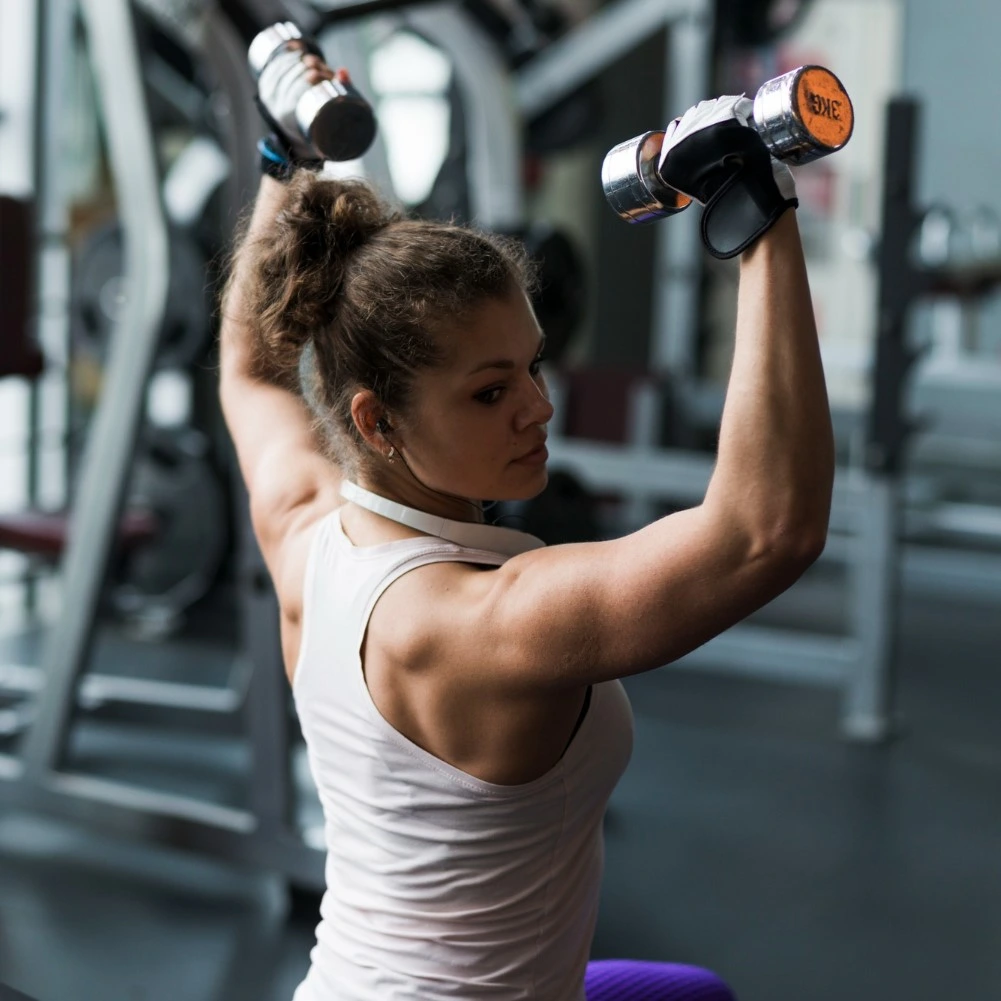
Building resilient, healthy shoulders requires heavy vertical pressing. Using a barbell or dumbbells, pressing weight directly over your head targets all three heads of your deltoid muscle. You must keep your core muscles braced and avoid excessively arching your lower back to prevent lumbar spine injuries.
The Bent-Over Row
To balance all the heavy pressing, you must incorporate heavy horizontal pulling. The bent-over row targets the thick muscles of your mid-back, essentially building the “brakes” for your shoulder joints. Hinge safely at the hips with a perfectly flat back, and actively pull the weight toward your belly button.
Full Upper Body Workout (Complete Routine)
How do you safely combine these movements into a single, effective gym session? A clinical full upper body workout must follow a highly specific, logical sequence to prevent injury and maximize muscular hypertrophy.
Always begin with a dynamic warm-up to flood your shoulder joints with synovial fluid. Perform five minutes of light rowing followed by arm circles and resistance band pull-aparts. Never lift heavy weights with stiff, cold joints.
Next, execute your heaviest compound exercises, such as the bench press and pull-ups, while your central nervous system is entirely fresh. Finally, conclude your complete upper body workout with lighter isolation exercises, like bicep curls, and a thorough static stretching cooldown.
Upper Body Workout Plan (Beginner to Advanced)
Your physical experience level absolutely dictates your weekly training volume. A proper upper body workout plan must safely scale with your body’s ability to recover from muscular damage.
For absolute beginners, I clinically recommend training the upper body exactly two days per week. This allows a massive 72-hour recovery window between sessions. Focus strictly on mastering the biomechanical form of push-ups and rows before adding heavy barbells.
Intermediate lifters can safely graduate to the best upper body workout plan, training three to four days per week. Advanced lifters frequently split their training into highly specific muscle groups, pushing their physical limits with aggressive volume and intensity.
Upper Body Weekly Workout Routine
Structuring your week correctly prevents severe overtraining and joint inflammation. A highly effective upper body weekly workout routine naturally separates pushing movements from pulling movements to maximize recovery.
- Day 1 (Push): Focus entirely on your chest, shoulders, and triceps. Utilize bench presses, overhead presses, and triceps extensions.
- Day 2 (Pull): Focus exclusively on your back and biceps. Perform heavy rows, pull-ups, and targeted bicep curls.
- Day 3 (Deep Recovery): Complete upper body rest. Engage in light, active walking and consume adequate dietary protein to rebuild torn muscle fibers.
Best Upper Body Workout Program
To see continuous, visible results, randomly choosing exercises every week will eventually lead to a frustrating plateau. The absolute best upper body workout program relies entirely on the clinical principle of progressive overload.
This scientific concept means you must consistently challenge your muscles by gradually increasing the physical weight, repetitions, or total sets over time.
Furthermore, a highly effective upper body workout program must perfectly balance total training volume and frequency. You cannot safely perform twenty sets of chest exercises in a single day and expect your torn muscle fibers to heal properly.
As a sports medicine physician, I recommend structuring your program in four-week blocks. Spend four solid weeks mastering your form with moderate weights, then slightly increase the resistance for the next block. This calculated, medical approach builds incredibly dense muscle while strictly protecting your fragile tendons.
Upper Body Workout at the Gym
Stepping into a fully equipped commercial gym provides you with unparalleled tools for complete muscular development. An optimal upper body workout at the gym utilizes heavy barbells and dumbbells to safely maximize your biomechanical range of motion.
Historically, fitness media heavily separated training routines by gender, but clinically, muscles contract exactly the same way. An upper body workout gym male routine and an upper body workout gym female routine should share the exact same foundational compound movements.
The primary difference lies strictly in your personal customization and aesthetic goals. If a male patient wants broader shoulders, he will naturally prioritize heavy overhead presses. If a female patient wants a more toned, defined back, she will heavily prioritize seated cable rows and lat pulldowns.
Upper Body Workout Using Gym Machines
If you are a complete beginner or recovering from an injury, free weights can feel dangerously unstable. Utilizing upper body workout gym machines provides an incredibly safe, physically structured environment. These machines strictly guide your biomechanical path, completely preventing dangerous form breakdowns.
First, the seated chest press machine is a phenomenal tool for safely overloading the pectoral muscles without risking a dropped barbell. Next, the lat pulldown machine provides the absolute best alternative to pull-ups. It allows you to precisely target your back muscles with manageable, adjustable weight stacks.
Finally, the seated shoulder press machine safely isolates your deltoids while providing total lower back support. I frequently prescribe these specific machines to my elderly patients to help them build functional strength without the acute risk of dropping heavy free weights.
Upper Body Exercises at Home
Do you strongly prefer avoiding the crowded, noisy gym environment? Executing highly effective upper body exercises at home requires minimal space and can yield incredible physiological results. Your own body weight provides significant resistance if utilized correctly.
The standard push-up remains the absolute foundation of any home chest routine. Additionally, dynamic plank variations, such as plank shoulder taps, aggressively challenge your core and shoulder stability simultaneously.
To properly train your pulling muscles at home, you must invest in simple resistance bands. Secure a heavy band around a sturdy doorframe to safely perform standing rows and lat pulldowns in your living room.
Upper Body Strength Exercises Without Equipment
What if you have absolutely zero fitness gear available during your workout time? You can still perform brutal, highly effective upper body strength exercises without equipment. This requires a strict focus on time-under-tension and muscular endurance.
Create a highly intense bodyweight circuit by combining explosive push-ups with agonizing isometric holds. Lower yourself into the bottom of a push-up and simply hold that painful, stretched position for ten full seconds to force massive chest activation.
Furthermore, utilize strict time-based workouts to drastically increase the cardiovascular intensity. Try performing as many perfect push-ups as physically possible in sixty seconds, rest for thirty seconds, and repeat for five brutal rounds.
Upper Body Workout for Beginners (Female Focus)

Many female patients in my clinic express a strong fear of becoming “too bulky” if they lift heavy weights. A properly structured upper body workout for beginners female completely dispels this myth. Biologically, women lack the massive testosterone levels required to build huge, bulky muscles accidentally.
An introductory female routine should safely prioritize light to moderate weights with slightly higher repetitions (12 to 15 reps). This specific rep range builds incredibly lean, dense, and visibly toned muscle tissue across the arms and shoulders.
The most critical factor is strictly focusing on proper lifting form. Master the biomechanics of a dumbbell row or a modified knee push-up before ever worrying about how much weight is in your hands.
What Exercise Is Best for High Blood Pressure?
As a medical doctor, this is a vital cardiovascular question I address weekly. What exercise is best for high blood pressure? The absolute safest approach prioritizes moderate-intensity aerobic exercise combined with highly controlled, light resistance training.
You must absolutely avoid heavy, maximum-effort lifting that requires you to hold your breath. This dangerous straining drastically spikes your systemic blood pressure and places terrifying stress on your blood vessels.
Instead, focus strictly on smooth, continuous upper body movements using lighter dumbbells or resistance bands. Always breathe continuously through the entire range of motion to safely regulate your cardiovascular system.
What Is the 3-3-3 Rule for a Workout?
Many overwhelmed beginners frequently ask me, “What is the 3-3-3 rule for a workout?” This simple, highly effective fitness concept completely removes the confusing guesswork from your weekly training schedule.
The 3-3-3 rule clinically dictates that you select exactly 3 specific exercises, perform 3 intense sets of each, and train exactly 3 times per week. For example, your upper body day would consist solely of 3 sets of push-ups, 3 sets of rows, and 3 sets of shoulder presses.
This minimalist clinical approach entirely prevents severe physical overtraining while guaranteeing sufficient weekly volume for steady muscle growth. It is the absolute perfect starting point for busy professionals trying to rebuild their physical fitness safely.
What Is the 5-5-5-30 Rule?
For patients seeking a faster, more metabolically demanding routine, I introduce the 5-5-5-30 protocol. But what is the 5 5 5 30 rule exactly? It is a brutally efficient, high-intensity circuit training method.
The protocol requires you to select 5 distinct exercises and perform exactly 5 repetitions of each movement. You complete this entire sequence for 5 continuous rounds, resting exactly 30 seconds between each round.
This specific method drastically elevates your heart rate while simultaneously building functional upper body strength. It is an incredibly time-efficient way to achieve a massive muscular pump in less than twenty minutes.
How to Build an Effective Upper Body Workout
Are you entirely ready to design your own custom routine? The clinical blueprint requires a relentless combination of heavy compound lifts, targeted isolation, and adequate deep recovery.
First, you must intentionally choose heavy compound exercises that safely force your chest and back to work simultaneously. Second, strategically add lighter isolation exercises, like triceps extensions, to fully exhaust the smaller arm muscles.
Third, you must strictly apply the scientific principle of progressive overload by slowly increasing your weights over the months. Finally, fiercely prioritize your deep nightly sleep and protein intake, as muscle tissues only rebuild while you are actively resting.
Common Upper Body Training Mistakes
Are you secretly sabotaging your own hard-earned gym progress? The absolute biggest mistake I see clinically is severe overtraining of the arms. Beginners constantly perform hundreds of bicep curls while completely ignoring their massive chest and back muscles.
Another massive clinical error is completely ignoring the posterior chain. If you perform heavy bench presses every day but never do back rows, your shoulders will violently pull forward, destroying your posture.
Finally, maintaining extremely poor posture during overhead presses puts terrifying stress on your fragile lumbar spine. Always aggressively brace your core and squeeze your glutes to create a perfectly stable base before pressing weight over your head.
Frequently Asked Questions
Can you safely do upper body workouts every single day?
No, training the exact same upper body muscles daily is a massive clinical mistake. Your torn muscle fibers absolutely require a minimum of 48 to 72 hours of deep rest to properly rebuild and grow thicker. Overtraining leads directly to joint inflammation and central nervous system fatigue.
What is the absolute best upper body workout to do at home?
The most highly effective home routine utilizes your own body weight and simple resistance bands. It should strictly combine dynamic push-ups for the chest and triceps, plank shoulder taps for core stability, and heavy resistance band rows for complete back development.
How long should a highly effective upper body workout actually take?
A scientifically structured, intense gym session should only last between 30 and 60 minutes. Training past the one-hour mark typically drastically spikes your body’s cortisol levels, which can actively break down existing muscle tissue and delay recovery.
Is severe muscle soreness required to build a toned upper body?
No, crippling delayed onset muscle soreness (DOMS) is entirely unnecessary and usually indicates clinical overtraining or poor physical recovery. You should aim to feel a slight, dull muscle fatigue the next day, not agonizing joint pain that prevents normal movement.
How should you properly breathe during heavy pressing exercises?
You must completely inhale into your diaphragm during the eccentric (lowering) phase of the movement. Forcefully exhale during the concentric (pushing) phase to safely regulate your systemic blood pressure and protect your cardiovascular system from dangerous spikes.
Conclusion
Building an incredibly strong, functional upper body is the absolute foundation of your long-term postural health and athletic vitality. As a sports medicine physician, I constantly assure my patients that you simply cannot build a powerful, resilient life on weak, neglected back and shoulder muscles.
To achieve true upper body fitness, you must entirely abandon terrible lifting form and imbalanced chest-only routines. Focus strictly on mastering heavy compound pulling and pressing, aggressively applying progressive overload, and prioritizing your vital deep recovery.
Do not wait another single day to correct your slouched posture and chronic neck pain. Implement these highly proven, clinically backed training strategies immediately, and proudly build the dense, capable upper body you truly deserve!
Authoritative References:
- PMC: Effects of Upper Body Exercise Training on Aerobic Fitness
- PMC: Muscle Activity in Upper-Body Single-Joint Resistance Exercises
- PubMed: Muscle Activity Levels in Upper-Body Push Exercises with Different Loads
- MDPI Sports: The Efficacy of Upper-Extremity Elastic Resistance Training
- American College of Sports Medicine (ACSM): 2026 Resistance Training Guidelines
Related Posts




MORE from Author
Read More As a physician specializing in exercise science and public health, I regularly consult patients who feel completely lost in the…
 Just last week, a 34-year-old patient named Clara sat in my clinic, feeling entirely overwhelmed by the modern fitness industry.…

 Hello, I am Dr. Kenji Sato, MD, specializing in sports medicine and performance optimization. In my sports clinic, I constantly…
- In my clinical practice as a physician focused on exercise science, I often tell patients that mastering fitness bench workouts…