
Cardiac Arrest vs Heart Attack: What’s the Difference?

You might confuse cardiac arrest with a heart attack sometimes. Many people use these terms interchangeably. Truthfully, they represent very different emergencies. A heart attack blocks blood flow suddenly. Cardiac arrest stops the heart’s electrical system. Both demand immediate action without delay.
Understanding cardiac arrest vs heart attack saves lives daily. I see patients who hesitate during crisis moments. That hesitation costs precious minutes unnecessarily. You need clear facts right now. Let’s break down every critical difference simply. You will learn recognition signs quickly.
Emergency response becomes second nature then. Your knowledge could save someone today.
What Is a Heart Attack?
A heart attack occurs when blood flow stops. Coronary arteries deliver oxygen to the heart muscle. Plaque buildup narrows these vessels gradually. A ruptured plaque triggers clot formation instantly. This blockage starves cardiac tissue of oxygen. Muscle cells begin dying within minutes permanently.
Medical professionals call this a myocardial infarction. Chest discomfort often signals this emergency clearly. Pain may radiate to the arms, jaw, or back. Nausea, sweating, and breathlessness accompany the event. Women sometimes experience subtler warning signs.
Fatigue or indigestion might dominate their symptoms. Early intervention restores blood flow effectively. Angioplasty procedures open blocked arteries quickly. Medications prevent further clotting complications. Time remains the heart muscle’s greatest ally always.
What Is Cardiac Arrest?

Cardiac arrest strikes when electrical function fails. The heart’s rhythm system malfunctions suddenly. Ventricular fibrillation causes chaotic quivering motions. No effective pumping occurs during this chaos. Blood circulation stops completely within seconds. The person collapses without warning immediately.
Breathing ceases or becomes gasping irregularly. Consciousness vanishes as brain oxygen drops. This differs fundamentally from a heart attack. Cardiac arrest represents an electrical catastrophe entirely. Heart attacks involve circulation problems primarily. However, a severe heart attack can trigger arrest.
The two conditions sometimes connect dangerously. Immediate CPR doubles or triples survival chances. Defibrillators restore normal rhythm effectively. Every minute without intervention reduces survival by ten percent. Rapid response remains absolutely critical here.
Cardiac Arrest vs Heart Attack: Key Differences
Understanding cardiac arrest vs heart attack prevents dangerous confusion. These emergencies require distinct immediate responses. A heart attack typically allows consciousness initially. Victims often describe symptoms clearly. Cardiac arrest causes instant unconsciousness, usually.
No communication occurs during this crisis. Heart attacks develop over minutes or hours. Cardiac arrest strikes without any warning. Treatment approaches differ significantly between them. Heart attacks need artery-opening procedures urgently. Cardiac arrest demands CPR and defibrillation immediately.
Both conditions share some risk factors, though. Smoking, diabetes, and hypertension increase both risks. Family history influences susceptibility to either. Recognizing these distinctions guides proper emergency action.
| Feature | Heart Attack | Cardiac Arrest |
|---|---|---|
| Primary Cause | Blocked coronary artery | Electrical system failure |
| Consciousness | Usually remains aware | Loss of consciousness immediate |
| Breathing | Often continues normally | Stops or becomes gasping |
| Pulse | Usually present initially | Absent completely |
| First Response | Call 911, chew aspirin | Start CPR, use AED immediately |
| Treatment Focus | Restore blood flow | Restore heart rhythm |
Symptoms of Cardiac Arrest vs Heart Attack
Cardiac arrest vs heart attack symptoms present very differently. Heart attack victims often report chest pressure. Discomfort feels like squeezing or a heavy weight. Pain may travel to the shoulders, arms, or jaw. Shortness of breath develops during rest occasionally.
Nausea, cold sweats, and dizziness accompany the event. Women frequently experience unusual fatigue instead. Sleep disturbances or indigestion might precede attacks. Cardiac arrest symptoms appear suddenly and dramatically. The person collapses without any warning.
No pulse can be detected at the neck or wrist. Breathing stops completely or becomes irregular gasps. Skin may turn pale or bluish quickly. Eyes might remain open with no response. These symptoms of cardiac arrest vs heart attack demand different emergency actions. Recognizing them saves critical response time.
Which Is Worse: Cardiac Arrest or a heart attack?
Many ask if cardiac arrest vs heart attack is worse. Cardiac arrest carries a higher immediate fatality risk. Survival drops ten percent every minute without CPR. Brain damage begins after four minutes without oxygen. Heart attacks allow more time for intervention, typically.
Victims often reach hospitals with conscious awareness. However, severe heart attacks can trigger cardiac arrest. This combination creates the most dangerous scenario. Both conditions require emergency medical attention always. Neither should ever be dismissed or delayed.
Prevention strategies overlap significantly for both. Managing blood pressure, cholesterol, and diabetes helps. Avoiding tobacco and maintaining a healthy weight matters. Regular exercise consistently strengthens cardiovascular resilience. Understanding severity guides appropriate urgency responses.
Causes of Cardiac Arrest vs Heart Attack
What causes cardiac arrest differs from heart attack triggers. Heart attacks stem from coronary artery disease primarily. Plaque rupture creates clots that block blood flow. High cholesterol, hypertension, and smoking accelerate this process. Diabetes damages arterial linings significantly over time.
Cardiac arrest often results from electrical disturbances. Ventricular fibrillation represents chaotic heart rhythms frequently. Previous heart attacks create scar tissue that disrupts signals. Genetic conditions affect the heart’s electrical pathways sometimes.
Drug overdoses or severe electrolyte imbalances trigger arrest. Drowning, electrocution, or major trauma can cause it. Both conditions share common risk factors, though. Family history, age, and lifestyle influence susceptibility. Understanding these causes informs prevention strategies effectively.
Survival Rates: Cardiac Arrest vs Heart Attack
Cardiac arrest vs heart attack survival rate data reveals important patterns. Heart attack survival exceeds ninety percent with timely care. Modern interventions restore blood flow effectively often. Cardiac arrest survival remains below ten percent generally. Immediate bystander CPR dramatically improves these odds.
Public access defibrillators increase survival significantly. Every minute without intervention reduces the chances substantially. I recently witnessed a grocery store emergency. A shopper collapsed suddenly without warning. Another customer recognized cardiac arrest immediately.
She began chest compressions within seconds. Someone retrieved the store’s AED device quickly. The victim survived with minimal neurological impact. This story illustrates why public education matters. You could be that life-saving responder someday.
First Aid and Emergency Treatment
Cardiac arrest vs heart attack treatment requires distinct emergency approaches. For suspected heart attacks, call emergency services immediately. Have the person rest comfortably while waiting. Chew one adult aspirin unless allergic or contraindicated. Loosen tight clothing around the neck and chest.
Monitor breathing and consciousness continuously. For cardiac arrest, begin CPR without delay. Place your hands at the center of your chest, push hard and fast. Compress at least two inches deep at 100-120 per minute. Use an AED device as soon as it is available.
Follow its voice prompts precisely without hesitation. Continue cycles until professional help arrives. What is the first aid for cardiac arrest remains simple: compress, shock, repeat. Training courses build confidence for these moments. Everyone should learn these life-saving skills.
Cardiac Arrest vs Heart Attack vs Stroke
Understanding cardiac arrest vs heart attack vs stroke prevents dangerous confusion. Strokes involve sudden disruption of brain blood flow. Facial drooping, arm weakness, and speech difficulties signal a stroke. Heart attacks affect heart muscle oxygenation primarily.
Cardiac arrest stops all effective heart pumping immediately. All three conditions demand an emergency response without delay. Remember the acronym FAST for stroke recognition. Face drooping, Arm weakness, Speech difficulty, Time to call 911. Heart attacks often present with chest discomfort primarily.
Cardiac arrest causes immediate collapse and unconsciousness. Distinguishing these emergencies guides appropriate first aid. Never attempt a diagnosis during crisis moments, though. When in doubt, activate emergency services immediately. Rapid professional evaluation determines the proper treatment always.
Cardiac Arrest vs Heart Failure vs Heart Attack
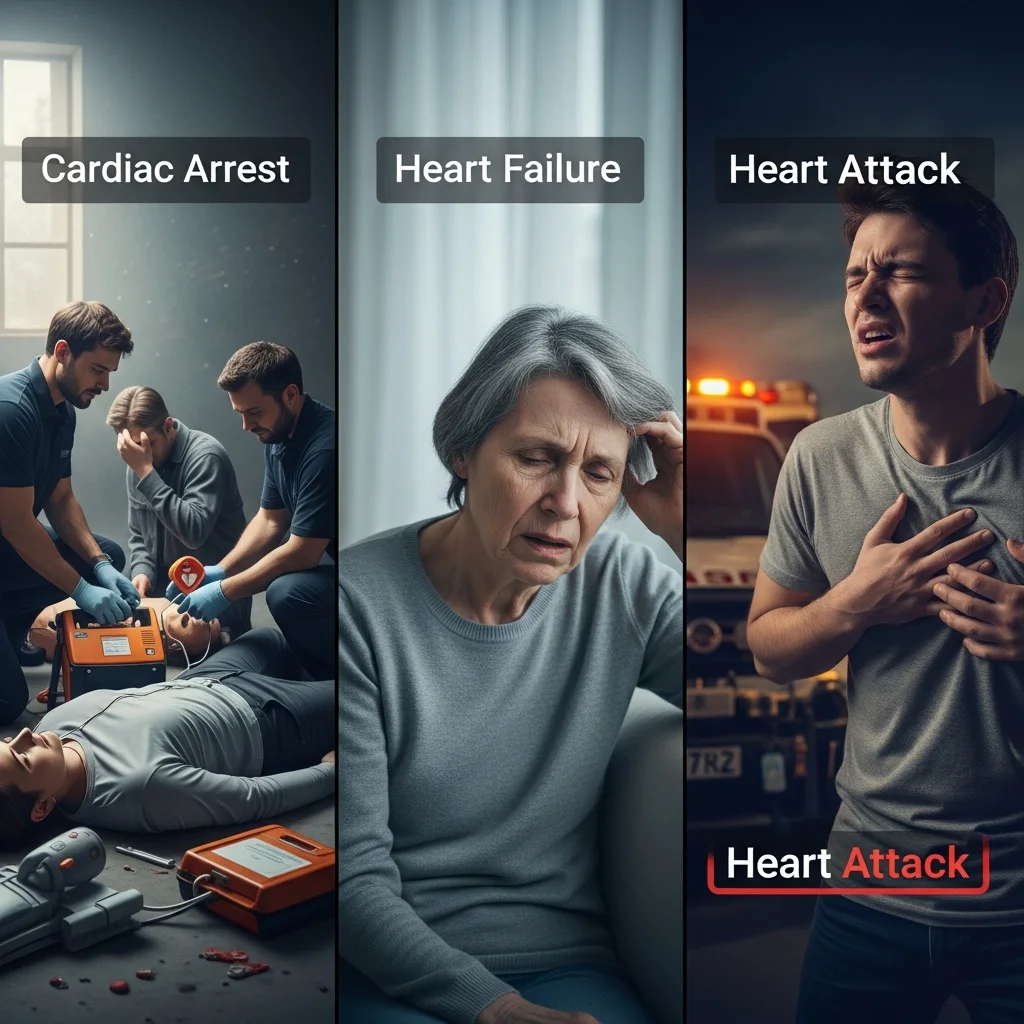
Cardiac arrest vs heart attack vs heart failure represents another important distinction. Heart failure describes chronic pumping weakness that gradually. The heart struggles to meet the body’s demands consistently. Symptoms include fatigue, swelling, and breathlessness progressively.
This differs from sudden cardiac events entirely. Heart attacks cause acute muscle damage from blocked flow. Cardiac arrest represents complete electrical system failure instantly. Heart failure patients face higher risks for both conditions. Proper management reduces these complications significantly.
Medications, lifestyle changes, and monitoring improve outcomes. Understanding these differences informs appropriate care expectations. Chronic conditions require consistent management strategies. Acute emergencies demand immediate life-saving interventions.
Can Cardiac Arrest Be Prevented?
Preventing cardiac arrest focuses on heart health optimization. Regular screenings detect electrical abnormalities early sometimes. Implantable defibrillators protect high-risk patients effectively. Managing underlying heart disease reduces arrest risks significantly.
Controlling blood pressure and cholesterol matters greatly. Avoiding tobacco and limiting alcohol helps substantially. Maintaining a healthy weight through diet and exercise works. Treating sleep apnea improves cardiac electrical stability. Family history warrants earlier and more frequent evaluation.
Discuss personal risk factors with your healthcare provider. Prevention strategies overlap with heart attack prevention significantly. Consistent healthy choices build cardiovascular resilience over time. Small daily actions compound into major protection eventually.
Frequently Asked Questions
Are cardiac arrest and heart attack identical?
No, they represent different emergencies entirely. Heart attacks block blood flow to the heart muscle. Cardiac arrest stops the heart’s electrical pumping function. Both require immediate emergency response without delay.
Can someone survive sudden cardiac arrest?
Yes, immediate CPR and defibrillation dramatically improve survival. Bystander intervention doubles or triples chances significantly. Every minute without action reduces survival by approximately ten percent.
What triggers cardiac arrest most commonly?
Ventricular fibrillation represents the most frequent cause. Previous heart damage, genetic conditions, or severe electrolyte imbalances contribute. Drug overdoses or major trauma can also trigger arrest.
Does cardiac arrest cause pain for the victim?
Consciousness typically vanishes within seconds of arrest onset. Most victims experience no awareness during the event. Family members witness the emergency, not the patient.
What immediate action helps someone collapse suddenly?
Call emergency services immediately without hesitation. Begin chest compressions hard and fast at the center of the chest. Use an AED device as soon as one becomes available.
Conclusion
Understanding cardiac arrest vs heart attack empowers your emergency readiness. You now recognize distinct symptoms, causes, and responses. Both conditions demand immediate action without hesitation. Learn CPR skills through certified training programs. Locate AED devices in your common environments.
Share this knowledge with family and colleagues. Prevention starts with consistent heart-healthy choices today. Consult healthcare professionals for personalized risk assessment. Your preparedness could save a life tomorrow. Knowledge combined with action creates real protection.
Authoritative References
- American Heart Association – Clinically reviewed guide covering heart attack symptom duration, warning signs, and the critical importance of timely emergency response.
- Mayo Clinic – Expert-authored resource detailing heart attack symptom timelines, progression patterns, and when to seek immediate medical care.
- Circulation (American Heart Association Journal) – Peer-reviewed research hub publishing landmark studies on myocardial infarction timing
- National Heart, Lung, and Blood Institute (NIH) – Authoritative clinical guidelines on heart attack recognition, symptom duration, and the critical “time is muscle” principle for emergency care.
Related Posts





MORE from Author
Read More As a physician specializing in exercise science and public health, I regularly consult patients who feel completely lost in the…
 Just last week, a 34-year-old patient named Clara sat in my clinic, feeling entirely overwhelmed by the modern fitness industry.…


 Hello, I am Dr. Kenji Sato, MD, specializing in sports medicine and performance optimization. In my sports clinic, I constantly…
- In my clinical practice as a physician focused on exercise science, I often tell patients that mastering fitness bench workouts…