
Type 2 Diabetes Blood Sugar Levels Before Bed: Safe Targets & Nighttime Control
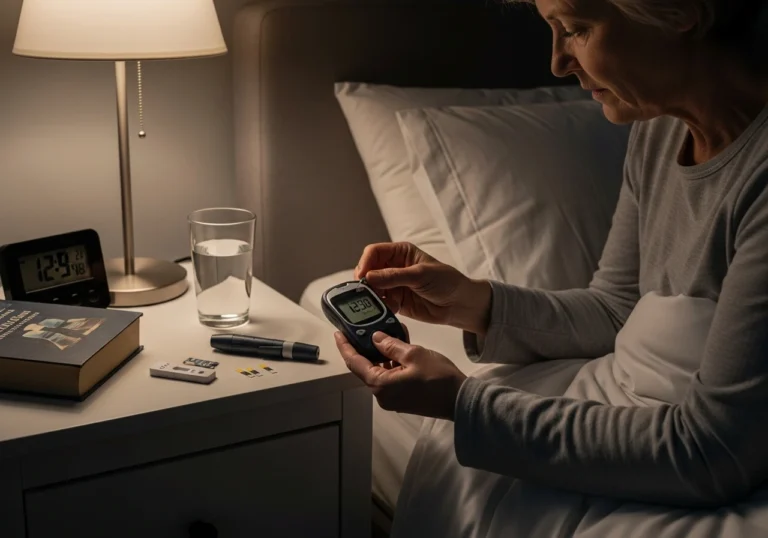
Last week, a patient named Robert visited my clinic feeling exhausted and frustrated. Despite maintaining a strict diet during the day, he kept waking up feeling groggy, thirsty, and anxious. When I asked him to track his type 2 diabetes blood sugar levels before bed, the mystery quickly unraveled.
His numbers were surging right as his head hit the pillow, leading to a chaotic night of metabolic distress. Understanding and controlling your evening glucose is just as critical as managing your daytime meals.
TL;DR: Quick Clinical Overview
- Ideal bedtime blood sugar for type 2 diabetes is typically 90–150 mg/dL (5.0–8.3 mmol/L).
- Levels actively remaining above 180 mg/dL may significantly increase overnight complications.
- Monitoring your bedtime glucose helps prevent dangerous nocturnal hypoglycemia and frustrating morning spikes.
- Proper evening diet, precise medication timing, and healthy nighttime habits are key to stable overnight control.
What Should Blood Sugar Be at Bedtime?
When the sun goes down, your body prepares for a prolonged fasting period. For a patient managing diabetes, this transition requires careful attention to circulating glucose. The American Diabetes Association provides clear guidelines to ensure you sleep safely.
Quick Answer: * With diabetes: Your target should generally sit between 90 and 150 mg/dL.
- Without diabetes: A normal, healthy range is tighter, usually between 70 and 120 mg/dL.
Going to sleep with a number slightly higher than your daytime fasting level provides a vital safety buffer. As you sleep, your body continues to use energy, and your glucose will naturally drop. If your bedtime number is too low, you risk experiencing a dangerous hypoglycemic event while unconscious.
Bedtime Blood Sugar Level Chart
To make tracking easier, I recommend patients keep a simple chart near their glucose monitor. Below is the standard clinical reference table we use in endocrinology to gauge nighttime safety.
| Category | US Measurement (mg/dL) | UK/Intl Measurement (mmol/L) |
| Normal (non-diabetic) | 70–120 | 3.9–6.7 |
| Type 2 Diabetes Target | 90–150 | 5.0–8.3 |
| High (Hyperglycemia) | > 180 | > 10.0 |
| Dangerous Level | > 250 | > 13.9 |
Type 2 Diabetes Blood Sugar Levels Before Bed (UK vs US)
Medical literature often looks confusing if you are reading articles from different countries. The clinical targets for human health remain exactly the same worldwide. However, the scale we use to measure those targets differs based on geography.
In the United States, we measure glucose concentration by weight, using milligrams per deciliter (mg/dL). In the UK, Canada, and most of Europe, doctors use millimoles per liter (mmol/L), which measures molecular count. To convert a UK reading to a US reading, simply multiply the mmol/L number by 18.
Why Do Blood Sugar Levels Spike Before Bed?
Many of my patients feel defeated when their evening readings are unexpectedly high. They often ask me why their glucose surges right before sleep, even if they skipped dessert. This bedtime spike usually stems from a combination of physiological and behavioral factors.
First, late-night meals or heavy carbohydrate snacking are the most common culprits. If you eat a large bowl of pasta at 8:00 PM and go to bed at 10:00 PM, your body is still actively digesting.
The carbohydrates convert to glucose and flood your bloodstream exactly when you are least active. Without physical movement to burn off that energy, the sugar simply pools in your vascular system.
Second, your body naturally experiences a shift in insulin resistance during the late evening. Your circadian rhythm heavily influences how efficiently your cells absorb glucose.
For many patients with type 2 diabetes, evening insulin sensitivity drops significantly compared to the morning. This means the exact same meal eaten at 7:00 PM will cause a higher spike than if eaten at noon.
Finally, evening stress hormones play a massive, hidden role in nighttime hyperglycemia. After a demanding workday, your body might retain high levels of cortisol and adrenaline.
These specific stress hormones actively instruct your liver to dump stored sugar into your blood for “emergency energy.” Learning to physically wind down and de-stress is a valid, necessary medical intervention.
Blood Sugar Levels Overnight: What Happens While You Sleep?

Sleep is not a passive, inactive state for your metabolic system. While your eyes are closed, your body acts like a busy chemical factory, constantly regulating your internal environment. Understanding this nocturnal behavior helps demystify those frustrating morning readings.
Even though you are not eating, your brain, heart, and lungs require constant energy overnight. To prevent your battery from draining completely, your liver slowly trickles stored glucose (glycogen) into your bloodstream. In a perfectly healthy body, a background level of insulin perfectly balances this trickle.
However, in type 2 diabetes, this delicate balance often breaks down. Between 3:00 AM and 8:00 AM, your body naturally releases a surge of growth hormones, cortisol, and glucagon. This hormonal wave is designed to wake you up, but it also signals the liver to dump extra sugar.
We call this natural surge the Dawn Phenomenon. Because a diabetic patient lacks sufficient insulin response, this morning’s sugar dump remains unchecked. Consequently, you might go to bed with a perfect 110 mg/dL, only to wake up frustrated at 160 mg/dL.
Normal Blood Sugar While Sleeping
For someone without metabolic dysfunction, glucose remains incredibly flat and stable throughout the night. A healthy pancreas constantly micro-adjusts insulin output minute by minute.
During the deepest stages of sleep, it is perfectly normal for blood sugar to experience a very slight dip. However, it rarely drops below 70 mg/dL because the liver’s safety mechanisms kick in automatically. The goal of type 2 diabetes management is to mimic this flat, stable overnight curve as closely as possible.
Blood Sugar Spike While Sleeping (Nocturnal Hyperglycemia)
Experiencing a massive glucose spike while sleeping is incredibly dangerous because you are entirely unaware it is happening. When we monitor patients using a Continuous Glucose Monitor (CGM), we often see terrifying peaks at 2:00 AM.
These nocturnal spikes are primarily driven by three main factors: late carbohydrate consumption, insufficient evening medication, and nocturnal stress. If your dinner medication wears off too early, your liver will rapidly overproduce glucose while you sleep.
Furthermore, severe sleep apnea causes massive spikes in nocturnal blood sugar. When you stop breathing during sleep, your body panics and floods your system with cortisol, driving your glucose levels incredibly high.
What Happens If You Go to Sleep with High Blood Sugar?
Going to bed with highly elevated glucose acts like a wrecking ball to your cellular recovery. First and foremost, you will likely experience severe, uncontrollable dehydration. Your kidneys will work all night frantically to flush out the excess sugar through your urine.
Consequently, you will wake up multiple times to use the bathroom, completely destroying your sleep architecture. Without deep, restorative sleep, your cells become even more insulin resistant the following day, creating a vicious, exhausting cycle.
You will also likely wake up with a painfully dry mouth, a severe headache, and lingering morning hyperglycemia. Your body simply cannot heal properly when its vascular system is drowning in syrup.
What Level of Blood Sugar Is Dangerous for Type 2 Diabetes?
As a physician, I teach my patients to recognize the numerical red flags immediately. While occasional fluctuations are perfectly normal, certain numbers demand immediate clinical intervention.
If your evening reading hits 250 mg/dL (13.9 mmol/L), you are entering an urgent, dangerous zone. At this concentration, your blood becomes highly viscous, forcing your heart to pump much harder to circulate oxygen.
If your monitor flashes a number above 300 mg/dL (16.6 mmol/L), you require immediate medical attention. At these extreme levels, your body may begin producing toxic ketones, leading to a deadly condition called Diabetic Ketoacidosis (DKA), even in Type 2 patients.
Blood Sugar Consistently Over 200: What It Means
Seeing your monitor consistently read over 200 mg/dL every single night is a massive, blaring alarm bell. It definitely means your current medical and dietary management plan is actively failing.
Living chronically above 200 mg/dL causes massive, silent damage to your smallest blood vessels. Overnight, this persistent inflammation slowly destroys the delicate capillaries in your eyes, kidneys, and toes.
Do not accept this as your “new normal.” If your readings refuse to drop below 200, contact your endocrinologist immediately to adjust your basal insulin or oral medications.
How to Prevent Blood Sugar Spikes at Night
Taking control of your nighttime readings requires discipline and strategic planning. You can successfully flatten that evening curve by implementing a few non-negotiable daily habits.
Actionable Clinical Tips:
- Establish a Kitchen Curfew: Stop eating all heavy carbohydrates at least three hours before bedtime.
- Prioritize Protein and Fat: If you must have a late-night snack, choose a handful of almonds or a slice of cheese, not fruit or crackers.
- Engage in Light Evening Activity: A gentle, 15-minute walk after dinner forces your muscles to burn off excess glucose from your meal.
- Optimize Medication Timing: Work with your doctor to ensure your evening dose peaks exactly when your body needs it most.
How to Prevent Nocturnal Hypoglycemia
While high readings are dangerous long-term, extremely low readings (hypoglycemia) are immediately life-threatening. Waking up drenched in sweat, shaking, or confused means your brain is starving for energy.
Preventing these dangerous overnight crashes requires extreme caution, especially if you take insulin or sulfonylureas. Never overcorrect a slightly high reading right before bed; “stacking” insulin doses is incredibly dangerous.
If your bedtime reading is surprisingly low (under 90 mg/dL), you should proactively consume a small, stabilized snack. Half a piece of whole-grain toast with peanut butter provides a slow, steady release of glucose to keep you safe until morning.
Should You Monitor Blood Sugar at Bedtime?
Quick Answer: Yes, absolutely. Checking your levels right before sleep is one of the most critical data points you can gather.
It is especially mandatory if you are currently using an insulin pump, taking long-acting basal insulin, or actively adjusting to a new medication. You cannot blindly guess your metabolic state before losing consciousness for eight hours.
Even if you manage your condition strictly with diet, checking a few nights a week provides massive peace of mind. It ensures your dinner choices are actually working in your favor.
What Should Blood Sugar Be in the Morning?
Your morning fasting number is a direct reflection of how successfully you managed the previous night. Ideally, a patient with type 2 diabetes should wake up with a reading between 80 and 130 mg/dL (4.4 to 7.2 mmol/L).
If your morning numbers are consistently higher than your bedtime numbers, you are likely experiencing the Dawn Phenomenon. Discussing these specific morning trends with your doctor helps us fine-tune your nighttime basal rates.
What Is the 3-Hour Rule in Diabetes?
The “3-Hour Rule” is a crucial safety protocol designed to prevent catastrophic insulin overdoses. It simply states that you must wait at least three hours before administering a second corrective dose of fast-acting insulin.
Many frustrated patients will check their blood sugar at 8:00 PM, see a high number, and inject insulin. An hour later, if the number hasn’t dropped, they panic and inject more.
This is called “insulin stacking.” The first dose is still actively working in the background. By the time both doses hit their peak simultaneously, the patient crashes into severe, life-threatening hypoglycemia.
Diabetes & Drinking Water at Night

Hydration plays a massive, often overlooked role in nocturnal glucose management. When your blood sugar is high, your body desperately needs water to help the kidneys filter out the toxic excess.
Keeping a large glass of water on your nightstand is highly recommended. Drinking water actively dilutes the concentration of glucose in your vascular system.
However, avoid drinking massive quantities right before you sleep, or you will be awake all night using the restroom. Sip consistently throughout the evening instead of chugging at midnight.
Can You Become Diabetic Overnight?
Many patients ask me if a single weekend of binge eating can suddenly trigger this disease. The absolute medical answer is no; you cannot develop type 2 diabetes overnight.
This condition is the result of years—often decades—of slow, progressive insulin resistance. Your pancreas fights valiantly for years to overproduce insulin before it finally burns out.
However, you can cross the diagnostic numerical threshold overnight. You may have been prediabetic for five years, but a stressful event finally pushes your A1C over the clinical edge.
Do Children with Diabetes Have Higher Bedtime Blood Sugar?
While type 2 diabetes is increasingly common in pediatrics, childhood metabolism behaves very differently from adult metabolism. Children require slightly higher overnight targets to protect their developing brains.
Because children sleep much more deeply and are highly prone to dangerous nocturnal hypoglycemia, pediatricians often prefer bedtime numbers closer to 110–150 mg/dL. Strict, individualized care plans are mandatory for pediatric patients.
How to Optimize Bedtime Blood Sugar (Practical Plan)
Translating medical theory into daily action is how we truly manage this disease. I want you to treat your evening routine like a strict medical prescription.
Your Evening Checklist:
- 7:00 PM: Finish eating a balanced, protein-heavy dinner.
- 7:30 PM: Take a 15-minute walk around the neighborhood.
- 9:00 PM: Drink your last major glass of water for the night.
- 9:45 PM: Check your blood sugar using your monitor or CGM.
- 10:00 PM: Administer your evening medications exactly as prescribed and go to sleep.
Type 2 Diabetes Bedtime Blood Sugar (Reddit vs Reality)
Online forums like Reddit are fantastic for emotional support, but they are absolutely terrible for medical advice. I constantly have to un-teach dangerous myths my patients read online.
Myth: “Running your numbers high overnight is much safer than running them low.”
Reality: While severe lows are immediately dangerous, chronically running high overnight guarantees permanent kidney and eye damage. You must aim for the healthy, stable middle ground (90-150 mg/dL).
Myth: “If you aren’t on insulin, you never need to check your numbers at night.”
Reality: Even diet-controlled patients need occasional nighttime data to ensure their dinner habits aren’t causing massive, silent spikes.
Frequently Asked Questions
What is the ideal blood sugar range before going to sleep?
For most adults managing Type 2 diabetes, the target range is typically 90–150 mg/dL (5.0–8.3 mmol/L). This specific range provides a vital safety buffer that helps prevent dangerous overnight hypoglycemia while avoiding the long-term damage caused by high glucose levels.
Why does my blood sugar spike right before bedtime?
Evening spikes are frequently caused by late-night carbohydrate consumption or a natural dip in insulin sensitivity as the day ends. Additionally, high levels of evening stress hormones like cortisol can signal your liver to release extra glucose into the bloodstream right as you prepare for rest.
What should I do if my blood sugar is over 250 mg/dL at night?
A reading above 250 mg/dL is medically concerning and requires immediate action. You should drink plenty of water to stay hydrated and follow the specific insulin or medication correction protocol provided by your doctor. If levels remain above 300 mg/dL, seek professional medical advice.
Is a bedtime snack necessary for Type 2 diabetics?
A snack is generally only necessary if your blood sugar is below 90 mg/dL before bed. If a snack is needed to prevent an overnight crash, choose options high in protein and healthy fats, such as a small handful of almonds or a piece of cheese, to avoid a sharp glucose surge.
What is the “Dawn Phenomenon” and how does it affect me?
The Dawn Phenomenon is a natural surge of hormones—including cortisol and growth hormone—that occurs between 3:00 AM and 8:00 AM to wake the body up. In people with diabetes, this hormonal wave causes the liver to release excess sugar, often leading to high glucose readings first thing in the morning.
The Expert Conclusion (MD Perspective)
Mastering your type 2 diabetes blood sugar levels before bed is the ultimate key to waking up feeling energized and in control. The night should be a time for cellular repair, not a stressful metabolic rollercoaster.
By enforcing a strict evening routine, respecting your medication timing, and refusing to eat heavy carbs late at night, you can entirely rewrite your morning numbers. Remember, data is power—use your monitor to listen to exactly what your body needs tonight.
Authoritative References:
- American Diabetes Association (ADA) – Glycemic Targets: Standards of Care in Diabetes—2023
- Centers for Disease Control and Prevention (CDC) – Manage Blood Sugar
- Mayo Clinic – Dawn Phenomenon: What Can You Do?
- National Center for Biotechnology Information (NCBI) – Type 2 diabetes and cardiovascular disease
Related Posts






MORE from Author
Read More As a physician specializing in exercise science and public health, I regularly consult patients who feel completely lost in the…
 Just last week, a 34-year-old patient named Clara sat in my clinic, feeling entirely overwhelmed by the modern fitness industry.…


 Hello, I am Dr. Kenji Sato, MD, specializing in sports medicine and performance optimization. In my sports clinic, I constantly…
- In my clinical practice as a physician focused on exercise science, I often tell patients that mastering fitness bench workouts…