Fitness Ball Workout: Best Stability Ball Exercises for Beginners, Weight Loss & Core Strength
As a physician specializing in sports medicine and rehabilitation, I constantly look for low-impact ways to help patients regain their mobility. Just last week, I prescribed a targeted fitness ball workout to a patient suffering from severe, chronic lower back pain. She was terrified of heavy lifting but desperately needed to rebuild her foundational core muscles to support her spine.
During our interview, she explained how years of sedentary office work had completely degraded her posture and daily energy levels. I introduced her to this simple, inflatable tool, and the transformation in her physical stability and pain management was truly remarkable. It allowed her to safely engage deep muscle groups without stressing her sensitive joints.
Because of her incredible success, I have developed this comprehensive medical and fitness guide for anyone facing similar physical hurdles. This resource is a fantastic starting point if you are looking into how to start a healthy lifestyle. This guide will walk you through everything you need to know to safely perform these exercises at home. By following these clinical guidelines, you can effectively rebuild your strength and improve your overall quality of life.
TL;DR (Quick Overview)
- A fitness ball workout utilizes an unstable, inflatable sphere to drastically improve your core strength, balance, and joint flexibility.
- Beginners should focus on highly supportive, low-impact movements like basic ball squats, seated marches, and simple crunches.
- Advanced trainees can easily incorporate dumbbells to create dynamic, full-body resistance routines that maximize calorie burn and weight loss.
- Seniors can safely use the equipment for gentle, seated mobility exercises to improve their daily posture and reduce the risk of accidental falls.
What Is a Fitness Ball Workout?
A fitness ball workout involves using a large inflatable ball, often called a stability or gym ball, to perform exercises that challenge your balance. These routines force your body to constantly adjust to an unstable surface, which automatically activates your deep core muscles.
Unlike exercising on a flat, rigid floor, exercises with a stability ball engage multiple muscle groups simultaneously to keep you from falling. This type of training originated in physical therapy clinics to help patients recover from spinal injuries.
Today, it has evolved into a mainstream fitness practice utilized by professional athletes, seniors, and casual gym-goers alike. It bridges the gap between rehabilitation and traditional strength training, helping you define what is a healthy living for your specific body.
Benefits of Fitness Ball Workouts
According to guidelines by the National Institutes of Health, incorporating unstable surfaces into your training provides profound physiological benefits of exercise. Primarily, it dramatically improves your functional core strength, which is the foundation of all bodily movement.
When you perform routines on this equipment, your nervous system works overtime, which greatly enhances your overall balance and neuromuscular coordination. This constant micro-adjustment effectively reduces the risk of future back pain by strengthening the small stabilizer muscles around your spine.
Furthermore, simply sitting on the ball actively supports posture correction by forcing you to sit upright and engage your pelvic floor. You cannot slouch on a round surface without sliding off, making it a brilliant tool for ergonomic awareness.
Fitness Ball Workout for Beginners
Diving into a new exercise routine can feel intimidating, which is why a fitness ball workout for beginners must prioritize safety and control. You do not need to perform acrobatic movements to see incredible results; starting simple is the most effective clinical approach.
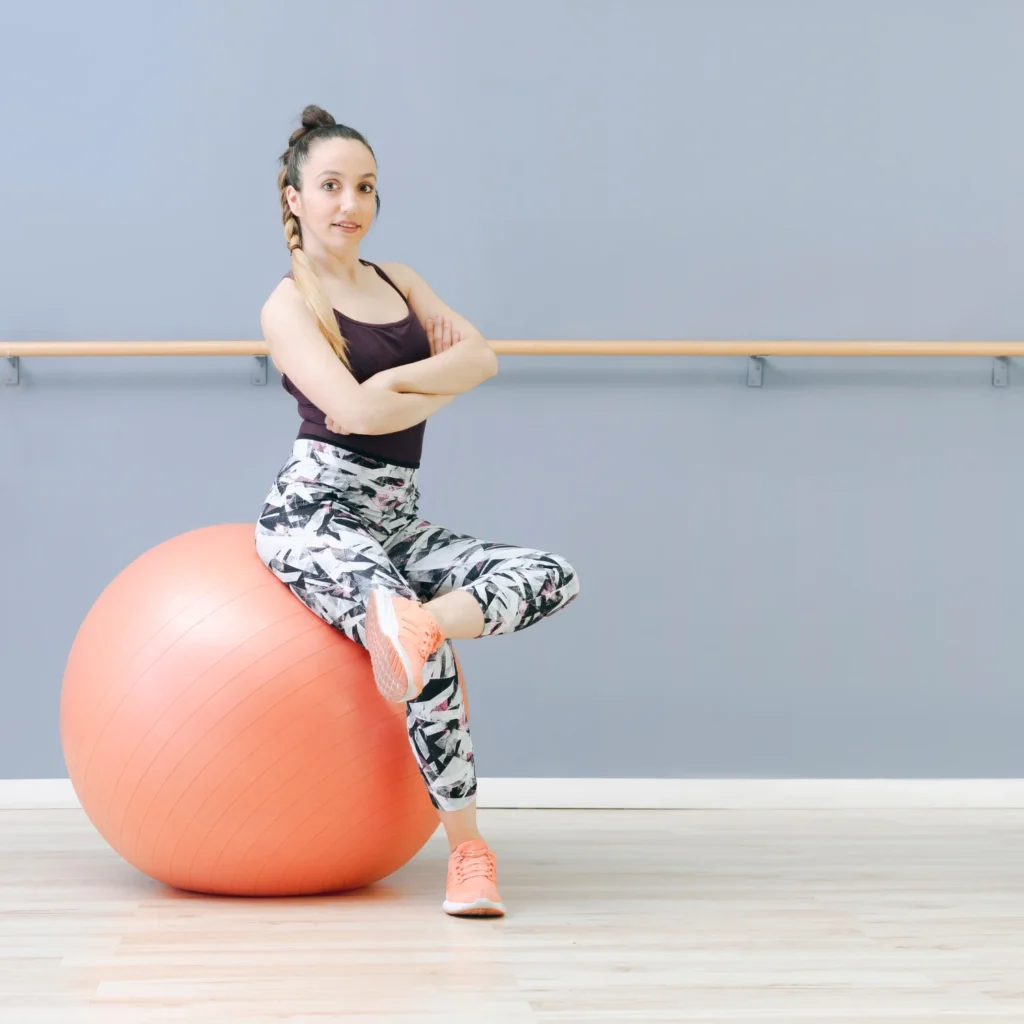
Stability ball exercises for beginners should focus on basic muscle engagement rather than speed or heavy resistance. The first movement I teach my patients is the Ball Sit, which involves simply sitting on the center of the equipment with your feet flat on the floor.
Once you master your posture there, you can progress to the Wall Squat with Ball. Place the ball between your lower back and a sturdy wall, and slowly lower your hips as if sitting in a chair.
Another excellent starter movement is the Seated March. While sitting perfectly upright on the ball, slowly lift one knee toward your chest, lower it, and repeat with the other leg.
Finally, try the classic Ball Crunch by lying with your lower back supported on the curve of the equipment. Place your hands behind your ears, and gently contract your abdominal muscles to lift your shoulders slightly upward.
As a clinical tip, I recommend that beginners start with just 10 to 15 slow, controlled repetitions per exercise. Focus entirely on feeling the targeted muscles contract rather than rushing through the movements.
Exercise Ball Workouts for Seniors
As we age, maintaining our sense of balance becomes critical for fall prevention and independent living. Exercise ball workouts for seniors are fantastic because they offer a low-impact way to strengthen the joints without causing unnecessary pain.
For my older patients, I strictly recommend safe, supportive exercises like seated balance holds where their feet remain firmly planted on the ground. Gentle leg lifts while seated can dramatically improve hip flexor strength and knee stability.
You can also use the equipment for gentle back support stretches by leaning back against it while it is wedged securely against a wall. Safety is paramount, so seniors should always use a wall or a sturdy chair for extra hand support when starting.
Avoid any highly unstable movements or exercises where your feet leave the ground completely until you build advanced confidence.
Stability Ball Exercises Chart (Quick Reference)
Having a quick visual guide can help you structure your daily routine without needing to constantly look up instructions. Use this exercise ball workouts chart to select movements based on your current fitness level and target areas.
| Exercise | Target Area | Difficulty |
| Ball Squat | Legs & Glutes | Easy |
| Ball Crunch | Core | Easy |
| Plank on Ball | Core & Shoulders | Medium |
| Pike Roll | Abs & Shoulders | Advanced |
Free Printable Stability Ball Exercises
Many of my patients struggle to remember their routines once they leave the clinic and return to their homes. That is why I highly recommend utilizing free printable stability ball exercises to keep your training organized and consistent.
A high-quality printable guide should always include a dedicated beginner routine sheet with clear, easy-to-read instructions. It is also beneficial to have a structured weekly workout plan that tells you exactly which days to train and which days to rest, keeping in mind how much sleep is important for proper muscle recovery.
Look for resources that provide detailed exercise illustrations, as seeing the correct posture is often better than just reading about it. Consider downloading a comprehensive PDF guide to keep in your gym bag or tape to your workout mirror.
Fitness Ball Workout for Weight Loss
While diet is the primary driver of fat reduction, combining cardiovascular effort with unstable resistance is a powerful combination and a cornerstone of learning how to maintain a healthy lifestyle. A fitness ball workout for weight loss focuses on elevating your heart rate while simultaneously challenging your large muscle groups.
The most effective strategy is to combine strength exercises with cardiovascular movements using very short rest intervals. This keeps your metabolism elevated and forces your body to burn more calories both during and after the session.
An excellent example circuit begins with 15 rapid ball squats to engage the large muscles in your legs. Immediately transition into mountain climbers, placing your hands firmly on the ball while driving your knees toward your chest.
Finish the circuit with 20 intense ball crunches to isolate the core before taking a brief 30-second rest. Repeating this circuit four or five times will provide a massive metabolic boost and support your fat-loss goals.
Gym Ball Exercises for Flat Stomach
Aesthetically, many people seek out this equipment specifically to tone their midsection and reduce abdominal bloating. The most effective gym ball exercises for flat stomach goals involve deep core contraction and rotational movements.
The standard stability ball crunch is excellent, but you must ensure you are stretching completely backward over the curve before contracting. This allows for a much larger range of motion than a floor crunch, activating deeper abdominal muscle fibers.
The Russian twist with ball is another phenomenal choice for targeting the oblique muscles on the sides of your stomach. Lie with your upper back on the equipment, hold your arms straight up, and slowly rotate your torso from side to side.
Finally, the ball plank forces your transverse abdominis, the deep muscle that acts like a corset, to work incredibly hard. Rest your forearms on the surface and hold your body in a straight, rigid line for as long as possible.
Weight Lifting with Exercise Ball
Once you have mastered your body weight, adding external resistance is the logical next step for muscular hypertrophy. Weight lifting with exercise ball routines requires extreme focus, as the added load makes balancing significantly more difficult.
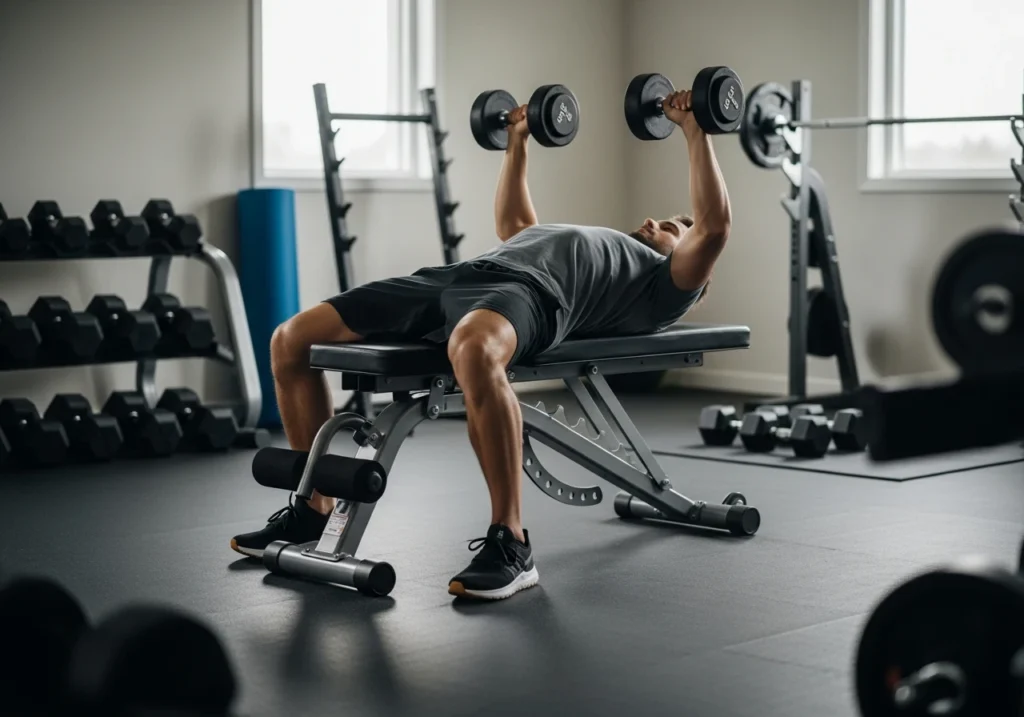
A classic example is the dumbbell chest press on ball, where you support your upper back on the equipment while keeping your hips elevated. This position mimics a flat bench but forces your glutes and core to stabilize the weight dynamically.
The shoulder press seated on ball is an incredible way to build upper body strength without relying on a chair’s backrest for support. Sitting unsupported forces your spinal erectors to work intensely to keep your torso completely upright.
You can also perform ball-supported rows by resting your chest against the curve while pulling dumbbells toward your ribs. The primary benefit of these movements is the dramatically increased core activation required to stabilize the external weights.
Stability Ball with Weights Workout
Creating a full-body routine that marries unstable surfaces with iron is a phenomenal way to break through a fitness plateau. This sample stability ball with weights workout will challenge your strength, endurance, and neurological coordination all at once.
Begin with ball squats holding dumbbells at your sides to heavily load the quadriceps and glutes. Transition into the ball chest press to target your pectorals, front deltoids, and triceps while your lower body acts as a bridge.
Finish the primary circuit with ball lunges, resting your back foot on the ball while you step your front foot forward into a deep lunge. This routine demands high cardiovascular output and significant muscular control, making it highly effective for advanced trainees who want to understand how to prevent heart disease through vigorous activity.
10-Minute Fitness Ball Workout (Quick Routine)
Lack of time is the most common excuse I hear from patients regarding their physical health and wellness. However, finding time for your body and learning how to deal with stress are crucial components of longevity. A highly focused 10-minute solution fitness ball workout can provide incredible cardiovascular and strength benefits if done consistently.
Set a timer and start with one full minute of deep, controlled ball squats against the wall. Immediately transition to the floor and perform one full minute of intense crunches over the curve of the equipment.
Flip over and hold a strict plank on the ball for exactly one minute, squeezing your glutes tightly. Rest for one minute, and repeat this three-minute circuit two more times for a comprehensive, full-body burn.
Fitness Ball Workout Videos (How to Learn Faster)
Sometimes reading about an exercise simply isn’t enough to grasp the complex biomechanics required to perform it safely. Searching for quality fitness ball workout videos is an excellent way to visually process the correct angles and speeds.
I heavily recommend following certified trainers or physical therapists who explain the anatomy behind the movements they are demonstrating. Always prioritize your physical form over the number of repetitions or the speed of the exercise.
Exercises with a Big Ball (Full List)
If you are looking to build a massive library of movements, here is a comprehensive breakdown of options. These exercises with a big ball can be mixed and matched to create endless workout variations.
Squats against a wall are foundational for lower body strength and knee joint stability. Crunches over the top curve provide an unparalleled range of motion for your rectus abdominis muscles.
Bridges performed with your feet resting on the top of the surface will aggressively target your hamstrings and gluteus maximus. Push-ups with your hands on the ground and your shins on the ball will build massive chest and shoulder strength.
Finally, planks with your forearms resting on the unstable surface will bulletproof your lower back and deep core stabilizers.
Common Mistakes in Fitness Ball Workouts
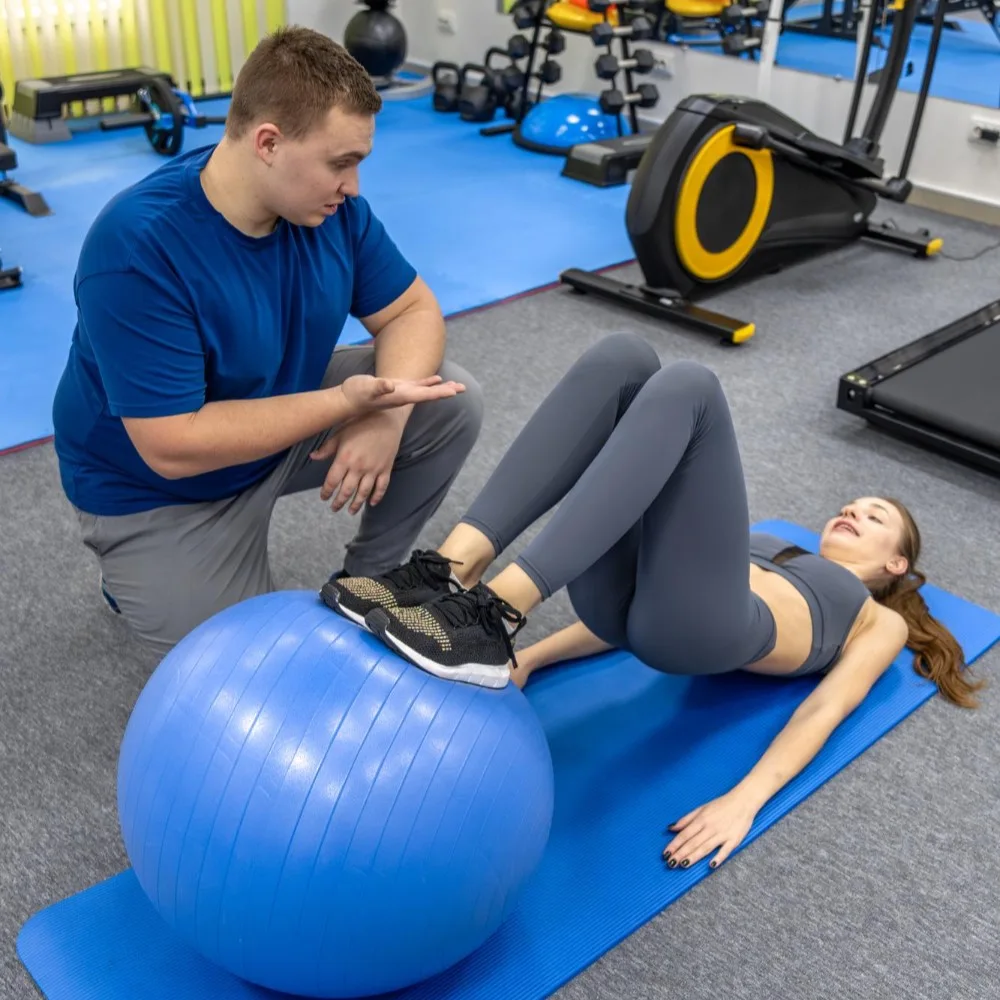
Even with the best intentions, improper technique can lead to severe joint strain or accidental falls. The most common error I see is using the wrong ball size, which forces the hips into an awkward, painful angle.
Poor posture, specifically rounding the lower back during seated movements, completely negates the core-strengthening benefits of the equipment. Moving too fast and relying on momentum rather than muscular control is a surefire way to lose your balance.
Finally, ignoring core engagement and letting your stomach relax during exercises puts dangerous pressure directly onto your lumbar spine.
Safety Tips (MD Perspective)
From a medical standpoint, preventing injuries should always be your number one priority when starting a new routine, which perfectly highlights why is preventive care important in physical therapy. The Centers for Disease Control and Prevention emphasizes that all adults should start slow when introducing new balance elements.
You must maintain a neutral spine during all movements, avoiding excessive arching or rounding of your lower back. If you have a severe back injury, a herniated disc, or chronic vertigo, you should avoid these exercises entirely until cleared by a specialist.
Gym Ball Price & Buying Guide
Investing in this equipment is highly affordable and provides a massive return on your health investment. The typical Gym Ball exercises price ranges from $10 to $40, depending heavily on the brand and the thickness of the anti-burst material.
Choosing the right size is entirely based on your height to ensure your knees sit at a proper 90-degree angle. A 55 cm option is perfect for shorter users, generally those under 5’4″.
The 65 cm version is the standard size, fitting most average-height individuals between 5’4″ and 5’11”. If you are exceptionally tall, over 6’0″, you will absolutely need the 75 cm option to maintain proper alignment.
FAQs
What is a fitness ball workout?
It is a comprehensive exercise routine that utilizes a large, unstable, air-filled sphere to drastically improve physical strength, balance, and joint flexibility. By forcing your body to stabilize itself constantly, it heavily targets your deep abdominal muscles.
Are stability ball workouts good for beginners?
Yes, they are highly beginner-friendly and incredibly low-impact on sensitive joints like the knees and hips. You can easily adjust the difficulty of the movements by simply widening your stance or holding onto a wall.
Can fitness ball workouts help lose weight?
Yes, especially when you specifically combine these core-strengthening movements with high-intensity cardiovascular circuits and a proper, calorie-controlled diet. The continuous engagement of large muscle groups helps burn significant calories during your routine.
What size fitness ball should I use?
Your ideal size depends entirely on your overall height, generally falling within the 55 to 75 cm range. When sitting squarely on top of it, your hips and knees should easily form a perfect 90-degree angle.
Are exercise ball workouts safe for seniors?
Yes, with the correct clinical modifications and preferably some initial physical supervision. Seniors can use the equipment for gentle, seated balance holds and supported stretching to safely improve their daily mobility.
Conclusion
In summary, integrating a fitness ball workout into your weekly routine provides immense benefits for your core strength, balance, and overall physical endurance. As we have explored throughout this guide, whether you are a complete beginner or a senior looking for safe mobility exercises, a stability ball is incredibly versatile.
By focusing on proper form, selecting the correct ball size, and gradually increasing your intensity, you can safely transform your body and reduce chronic pain. I have seen firsthand in my clinic how these simple movements can drastically improve a patient’s quality of life. Consistent practice will enhance your posture, support healthy weight loss, and build profound functional strength.
Remember to start slowly, use the free printable routines provided, and consult with a healthcare professional if you have any pre-existing injuries or severe back issues. The key to long-term fitness success is not perfection, but rather consistency and a willingness to challenge your body safely.
Pick up a stability ball, carve out just ten minutes of your day, and begin your journey toward a stronger, healthier, and much more resilient version of yourself. Your spine, joints, and core muscles will undoubtedly thank you for making this excellent daily health choice.
Evidence-Based References:
- National Library of Medicine — Effects of a stability ball exercise programme on low back pain and daily life interference during pregnancy
- National Library of Medicine — Effects of trunk exercise with physioball to improve trunk balance among subjects with stroke: a systematic review and meta-analysis
- National Library of Medicine — Stability ball versus office chair: comparison of muscle activation and lumbar spine posture during prolonged sitting
- National Institutes of Health — Stability Ball Sitting versus Chair Sitting During Sub-maximal Arm Ergometry
- National Institutes of Health — Regular exercise ball training reduces arterial stiffness in sedentary middle-aged males
- National Institutes of Health PubMed — The effects of stability ball training on spinal stability in sedentary individuals
- National Institutes of Health PubMed — Electromyographic comparison of a stability ball crunch with a traditional crunch
- National Institutes of Health PubMed — Stability ball versus office chair: comparison of muscle activation and lumbar spine posture during prolonged sitting
- National Institutes of Health PubMed — Sitting on stability balls: biomechanics evaluation in a workplace setting
- National Institutes of Health PubMed — Effects of a stability ball exercise programme on low back pain and daily life interference during pregnancy
Related Posts
MORE from Author
Read More As a physician specializing in exercise science and public health, I regularly consult patients who feel completely lost in the…
 Just last week, a 34-year-old patient named Clara sat in my clinic, feeling entirely overwhelmed by the modern fitness industry.…
 Hello, I am Dr. Kenji Sato, MD, specializing in sports medicine and performance optimization. In my sports clinic, I constantly…
- In my clinical practice as a physician focused on exercise science, I often tell patients that mastering fitness bench workouts…