
Ischemic Heart Disease: Symptoms, Causes, Stages, Treatment & Life Expectancy

As a board-certified MD specializing in cardiovascular health, I frequently help patients navigate complex cardiac diagnoses in my clinical practice. One of the most critical conditions we manage is ischemic heart disease, which requires immediate patient education and proactive care.
When patients first hear this diagnosis, they often experience significant anxiety about their long-term health and survival. However, understanding the mechanics of your cardiovascular system is the first powerful step toward taking control of your well-being.
Through my years of treating vascular conditions, I have seen firsthand how early intervention can completely alter a patient’s prognosis. This comprehensive guide will explain the symptoms, clinical stages, and modern treatments available to protect your cardiac health.
TL;DR: Quick Overview
- Cardiac ischemia occurs when narrowed coronary arteries severely restrict blood flow and oxygen to the heart muscle.
- The most common warning signs include chest pressure, extreme fatigue, and unexplained shortness of breath.
- Primary triggers include plaque buildup, chronic high blood pressure, and long-term tobacco use.
- Clinical treatment involves a combination of lifestyle adjustments, specific medications, and sometimes surgical procedures.
What Is Ischemic Heart Disease?
This condition is a cardiovascular disorder where the arteries supplying your heart muscle become narrowed or completely blocked. This restriction prevents the cardiac tissue from receiving the necessary amount of oxygen-rich blood it needs to function properly.
In clinical settings, we often use this term to describe a spectrum of issues caused by compromised coronary circulation. Without adequate blood flow, the heart muscle physically weakens, increasing the risk of arrhythmias and sudden failure.
Pronunciation of the Condition
Medical terminology can often feel like a foreign language to newly diagnosed patients. For clarity, the condition is pronounced as (is-KEE-mik heart dih-ZEEZ.
What Is “Ischemia” in the Heart?
Ischemia is a medical term that simply means an inadequate blood supply to an organ or part of the body. When we apply this term to the heart, it describes a critical mismatch between oxygen supply and physical demand.
If you are resting, your narrowed arteries might deliver just enough blood to keep the muscle stable. However, when you exercise or experience stress, the heart works harder and demands more oxygen than the clogged arteries can provide.
Symptoms of Ischemia
The physical warning signs of reduced cardiac blood flow manifest when the heart muscle becomes starved of oxygen. Chest pain, clinically known as angina, is the most common presentation, often described as a heavy squeezing or tight pressure.
Many patients also report a sudden, severe shortness of breath during activities they used to handle with ease. Profound, unexplainable fatigue and dizziness are also frequent indicators that your cardiac output is actively failing.
Crucially, some patients experience silent ischemia, where severe blockages occur without producing any noticeable physical symptoms at all.
Causes of Reduced Cardiac Blood Flow
The primary driver behind this vascular condition is atherosclerosis, a slow-moving disease that damages the arterial walls. This process involves the steady accumulation of cholesterol, cellular waste, and calcium inside the coronary arteries.
Over several decades, these fatty deposits harden into rigid plaques that severely narrow the passageways for blood. Chronic high blood pressure accelerates this process by creating microscopic tears in the blood vessels where plaque can easily attach.
Furthermore, smoking tobacco introduces highly inflammatory toxins into your bloodstream, which rapidly accelerates arterial damage and plaque formation.
How the Mechanism Develops
Understanding the physical mechanism helps explain why certain treatments are so highly effective. The disease usually begins with endothelial dysfunction, meaning the inner lining of the blood vessels loses its natural flexibility.
As the vessels become rigid and choked with plaque, the actual volume of blood reaching the cardiac tissue drops significantly. If this oxygen deprivation lasts too long, the affected muscle cells begin to die, leading to irreversible structural damage.
Types of the Disease
Understanding the specific types of cardiac ischemia is vital because each variation requires a distinct medical approach. This condition is not a single, uniform illness; it exists on a spectrum of severity. Let us explore these variations in detailed clinical terms so you understand exactly what each diagnosis means.
Stable angina is the most predictable and common form of this cardiovascular condition. Patients with this type usually only experience chest pain during physical exertion or moments of extreme emotional stress.
Because the heart is working harder, it demands more oxygen, but the stable plaque blockages prevent adequate delivery. Once the patient rests or takes a medication like nitroglycerin, the chest discomfort typically resolves within a few minutes.
Unstable angina represents a much more dangerous clinical scenario and is considered an acute medical emergency. In this type, chest pain occurs randomly, even while the patient is completely resting or sleeping.
The pain is usually more severe, lasts significantly longer, and does not improve with standard rest or rapid medications. This occurs because an arterial plaque has likely ruptured, causing a partial blood clot that threatens to completely block the vessel.
Silent ischemia is a particularly dangerous variation because it produces absolutely no outward physical symptoms. The heart muscle is still being starved of oxygen, but the patient feels no chest pressure, fatigue, or breathlessness.
We typically only discover this type during routine electrocardiograms (ECGs) or stress tests for other medical concerns. Diabetic patients are at a uniquely high risk for this silent presentation due to underlying nerve damage affecting pain receptors.
Microvascular dysfunction is another specific type that affects the tiny, branching blood vessels within the heart muscle itself. Instead of a major blockage in a large coronary artery, the microscopic vessels fail to dilate properly to increase blood flow.
This variation is significantly more common in women and can be much harder to diagnose with standard imaging tests. Treatment for this specific type relies heavily on aggressive medication management rather than surgical stenting.
What Is Myocardial Infarction (Heart Attack)?
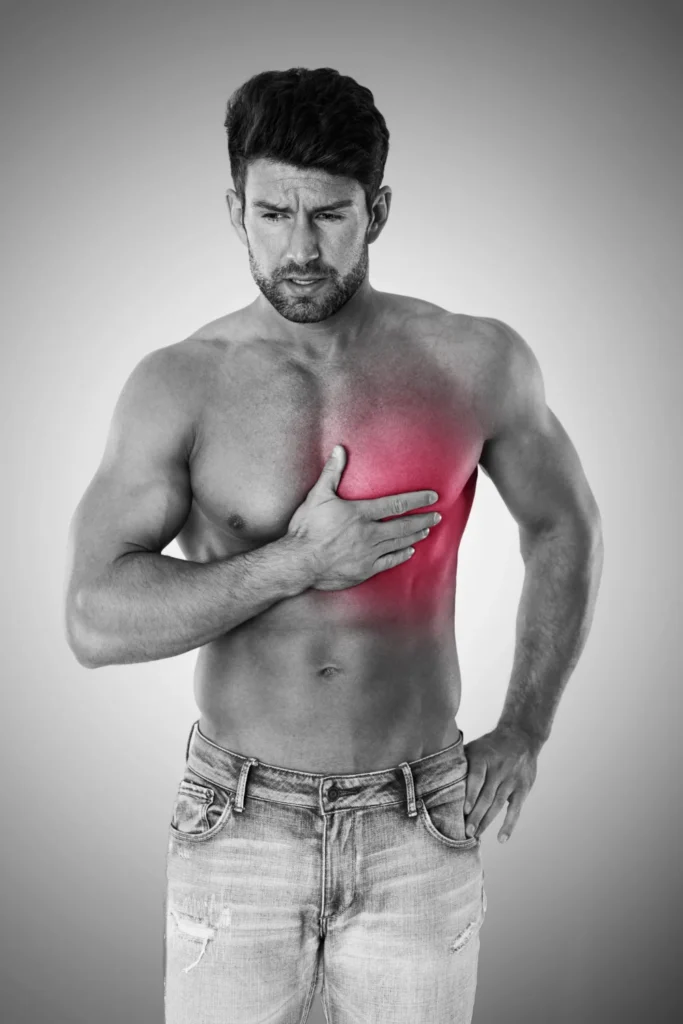
A myocardial infarction is the most severe and life-threatening manifestation of advanced coronary blockages. It occurs when a diseased artery becomes completely obstructed, cutting off all blood flow to a section of the heart.
Without immediate emergency medical intervention, that specific section of cardiac tissue will permanently die.
The relationship between chronic ischemia and a sudden heart attack is direct; one is the slow buildup, and the other is the catastrophic breaking point.
The 4 Stages of Ischemia
Cardiologists often categorize the progression of this illness into four distinct clinical stages to guide our treatment plans. The first is the asymptomatic stage, where plaque is actively building up, but the patient feels completely normal.
The second stage is stable angina, marked by predictable chest pain that only occurs during physical exertion. The third stage transitions into unstable angina, where unpredictable pain occurs even at rest, signaling a high-risk plaque rupture.
The fourth and final stage is an acute myocardial infarction, requiring immediate, life-saving emergency hospital intervention.
Chronic Ischemic Heart Disease
When patients survive a cardiac event or live with long-term blockages, they enter a phase of chronic management. The heart muscle has often adapted to a permanent state of reduced blood flow, but it remains structurally vulnerable.
Our clinical focus shifts entirely to secondary prevention, working aggressively to stop any further arterial narrowing. This requires strict adherence to daily medications and a permanent commitment to heart-healthy lifestyle modifications.
Life Expectancy and Survival Factors
Patients frequently ask how long they can survive after receiving this cardiovascular diagnosis. The honest clinical answer is that life expectancy varies massively depending on the severity of the blockages and patient compliance.
If diagnosed early and managed aggressively with modern medicine, many patients live completely normal, full lifespans. However, if the condition is ignored and leads to severe heart failure, life expectancy can drop significantly.
Survival is heavily influenced by your age, your adherence to prescribed treatments, and the presence of diabetes or obesity.
Clinical Treatment Options

Modern cardiology offers an incredibly robust toolkit for managing and often reversing the symptoms of restricted blood flow.
Our treatment protocols are built on three primary pillars: aggressive lifestyle modifications, targeted pharmacologic therapy, and mechanical surgical interventions.
We customize these approaches based on the exact location of your blockages and your overall physical resilience.Lifestyle modifications remain the mandatory foundation of any successful cardiovascular recovery plan.
We prescribe a diet heavily focused on whole foods, lean proteins, and severe reductions in sodium and saturated fats. Patients must engage in daily, supervised cardiovascular exercise to naturally lower blood pressure and improve overall vascular tone.
Additionally, complete and permanent smoking cessation is non-negotiable; continuing to use tobacco actively neutralizes most medical treatments.Medications are specifically designed to reduce the heart’s daily workload and stabilize the damaged blood vessels.
Statins are universally prescribed to aggressively lower LDL cholesterol and prevent existing arterial plaques from rupturing. Beta-blockers are utilized to slow the resting heart rate and lower blood pressure, which drastically reduces the heart’s oxygen demands.
Antiplatelet medications, like daily aspirin, are critical for preventing blood cells from clumping together and causing a fatal clot.When medications cannot overcome severe blockages, we turn to advanced mechanical procedures to rapidly restore blood flow.
Angioplasty involves threading a tiny, deflated balloon into the blocked artery and inflating it to crush the plaque against the walls. We then deploy a small metal mesh tube, called a stent, to act as permanent scaffolding to keep the vessel open.
For patients with widespread, complex blockages, Coronary Artery Bypass Grafting (CABG) is often the safest surgical route.
During this open-heart procedure, surgeons take a healthy blood vessel from the patient’s leg or chest. They use this vessel to create a brand-new detour around the heavily blocked coronary artery, instantly restoring massive blood flow.
ICD Codes for Clinical Billing
In the medical and insurance fields, we use specific alphanumeric codes to classify this diagnosis uniformly. The ICD-10 codes for chronic ischemic conditions generally fall between I20 and I25.
These codes ensure that your health insurance properly covers the necessary diagnostic tests, medications, and surgical procedures.
Agent Orange Exposure and Veterans
For our military veterans, there is a heavily documented link between herbicide exposure and subsequent cardiovascular illness. The Department of Veterans Affairs (VA) officially recognizes ischemic conditions as a presumptive disease associated with Agent Orange.
This means if you served in specific locations during the Vietnam era and developed this disease, the VA presumes the military exposure caused it.
VA Compensation and Disability Ratings
Veterans suffering from this service-connected condition are eligible for significant monthly disability compensation. The VA assigns disability ratings ranging from 10% to 100%, based entirely on how severely the heart condition impacts daily life.
These monthly, tax-free payments depend on objective medical evidence, such as your heart’s ejection fraction and exercise tolerance.
VA Evaluation Worksheet Guidelines
To determine your specific disability rating, the VA uses a standardized diagnostic worksheet during your medical exam. This evaluation meticulously records your current symptoms, any history of heart attacks, and your metabolic equivalent (METs) testing results.
Your cardiologist’s precise documentation of your exercise limitations is the most critical factor in securing an accurate VA rating.
Risk Factors Table
Understanding your modifiable risks helps you take actionable steps toward better cardiovascular health.
| Risk Factor | Clinical Impact | Can You Change It? |
| Tobacco Smoking | Extremely High | Yes |
| High Blood Pressure | High | Yes |
| Family History | High | No |
| Regular Exercise | Protective | Yes |
When to Seek Medical Help
You must never ignore sudden changes in your chest comfort or baseline breathing abilities. If you experience crushing chest pain that lasts longer than five minutes, call emergency services immediately.
Sudden, profound weakness, pain radiating down your left arm, or breaking out in a cold sweat are massive red flags. Rapid medical intervention is the single most important factor in surviving an acute ischemic event.
Frequently Asked Questions
What is ischemic heart disease?
It is a serious cardiovascular condition where narrowed or blocked arteries prevent your heart muscle from receiving enough oxygen-rich blood. This lack of blood flow weakens the heart and frequently leads to chest pain or sudden cardiac events.
What are symptoms of ischemia?
The most classic symptoms include a tight, squeezing pain in the chest, unexplained shortness of breath, and extreme physical fatigue. However, some patients experience no outward symptoms until a major cardiac event occurs.
Can you live long with ischemic heart disease?
Yes, absolutely. With early diagnosis, strict adherence to prescribed medications, and serious lifestyle changes, many patients live long, fulfilling lives.
What causes ischemic heart disease?
The primary cause is atherosclerosis, which is the slow buildup of fatty cholesterol plaques inside the walls of your coronary arteries. Chronic high blood pressure, smoking, and poorly managed diabetes rapidly accelerate this dangerous plaque formation.
How is this condition diagnosed?
Cardiologists diagnose this illness using a combination of patient history, electrocardiograms (ECGs), and physical stress tests. In advanced cases, we use a coronary angiogram to physically look inside the blood vessels for severe blockages.
Conclusion
Hearing that you have ischemic heart disease can be daunting, but it is a highly treatable condition in modern medicine. By understanding how arterial blockages develop and recognizing the physical warning signs, you can prevent catastrophic cardiac events.
Commit to your prescribed medications, embrace daily physical activity, and prioritize a nutrient-dense diet to protect your vascular health. Always communicate openly with your healthcare provider, and never hesitate to seek emergency care if you feel sudden cardiac distress.
Evidence-Based References:
- Centers for Disease Control and Prevention (CDC) – Heart Disease
- American Heart Association (AHA) – Ischemic Heart Disease and Silent Ischemia
- U.S. Department of Veterans Affairs (VA) – Agent Orange and Ischemic Heart Disease
- Mayo Clinic – Coronary Artery Disease
- U.S. Department of Veterans Affairs (VA) – Agent Orange and Ischemic Heart Disease
Related Posts



MORE from Author
Read More As a physician specializing in exercise science and public health, I regularly consult patients who feel completely lost in the…
 Just last week, a 34-year-old patient named Clara sat in my clinic, feeling entirely overwhelmed by the modern fitness industry.…


 Hello, I am Dr. Kenji Sato, MD, specializing in sports medicine and performance optimization. In my sports clinic, I constantly…
- In my clinical practice as a physician focused on exercise science, I often tell patients that mastering fitness bench workouts…