Can Anxiety Cause Chest Pain? Symptoms, Causes, Duration & When to Worry
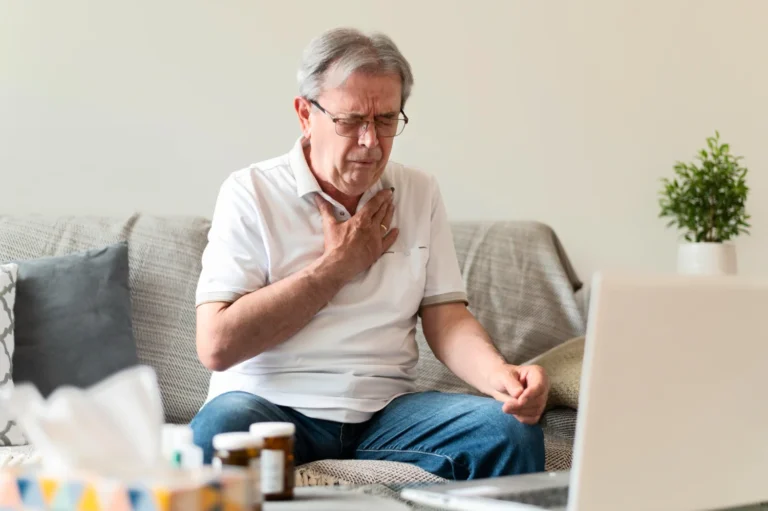
Chest pain is inherently alarming, and many people immediately wonder Can Anxiety Cause Chest Pain when they feel a sudden ache or pressure in their chest cavity. It is incredibly common to immediately fear a heart attack in that moment, and this terrifying experience sends thousands of perfectly healthy individuals to emergency rooms every single day.
Recently, I interviewed David, a 34-year-old software engineer, who described his first severe panic episode. “I was sitting at my desk when a crushing weight hit my chest, and my left arm went numb,” he recalled.
After a terrifying ambulance ride and extensive cardiac testing, the emergency room doctor delivered an unexpected diagnosis: severe stress and panic. His story highlights a crucial medical reality that many people fail to recognize.
Yes, anxiety can cause chest pain, and the physical sensations often closely mimic serious heart-related symptoms. When you ask, “Can stress cause chest pain?” the answer is deeply rooted in your body’s biological survival mechanisms.
Understanding chest pain caused by stress is essential for your mental wellness and physical well-being. However, because the symptoms overlap so heavily with cardiac emergencies, you must always exercise caution and seek professional evaluation to rule out heart disease safely.
Can Anxiety Cause Chest Pain?
If you are wondering exactly how can anxiety cause chest pain, it comes down to nervous system activation. Your body is physically preparing to fight a threat or run away from it. This biological response demands immediate energy, forcing your heart to pump harder and your lungs to work faster.
People frequently ask, “Why can anxiety cause chest pain when there is no actual physical danger present?”
Chronic worry tricks your brain into keeping this survival mechanism constantly activated. The continuous strain on your chest wall muscles, combined with erratic breathing patterns, inevitably leads to noticeable physical pain.
What Does Chest Pain from Anxiety Feel Like?
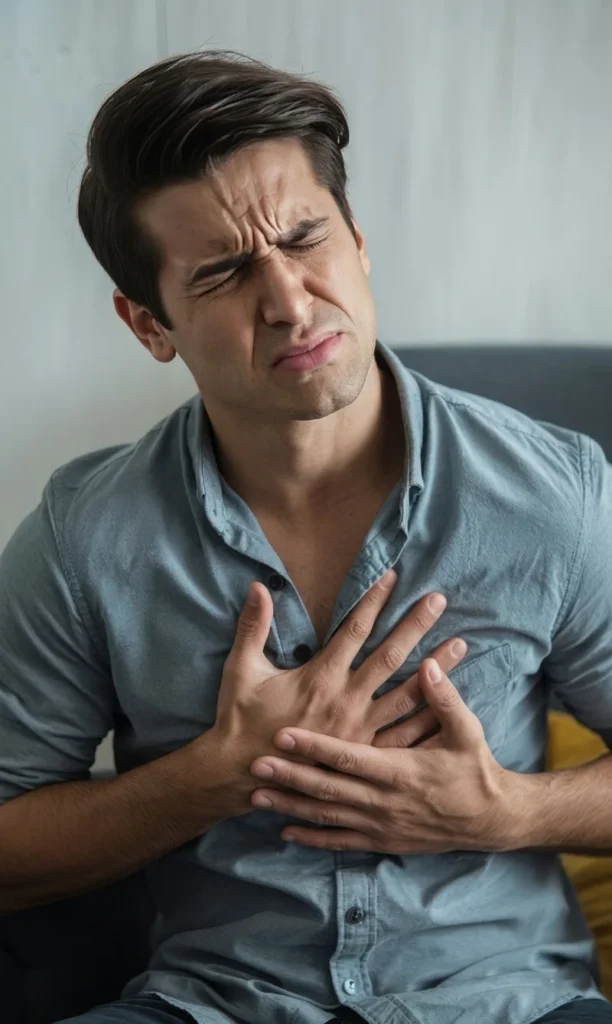
Because everyone’s nervous system is unique, the physical manifestations of panic can vary wildly from person to person. Knowing exactly what chest pain from anxiety feels like can help you identify a panic attack when it strikes.
For some individuals, it manifests as a very sharp or stabbing pain that occurs suddenly and intensely. This sharp sensation is often fleeting, lasting only a few seconds before disappearing, only to return minutes later.
For others, the sensation is described as a heavy tightness or pressure, almost as if a heavy weight is resting on their ribcage. You might also experience a distinct burning sensation, which is frequently mistaken for severe acid reflux or heartburn.
Notably, anxiety pain often shifts location, moving across the chest rather than staying in one isolated spot.
Can anxiety cause chest pain on the left side or right side?
A common source of panic is the specific location of the discomfort. Patients frequently search to find out, can anxiety cause chest pain on the left side? Because the heart is located slightly to the left of the center of your chest, any pain here instantly triggers fears of a cardiac event.
However, the reality is that anxiety-related pain can occur absolutely anywhere in the chest cavity. You might experience it intensely on the left side, but it is equally possible to feel it on the right side. Many people also report feeling a tight, restrictive band of pain directly in the middle of their sternum.
It is vital to clarify that left-side pain does not automatically equate to a heart attack. The muscle spasms and nerve misfires caused by high cortisol levels do not discriminate by location. While you should always have left-sided pain evaluated by a doctor, it is a very common symptom of severe emotional distress.
Associated Symptoms of Anxiety Chest Pain
Panic rarely produces just one isolated symptom. When the nervous system is overwhelmed, it triggers a cascade of physical reactions. Many people wonder if their combination of ailments is normal for a panic attack.
Breathing Difficulties and Shortness of Breath
It is incredibly common to wonder, can anxiety cause chest pain and shortness of breath? Yes, these two symptoms almost always occur together due to hyperventilation. When you are anxious, you unknowingly take rapid, shallow breaths.
This disrupts the balance of oxygen and carbon dioxide in your blood, making your chest feel tight and your lungs feel starved for air.
Heart Palpitations and Racing Pulse
The sudden rush of survival hormones directly impacts your cardiovascular system. If you ask, “Can anxiety cause chest pain and heart palpitations?” the answer lies in adrenaline.
The adrenaline surge forces your heart to beat faster and harder, which can feel like it is violently fluttering or skipping beats against your chest wall.
Arm Pain and Numbness Sensations
Radiating pain is typically associated with heart attacks, leading many to ask, “Can anxiety cause chest pain and arm pain?”
Surprisingly, severe panic can cause intense muscle tension in your neck and shoulders. This tension pinches sensitive nerves, sending shooting pains or tingling numbness down your arms, mimicking a cardiac emergency perfectly.
Dizziness and Lightheadedness
When hyperventilation alters your blood gas levels, your brain temporarily receives slightly less oxygen. Consequently, if you are asking, can anxiety cause chest pain and dizziness, it is a very typical pairing.
The rapid breathing makes you feel faint, unsteady, and lightheaded, which only serves to increase your overall panic.
Nausea and Digestive Upset
The gut and brain are deeply connected through the vagus nerve. During a panic attack, blood is diverted away from your stomach to your major muscle groups. This means you can easily experience nausea, stomach cramping, and severe digestive upset right alongside your chest discomfort.
Can Anxiety Cause Chest Tightness?
Beyond sharp pains, a dull, restrictive feeling is a hallmark of stress. Can anxiety cause chest tightness? Absolutely. When you are constantly on edge, you unconsciously tense the muscles throughout your body, particularly your intercostal muscles located between your ribs.
Over hours or days of chronic stress, these muscles become deeply fatigued and contracted. This sustained muscle contraction in the chest wall creates a tight, restrictive sensation. It often feels like you are wearing a corset that is laced entirely too tightly, making it uncomfortable to relax your upper body.
Can Anxiety Cause Chest Pain When Breathing?
Sometimes the discomfort is not constant but occurs exclusively during respiration. Can anxiety cause chest pain when breathing? Yes, and it is usually tied directly to the strained muscles in your ribcage.
When your intercostal muscles are fatigued from hyperventilation or chronic tension, expanding your lungs forces those tight muscles to stretch.
This causes a sudden, sharp ache whenever you attempt to take a deep, full breath. Furthermore, the persistent strain on your rib cartilage from erratic breathing can cause localized inflammation, making every breath temporarily painful.
How Long Does Chest Pain from Anxiety Last?
How long does chest pain from anxiety last? The duration entirely depends on your stress levels. A sudden panic attack may cause sharp chest pain that lasts for 10 to 20 minutes.
However, lingering muscle tension from chronic anxiety can cause a dull, aching chest discomfort that persists for several hours or even days. Patients frequently ask their doctors, “How long can anxiety cause chest pain?”
There is no single universal timeline, as it is tied directly to your body’s cortisol production. Once the perceived threat passes and your nervous system successfully calms down, the sharp, stabbing sensations usually dissipate very quickly.
However, the physical aftermath of a panic episode can linger. Even after your mind feels calm, your intercostal muscles remain heavily fatigued from hyperventilation. This residual tightness means a dull ache can remain noticeable for the rest of the afternoon.
Can Anxiety Cause Chest Pain for Days or Weeks?
When the ache refuses to fade, it is natural to become highly concerned. Can anxiety cause chest pain for days? Yes, unfortunately, it can. When you are trapped in a state of prolonged, unrelenting stress, your body never fully exits the fight-or-flight stage.
The constant flood of stress hormones keeps your chest muscles continuously contracted. This means it is entirely possible to experience a heavy, aching sensation that lingers persistently.
If you are wondering, can anxiety cause chest pain for weeks? The answer is also yes, especially if the underlying psychological triggers remain entirely unresolved.
Can Anxiety Cause Chest Pain Every Day?
Living with constant discomfort is exhausting and terrifying. Can anxiety cause chest pain every day? Yes, chronic anxiety disorders can lead to severe nervous system dysregulation. Your body becomes trapped in a loop, treating everyday minor stressors as massive physical threats.
When you experience severe chronic anxiety, you wake up with high cortisol levels that remain elevated until you go to sleep, sometimes even triggering night sweats.
This constant, daily muscle tension and shallow breathing ensure that your chest muscles never receive the restorative rest they require. Consequently, you may feel that restrictive chest tightness every single day.
What Causes Chest Pain During a Panic Attack?
To demystify the experience, we must look at the exact biological sequence. What causes chest pain during a panic attack? It always begins with a sudden, massive adrenaline surge triggered by the brain’s amygdala, which falsely senses immediate mortal danger.
This adrenaline instantly forces your heart rate to skyrocket. Simultaneously, your breathing becomes incredibly rapid and shallow, a process known as hyperventilation.
This combination severely strains the chest cavity, while massive muscle tightness in the chest wall creates a terrifying sensation of crushing pressure.
Can Anxiety Cause High Blood Pressure?

Because the cardiovascular system is so heavily involved, blood pressure naturally fluctuates. Can anxiety cause high blood pressure? Yes, experiencing a sudden panic attack will cause a dramatic, temporary spike in your blood pressure due to constricted blood vessels and a racing heart.
However, it is important to distinguish between temporary spikes and chronic illness. While chronic stress damages your blood vessels over time, isolated panic attacks do not directly cause chronic hypertension. The pressure typically returns to a normal, healthy baseline once the anxiety subsides.
Other Physical Symptoms of Anxiety
Anxiety is a full-body experience that affects multiple organ systems simultaneously. Can anxiety cause shortness of breath? Yes, the erratic breathing patterns make it feel impossible to draw a satisfying, full breath.
Furthermore, can anxiety cause heart palpitations? Absolutely. The adrenaline surge frequently causes the heart to palpitate, flutter, or seemingly skip a beat. Additionally, the altered oxygen levels from hyperventilation lead many to ask, “Can anxiety cause dizziness?” Feeling faint or unsteady on your feet is a highly common reaction.
Finally, the severe muscle tension does not stop at the chest. Can anxiety cause headaches? Yes, tension headaches radiating from the neck and shoulders are incredibly frequent. All of these factors combined easily answer why can anxiety cause chest discomfort on a systemic, full-body level.
Is It Anxiety or Heart Problems?
This is the most critical question anyone experiencing these symptoms must ask. Dr. Elena Rostova, a clinical cardiologist, notes that she sees dozens of patients weekly who are terrified they are having a heart attack when it is actually severe panic. So, is it anxiety or heart problems?
Anxiety chest pain is typically sharp, fleeting, and highly localized. It usually worsens when you are at rest and focusing intensely on your stressful thoughts. Crucially, anxiety-related pain almost always improves when you engage in deep relaxation techniques or grounding exercises.
Conversely, heart-related pain feels like a deeply crushing, heavy pressure, often described as an elephant sitting on your chest.
It frequently radiates strongly to the left arm, jaw, or back. Most importantly, cardiac pain is usually triggered by physical exertion, like climbing stairs, and does not quickly disappear with mental distraction.
When to Seek Medical Help
Because the symptoms overlap so heavily, you must prioritize your physical safety above all else. How do I know if my chest hurts from anxiety? The truth is, without medical testing, you cannot know with absolute 100% certainty.
You must seek immediate emergency medical care if the pain is accompanied by severe, crushing pressure that radiates down your arm or up into your jaw.
Additionally, if the chest pain is paired with sudden, unexplained fainting, profound sweating, or severe vomiting, do not assume it is a panic attack. Call emergency services immediately.
How to Relieve Chest Tightness from Anxiety
Once a doctor has officially cleared your heart, you can focus on healing your nervous system and building healthy lifestyle habits. How to relieve chest tightness from anxiety involves actively signaling to your brain that you are safe.
How do I relax my chest from anxiety? The most effective method is diaphragmatic deep breathing. Place your hand on your stomach and breathe in deeply through your nose, ensuring your stomach expands outward.
Exhale slowly through your mouth. Additionally, Progressive Muscle Relaxation (PMR)—where you intentionally tense and then slowly release your chest and shoulder muscles—can effectively break the cycle of chronic tension.
What Is the 3-3-3 Rule for Anxiety?
When you feel a panic attack beginning to spiral, grounding techniques can immediately interrupt the brain’s fear loop. What is the 3-3-3 rule for anxiety? It is a highly effective, simple sensory exercise designed to pull your mind out of its internal panic and back into the present physical environment.
First, look around and name 3 things you can clearly see. Second, listen closely and identify 3 distinct things you can hear. Finally, actively move 3 different parts of your body, such as rolling your ankles, shrugging your shoulders, or wiggling your fingers.
Can Stress Cause Chest Pain?
It is vital to recognize that you do not need a diagnosed panic disorder to experience these physical symptoms. Can stress cause chest pain? Absolutely. The daily grind of financial worries, relationship conflicts, or workplace burnout creates a slow, steady drip of cortisol.
This prolonged emotional burden physically manifests in the body over time. Even if you never experience a full-blown panic attack, the accumulated tension from chronic daily stress is more than enough to cause persistent, aching chest discomfort.
Frequently Asked Questions
Can anxiety cause chest pain every day?
Yes, living with chronic, untreated anxiety keeps your nervous system in a constant state of hyper-arousal. This persistent daily stress leads to continuous muscle tension in your chest wall, causing noticeable discomfort every single day.
Can anxiety cause chest pain on the left side?
Yes, anxiety-induced muscle spasms and nerve tension can occur anywhere in the chest cavity. While left-sided pain understandably triggers fears of a heart attack, it is a very common location for stress-related muscle tightness.
How long does anxiety chest pain last?
The duration varies significantly based on the individual and the stressor. An acute panic attack may cause sharp pain lasting 10 to 20 minutes, while chronic underlying stress can cause a dull, aching tightness that lasts for days or even weeks.
Is it anxiety or heart problems?
Anxiety pain is often sharp, worsens with mental stress, and improves with breathing exercises. Cardiac pain typically feels like a heavy, crushing pressure that radiates to the jaw or arm and is usually triggered by physical exertion. Always consult a doctor to be sure.
What is the 3-3-3 rule for anxiety?
It is a rapid grounding technique to stop a panic attack. You identify 3 things you can see and 3 things you can hear and deliberately move 3 parts of your body to immediately bring your focus back to the present moment.
Conclusion
Experiencing unexplained chest pain is a profoundly terrifying event that naturally triggers thoughts of a worst-case scenario. However, recognizing that your mind has the power to manifest intense physical symptoms is incredibly empowering.
Anxiety chest pain is a valid, highly common medical phenomenon rooted entirely in your nervous system’s attempt to protect you from perceived harm. While you should always seek a professional medical evaluation to rule out any underlying heart conditions, receiving a clean bill of health allows you to shift your focus.
By practicing consistent mindfulness, targeted deep breathing, and grounding techniques, you can successfully retrain your nervous system. If persistent stress continues to disrupt your daily life, please reach out to a licensed mental health professional to regain lasting control of your health.
Evidence-Based References:
Related Posts




MORE from Author
Read More As a physician specializing in exercise science and public health, I regularly consult patients who feel completely lost in the…
 Just last week, a 34-year-old patient named Clara sat in my clinic, feeling entirely overwhelmed by the modern fitness industry.…

 Hello, I am Dr. Kenji Sato, MD, specializing in sports medicine and performance optimization. In my sports clinic, I constantly…
- In my clinical practice as a physician focused on exercise science, I often tell patients that mastering fitness bench workouts…