
Fitness Plan to Build Muscle: Complete Guide to Workout Routines and Muscle Gain
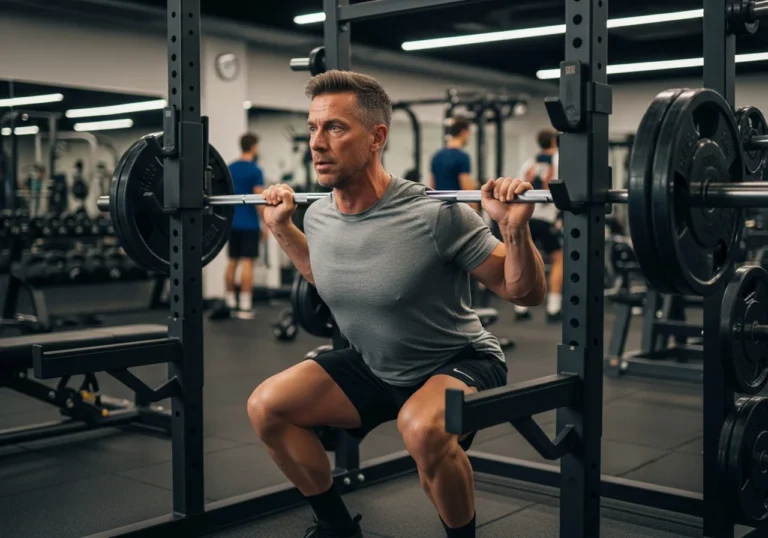
As a physician specializing in exercise science and public health, I regularly consult patients who feel completely lost in the gym. Last year, I treated a patient named David, a 42-year-old software engineer dealing with metabolic stagnation and early signs of muscle wasting.
He had tried random workouts but saw no results. I prescribed him a structured fitness plan to build muscle, shifting his focus from random cardio to progressive resistance training.
Within three months, David completely transformed his body composition, added significant lean mass, and dramatically improved his insulin sensitivity ACSM Guidelines.
Building muscle is not just for bodybuilders; it is a profound medical intervention for longevity. In this guide, I will walk you through the exact science and routines needed to build muscle safely and effectively.
TL;DR
- Building muscle requires a calculated mix of progressive overload, proper nutrition, and strict recovery CDC Physical Activity.
- The most effective plans include dedicated strength training 3 to 6 days per week.
- Beginners can start with simple 3-day routines, while advanced lifters may require 6-day splits.
- Consistency over an 8 to 12-week period consistently delivers measurable, visible results Mayo Clinic.
What Is a Fitness Plan to Build Muscle?
A fitness plan to build muscle is a structured program combining resistance training, progressive overload, and proper recovery to deliberately increase muscle size and functional strength Harvard Health.
Instead of randomly lifting weights, this type of plan prescribes specific exercises, sets, and repetitions. It tracks your progress over time to ensure your body is constantly adapting to new, heavier stimuli. For beginners starting out, explore these fitness tips for beginners.
What’s the Best Workout Plan to Gain Muscle?
The best plan includes compound lifts, strict progressive overload, and training each major muscle group 2 to 3 times per week NIH Research. The optimal routine is always the one you can adhere to consistently without risking injury or severe burnout.
Key Principles of Muscle Growth (Science-Based)
Understanding the biology of hypertrophy (muscle growth) is critical for your success. Your muscles adapt when exposed to three primary scientific mechanisms Journal of Strength & Conditioning.
First is mechanical tension. This is the physical strain placed on muscle fibers when lifting heavy weights through a full range of motion. Second is muscle damage, the micro-tears in the muscle fibers that occur during the eccentric (lowering) phase of a lift.
Finally, metabolic stress is the accumulation of byproducts like lactate during high-repetition sets. This is often felt as the “burn” during a workout, signaling hormonal responses that promote tissue growth British Journal of Sports Medicine.
What Is the 3-3-3 Rule in Gym?
The 3-3-3 rule is a highly effective, simplified framework for balancing a beginner fitness routine.
It dictates performing 3 strength exercises per session, executing 3 sets of each exercise, and committing to training 3 times per week. This provides an excellent baseline of volume without overwhelming the central nervous system Cleveland Clinic.
Best Fitness Plan to Build Muscle (Overview)
A comprehensive muscle-building strategy requires more than just lifting weights. It is an ecosystem of physical habits.
It must include heavy strength training focused on compound movements like squats and deadlifts, and must also integrate progressive overload, meaning you slowly increase the weight or reps every single week.
Furthermore, strictly scheduled recovery days and high daily protein intake are absolutely non-negotiable for tissue repair. Learn more about healthy lifestyle habits to support your gains.
3-Day Workout Routine to Build Muscle (Beginner)
For beginners, stimulating the entire body multiple times a week yields the fastest physiological adaptations Johns Hopkins. Here is a foundational 3-day split.
| Day | Workout Focus | Primary Goal |
|---|---|---|
| Mon | Full Body | Foundation and baseline strength |
| Tue | Rest | Central nervous system recovery |
| Wed | Full Body | Neurological adaptation |
| Thu | Rest | Muscle fiber repair |
| Fri | Full Body | Volume accumulation |
| Sat/Sun | Rest / Light Walk | Active recovery |
For home-based options, try these bodyweight fitness exercises.
6-Day Gym Workout Schedule for Muscle Gain (Advanced)
Advanced lifters need massive volume to force new growth, requiring a highly compartmentalized routine.
| Day | Focus | Example Exercises |
|---|---|---|
| Mon | Chest & Triceps | Bench press, dips, tricep extensions |
| Tue | Back & Biceps | Pull-ups, barbell rows, barbell curls |
| Wed | Legs & Calves | Squats, leg press, calf raises |
| Thu | Shoulders & Abs | Overhead press, lateral raises, planks |
| Fri | Arms (Biceps/Triceps) | Heavy supersets, skull crushers |
| Sat | Full Body / Weak Points | Addressing lagging muscle groups |
| Sun | Complete Rest | Total physical recovery |
Target specific areas with these fit legs workout and upper body fitness workout guides.
7-Day Workout Routine Bodybuilding
Training seven days a week is extreme and generally reserved for competitive bodybuilders peaking for a show.
This structure requires high-volume training focused on highly specific, isolated muscle groups each day. To survive this without injury, intensity must be carefully modulated, often mixing very heavy days with light, “pump” focused days to spare the joints PubMed Study.
Full Week Workout Plan for Muscle Gain

A balanced, sustainable weekly plan ensures you can train for years, not just weeks.
The ideal structure includes 4 to 5 intense strength sessions distributed throughout the week. This allows you to split the body into upper and lower days, ensuring each muscle group is hit twice.
Crucially, it mandates 2 full rest days to allow cortisol levels to drop and testosterone levels to rebound American Heart Association.
10-Week Mass Building Program
Building significant muscle mass requires periodization. You cannot train at maximum intensity forever. This detailed 10-week protocol is designed to safely maximize muscular hypertrophy through calculated physical stress.
Weeks 1–3: The Foundation Phase
During the first three weeks, the primary goal is neurological adaptation and connective tissue strengthening. You will focus entirely on mastering the form of compound lifts: squats, deadlifts, bench presses, and overhead presses.
Keep the weight moderate (around 60-70% of your one-rep max). Perform 3 to 4 sets of 8 to 12 repetitions. Rest times should be strictly timed at 90 seconds. Your body is learning to fire motor units efficiently, setting the stage for heavier loads to come.
Weeks 4–7: The Progressive Overload Phase
This is where the actual muscle building occurs. You must now force the muscle to adapt by increasing the mechanical tension. Every single week, you must add either 2.5 to 5 pounds to the bar or complete one additional repetition per set.
Drop the rep ranges slightly to 6 to 8 reps, but increase the weight to 75-85% of your max. The perceived exertion should be very high. If you are not struggling on the final two repetitions of your sets, the weight is simply too light to trigger a hypertrophic response.
Weeks 8–10: The Peak Intensity and Deload Phase
Weeks 8 and 9 are the absolute peak of the program. You will utilize advanced techniques like drop sets and supersets to maximize metabolic stress and completely exhaust the muscle fibers. Rest times extend to 2 to 3 minutes to allow for maximum force output on heavy sets.
Week 10 is the mandatory “deload” week. You will cut your lifting volume and weights by 50%. This is arguably the most important week, as it allows your joints, tendons, and central nervous system to fully recover and express the strength and muscle you have built over the previous nine weeks WHO Guidelines.
Lifting Schedule for Muscle Rebuild
If you are returning from an injury or a long hiatus, you need a specific rebuilding protocol.
The key focus here is recovery-based training, utilizing high repetitions with very light weights to pump nutrient-rich blood into dormant tissues. You must maintain moderate intensity, completely avoiding muscular failure, to allow your tendons time to catch up to your muscle strength.
Workout Routine to Build Muscle at Home
You do not need a commercial gym to trigger severe muscular hypertrophy. Your body weight is an excellent starting tool.
Begin with strict push-ups, elevating your feet on a chair to increase chest activation as you get stronger. Perform deep, slow bodyweight squats, eventually transitioning to single-leg (pistol) squats for extreme mechanical tension.
Finally, integrate resistance band training to mimic cable machines for rows and bicep curls. For more home options, check this fitness plan home resource.
Muscle Gain Workout Plan (Complete Routine)
A complete, non-negotiable routine revolves entirely around the “Big Four” compound movements.
Every week, you must execute heavy Squats to trigger massive lower-body growth and systemic hormone release. Deadlifts are mandatory for building a thick, resilient posterior chain and lower back.
The Bench press will develop the pectorals and anterior deltoids, while strict Pull-ups will build immense lat width and bicep peaks. Strengthen your core with these fitness abs exercises.
Building Muscle Routine Workout Plan (Step-by-Step)
Creating your own routine requires a logical, clinical approach to exercise selection.
First, choose exercises that target multiple joints at once before moving to isolation movements. Second, set strict reps and sets; aim for 10-20 total sets per muscle group per week. Third, meticulously track your progress in a journal. Finally, adjust your weights weekly to ensure you never hit a physiological plateau.
Weight Muscle Building Program
A dedicated weight program differs from general fitness by focusing purely on tissue expansion.
The focus relies entirely on heavy lifting, utilizing barbells and dumbbells to move the maximum amount of weight possible. Progressive overload is the core philosophy; if the bar is not getting heavier over a six-month period, you are simply maintaining, not building ACSM Progressive Overload.
Can You Build Muscle With High Cortisol?
Yes, it is possible, but chronically high cortisol acts as a massive biological roadblock to your fitness goals.
Cortisol is a catabolic stress hormone, meaning it breaks down tissue for immediate energy. High levels can severely slow muscle growth by increasing muscle breakdown and blocking protein synthesis.
Managing lifestyle stress and prioritizing sleep are essential clinical interventions for hypertrophic success. Learn how to deal with stress effectively.
Can I Build Muscle While on Zepbound?
As a physician, I get this question frequently regarding new GLP-1 weight-loss medications like Zepbound.
It is entirely possible to build or retain muscle while on these medications, provided you engage in heavy resistance training. However, because these drugs severely blunt appetite, you must meticulously monitor your calorie and protein intake to ensure you are not starving your muscles of the necessary building blocks NIH GLP-1 Research.
Nutrition for Muscle Growth
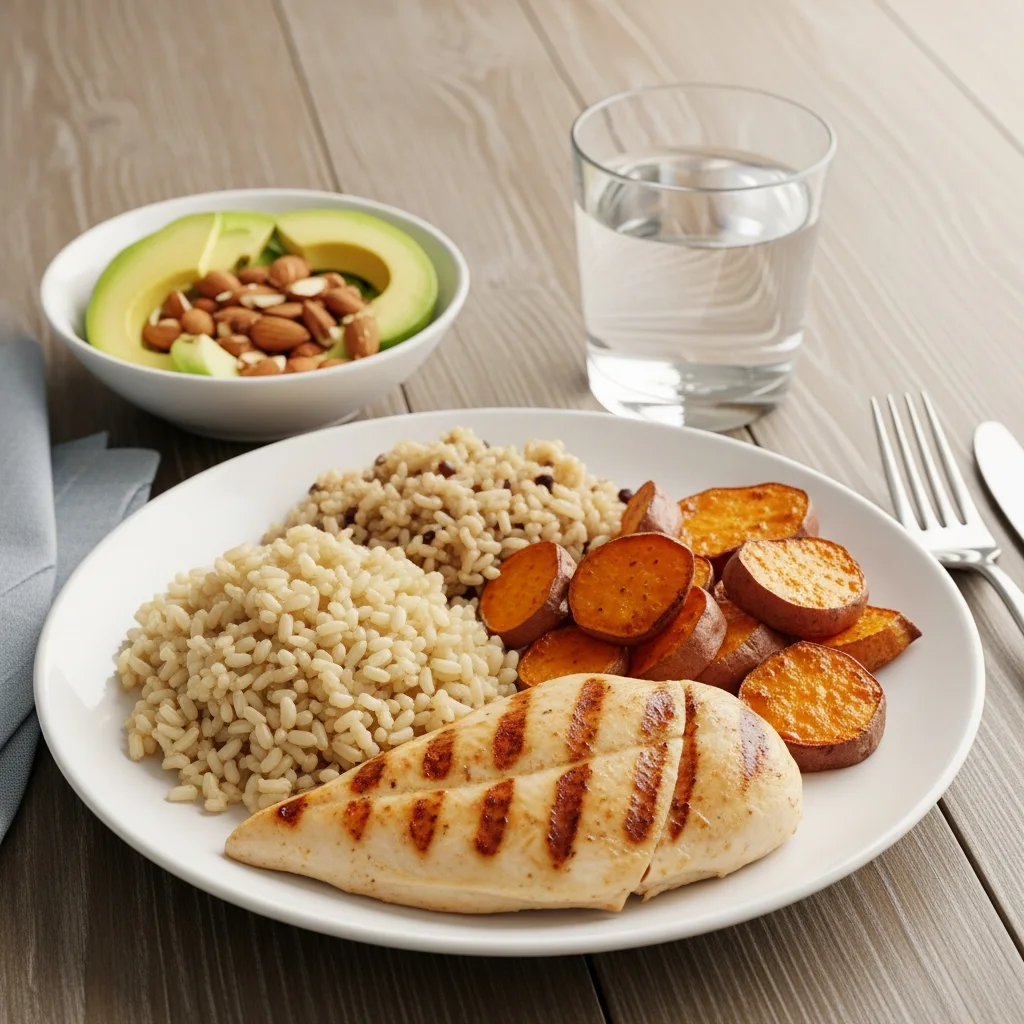
Exercise merely provides the stimulus for muscle growth; nutrition provides the actual physical materials. Without a hyper-focused nutritional protocol, your hours in the gym will result in nothing but joint wear and chronic fatigue. Muscle is metabolically expensive to build, requiring a surplus of specific nutrients.
Protein: The Building Block
Dietary protein is broken down into amino acids, specifically leucine, which acts as the biological trigger for muscle protein synthesis. To build mass, you must consume between 0.7 and 1 gram of protein per pound of target body weight daily Harvard Nutrition.
This intake should be spaced out across four to five meals to keep your body in a constant anabolic state. High-quality sources like lean poultry, beef, eggs, and whey protein isolate are critical due to their high bioavailability.
Carbohydrates: The Energy Source
Many people mistakenly fear carbohydrates, but they are essential for heavy lifting. Carbs convert into glycogen, which is stored directly inside your muscle tissue and liver.
During a heavy set of squats, your body violently burns through this local glycogen. If your stores are depleted, your performance drops, and your body may begin breaking down muscle tissue for energy.
Focus on complex carbohydrates like oats, rice, and sweet potatoes to provide sustained energy. Explore healthy diet options for fueling your training.
Healthy Fats: Hormonal Optimization
Dietary fats are the backbone of your body’s hormone production, including testosterone, which is the primary hormone responsible for muscle growth.
Severely restricting fat intake will cause your natural testosterone levels to plummet, halting hypertrophy. Incorporate dense sources of omega-3s and monounsaturated fats, such as avocados, olive oil, almonds, and wild-caught salmon, to keep your hormonal profile optimized for recovery.
Recovery and Muscle Growth
Your muscles do not grow while you are lifting weights; they grow while you are resting in bed Sleep Foundation.
You must sleep 7 to 9 hours of deep, uninterrupted sleep per night to facilitate the release of human growth hormone (HGH). Learn how much sleep do I need for optimal recovery. Scheduled rest days are scientifically required to clear systemic inflammation.
Incorporating active recovery, like light cycling or yoga, helps flush metabolic waste products from the muscle beds. Remember, the benefits of exercise include enhanced recovery when balanced properly.
Common Mistakes to Avoid
Many eager lifters completely sabotage their gains through easily correctable clinical errors.
Overtraining by lifting too heavy, too often, fries the central nervous system and leads to muscle loss. Poor nutrition, specifically not eating in a slight caloric surplus, deprives the body of raw building materials.
Finally, a lack of progression—doing the exact same workout for months—forces the body to stop adapting. Stay hydrated to support recovery—check how much water should you drink.
Frequently Asked Questions
What is the best workout plan to gain muscle?
The best plan is one that includes strict progressive overload, utilizes multi-joint compound exercises, and trains each major muscle group multiple times weekly for optimal protein synthesis Mayo Clinic.
Can beginners build muscle at home?
Yes, absolutely. Beginners can build significant muscle at home using bodyweight exercises, strict form, and resistance bands to provide the necessary mechanical tension Cleveland Clinic.
How long does it take to build muscle?
While neurological strength improvements happen in weeks, noticeable, visible changes in muscle hypertrophy typically appear in 6 to 12 weeks of consistent training and eating PubMed Meta-Analysis.
Is a 3-day workout enough to build muscle?
Yes, a 3-day full-body workout is incredibly effective, especially for beginners, as it perfectly balances training volume with adequate systemic recovery time ACSM Beginner Guidelines.
Do I need supplements to build muscle?
No, supplements are not mandatory. However, tools like whey protein powder and creatine monohydrate are scientifically proven, highly convenient ways to support your dietary intake and performance Journal of Strength & Conditioning.
Conclusion
Building muscle is arguably the most effective preventative medicine available to us. It actively fortifies your joints, optimizes your hormonal profile, and drastically improves your metabolic health and insulin sensitivity.
However, achieving these profound clinical benefits requires moving away from random gym sessions and committing to a highly structured, progressive plan. You must consistently challenge your central nervous system with heavier weights, fuel your body with adequate protein, and respect the mandatory recovery process.
Do not let the complexity of advanced bodybuilding routines paralyze your progress. Start with the basic compound movements, master your physical form, and relentlessly track your weekly overload.
Pick up the weights, trust the biological process, and start building your physical resilience today. For more holistic guidance, explore how to stay healthy long-term.
Medical References & Further Reading:
- ACSM. Muscle Building Guidelines. acsm.org
- CDC. Strength Training Basics. cdc.gov/physicalactivity
- Mayo Clinic. Hypertrophy Training. mayoclinic.org
- Harvard Health. Muscle Growth Science. health.harvard.edu
- NIH. Exercise & Metabolism Research. nih.gov
- Cleveland Clinic. Resistance Training Safety. clevelandclinic.org
- Johns Hopkins. Fitness & Longevity. hopkinsmedicine.org
- American Heart Association. Strength & Heart Health. heart.org
- British Journal of Sports Medicine. Hypertrophy Mechanisms. bjsm.bmj.com
- Journal of Strength & Conditioning. Progressive Overload Studies. jscr.nsca.org
- Sleep Foundation. Recovery & Muscle Repair. sleepfoundation.org
- WHO. Physical Activity Recommendations. who.int
- PubMed. Muscle Building Meta-Analyses. pubmed.ncbi.nlm.nih.gov
Related Posts






MORE from Author
Read More As a physician specializing in exercise science and public health, I regularly consult patients who feel completely lost in the…
 Just last week, a 34-year-old patient named Clara sat in my clinic, feeling entirely overwhelmed by the modern fitness industry.…

 Hello, I am Dr. Kenji Sato, MD, specializing in sports medicine and performance optimization. In my sports clinic, I constantly…
- In my clinical practice as a physician focused on exercise science, I often tell patients that mastering fitness bench workouts…