
Do Dates Spike Blood Sugar? MD-Reviewed Truth for Diabetics
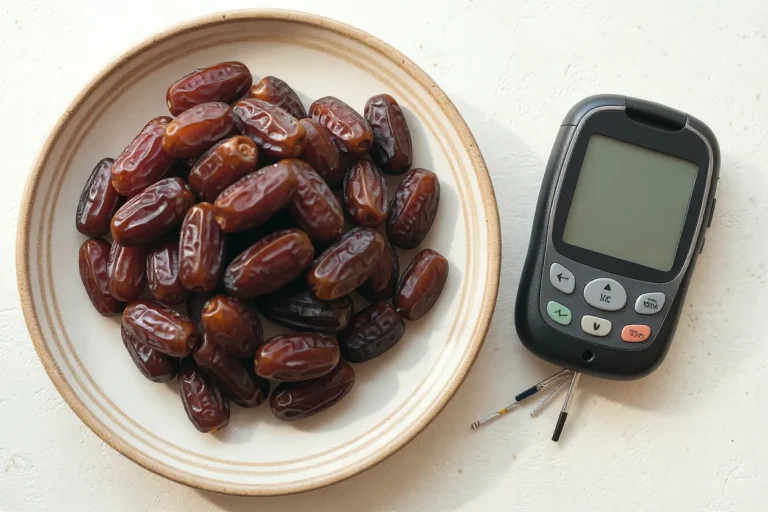
In my clinic, one of the most common questions I hear from patients trying to manage their diabetes is, do dates spike blood sugar? It is a highly relevant question, especially since dates are often marketed as a “natural” and “healthy” alternative to refined sugar.
Just last month, a patient of mine named Robert came in with unusually high fasting glucose numbers. He had completely cut out white sugar, which was excellent. However, he replaced his evening sweets with a large bowl of dates, assuming they were perfectly safe.
He did not realize the dense carbohydrate load he was consuming. We had to sit down and restructure his fruit intake. In this comprehensive guide, I will break down exactly how dates affect your body, the safest ways to eat them, and the medical science behind their glycemic impact.
TL;DR Summary
- Dates can raise your blood sugar, but the effect depends heavily on portion size, the type of date, and what you eat with it.
- They possess a low-to-moderate glycemic index (GI), meaning they do not hit your bloodstream as violently as refined white sugar.
- Despite the fiber, they are incredibly dense in carbohydrates and calories.
- Small, strictly controlled portions (1–2 dates) can fit into a diabetic diet if monitored carefully.
What Are Dates and Why Are They Sweet?
Dates are the fruit of the date palm tree, grown extensively in tropical and subtropical regions. Unlike many fresh fruits, dates are typically dried or semi-dried before consumption.
This drying process removes the water weight. Consequently, the natural sugars left behind become highly concentrated. This is exactly why a single date tastes almost like caramel or candy.
The primary sugars found in dates are glucose and fructose. Fructose processes through the liver, while glucose enters the bloodstream directly.
Despite this high sugar content, dates are not empty calories. They pack a massive amount of dietary fiber. Furthermore, they are incredibly dense in vital nutrients like potassium, magnesium, and protective antioxidants.
Do Dates Spike Blood Sugar?
When you eat anything sweet, your primary concern is the immediate metabolic response. So, what happens when you consume this concentrated fruit?
The Short Answer
Yes, dates can certainly increase your blood glucose levels. However, the rise is usually moderate and steady, rather than the extreme, vertical spike caused by candy or soda.
How Much Do Dates Spike Blood Sugar?

Patients constantly ask me for an exact number. They want to know exactly how their monitor will react. Unfortunately, human biology is not a simple math equation.
The exact spike you experience depends on several distinct factors. First and foremost is your portion size. Eating one date produces a vastly different response than eating five.
Second, the type of date matters significantly. A massive, juicy Medjool date contains far more sugar than a smaller, drier variety.
Third, your personal insulin sensitivity plays a massive role. A healthy athlete will process the sugar much faster than someone with advanced type 2 diabetes. Finally, eating dates on an empty stomach causes a sharper spike than eating them after a meal.
Why Do Dates Not Spike Blood Sugar as Much as Sugar?
Many people are confused by the science. If dates are full of sugar, why do doctors sometimes say they are safer than regular table sugar?
Key Mechanisms
The secret lies entirely in the fruit’s physical structure. Dates contain a robust amount of dietary fiber.
When you eat a date, this fiber physically blocks your digestive enzymes. It slows down the rate at which the sugar is absorbed through your intestinal wall.
Because of this slower absorption rate, dates have a low-to-moderate glycemic index (GI). The sugar trickles into your blood rather than flooding it instantly.
Additionally, dates are rich in polyphenols. These plant compounds naturally reduce oxidative stress and may actually help your cells respond better to insulin over time.
Do Medjool Dates Spike Blood Sugar More?

When discussing specific types of dates, we must address the Medjool variety in detail. Medjool dates are the large, plump, and incredibly sweet dates you often see in premium grocery stores.
Because of their massive size, a single Medjool date contains significantly more total sugar than smaller varieties like Deglet Noor.
One Medjool date can contain up to 16 grams of sugar. Therefore, it carries a much higher glycemic load per fruit.
If you choose Medjool dates, you must be exceptionally careful with your portions. In my medical practice, I advise diabetic patients to cut a single Medjool date in half.
Do Dates Spike Blood Sugar After Fasting?
Fasting has become incredibly popular for metabolic health and religious observances. Breaking a fast with dates is a centuries-old tradition.
However, you must understand how your body reacts after a fasting period. When you have not eaten for hours, your stomach is completely empty.
If you drop a heavy carbohydrate load like dates into an empty stomach, the digestion is rapid. The sugar hits your bloodstream with zero physical barriers.
While fasting improves overall insulin sensitivity, breaking it with too many dates can still cause an aggressive, unwanted glucose spike. Always pair them with water and a protein source.
Are Dates High in Sugar?
Yes, dates are objectively high in sugar. We must respect their carbohydrate density.
To put it in perspective, a standard 100-gram serving of dates contains roughly 60 to 70 grams of pure sugar.
If you compare this to strawberries, the difference is staggering. A 100-gram serving of strawberries contains only about 5 grams of sugar.
Therefore, you should never treat dates like a “free” fruit. They are a concentrated energy source and must be accounted for in your daily carbohydrate budget.
Are Dates Good or Bad for Diabetes?
Patients often want to label foods as strictly “good” or “bad.” In medicine, we prefer to look at the overall context of a patient’s diet.
Dates are not inherently bad for diabetes. They offer fantastic nutritional value, fiber, and essential minerals that many diabetics lack.
However, they become “bad” when eaten recklessly. If you consume them by the handful without tracking your carbohydrates, they will damage your glycemic control.
Ultimately, dates are a perfectly fine, portion-controlled food. You simply must treat them with the metabolic respect they demand.
Can Diabetics Eat Dates?
As a physician, I never want to ban entire food groups unless absolutely necessary. Therefore, can diabetic people safely enjoy this sweet fruit? Yes, they absolutely can.
However, you must transition from eating them mindlessly to eating them purposefully. You cannot snack on them out of a large bag while watching television.
Safe Consumption Guidelines
If you want to keep dates in your diet, you must establish strict rules. First, treat them as a dessert, not a free snack.
Second, commit to tracking their carbohydrates. You must subtract those carbs from another part of your meal to maintain balance.
How Many Dates Can a Diabetic Eat in a Day?
Portion control is the cornerstone of all diabetes management. So, exactly how many dates can a diabetic eat in a day?
My general medical guidance is a strict limit of one to two dates per day. This small amount satisfies your sweet tooth without overwhelming your pancreas.
If you choose the larger Medjool variety, you should strictly limit yourself to just one. For smaller varieties like Deglet Noor, two dates are clinically acceptable.
How to Eat Dates Without Spiking Blood Sugar
You can actively protect your bloodstream by changing how you eat this fruit. How can I eat dates without spiking my blood sugar? You must build a metabolic wall.
Evidence-Based Strategies
Never eat a date by itself on an empty stomach. Always combine it with a robust source of healthy fats and proteins.
For instance, slice a date open and stuff it with a spoonful of unsweetened almond butter. Alternatively, eat it alongside a handful of raw walnuts.
The heavy fat and protein content forces your stomach to slow down digestion. Consequently, the sugar enters your blood at a slow, manageable trickle.
Furthermore, try eating your date immediately after a protein-rich dinner. Your digestive tract is already busy processing the heavy meal, which naturally blunts the sugar spike.
Do Dates Spike Insulin?
Patients constantly ask me about the hormonal impact of their food. Does the natural sugar in dates spike insulin?
Yes, any food containing glucose or fructose will trigger an insulin response. Your pancreas must release insulin to clear the sugar from your blood.
However, because the fiber in dates slows down digestion, the insulin release is more gradual. It does not cause the massive, panicked insulin dump associated with drinking a regular soda.
Are Dates Better Than Sugar for Diabetics?
If you must choose between table sugar and dates, the fruit is always the superior choice.
White table sugar provides empty calories. It contains absolutely zero vitamins, minerals, or fiber to benefit your body.
Dates, on the other hand, provide essential potassium, which helps regulate blood pressure. While both raise your blood glucose, dates offer actual nutritional value alongside the carbohydrates.
Do Dates Affect Blood Sugar in People With Diabetes?
We must acknowledge that every patient is metabolically unique. Do dates affect blood sugar in people with diabetes uniformly? No, they do not.
Recently, I had two patients eat the exact same portion of dates. One patient saw a modest 20-point rise on his continuous glucose monitor (CGM).
The other patient, who struggled with severe insulin resistance, saw a massive 80-point spike. Therefore, you must test your own blood sugar to see your personal response.
Side Effects of Dates for Diabetes
While dates are natural, overconsuming them carries distinct side effects for diabetic patients.
The most immediate side effect is, of course, a dangerous spike in blood glucose levels. If left unchecked, this damages your blood vessels over time.
Additionally, dates are incredibly calorie-dense. Eating too many will quickly lead to weight gain, which aggressively worsens insulin resistance.
Finally, the high fiber and natural sulfite content can cause severe bloating and digestive distress if you eat too many at once.
Can Eating a Date Cause a Blood Sugar Spike?
To be crystal clear, can eating a date cause a blood sugar spike? Yes, it absolutely can under the wrong conditions.
If your baseline blood sugar is already elevated, eating even a single date will push it higher.
Furthermore, if your diabetes is poorly controlled and your A1C is high, your body lacks the ability to process even small amounts of natural sugar safely.
Special Types of Dates
Not all dates are created equal. You must understand the specific varieties available at your local market to make smart choices.
Ajwa Dates Profile
In my clinic, many patients ask about Ajwa dates for diabetes. These dates hold immense cultural and historical significance, particularly in the Middle East.
Ajwa dates are generally smaller, darker, and drier than other varieties. Because they contain less moisture and a slightly different sugar profile, they tend to have a lower glycemic index.
Some preliminary studies suggest Ajwa dates contain unique antioxidants that support metabolic health. However, they are still a concentrated carbohydrate source and must be limited to one or two per day.
Medjool Dates Profile
As mentioned earlier, Medjool dates are the “king of dates.” They are exceptionally large, moist, and carry a heavy caramel flavor.
Because of their size, they carry the highest glycemic load. If you are struggling to control your morning fasting numbers, I highly recommend avoiding Medjool dates entirely until your numbers stabilize.
Comparison: Dates vs Other Fruits for Diabetics
How do dates stack up against other fruits in a diabetic diet? Let’s look at the glycemic reality.
Berries (like strawberries and raspberries) are the absolute best choice for diabetics. They are packed with fiber but contain very little actual sugar.
Tropical fruits like mangoes, pineapples, and bananas sit in the middle. They contain more sugar than berries but generally less concentrated sugar per bite than dried fruit.
Dates, raisins, and dried cranberries sit at the very top of the risk pyramid. Because the water is removed, the sugar is hyper-concentrated.
What 7 Fruits Should Diabetics Avoid?
While I dislike the word “avoid,” patients often ask what 7 fruits should diabetics avoid to stay safe.
Generally, you should highly limit: fruit juices, canned fruit in heavy syrup, raisins, sweetened dried cranberries, excessively ripe bananas, watermelons, and large portions of dates.
These items share a common trait: they digest rapidly and flood the bloodstream with massive amounts of simple sugars instantly.
Are Dates OK for GERD?
Many diabetic patients also suffer from Gastroesophageal Reflux Disease (GERD). So, are dates safe for your stomach?
For most people, dates are perfectly fine for GERD. They are not highly acidic like citrus fruits or tomatoes.
However, because they are incredibly sweet and dense, eating a large portion might trigger heartburn in sensitive individuals. Always test a small amount first.
Reddit Opinions on Dates and Blood Sugar
If you browse online forums searching for do dates spike blood sugar reddit, you will find incredible confusion.
Some users boast that dates never affect their numbers. Others claim a single date ruined their daily glucose average.
This anecdotal evidence proves my earlier point: individual metabolic responses vary wildly. Do not base your diet on a Reddit comment. Trust your own glucose meter and your doctor’s advice.
When Should Diabetics Avoid Dates?
There are times when you must completely remove dates from your meal plan.
If your A1C is currently above 8.0%, your body is signaling severe distress. You should avoid all dried fruits until you regain control.
Additionally, if you are currently fighting an infection or taking steroid medications, your blood sugar will naturally run high. Avoid dates during these high-stress periods.
When to See a Doctor
Managing a diabetic diet is exhausting, and you do not have to do it alone.
If you are strictly controlling your portions but still experiencing massive glucose spikes after eating, contact your clinic.
You may need an adjustment to your oral medications or your insulin regimen. Consistent, dangerous spikes require professional medical intervention.
Frequently Asked Questions
Do dates spike blood sugar?
Yes, dates can increase your blood glucose levels. However, because of their high fiber content, the spike is usually more moderate than the spike caused by refined white sugar.
Can diabetics eat dates everyday?
Yes, a diabetic can eat dates daily, provided the portion is strictly limited to one or two dates and the carbohydrates are accounted for in the daily meal plan.
How many dates can a diabetic eat?
General medical guidelines suggest limiting intake to 1 to 2 small dates per day. If eating large Medjool dates, limit the portion to a single date or half of one.
Are dates good for diabetes?
They are not a cure, but they are a nutrient-dense alternative to refined sweets. They provide helpful fiber, potassium, and magnesium when eaten in strict moderation.
Will dates increase blood sugar?
Yes, any food containing carbohydrates and natural sugars will increase your blood glucose. The goal is to manage the size and speed of that increase through portion control and food pairing.
Conclusion
Navigating fruit choices with diabetes can feel like walking a tightrope. So, do dates spike blood sugar? Yes, they absolutely do. However, you do not need to fear them. By understanding their heavy carbohydrate density, you can make smart, clinical choices. Stick to small portions of one or two dates.
Always pair them with healthy fats like almonds or walnuts to slow down digestion. Most importantly, use your glucose monitor to understand your body’s unique response. With careful planning, you can enjoy the natural sweetness of dates without compromising your long-term metabolic health.
Evidence-Based References
- Nutrition Journal — Glycemic indices of five varieties of dates in healthy and diabetic subjects
- World Journal of Diabetes — Effect of dates on blood glucose and lipid profile among patients with type 2 diabetes
- World Journal of Diabetes — Dates fruit effects on dyslipidemia among patients with Type-2 diabetes mellitus: A systematic review and meta-analysis of randomized trials
- International Journal of Clinical and Experimental Medicine — Therapeutic effects of date fruits (Phoenix dactylifera) in the prevention of diseases via modulation of anti-inflammatory, anti-oxidant and anti-tumour activity
- Frontiers in Plant Science — Date Palm Tree (Phoenix dactylifera L.): Natural Products and Therapeutic Options
Related Posts






MORE from Author
Read More As a physician specializing in exercise science and public health, I regularly consult patients who feel completely lost in the…
 Just last week, a 34-year-old patient named Clara sat in my clinic, feeling entirely overwhelmed by the modern fitness industry.…


 Hello, I am Dr. Kenji Sato, MD, specializing in sports medicine and performance optimization. In my sports clinic, I constantly…
- In my clinical practice as a physician focused on exercise science, I often tell patients that mastering fitness bench workouts…