
How Much Water Should You Drink? Evidence-Based Guide 2026
The old “8 glasses a day” rule is often insufficient for modern life. This comprehensive guide explores How Much Water Should You Drink based on clinical data from the NIH and CDC, tailored to your specific weight, activity level, and medical needs.
Whether you are seeking a water calculator by weight or need to know how much water you should drink while pregnant, this resource provides precise, evidence-based answers.
We also delve into hydration requirements for those using supplements like creatine or medications such as Farxiga. By mastering how to drink water correctly, you can support weight loss, improve skin health, and avoid the hidden dangers of overhydration.
Start your journey to peak hydration today.
Recommended Daily Water Intake for Adults
The old “8×8 rule” (eight glasses of eight ounces) is a helpful starting point, but it isn’t a hard medical requirement.
According to the National Academies of Sciences, Engineering, and Medicine, how much water an adult should drink per day depends on biological sex and environmental factors.
For a healthy adult living in a temperate climate, the total fluid intake should be:
- Men: Approximately 15.5 cups (3.7 liters) daily.
- Women: Approximately 11.5 cups (2.7 liters) daily.
It is important to remember that about 20% of your daily water intake comes from the food you eat, such as watermelons, cucumbers, and soups. Therefore, you don’t necessarily need to “chug” 3.7 liters of plain water to stay healthy.
Hydration Guidelines by Life Stage and Sex
| Group | Recommended Total Fluids (Liters/Day) | Approx. Cups (8 oz) |
| Adult Men | 3.7 L | 15.5 |
| Adult Women | 2.7 L | 11.5 |
| Pregnancy | 3.0 L | 12.5 |
| Breastfeeding | 3.8 L | 16.0 |
What are the 7 Signs You’re Not Drinking Enough Water?

Dehydration is a clinical state where your body loses more fluid than it takes in. Even mild dehydration can impair your mood and memory. If you recognize these symptoms, it’s a sign that your daily water intake is falling short.
- Urine Color: Dark yellow or amber urine is a clear distress signal. Ideally, it should be pale straw-colored.
- Dry Mouth and Skin: Reduced saliva and “tenting” of the skin (where skin stays raised when pinched) indicate low fluid volume.
- Persistent Fatigue: Water is essential for enzymatic reactions that produce energy.
- Frequent Headaches: The brain temporarily shrinks from fluid loss, pulling away from the skull.
- Dizziness or Lightheadedness: Dehydration often leads to a drop in blood pressure.
- Constipation: Water is necessary to keep waste moving through the digestive tract.
- Muscle Cramps: Electrolyte imbalances caused by fluid loss can lead to painful spasms.
Hydration Needs for Specific Populations
Not everyone follows the same hydration blueprint. Certain life stages and health goals require significant adjustments to how much water you should drink daily.
Pregnant and Breastfeeding Women
During pregnancy, your blood volume increases by nearly 50%. This requires a higher daily water intake to support the placenta and amniotic fluid. Most experts suggest at least 3 liters per day to prevent urinary tract infections (UTIs) and constipation.
When it comes to how much water you should drink while breastfeeding, the stakes are even higher.
Breast milk is roughly 88% water. If you aren’t drinking enough, your body will prioritize the baby, leaving you dehydrated and exhausted. I advise my patients to drink a large glass of water every time they nurse.
Hydration for Weight Loss and Fitness
Many people ask, “How much water should you drink a day to lose weight?” While water isn’t a “magic burner,” it is an effective appetite suppressant. Drinking about 500 mL (17 oz) of water 30 minutes before a meal can reduce calorie intake and boost metabolic rate by up to 30%.
Whether you are a pro athlete or just looking for fitness tips as a beginner, hydration timing is key. You should aim to drink 16–20 ounces of water four hours before exercise and another 8–10 ounces every 20 minutes during intense activity. This prevents the performance dip that occurs once you lose just 2% of your body weight in sweat.
Hydration with Creatine and Medications
If you are an athlete, you might wonder how much water you should drink with creatine. Because creatine draws water into the muscle cells, your systemic hydration needs increase.
I recommend an additional 16–32 ounces of water daily beyond your baseline when using this supplement to protect kidney function and prevent cramping.
Furthermore, some medications affect fluid balance. For instance, if you are taking medications like Farxiga to manage the symptoms of diabetes or heart failure, your kidneys will excrete more glucose and water.
This increases the risk of dehydration and low blood pressure. Patients on SGLT2 inhibitors must be vigilant about consistent sipping throughout the day.
Calculating Personalized Water Intake by Weight
A general guideline is good, but a water calculator based on weight is better. A common medical formula used to estimate baseline needs is:
Body Weight (kg) x 30–35 mL = Total Daily Fluid Goal
For example, a person weighing 70 kg (approx. 154 lbs) would need roughly 2,100 to 2,450 mL (2.1–2.4 liters) of water daily in a resting state. If you are active or live in a humid environment like Florida, you should add 500 mL for every hour of moderate sweating.
Suggested Water Intake by Weight Table
| Weight (lbs) | Weight (kg) | Estimated Daily Water (mL) | Approx. Cups |
| 110 lbs | 50 kg | 1,750 mL | 7.5 |
| 154 lbs | 70 kg | 2,450 mL | 10.5 |
| 198 lbs | 90 kg | 3,150 mL | 13.5 |
| 242 lbs | 110 kg | 3,850 mL | 16.5 |
How to Drink Water Properly Throughout the Day
It isn’t just about the volume; it’s about the timing. Your kidneys can only process about 800 mL to 1,000 mL (approx. 1 liter) of water per hour. If you “chug” 2 liters at once, you’ll likely just trigger a bathroom trip without hydrating your tissues effectively.
The most correct way to drink water is to spread your intake evenly. Try to consume 8–10 ounces every 2 hours.
Start your day with a glass of water immediately upon waking to kickstart your kidneys and rehydrate after a long night of breathing and sweating (if you often wonder “why do i sweat in my sleep“, mild dehydration can sometimes play a role).
What Happens If You Drink Too Much Water?
While most of my clinical focus is on dehydration, overhydration is a serious medical risk that can lead to a condition called hyponatremia. This occurs when you consume water so rapidly that your kidneys cannot excrete it fast enough.
As a result, the sodium levels in your blood drop to dangerously low levels.
Sodium is an essential electrolyte that balances the fluid inside and outside your cells. When sodium is diluted, water enters the cells and causes them to swell. In the brain, this swelling (cerebral edema) can lead to confusion, seizures, or even coma.
So, how much water causes hyponatremia? Most healthy adults can process about 20 to 28 liters of water a day, but the rate of consumption is what matters most. If you drink more than 1 liter (about 33 oz) per hour for several hours, you significantly increase your risk.
Signs of Dehydration vs. Overhydration
| Symptom | Dehydration | Overhydration (Hyponatremia) |
| Thirst | Intense thirst | No thirst / Nausea |
| Urine | Dark, concentrated | Clear, excessive |
| Mental State | Fatigue / Headache | Confusion / Irritability |
| Muscle Feel | Cramping | Spasms / Weakness |
| Action | Drink water and electrolytes. | Stop the water / Seek medical aid. |
Exploring the Different Types of Drinking Water
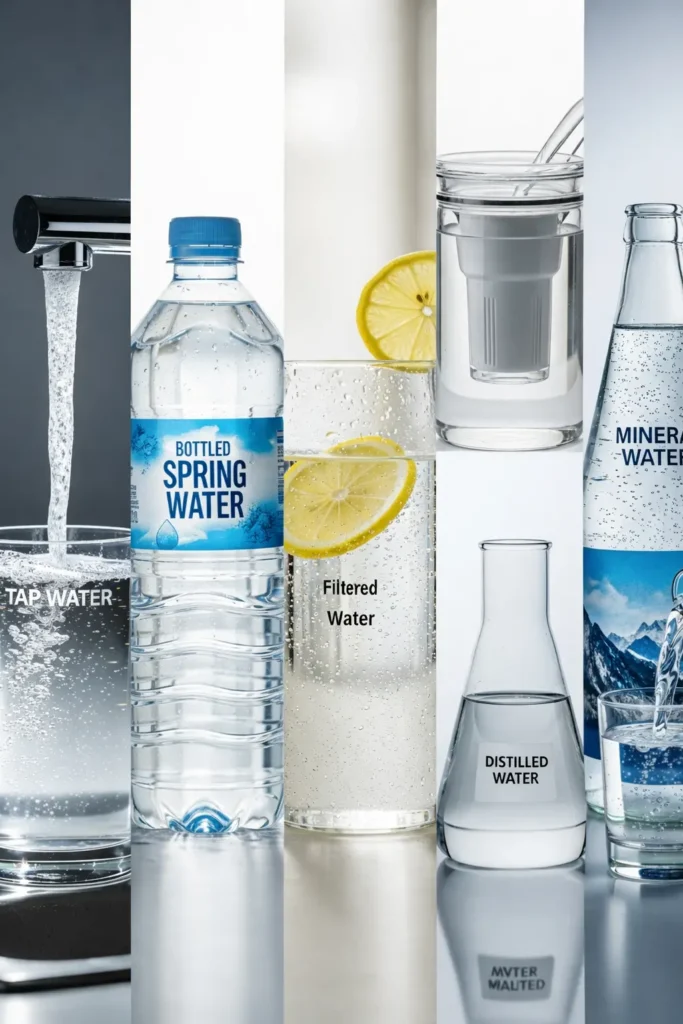
When you are deciding how much water you should drink, the source of that water matters for both taste and mineral content. In the US, we have several options, each with distinct clinical and practical profiles.
Tap Water and Filtration
Most municipal tap water is safe and strictly regulated by the EPA. However, some households prefer filtration to remove chlorine or trace heavy metals.
If you are considering a whole-home solution, you might ask: How much does a filtration system really cost? The answer is: high-quality whole-home filtration systems generally range from $2,500 to $4,500
These systems generally range from $2,500 to $4,500, including professional installation. They use granulated activated carbon and scale inhibitors to provide high-quality water for the entire house.
Mineral and Spring Water
Mineral water must contain at least 250 parts per million (ppm) of total dissolved solids. It can be a great source of calcium and magnesium. Spring water, on the other hand, comes from underground formations and is bottled at the source.
Both are excellent choices for hitting your daily water intake goals while gaining trace nutrients.
Distilled and Purified Water
Distilled water has been boiled into steam and condensed back into liquid, removing all minerals. While safe, it can taste “flat” and shouldn’t be your only source of water if your diet is low in minerals. Purified water uses processes like reverse osmosis to achieve a similar result.
Frequently Asked Questions
How Much Water Should a Child Drink a Day?
Children have smaller bodies but higher metabolic rates. Generally, kids aged 4–8 need about 5 cups (1.2 liters) of water daily. As they enter their teenage years, their needs align more closely with adult requirements, especially if they are active in sports.
How Much Water Should a Pregnant Woman Drink Daily?
According to ACOG and NIH guidelines, a pregnant woman should drink about 8 to 12 cups (2.3 to 3 liters). Proper hydration is essential for preventing preterm labor and maintaining adequate amniotic fluid levels for the baby.
How Much Water Should You Drink While Breastfeeding?
Breastfeeding mothers need significantly more fluids. You should aim for about 16 cups (3.8 liters) of total fluids daily. A simple rule of thumb is to drink one full glass of water every time you breastfeed or pump to stay ahead of thirst.
How Much Water Should an Average Adult Drink Per Day?
For an average adult woman, 11.5 cups is the goal. For a man, it is 15.5 cups. Remember that this includes the water found in coffee, tea, and moisture-rich foods like fruits and vegetables.
Is Drinking 2 Liters of Water a Day Enough?
Actually, 2 liters of water a day is slightly less than the recommended baseline for most adults. While it is a great starting goal, men and active women will likely need more to reach optimal hydration levels.
How Much Water Should You Drink to Lose Weight?
To support weight loss, aim for your baseline weight-based calculation plus 16 oz (500 mL), specifically 30 minutes before your largest meals. This helps increase satiety and ensures your metabolism is running at full capacity.
Conclusion
Determining how much water you should drink a day is a personalized process. While the general guidelines of 2.7 to 3.7 liters provide a solid framework, your weight, activity level, and medical status will dictate your final target.
By using a water calculator based on weight and monitoring for signs like urine color and energy levels, you can find the perfect balance. Remember to spread your intake throughout the day to avoid the risks of overhydration and to maximize absorption.
If you have specific medical conditions, such as congestive heart failure or kidney disease, or if you are taking Farxiga, please consult your physician. They can provide a medically supervised fluid limit tailored to your specific clinical needs.
Authoritative Evidence & References:
- Dietary Reference Intakes for Water, Potassium, Sodium, Chloride, and Sulfate
- Water-Induced Thermogenesis (The Journal of Clinical Endocrinology & Metabolism – Relates to water intake and weight loss)
- Maternal Hydration Status and Pregnancy/Lactation Outcomes (Nutrients Medical Journal)
- Diagnosis and Management of Hyponatremia (American Family Physician—Relates to the dangers of overhydration)
- SGLT2 Inhibitors (like Farxiga) and the Risk of Hypovolemia/Dehydration (National Library of Medicine / NIH)
Related Posts






MORE from Author
Read More As a physician specializing in exercise science and public health, I regularly consult patients who feel completely lost in the…
 Just last week, a 34-year-old patient named Clara sat in my clinic, feeling entirely overwhelmed by the modern fitness industry.…


 Hello, I am Dr. Kenji Sato, MD, specializing in sports medicine and performance optimization. In my sports clinic, I constantly…
- In my clinical practice as a physician focused on exercise science, I often tell patients that mastering fitness bench workouts…