Beginner Fitness Routine: Complete Step-by-Step Guide for 2026 (Home & Gym)
In my clinical practice, I often meet patients who feel overwhelmed when trying to improve their health because they don’t know where to begin. Building a proper beginner fitness routine is often the most important first step toward long-term wellness.
Recently, I worked with a 45-year-old patient dealing with prediabetes and chronic joint pain. They had repeatedly tried extreme diets and intense workout programs, only to quit within days because of exhaustion and discomfort.
Instead of recommending another aggressive plan, I created a gradual, structured routine focused on consistency, proper movement, and realistic progress.
Over the next three months, that patient improved their prediabetic markers and significantly reduced joint pain by following simple progressive exercise habits.
In this guide, I’ll break down the science behind safe beginner training, practical workout schedules, and sustainable routines that can help you build strength, improve endurance, and create lasting health habits—whether you train at home or in a gym. For evidence-based fitness tips for beginners, start here.
TL;DR
A successful beginner fitness routine strictly balances strength training, cardiovascular exercise, and essential rest days. You should aim to start with just 3 to 4 structured workouts per week to prevent early burnout, aligned with CDC physical activity guidelines.
Your primary focus must be on building consistency, mastering proper form, and utilizing gradual progression. These routines are highly adaptable and can be performed effectively at home or in a commercial gym.
Following a structured 30-day beginner workout plan is the best way to build a permanent, healthy habit.
What Is a Beginner Fitness Routine?
Understanding exactly what a beginner workout plan is is crucial before lifting a single weight. A beginner fitness routine is a structured schedule of physical activity specifically designed for a deconditioned body.
A beginner fitness routine guide emphasizes low-intensity adaptation. This means preparing your tendons, ligaments, and central nervous system for new physical stress before attempting to build massive muscles.
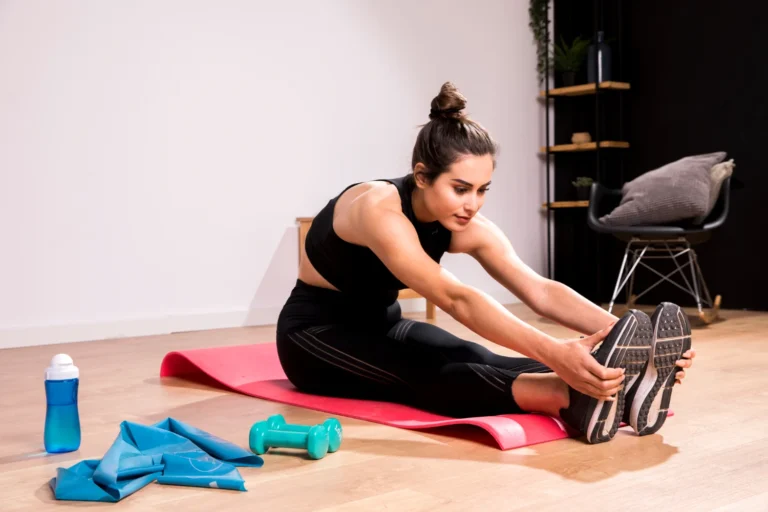
A complete routine must contain three distinct components: cardiovascular work for heart health, strength training for muscle and bone density, and flexibility work for joint mobility, per National Institute on Aging.
The first four weeks of any beginner plan are known as the neurological adaptation phase. During this time, your brain is simply learning how to communicate with your muscle fibers efficiently. Learn more about the benefits of exercise for foundational health.
How to Start a Fitness Routine as a Beginner
Knowing how to start a fitness routine as a beginner requires strategy, not just motivation. Motivation fades quickly, but a well-designed system will keep you moving forward on days when you feel tired.
Implementing beginner fitness routine steps starts with establishing a highly realistic baseline. Do not attempt a six-day professional bodybuilding split; you will end up injured or deeply discouraged, according to ACSM research.
The most effective beginner fitness routine tips revolve around preparation. Lay out your workout clothes the night before, schedule your workouts in your calendar like doctor’s appointments, and track your daily progress meticulously. Start your journey with how to start a healthy lifestyle.
Step-by-Step Beginner Plan Structure
First, set clear, measurable goals. Are you exercising primarily for fat loss, to build raw strength, or simply to improve your cardiovascular health and mobility?
Second, choose a workout type that you actually enjoy. If you hate running, do not force yourself onto a treadmill; try cycling, swimming, or brisk incline walking instead.
Third, commit to a realistic schedule of 3 to 5 days per week. Finally, meticulously track your progress using a notebook or app. Write down your sets, reps, and how you felt during the session per WHO recommendations.
Common Beginner Mistakes to Avoid
Overtraining is the most common medical issue I see in new gym-goers. More exercise is not better; muscles grow and repair strictly during your rest days.
Poor form is another massive risk factor. Attempting to lift heavy weights with a rounded back or caved knees guarantees a joint injury that will sideline your progress.
Finally, skipping warm-ups is highly dangerous. A cold muscle is a stiff muscle, and diving straight into heavy exercise drastically increases your risk of severe muscle tears.
Complete Beginner Fitness Routine (Weekly Plan)
A complete beginner fitness routine requires balancing stimulus and recovery. If you do not schedule rest, your body will eventually force you to rest through illness or injury.
This complete beginner workout plan ensures every major muscle group is targeted while allowing the central nervous system ample time to recover.
It is the exact recommended workout routine for beginners transitioning from a sedentary lifestyle to an active one, according to the American Heart Association.
| Day | Workout Focus | Primary Goal |
|---|---|---|
| Day 1 | Full Body Strength | Neuromuscular activation and joint loading |
| Day 2 | Steady-State Cardio | Cardiovascular endurance and calorie burn |
| Day 3 | Rest & Recovery | Tissue repair and systemic recovery |
| Day 4 | Upper Body Strength | Postural improvement and upper body power |
| Day 5 | Lower Body Strength | Core stability and large muscle development |
| Day 6 | Light Cardio + Core | Active recovery and abdominal endurance |
| Day 7 | Rest & Recovery | Complete physical and mental reset |
Beginner Fitness Routine at Home
You absolutely do not need an expensive gym membership to drastically change your physique. A beginner fitness routine at home is highly effective and eliminates the common excuse of commute times.
When designing a beginner fitness routine for home, the focus shifts entirely to mastering your own body weight. Bodyweight exercises require profound core stability and balance. For more options, explore bodyweight fitness exercises.
These workout routines for beginners at home are designed to be done in small spaces, requiring zero heavy machinery, yet they yield massive physiological benefits.
No Equipment Routine Fundamentals
The foundation of home training relies on the Squat. Stand with feet shoulder-width apart, push your hips back, and lower yourself as if sitting in a chair. This builds incredible lower-body strength.
Next are Push-ups. If you cannot do them on your toes, start against a wall or on your knees. Push-ups develop the chest, shoulders, and triceps while demanding total core rigidity.
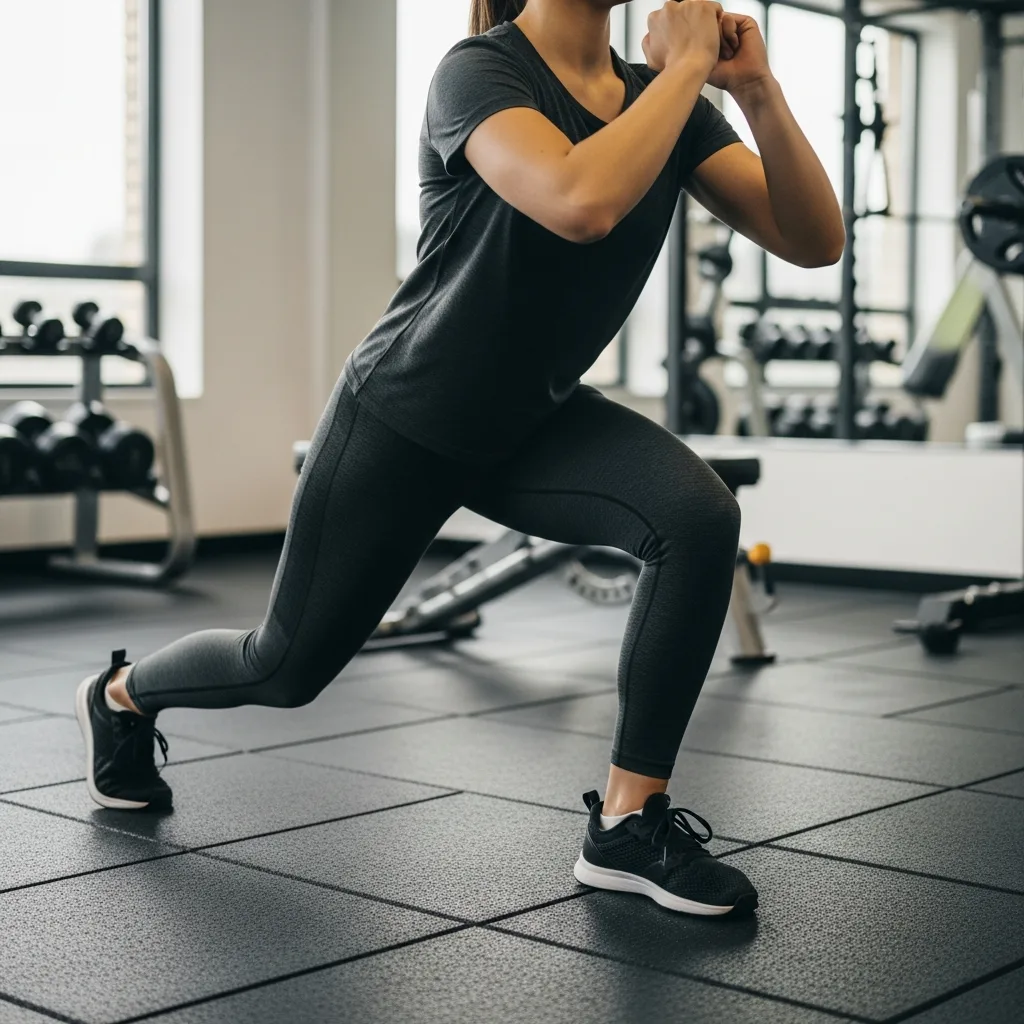
Lunges are critical for unilateral (single-leg) strength and hip mobility. Step forward, lowering your back knee toward the floor, and push back up through your front heel.
Finally, the Plank replaces traditional crunches. Rest on your forearms and toes, keeping your body in a perfectly straight line to build deep, protective abdominal strength as recommended by Harvard Health.
Home Workout Plan for Beginners
Your daily sessions should only take 20 to 30 minutes to complete. The goal is to stimulate the muscles, not to completely annihilate them.
Perform the four exercises listed above in a circuit format. Do 10 squats, 10 push-ups, 10 lunges per leg, and a 30-second plank, resting for one minute before repeating the circuit three times.
Focus strictly on progressive reps. If you manage 10 push-ups this week, aim for 11 or 12 next week. This micro-progression is the secret to continuous home muscle growth. For a structured option, check our free fitness workout plan.
Gym Workout Plan for Beginners
Transitioning to a commercial facility can be intimidating, but a structured gym workout plan for beginners provides immediate confidence. Gyms offer specialized equipment that isolates muscles perfectly.
Avoid the temptation of a 6-day gym workout schedule or a rigorous 7-day gym workout plan initially. These high-frequency splits are designed for advanced bodybuilders utilizing performance-enhancing recovery methods, notes Mayo Clinic.
Instead, a beginner should focus on utilizing the facility to safely learn compound movements under controlled conditions, establishing a baseline of total body strength.
Beginner Gym Routine Foundations
Start your journey by utilizing selectorized machines. Machines guide your joints through a fixed, safe range of motion, which is perfect for isolating a muscle without requiring intense balance.
Once you build baseline strength on machines, slowly transition to free weights (dumbbells and barbells). Free weights force your stabilizing muscles to activate, building real-world functional strength.
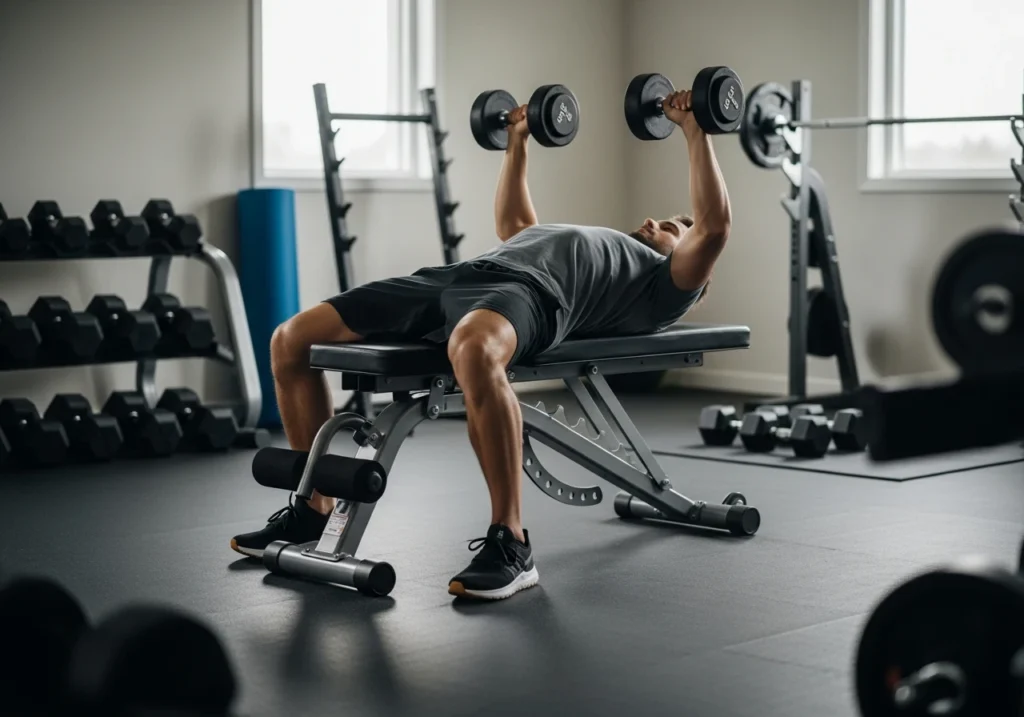
Focus almost entirely on compound lifts. Exercises like the leg press, lat pulldown, and seated chest press work multiple muscle groups simultaneously, giving you the best return on your time.
Sample Gym Split Structure
The most effective schedule is a Push / Pull / Legs (PPL) split adapted for beginners. This group of muscles is logically based on their mechanical function.
On a “Push” day, you target the chest, shoulders, and triceps. Before a “Pull” day, you target the back and biceps. On “Legs” day, you focus entirely on the lower body.
Ensure rest days are strictly included between these sessions. A beginner might do Push on Monday, Rest on Tuesday, Pull on Wednesday, Rest on Thursday, and Legs on Friday. For tailored guidance, see the fitness plan for men.
Beginner Fitness Routine for Women
A highly effective beginner fitness routine for women is fundamentally similar to a man’s, but it can be optimized for specific physiological and hormonal profiles.
A beginner fitness routine for females often includes a heavier focus on glute, hamstring, and core development, which actively prevents the pelvic tilt issues common in sedentary lifestyles. For tailored advice, explore fitness tips for women.
When searching for a workout plan for beginners female, you must ignore outdated strength training myths. Lifting weights will not make a woman look “bulky”; women do not produce enough natural testosterone for that to happen.
Instead, resistance training is the absolute best method for fat loss and muscle toning. Furthermore, load-bearing exercises are medically critical for women to build bone density and prevent osteoporosis later in life, per Journal of the American Geriatrics Society.
Beginner Fitness Routine for Men
The foundation of a beginner fitness routine for men heavily prioritizes building a broad, strong upper back and a solid lower body foundation.
Muscle building basics require men to focus on progressive overload on heavy compound movements like the bench press, barbell row, and leg press to trigger systemic growth.
Establishing a consistent lifting routine is a highly testosterone-friendly habit. Regular, intense resistance training naturally optimizes male hormone profiles, improving energy, mood, and libido.
Strength progression should be meticulously tracked. A man should aim to add 2.5 to 5 pounds to his major lifts every week or two, forcing the body to constantly adapt and grow.
30-Day Beginner Workout Plan
Committing to a beginner 30-day workout plan is the best way to rewire your daily habits. It takes roughly four weeks for the body to adapt to the shock of a new physical routine.
Treat this 30-day workout challenge for beginners as a non-negotiable daily appointment. This structured timeline prevents you from getting bored or plateauing early in your journey.
Weekly Progression Breakdown
Week 1: The Adaptation Phase
Your only goal is to learn the movements and survive the initial muscle soreness. Keep weights very light and stop every set a few reps short of failure.
Week 2: Strength Building
The severe soreness will begin to fade. Start slightly increasing the weight on your machines or dumbbells, focusing heavily on controlling the negative (lowering) portion of the lift.
Week 3: Cardiovascular Endurance
Your muscles are adapting, so it is time to challenge your heart. Add an extra 10 minutes of brisk walking or cycling to the end of your strength workouts. For optimal heart health, see the best exercise for heart health.
Week 4: Fat Loss and Intensity
You are now ready to push harder. Decrease your rest periods between sets from 90 seconds to 60 seconds. This keeps your heart rate elevated and maximizes fat oxidation.
Best Beginner Fitness Routine for Weight Loss
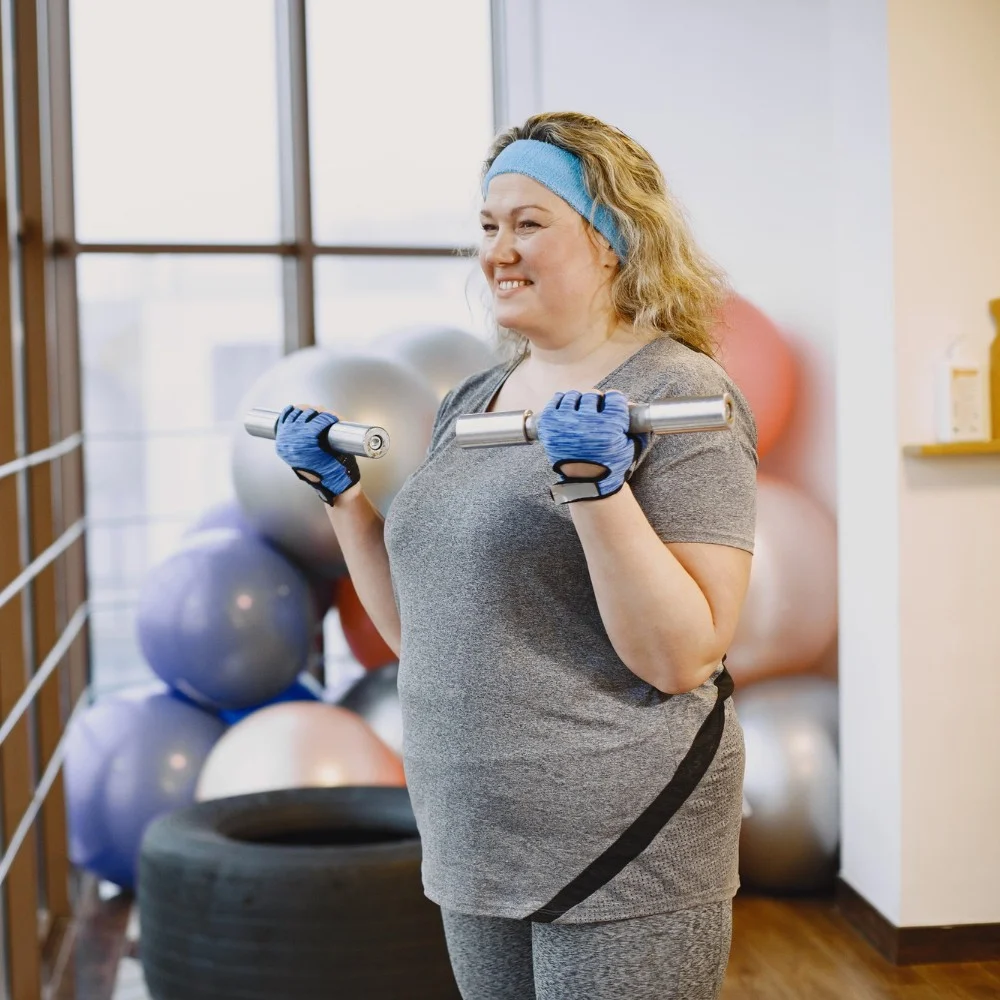
To achieve a complete beginner fitness routine for weight loss, you must understand that exercise alone cannot outwork a terrible diet. Fat loss is driven primarily by nutrition.
However, the best workout routine for beginner fat loss combines resistance training with cardiovascular work to maximize total daily energy expenditure while preserving lean muscle mass.
Calorie deficit basics dictate that you must consume fewer calories than you burn. Lifting weights ensures that the weight you lose is strictly body fat, not precious, metabolically active muscle tissue.
You can also introduce a light intro to High-Intensity Interval Training (HIIT). Once a week, perform 20 seconds of intense effort (like fast cycling) followed by 40 seconds of slow recovery, repeated for 10 minutes. Explore fitness HIIT training for more.
Basic Workout Routine for Beginners
If you are severely pressed for time, a basic workout routine for beginners strips away all the complexity and leaves only the absolute essentials.
A highly simplified routine requires performing just 3 exercises per day. Choose one lower body movement, one upper body push, and one upper body pull.
Perform 2 to 3 sets of each exercise per session. This volume is perfectly adequate to trigger a muscle-building response in a brand-new lifter without causing severe fatigue, according to Physical Therapy journal.
Aim for 8 to 12 reps per set. If you can easily complete 12 reps with perfect form, the weight is too light. If you cannot reach 8 reps, the weight is too heavy.
Evidence-Based Benefits of Beginner Fitness
The medical consensus on starting a fitness routine is overwhelmingly positive. Decades of clinical research support the life-changing impact of basic daily movement.
| Health Benefit | Medical Evidence Rating | Primary Biological Mechanism |
|---|---|---|
| Improves cardiovascular health | Strong | Lowers resting heart rate and reduces arterial stiffness |
| Supports weight loss | Strong | Increases daily caloric expenditure and metabolic rate |
| Enhances mental health | Strong | Releases endorphins and drastically reduces systemic cortisol |
| Builds muscle strength | Strong | Increases bone density and prevents age-related sarcopenia |
Understanding what your resting heart rate says about your health helps track progress. Prioritize how much sleep do I need for optimal recovery, and manage how to deal with stress to support overall wellness.
Workout Plan Generator & Tools
In 2026, relying on technology takes the guesswork out of your training. Using an AI-driven workout plan generator can provide a highly customized daily schedule.
These apps and online tools allow you to input your exact goals, your available equipment, and your time constraints to instantly create a scientifically sound fitness routine.
The primary customization benefits include injury workarounds. If you tell an app you have bad knees, it will instantly swap out heavy barbell squats for joint-friendly alternatives like glute bridges.
Beginner Fitness Routine (Reddit Insights & Real-Life Tips)
Medical advice is vital, but community experience is also highly valuable. Searching for a beginner fitness routine on Reddit reveals exactly what ordinary people struggle with the most.
A common Reddit beginner fitness routine consensus is that motivation is a myth; discipline is what actually creates results. Users frequently advise beginners to just show up to the gym, even if they only do half a workout.
Summarized community insights heavily stress the importance of diet. Thousands of real-life tips confirm that you cannot see the results of your fitness routine if you are constantly overeating highly processed foods. For nutrition guidance, explore a healthy diet.
Mistakes beginners share online almost always involve ego-lifting. Real users constantly warn newcomers to ignore what other people in the gym are lifting and to focus entirely on their own form.
FAQs
How to create a workout plan for beginners?
To create a plan, first choose your primary goals, determine a realistic frequency of 3 to 4 days a week, select basic compound exercises, and ensure you plan for progressive overload, notes CDC fall prevention.
What is the best beginner fitness routine for 2026?
The absolute best routine is a balanced plan that incorporates two days of full-body strength training, two days of moderate cardiovascular exercise, and dedicated recovery days to promote tissue healing according to ACSM guidelines.
How many days should a beginner work out?
A beginner should ideally work out 3 to 4 days per week. This provides enough physical stimulus to force the body to adapt while allowing the necessary 48 hours for muscle groups to recover.
Can beginners work out every single day?
Working out every day is highly discouraged for beginners. Daily intense exercise without adequate rest leads directly to central nervous system fatigue, severe muscle tears, and psychological burnout.
How long until a beginner sees physical results?
Neurological strength gains happen within the first two weeks, but visible physical changes in muscle tone and fat loss typically take 6 to 8 weeks of highly consistent training and dieting, per NIH weight management guidelines.
Conclusion
In my clinical experience, starting a beginner fitness routine is one of the most valuable investments you can make in your long-term health. I always remind patients that real progress doesn’t come from extreme diets or “secret” workout hacks—it comes from consistently mastering the fundamentals.
Whether you’re exercising in your living room or walking into a gym for the first time, the same principles apply: move regularly, focus on proper form, build strength gradually, and allow your body enough time to recover.
I encourage patients to prioritize consistency over intensity. Progressive improvement happens when you challenge your body safely and stay committed to realistic habits.
Your fitness journey doesn’t need to be perfect—it simply needs to begin. Stick to a structured plan, stay patient, and you may be surprised by how much your body can achieve over time. For more on how to stay healthy, explore our comprehensive wellness resources.
Medical References & Further Reading:
- ACSM. Beginner Exercise Guidelines. acsm.org
- CDC. Physical Activity Basics. cdc.gov/physicalactivity
- WHO. Exercise for Health. who.int/physical-activity
- Harvard Health. Starting Fitness Safely. health.harvard.edu
- NIH. Muscle Recovery Science. nih.gov
- Sleep Foundation. Recovery & Performance. sleepfoundation.org
- Mayo Clinic. Weight Loss & Exercise. mayoclinic.org
- American Heart Association. Cardio Guidelines. heart.org
- British Journal of Sports Medicine. Training Adaptation. bjsm.bmj.com
- Journal of Strength & Conditioning. Beginner Progression. jsc-journal.com
Related Posts

MORE from Author
Read More As a physician specializing in exercise science and public health, I regularly consult patients who feel completely lost in the…
 Just last week, a 34-year-old patient named Clara sat in my clinic, feeling entirely overwhelmed by the modern fitness industry.…

 Hello, I am Dr. Kenji Sato, MD, specializing in sports medicine and performance optimization. In my sports clinic, I constantly…
- In my clinical practice as a physician focused on exercise science, I often tell patients that mastering fitness bench workouts…