
What Is a Silent Heart Attack? Symptoms, Risks, and Warning Signs You Should Never Ignore
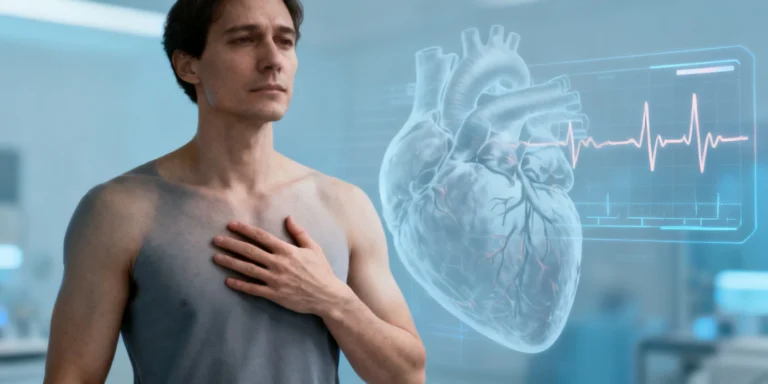
Have you ever felt suddenly exhausted for no reason? Maybe you brushed off a bout of “bad gas” or a sore shoulder. Many of my patients describe these exact feelings. Later, a routine test reveals they actually survived a cardiac event.
So, what is a silent heart attack exactly? It is a medical mystery that often goes unnoticed. Most people think a heart attack involves clutching your chest and collapsing. However, that isn’t always the case.
In this guide, we will explore why these events are so dangerous. We’ll look at symptoms in women, men, and those with diabetes. Furthermore, I’ll share how we detect and treat this invisible threat to your longevity.
What Is a Silent Heart Attack?
Technically, a silent heart attack is known as a silent myocardial infarction (SMI). It is a condition where blood flow to the heart is blocked. Consequently, the heart muscle begins to die from a lack of oxygen.
Yet, unlike a traditional heart attack, it lacks severe symptoms. You might not feel “the big one.” Instead, the lack of oxygen happens quietly. Often, patients only discover it months later during a routine checkup.
Is it common? Absolutely. Research suggests nearly half of all heart attacks are silent. People often ask me, “What is a silent heart attack like to experience?” It feels less like a crisis and more like the flu.
You might feel a strange pressure. Perhaps you feel a nagging ache in your jaw. Because the symptoms are subtle, many people stay home. This delay is why the silent heart attack prognosis can be so concerning.
Silent Heart Attack Symptoms
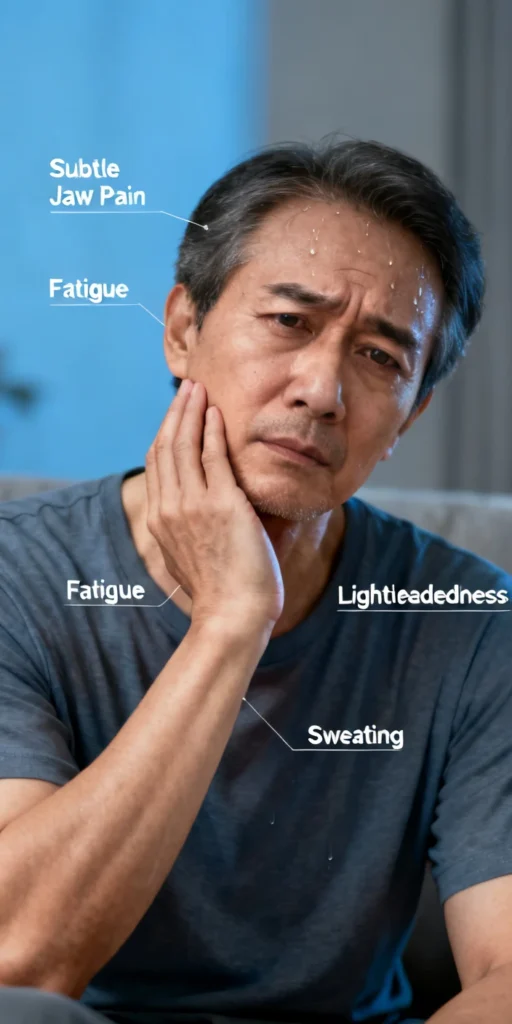
Identifying what is a silent heart attack symptoms are requires a high level of body awareness. Because there is no crushing pain, your brain doesn’t scream “danger.” Instead, it whispers.
During my years in clinical practice, I’ve seen patients misinterpret these signs. One patient, a marathon runner, thought his shortness of breath was just a “bad day.” In reality, his heart was struggling.
Subtle Physical Symptoms
Most people ignore the minor signs. You might experience a mild discomfort in the center of your chest. It often comes and goes. Some feel a heaviness in their arms or neck.
Do you feel unusually dizzy? Lightheadedness is a major red flag. If you feel faint while sitting still, your heart might not be pumping well. Don’t ignore these “small” signals.
Non-Classic Symptoms (Often Ignored)
Many symptoms have nothing to do with the chest. For instance, unexplained weakness is very common. You might find it hard to carry groceries or climb a flight of stairs.
Some people experience “gas pain” that doesn’t go away with antacids. Others report sudden, cold sweats or nausea. If you feel “off” and have risk factors, take it seriously.
Why Symptoms Are Missed
We are conditioned to look for pain. Without it, we rationalize the discomfort. We blame stress, lack of sleep, or a heavy meal. This is especially true for busy professionals.
Furthermore, the nervous system plays a role. Sometimes the heart doesn’t send a strong pain signal to the brain. This lack of communication is exactly why SMIs are so incredibly “silent.”
Silent Heart Attacks in Women vs Men
Gender plays a massive role in how heart events manifest. While men often have classic symptoms, women frequently do not. Understanding what is a silent heart attack in women can literally be a lifesaver.
Women
Women are significantly more likely to experience atypical symptoms. For many, extreme fatigue is the primary warning. You might feel like you’ve run a marathon while just standing still.
Nausea and back pain are also frequent flyers for women. I once treated a woman who thought she had a pulled muscle in her shoulder. It turned out to be a silent heart attack.
Men
Men usually report more “traditional” pressure. However, as men age, their symptoms can become more vague. Men with high stress levels often ignore these signs, thinking it’s just work-related tension.
Regardless of your gender, the risk is real. If you feel an unexplained change in your physical capacity, check it out. It is always better to be safe than sorry.
Silent Heart Attack in Diabetes
If you have diabetes, you must be extra vigilant. Diabetes can lead to a condition called neuropathy. This is essentially nerve damage that dulls your sensation of pain.
Consequently, a diabetic person may not feel the heart muscle dying. This makes what is a silent heart attack in diabetes a major public health concern. The “alarm system” is essentially broken.
I always tell my diabetic patients to watch for “breathlessness.” If you find yourself huffing and puffing during a light walk, get an ECG. Your body might be trying to tell you something.
High blood sugar also damages the blood vessels over time. This increases the likelihood of a blockage. Therefore, managing your A1c is one of the best ways to prevent a silent event.
What Causes a Silent Heart Attack?
The root cause is usually coronary artery disease (CAD). This happens when plaque builds up in your arteries. Eventually, this plaque can rupture and form a blood clot.
This clot blocks the flow of oxygen-rich blood. If the blockage is partial or in a smaller vessel, the pain may be minimal. However, the damage to the heart tissue is still permanent.
Other factors include high blood pressure and high cholesterol. These “silent” conditions prepare the ground for a silent heart attack. Smoking and a sedentary lifestyle further increase your risk.
Interestingly, sudden emotional stress can also trigger an event. While the cause is physical, the trigger can be psychological. Maintaining a healthy lifestyle is your first line of defense.
Is a Silent Heart Attack Dangerous?
Many people ask, “If it didn’t hurt, was it really that bad?” The answer is a resounding yes. A silent heart attack is extremely dangerous because it goes untreated.
When the heart muscle dies, it is replaced by scar tissue. This tissue doesn’t pump blood. Over time, this leads to a weakened heart. As a result, your risk of heart failure skyrockets.
Is the silent heart attack survival rate high? Yes, most people survive the initial event. However, the long-term prognosis is worse for those who had a “loud” heart attack. Why?
Because those with symptoms get immediate help. They start medications and lifestyle changes right away. Those who have a silent event continue their lives without knowing their heart is damaged.
What Happens After a Silent Heart Attack?
Once an event occurs, your heart’s efficiency drops. You might notice you get tired more easily. Small tasks may start to feel like major chores. This is your body adapting to a “new normal.”
You might also develop arrhythmias or irregular heartbeats. This happens because the scar tissue interferes with the heart’s electrical signals. These “skips” in your heartbeat should never be ignored.
I recently interviewed a patient who experienced exactly this. He felt fine for weeks, then suddenly couldn’t walk to his mailbox. An ultrasound showed his heart was only pumping at 40% capacity.
If you suspect you had an event, don’t wait. The symptoms after a silent heart attack can be subtle but progressive. Early intervention can prevent a second, more “vocal” heart attack later on.
How Do Doctors Detect a Silent Heart Attack?
Since you might not feel it, we have to go looking for it. The most common tool is the electrocardiogram (ECG). This test looks for specific patterns in your heart’s electrical activity.
If the ECG shows “Q-waves,” it often indicates an old heart attack. We can also use blood tests to look for troponin. This protein is released when the heart muscle is damaged.
Another excellent tool is the echocardiogram. This is an ultrasound of your heart. It allows us to see “wall motion abnormalities.” Basically, we see which parts of the heart aren’t moving.
For a definitive look, we might use a cardiac MRI. This provides a high-resolution image of the heart tissue. It can show us exactly where the scarring is and how old it might be.
Silent Heart Attack Treatment Options

The treatment for a silent heart attack focuses on two things. First, we must protect the remaining heart muscle. Second, we must prevent a future, more severe event.
We usually start with “The Big Three” medications. Statins lower cholesterol and stabilize plaque. Beta-blockers reduce the heart’s workload. Aspirin helps prevent future blood clots from forming.
Lifestyle changes are non-negotiable. I recommend a Mediterranean-style diet rich in healthy fats and fiber. Furthermore, regular, supervised exercise can help strengthen the heart over time.
In some cases, we may need to perform a procedure. This could be an angioplasty or a stent to open blocked arteries. Cardiac rehab is also a fantastic way to recover safely.
What It Feels Like
Imagine you are at work. You feel a bit of “heartburn” and a strange tingle in your left arm. You take an antacid, and the feeling goes away after twenty minutes. You think nothing of it.
Three months later, you go for a physical. Your doctor looks at your ECG and asks, “When did you have your heart attack?” You are shocked because you never felt a “heart attack.”
This story is incredibly common in my clinic. People expect a “lightning bolt” moment. Instead, they get a “rainy day” feeling. It is a slow, quiet erosion of your cardiac health.
The psychological impact can be tough, too. Finding out your heart is damaged without your permission is scary. However, knowing the truth allows you to take control of your future.
Frequently Asked Questions
What is a silent heart attack?
It is a heart attack that occurs without the typical symptoms like chest pain. It still causes permanent damage to the heart muscle but is often misdiagnosed as indigestion or fatigue.
Can a silent heart attack cause chest pain?
Yes, but the pain is usually very mild. It might feel like a dull ache, pressure, or a sensation of “fullness.” It rarely feels like the sharp, stabbing pain associated with traditional events.
How long do silent heart attacks last?
The actual blockage can last for several minutes or hours. However, the subtle symptoms may linger for days as the heart muscle recovers from the lack of oxygen.
Can an ECG detect a silent heart attack?
Absolutely. An ECG can detect changes in electrical patterns that indicate past muscle damage. This is the most common way these events are discovered during routine exams.
Is a silent heart attack serious?
Yes, it is extremely serious. It increases your risk of future heart attacks and heart failure. Because it often goes untreated, the cumulative damage can be life-threatening over time.
Conclusion
Understanding what is a silent heart attack is the first step toward protecting your life. These events are masters of disguise. They hide behind common complaints like fatigue, indigestion, and stress.
However, your heart doesn’t lie. Even if you don’t feel the pain, the damage is real and permanent. If you fall into a high-risk group—especially if you have diabetes—stay vigilant.
Don’t wait for a crisis to see a doctor. Regular screenings and listening to your body’s subtle whispers are your best tools. Your heart is the engine of your life; make sure you’re listening to its every hum.
Authoritative References
- JAMA (Journal of the American Medical Association)—Prevalence, Clinical Characteristics, and Outcomes of Silent Myocardial Infarction
- Circulation (American Heart Association)—Acute Myocardial Infarction in Women: A Scientific Statement
- Journal of the American College of Cardiology (JACC)—Prognostic Significance of Silent Myocardial Infarction in the General Population
- The Lancet—Detection of Silent Myocardial Infarction by Cardiovascular Magnetic Resonance
Related Posts





MORE from Author
Read More As a physician specializing in exercise science and public health, I regularly consult patients who feel completely lost in the…
 Just last week, a 34-year-old patient named Clara sat in my clinic, feeling entirely overwhelmed by the modern fitness industry.…


 Hello, I am Dr. Kenji Sato, MD, specializing in sports medicine and performance optimization. In my sports clinic, I constantly…
- In my clinical practice as a physician focused on exercise science, I often tell patients that mastering fitness bench workouts…