Senior Fitness Workouts: Safe, Effective Exercise Plans for Adults Over 60
Just last month, a 72-year-old patient named Arthur came to my office frustrated by his declining mobility and asked about safe senior fitness workouts he could do at home. He loved gardening, but getting up from the ground had become painful and difficult.
As a physician specializing in public health and geriatric exercise, I hear concerns like this often.
I reminded Arthur that aging does not automatically mean losing strength or independence. We started a simple at-home routine that included chair squats, light mobility exercises, and daily stretching. For foundational guidance, see our fitness tips for beginners.
Within eight weeks, he was back in his garden and walking his dog without knee pain. The body can respond remarkably well to consistent, safe movement at any age.
In this guide, I’ll explain how older adults can safely improve strength, mobility, and independence through practical exercise routines.
TL;DR Summary
Senior fitness workouts must focus primarily on functional strength, balance, joint flexibility, and cardiovascular endurance. Adults over 60 should aim for low-impact, full-body routines performed consistently 3 to 5 times per week.
Utilizing guided videos and committing to short, daily 10-minute sessions can drastically improve mobility, reduce the risk of dangerous falls, and boost overall well-being. Always consult your physician before beginning any new physical regimen.
What Is the Best Workout Routine for Seniors?
The best workout routine for seniors is a balanced, multi-disciplinary approach that does not overly stress the joints. It includes low-impact cardio for heart health, resistance training for bone density, and dedicated balance exercises to prevent falls.
Flexibility work must also be performed consistently throughout the week to maintain a healthy range of motion. The “best” routine is ultimately the one that an older adult can perform safely and consistently without experiencing acute joint pain. For more on sustainable movement, explore our benefits of exercise guide.
What Exercise Should a 70-Year-Old Do Every Day?
Daily activities for a 70-year-old should prioritize joint lubrication and fall prevention over high-intensity fatigue. Walking is an exceptional daily habit that safely maintains cardiovascular health and spinal mobility.
Gentle stretching routines and basic balance exercises, such as standing on one leg near a sturdy chair, should be done daily. Light strength training with resistance bands can be added a few times a week to maintain essential muscle mass. For heart-focused routines, see our guide to best exercise for heart health.
Benefits of Senior Fitness Workouts (Evidence-Based)
The physiological benefits of remaining active in your later years are profoundly documented in medical literature. Regular exercise drastically improves joint mobility and neuromuscular balance, which is the number one defense against catastrophic falls.
Furthermore, engaging in moderate physical activity reduces the risk of chronic conditions like hypertension and cardiovascular disease.
Mentally, routine movement triggers endorphin release, actively combating the depression and isolation that many seniors face, while improving overall cognitive function. For holistic wellness strategies, reference our how to maintain a healthy lifestyle framework.
Full Body Exercises for Seniors
When designing a senior workout program, we must focus on movements that translate directly to activities of daily living. Getting out of a chair, reaching for a high shelf, and picking up a dropped item are functional tasks that require full-body coordination.
A comprehensive list of full-body exercises for seniors must prioritize joint safety while providing enough resistance to stimulate muscle and bone growth. Below are detailed breakdowns of the most effective, safe exercises you can perform at home.
The Functional Chair Squat
The chair squat is the single most important exercise an older adult can master. It directly mimics the motion of getting up from a sofa or a toilet, which is vital for maintaining independence. To perform this, stand directly in front of a sturdy, armless dining chair with your feet shoulder-width apart.
Slowly hinge your hips backward, keeping your chest tall, and lower yourself until your glutes lightly touch the seat. Pause for a second, then press firmly through your heels to return to a standing position. This safely builds massive strength in the quadriceps, hamstrings, and glutes without requiring heavy barbells.
Wall Push-Ups for Upper Body Strength
Standard push-ups on the floor are often too stressful for aging shoulders and wrists. Wall push-ups provide an excellent, easily modifiable alternative. Stand about an arm’s length away from a solid wall. Place your palms flat against the wall at shoulder height and shoulder-width apart.
Slowly bend your elbows to bring your chest close to the wall, then push back to the starting position. This exercise safely fortifies the chest, triceps, and anterior deltoids, which are the exact muscles required to push open heavy doors or catch yourself during a forward stumble.
Seated Leg Lifts for Knee Stability
Knee pain is incredibly common as cartilage wears down, making strong surrounding muscles essential for joint support. Seated leg lifts directly target the quadriceps while completely removing the body’s weight from the knee joint.
Sit near the edge of a sturdy chair with your back straight and both feet flat on the floor. Slowly extend your right leg straight out in front of you, squeezing the thigh muscle tightly at the top. Hold for two seconds, then slowly lower it.
Alternate legs. This simple movement is a staple in clinical physical therapy for osteoarthritis management.
Overhead Arm Raises for Shoulder Mobility
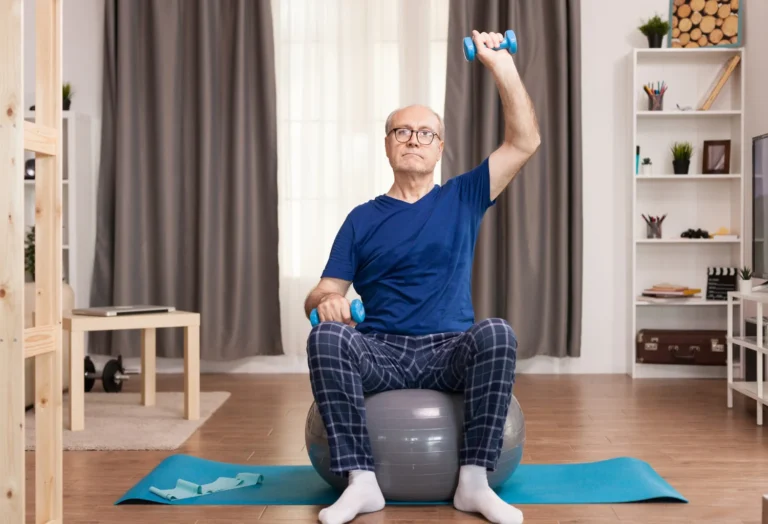
Losing the ability to reach overhead makes dressing and retrieving items from cabinets incredibly difficult. Seated or standing arm raises help preserve this critical range of motion. Hold a very light weight—such as a soup can or a one-pound dumbbell—in each hand.
Start with your arms down by your sides. Keeping a slight bend in your elbows, slowly raise your arms straight up in front of you until they are parallel to the floor, or slightly higher if your shoulders allow. Slowly lower them back down.
This constant, controlled movement keeps the rotator cuff muscles engaged and the shoulder capsule well-lubricated.
Over 60 Workouts for Seniors (Weekly Plan)
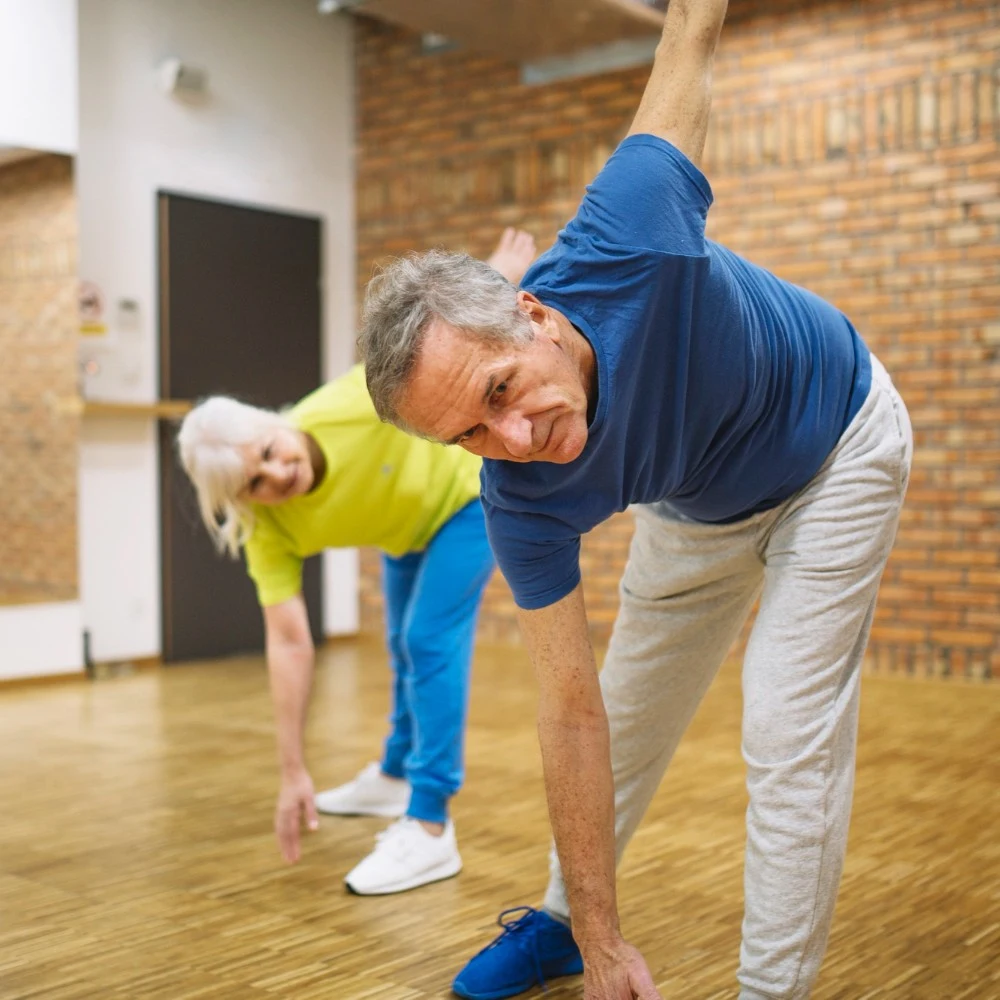
Creating a safe weekly schedule prevents the dangers of overexertion. A structured plan of over 60 workouts for seniors should strategically balance different types of physical stress.
Aim for three non-consecutive days of strength sessions, focusing on chair squats and wall push-ups to maintain muscle mass. Incorporate two dedicated cardio sessions, such as brisk walking or water aerobics, to fortify the heart.
Finally, reserve 10 minutes every single day for gentle mobility and stretching to prevent morning stiffness. For a downloadable template, see our free fitness workout plan.
Senior Fitness With Meredith
For patients seeking guided at-home routines, I frequently recommend digital resources. Many seniors enjoy following senior exercises with Meredith stretches, as her channel focuses heavily on gentle, accessible movements.
Her content is fantastic because it emphasizes safety and modifications. Following workouts, Senior Fitness with Meredith provides a structured, encouraging environment right in your living room.
A standard senior fitness with Meredith video usually requires nothing more than a sturdy chair and light dumbbells, making senior exercises Meredith videos highly accessible. Trying exercises for seniors with Meredith is an excellent starting point for absolute beginners.
Senior Shape Fitness With Lauren
Another highly respected resource in the digital fitness space is Lauren. Her brand focuses on slightly more progressive routines, blending light strength training with pilates-inspired core work.
When looking at Senior Shape Fitness reviews, users consistently praise her clear instructions and calm demeanor. Senior Shape Fitness with Lauren reviews often highlight how her routines improve posture and alleviate back pain.
If you search for senior fitness with Lauren or wonder who Lauren is on the senior shape fitness Wikipedia page, you will find a dedicated instructor passionate about aging gracefully. Her senior shape workouts are ideal for those ready to advance past basic chair exercises.
Senior Shape 10-Minute Workouts
Lack of time or stamina is a common barrier to exercise for older adults. This is why Senior Shape 10-minute workouts are incredibly valuable clinical tools.
These short daily routines break fitness down into manageable, bite-sized sessions that do not overwhelm the nervous system. By committing to just ten minutes a day, seniors can build a profound biological habit of movement. These brief sessions are perfect for gently elevating the heart rate before breakfast or relieving stiff joints before bed.
Exercise for Seniors Over 75 (Safety Focus)
When prescribing exercise for seniors over 75, our clinical priorities shift heavily toward fall prevention and extreme joint protection. High-impact movements must be entirely eliminated.
Instead, the focus should be on robust chair exercises and supported balance training. Searching for an Exercise for Seniors Over 75 youtube routine will yield videos that keep the feet firmly planted or seated.
We want to stimulate the muscles and the cardiovascular system without introducing any risk of acute injury or severe fatigue. For gender-specific considerations, reference our fitness tips for women.
Seniorshape Fitness Videos
Visual learning is incredibly important when trying to master new biomechanics safely. Utilizing senior shape fitness videos allows older adults to mirror the exact posture and pacing of a professional instructor.
This video embedding strategy ensures that viewers do not rush through the movements. Always pause the video if you feel out of breath, and never feel pressured to match the instructor’s speed perfectly; your safety always dictates the pace.
Local Senior Fitness Workouts
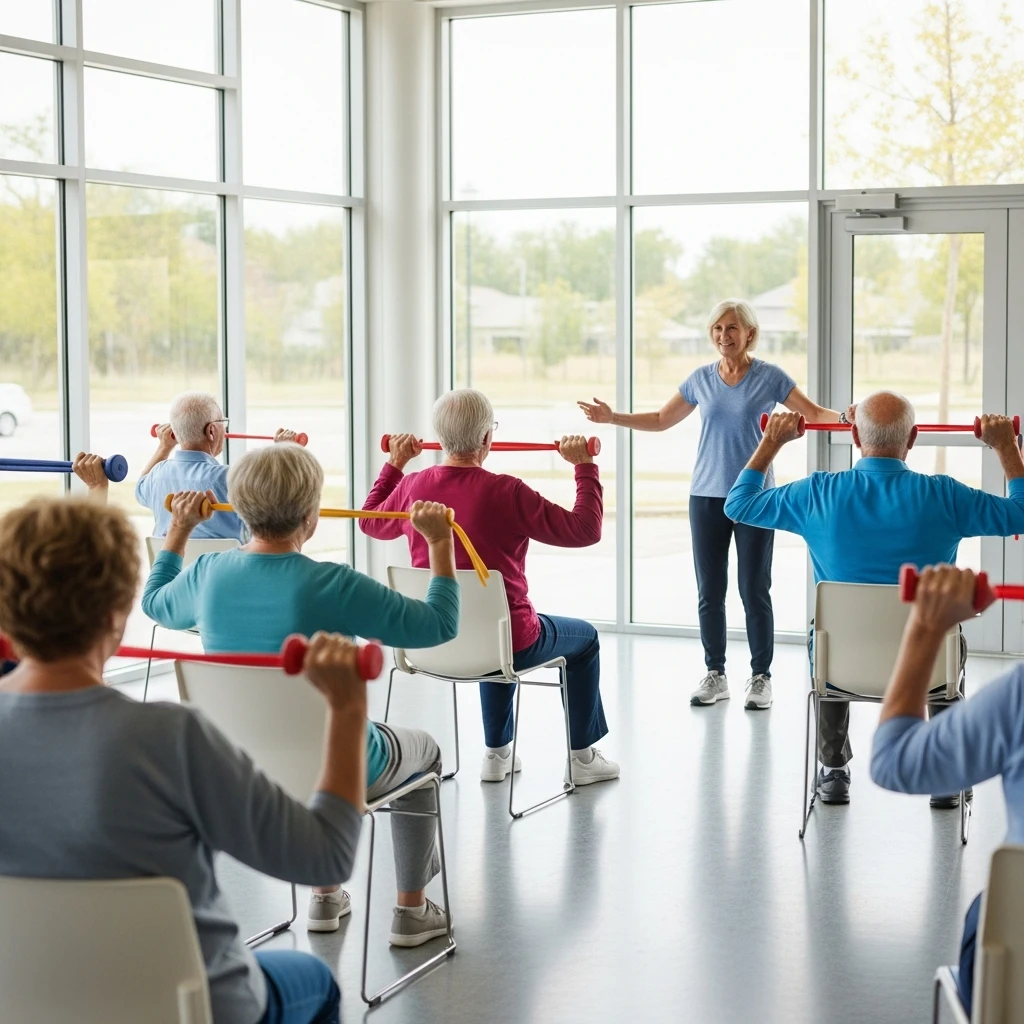
While home videos are excellent, community exercise provides vital social interaction that combats geriatric isolation. Many local centers offer specialized group classes tailored specifically for older demographics.
For instance, finding senior fitness workouts in Vacaville can connect you with local SilverSneakers programs. In urban areas, searching for senior fitness workouts on West End Avenue or senior fitness workouts in midtown Manhattan will reveal numerous boutique studios offering low-impact senior pilates.
Similarly, community centers hosting senior fitness workouts, such as Lenox Hill, or senior fitness workouts in Manhattan Valley, provide safe, supervised environments where you can exercise alongside your peers.
What Is the 3-3-3 Rule at the Gym?
The 3-3-3 rule is an incredibly effective, easily memorable framework for beginners and older adults returning to the gym. It refers to performing exactly 3 exercises, for 3 sets each, exactly 3 times per week.
This minimalist structure is heavily recommended by sports medicine professionals because it prevents profound muscular burnout. It provides just enough stimulus to force the muscles to grow stronger without overwhelming a senior’s recovery capacity.
What’s the Best Exercise for Type 2 Diabetes?
Type 2 diabetes is highly prevalent in older populations, but it can be aggressively managed with proper movement. The best exercises for this condition are those that actively pull glucose out of the bloodstream to be used as cellular fuel.
Brisk walking, light resistance training, and low-impact aerobic exercise are highly effective for managing blood sugar. Skeletal muscle is the body’s largest consumer of glucose, so building muscle through chair squats directly improves your insulin sensitivity.
For diabetes symptom awareness, see our guide on common symptoms of diabetes.
Safety Tips for Senior Fitness
Safety must always be the absolute foundation of any geriatric exercise plan. You must start incredibly slow; doing too much in the first week will cause severe delayed onset muscle soreness (DOMS), which discourages future consistency.
Always prioritize your physical form over the number of repetitions you can complete. Furthermore, older adults naturally lose their sense of thirst, making it clinically imperative to stay aggressively hydrated before, during, and after your workouts to prevent dizziness. For recovery optimization, reference our sleep recovery guidelines.
Common Mistakes Seniors Should Avoid
The most dangerous mistake I see in my clinic is severe overexertion driven by a desire to perform at a younger age’s capacity. Attempting to lift too heavy or move too fast usually results in acute tendon strains.
Another massive error is completely skipping the warm-up phase. Aging connective tissues are less elastic and require at least five to ten minutes of gentle, dynamic movement to lubricate the joints before any formal resistance training begins. Never ignore sharp pain; muscle fatigue is acceptable, but joint pain is a warning to stop immediately.
How to Start a Senior Workout Program
Embarking on a new fitness journey requires a systematic, medically sound approach. First and foremost, you must get explicit medical clearance from your primary care physician to ensure your heart and joints can handle increased activity.
Once cleared, start with remarkably light activity, such as a ten-minute daily walk and basic stretching. Build consistency over several weeks before you introduce resistance bands or light dumbbells.
Treat exercise as a lifelong prescription, not a temporary, intense intervention. For a long-term strategy, see our how to start a healthy lifestyle guide.
Frequently Asked Questions
How often should seniors exercise each week?
Seniors should aim to engage in moderate physical activity for 30 minutes a day, at least 3 to 5 days per week, combining both cardiovascular exercise and light strength training.
Can seniors safely build new muscle mass?
Yes, research explicitly shows that older adults can safely and effectively build new muscle mass through consistent resistance training, which is vital for preventing age-related muscle loss (sarcopenia).
Are home workouts completely safe for older adults?
Home workouts are highly safe when older adults follow guided, modified routines, use sturdy furniture for balance support, and strictly avoid complex or high-impact jumping movements.
What should I do if my joints hurt during exercise?
If you experience sharp or stabbing joint pain during any movement, you must stop immediately, rest the joint, and consult your physician before attempting that specific exercise again.
Is daily walking enough for a senior workout program?
While walking is exceptional for cardiovascular health, a complete program must also include dedicated resistance training and specific balance exercises to properly protect bone density and prevent falls.
Conclusion
We must fundamentally change how we view aging and physical capability. The narrative that getting older means becoming fragile is medically inaccurate and culturally harmful.
As I constantly remind my geriatric patients, your body is an incredibly resilient machine that desperately wants to move, adapt, and grow stronger, regardless of the year on your birth certificate.
By implementing a safe, consistent senior fitness workout plan—whether that involves chair squats in your living room, following a 10-minute online video, or joining a local community class—you are taking active, powerful control over your health span.
Focus on your daily consistency, honor your body’s limits, and celebrate every small improvement in your mobility. Reclaiming your independence starts with one simple, confident step. For comprehensive wellness integration, explore our healthy lifestyle habits resource.
Medical References & Further Reading:
- CDC. Physical Activity for Older Adults. cdc.gov/physicalactivity
- NIH. Exercise and Aging Research. nih.gov
- WHO. Global Guidelines on Physical Activity. who.int
- American Geriatrics Society. Fall Prevention. americangeriatrics.org
- Mayo Clinic. Exercise for Seniors. mayoclinic.org
- Harvard Health. Strength Training After 60. health.harvard.edu
- American Heart Association. Cardio for Seniors. heart.org
- PubMed. Resistance Training Meta-Analysis. pubmed.ncbi.nlm.nih.gov
- Journal of Aging Research. Mobility Studies. hindawi.com/journals/jar
- ACSM. Exercise Guidelines for Older Adults. acsm.org
- NIH ODS. Blood Sugar Management. ods.od.nih.gov
- Sleep Foundation. Recovery & Aging. sleepfoundation.org
Related Posts


MORE from Author
Read More As a physician specializing in exercise science and public health, I regularly consult patients who feel completely lost in the…
 Just last week, a 34-year-old patient named Clara sat in my clinic, feeling entirely overwhelmed by the modern fitness industry.…

 Hello, I am Dr. Kenji Sato, MD, specializing in sports medicine and performance optimization. In my sports clinic, I constantly…
- In my clinical practice as a physician focused on exercise science, I often tell patients that mastering fitness bench workouts…