80s Fitness Workout: Retro Aerobics, Dance Routines & Iconic Trends
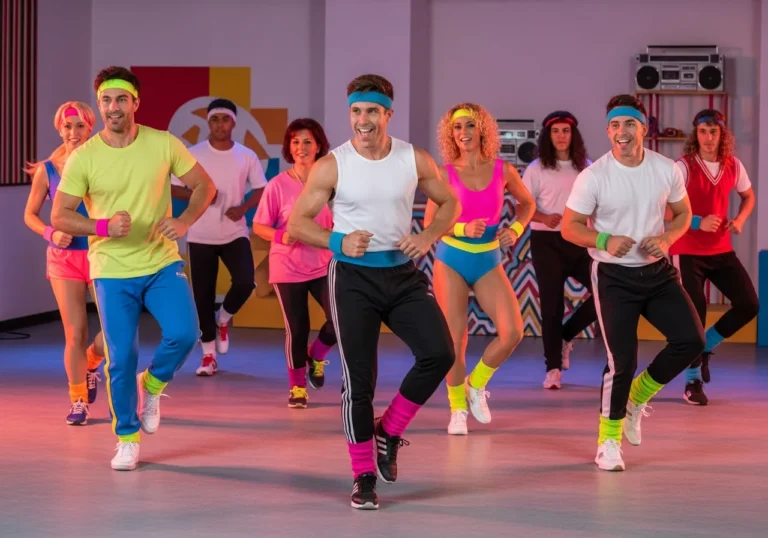
Just last week, a 62-year-old patient named Linda came to my clinic frustrated with her current routine and asked for a more enjoyable way to stay active. She needed regular cardio for blood pressure management, but hated the boredom of treadmills and elliptical machines. That conversation led us to discuss an 80s fitness workout—a fun, high-energy option she remembered loving years ago.
During our visit, Linda shared how much she used to enjoy exercising in her living room with upbeat music and simple routines. I explained that those classic workouts can still provide meaningful cardiovascular benefits today.
As a physician specializing in public health and exercise science, I often see patients stay more consistent when movement feels enjoyable rather than stressful. The 1980s helped transform exercise into an energetic, music-driven experience—and many of those routines remain effective today.
In this comprehensive 2026 guide, we will explore the science, the style, and the undeniable health benefits of retro aerobics. For more on the benefits of exercise, explore our guide.
TL;DR Summary
The 80s fitness workout era was heavily dominated by high-energy aerobics, dance routines, and incredibly colorful fashion. Popularized by iconic, charismatic instructors, these workouts focused heavily on sustained cardio, rhythm, and making exercise genuinely fun.
Today, these 80s-style workouts remain a highly effective, scientifically sound method for improving cardiovascular health, burning calories, and boosting overall mental well-being.
What Was the Popular Workout in the 80s?
The most popular workout in the 80s was undoubtedly aerobics—high-energy, dance-based cardio routines set to fast-paced pop music. These routines were often performed in packed, enthusiastic group classes or at home via revolutionary workout videos.
These sessions heavily emphasized continuous, rhythmic movement designed to elevate the heart rate and keep it in the target cardiovascular zone for 30 to 60 minutes. The focus was on full-body mobility, coordination, and building aerobic endurance through sheer repetition.
Why Was Fitness So Big in the 80s?
The fitness boom of this decade was driven by a perfect storm of technological and cultural shifts. The rise of the VCR allowed people to bring professional fitness classes directly into their living rooms for the very first time.
Furthermore, celebrity fitness culture exploded, making exercise aspirational and glamorous rather than purely functional. Increased public health awareness regarding heart disease also prompted millions of Americans to seek out accessible, engaging ways to improve their daily cardiovascular activity.
Who Was the Famous Aerobics Instructor in the 80s?
Several iconic figures defined this era, but the most famous 80s aerobics instructors included Jane Fonda and Richard Simmons. Jane Fonda’s original 1982 workout video became the highest-selling VHS tape of all time, completely revolutionizing the home fitness industry.
Richard Simmons brought an incredible, inclusive energy to the scene, focusing heavily on making fitness accessible and welcoming for people of all shapes, sizes, and fitness levels. Their combined influence permanently changed how the world approached daily physical activity.
Classic 80s Workout Videos
The legacy of 80s workout videos lives on strongly in modern digital archives. These videos were characterized by their bright studio sets, enthusiastic background exercisers, and relentless positivity.
Routines like the “Jane Fonda Workout” or the “20 Minute Workout” television show set the standard for home cardio. Today, you can easily find remastered versions or modern tribute routines on platforms like YouTube, making it incredibly easy to start stepping right in your living room.
Greatest Hits 80s Workout Playlist
Music was the absolute heartbeat of every successful retro routine. A greatest hits 80s workout playlist relies on tracks with a consistent, driving beat—usually between 120 and 140 beats per minute (BPM).
Iconic tracks like “Physical” by Olivia Newton-John, “Maniac” by Michael Sembello, and “Push It” by Salt-N-Pepa provide the perfect cadence for aerobic stepping. The energetic synth-pop and driving basslines naturally encourage you to move faster and sustain your effort longer.
80s Workout Fashion: Iconic Style Guide

When discussing this era, you simply cannot ignore the profound cultural impact of 80s workout fashion. The clothing was not just about aesthetics; it was a loud, unapologetic celebration of the human body in motion.
The standard 80s workout outfit female enthusiasts wore was built around the iconic, high-cut spandex leotard. These leotards were typically worn over shimmering, opaque tights, allowing for maximum flexibility and a completely unrestricted range of motion during deep stretches and high kicks.
Leg warmers were another absolutely non-negotiable staple of the era. Originally borrowed from classical ballet dancers, these thick, scrunchy knitted tubes served a genuine physiological purpose.
They helped keep the ankle joints and Achilles tendons warm and pliable, significantly reducing the risk of strains during high-impact bouncing and stepping.
Color palettes were equally important. Muted tones were entirely discarded in favor of blinding neon pinks, electric blues, and fluorescent yellows. Sweatbands and terry-cloth headbands were worn not just to keep sweat out of the eyes, but to add a final, vibrant touch to the ensemble.
Today, donning a retro 80s workout outfit can serve as a powerful psychological trigger, instantly putting you in a fun, energetic mindset before you even begin to sweat.
80s Workout for Women vs Men
Historically, there was a noticeable divide in how exercise was marketed during this decade. The standard 80s workouts for women focused overwhelmingly on dance aerobics, flexibility, and group synchronization. For tailored guidance, see our fitness tips for women.
Conversely, the typical 80s workout male routine leaned heavily into early bodybuilding culture and isolated strength training, heavily influenced by action movie stars. However, many men eventually discovered that aerobics provided an unparalleled cardiovascular challenge, leading to more integrated, mixed-gender fitness classes as the decade progressed.
Sample 80s Fitness Workout Routine (Modern Adaptation)
To truly understand the metabolic benefits, you must experience the movements. This sample routine is a medically sound, modern adaptation of a classic aerobics class.
It is designed to elevate your heart rate safely while protecting your lower body joints. Before beginning, clear a safe space in your room and put on a driving, high-energy retro playlist.
The Dynamic Warm-Up (5 Minutes)
Begin with simple, rhythmic marching in place to increase core body temperature and circulate synovial fluid into your joints. Transition into gentle shoulder rolls and slow, controlled arm circles. Gradually increase the height of your marching knees as your breathing begins to deepen.
The Grapevine Step (5 Minutes)
This is the foundational movement of all retro aerobics. Step your right foot to the side, cross your left foot entirely behind your right, step your right foot to the side again, and finally tap your left foot next to your right. Repeat this, moving fluidly to the left. This builds excellent lateral agility and lateral hip strength.
The V-Step and High Knees (10 Minutes)
Visualize a “V” on the floor. Step your right foot wide and forward, then your left foot wide and forward. Step your right foot back to the center, then your left foot back to the center. Alternate this with sets of high-knee marches, aggressively pumping your arms to maximize your cardiovascular output.
The Cool-Down and Stretch (5 Minutes)
Never stop moving abruptly. Slowly reduce your movement back to a gentle, shallow march. Once your heart rate has safely decreased, perform static stretches, holding each for thirty seconds.
Focus specifically on your calves, hamstrings, and chest muscles, breathing deeply to promote nervous system recovery. Prioritize how much sleep do I need for optimal recovery.
Easy Dance Workout for Beginners
If complex choreography causes you stress, an easy dance workout for beginners is the perfect entry point. The primary goal is simply to keep your body moving to the music, regardless of perfect technique. For more guidance, explore our fitness tips for beginners.
Focus on basic movements like the “step-touch” (stepping side to side and tapping the foot) and simple bicep curls. By keeping the movements entirely predictable, beginners can focus on their breathing and heart rate rather than feeling overwhelmed by complex footwork.
Low Impact Dance Workout for Seniors
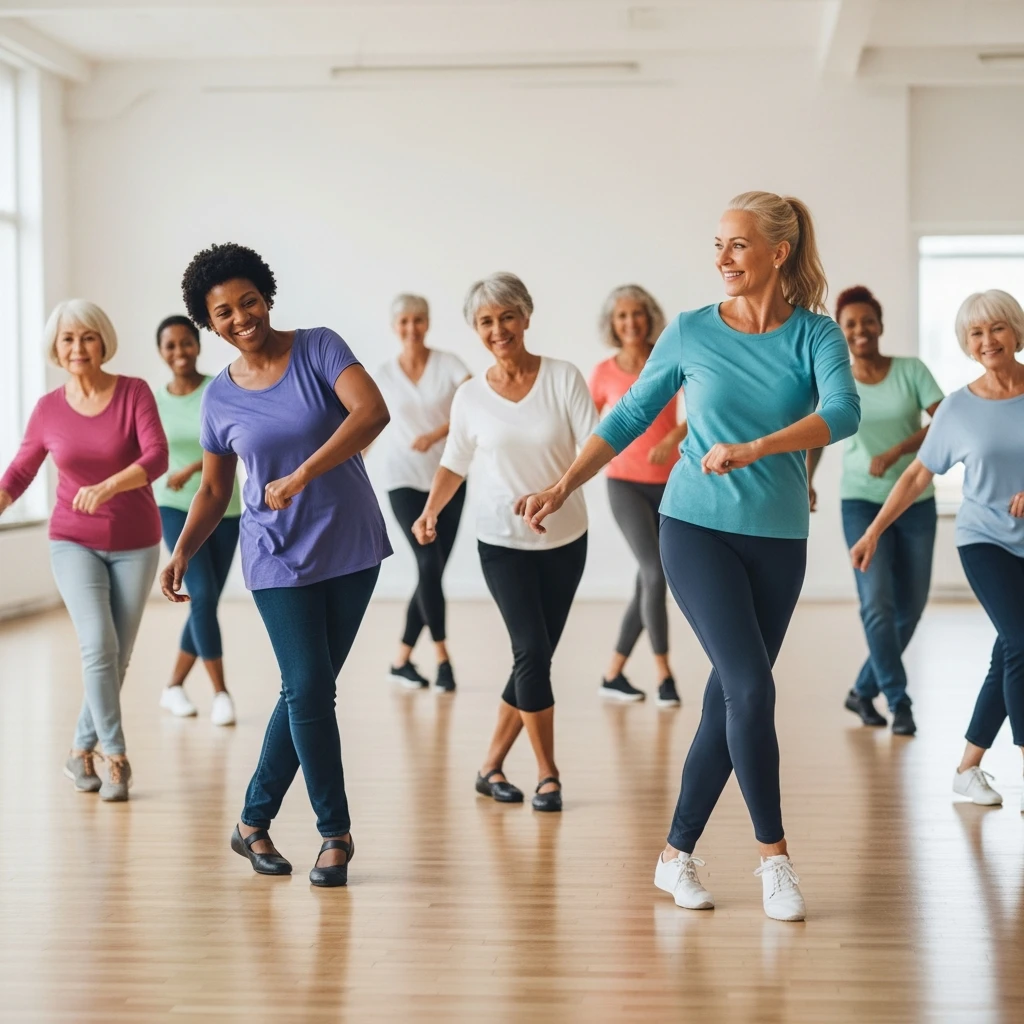
For older adults, a low-impact dance workout for seniors provides immense health benefits without risking joint damage. “Low impact” simply means that one foot always remains safely in contact with the floor.
These routines eliminate all jumping, hopping, and jarring movements. Instead, they focus heavily on smooth, continuous steps, gentle core rotations, and balance-enhancing weight shifts, which are vital for preventing dangerous falls as we age.
What Is the 3-3-3 Rule at the Gym?
While exploring retro and modern fitness, beginners often ask about foundational training concepts. The 3-3-3 rule typically refers to a highly effective beginner protocol: performing exactly 3 exercises, for 3 sets each, exactly 3 times per week.
This minimalist approach prevents nervous system burnout and psychological overwhelm. It allows novices to safely master exercise form and build a consistent routine before introducing complex, high-volume workouts.
Benefits of 80s Fitness Workouts (Evidence-Based)
As a physician, I evaluate exercise based on clinical outcomes. The physiological benefits of 80s fitness workouts are deeply rooted in established exercise science.
Continuous aerobic movement dramatically strengthens the myocardium (heart muscle), drastically lowering resting heart rate and improving systemic circulation. Learn more about what your resting heart rate says about your health.
Furthermore, these workouts are excellent for sustained weight management. A 45-minute energetic aerobics session can burn a significant amount of calories.
Mentally, combining exercise with upbeat music triggers a massive release of endorphins and dopamine, effectively combating clinical anxiety and mild depression. Managing how to deal with stress also supports mental wellness.
Are 80s Workouts Still Effective Today?
A common medical question is whether these older routines hold up against modern HIIT or CrossFit trends. Yes, 80s workouts are absolutely still effective today. The human cardiovascular system has not changed; sustained aerobic exercise is still a biological necessity.
While modern fitness often prioritizes extreme intensity, retro aerobics offers a highly sustainable, moderate-intensity alternative.
It allows you to build a massive aerobic base without subjecting your joints to the severe wear and tear associated with extreme modern fitness trends. For structured options, explore fitness HIIT training or fitness circuit workout.
80s Workout GIFs & Visual Content Strategy
Sometimes, reading a description of an aerobic step is not enough to grasp the biomechanics. Utilizing an 80s workout gif is an excellent way to visually understand the exact timing and coordination required for moves like the “pony” or the “grapevine.”
Seeing a short, endlessly looping clip allows you to safely mimic the movement at your own pace before attempting to integrate it into a fast-paced, full-length video routine.
How to Start an 80s-Style Fitness Routine Today
Starting a new routine should be exciting, not intimidating. First, curate a playlist of music that genuinely makes you want to move. If you do not like synth-pop, choose any upbeat music that keeps your energy high.
Start with just 15 to 20 minutes of simple stepping in your living room, focusing purely on consistency rather than perfection. As your cardiovascular endurance improves over the weeks, gradually increase the duration and complexity of your sessions. For a structured approach, check our free fitness workout plan.
Common Mistakes to Avoid
The biggest mistake beginners make with aerobic exercise is severe overexertion. Do not try to keep up perfectly with an advanced video instructor on your very first day; you will quickly risk a calf strain or shin splints.
Secondly, poor footwear is dangerous. Even if you are working out on a living room carpet, wear proper, supportive cross-training shoes to protect your arches. Finally, never skip your warm-up; cold muscles and ligaments are highly susceptible to acute tearing during rapid, dance-based movements.
Frequently Asked Questions
Are 80s aerobic workouts effective for long-term weight loss?
Yes, they are highly effective for weight loss because they provide sustained, moderate-intensity cardiovascular exercise that actively burns calories and improves metabolic health over time.
Do I need to purchase expensive equipment for these routines?
No, the vast majority of classic 80s aerobic and dance routines are entirely bodyweight-based, requiring nothing more than a small, clear space in your home and proper footwear.
Can absolute beginners safely perform 80s aerobics?
Yes, beginners can absolutely perform these routines by focusing on low-impact modifications, keeping one foot on the floor at all times, and moving at their own comfortable pace.
How often should I do a retro dance workout each week?
For optimal cardiovascular health, the American College of Sports Medicine recommends engaging in moderate-intensity aerobic exercise for at least 150 minutes per week, broken down into three to five sessions.
Will wearing leg warmers actually prevent exercise injuries?
While not a magical cure, leg warmers do help retain body heat around the ankles and calves, which keeps the connective tissues pliable and slightly reduces the risk of acute strains during dynamic movement.
Conclusion
We have complicated fitness far too much in recent years, turning what should be a celebration of physical health into a stressful, metric-obsessed chore. As I advised my patient Linda, sometimes the most profound medical intervention is simply finding a way to enjoy sweating again.
The 80s fitness workout era perfectly captured the sheer joy of movement, combining vibrant energy with medically sound cardiovascular principles.
By dusting off these classic routines, putting on a neon sweatband, and embracing the music, you can profoundly improve your heart health while genuinely having a great time. For more on best exercise for heart health, read our expert guide.
Step to the beat, listen to your body’s limits, and keep moving forward. Start your journey with how to start a healthy lifestyle today.
Medical References & Further Reading:
- ACSM. Aerobic Exercise Guidelines. acsm.org
- CDC. Physical Activity Basics. cdc.gov/physicalactivity
- WHO. Cardiovascular Exercise. who.int/physical-activity
- Harvard Health. Fitness Culture History. health.harvard.edu
- NIH. Music & Exercise Performance. nih.gov
- Sleep Foundation. Recovery & Stretching. sleepfoundation.org
- Mayo Clinic. Low-Impact Exercise. mayoclinic.org
- American Heart Association. Heart Health & Aerobics. heart.org
- British Journal of Sports Medicine. Endorphins & Exercise. bjsm.bmj.com
- Journal of Strength & Conditioning. Retro Training Efficacy. jsc-journal.com
Related Posts
MORE from Author
Read More As a physician specializing in exercise science and public health, I regularly consult patients who feel completely lost in the…
 Just last week, a 34-year-old patient named Clara sat in my clinic, feeling entirely overwhelmed by the modern fitness industry.…
 Hello, I am Dr. Kenji Sato, MD, specializing in sports medicine and performance optimization. In my sports clinic, I constantly…
- In my clinical practice as a physician focused on exercise science, I often tell patients that mastering fitness bench workouts…