Can Sleep Apnea Cause Headaches? Morning Pain & Relief
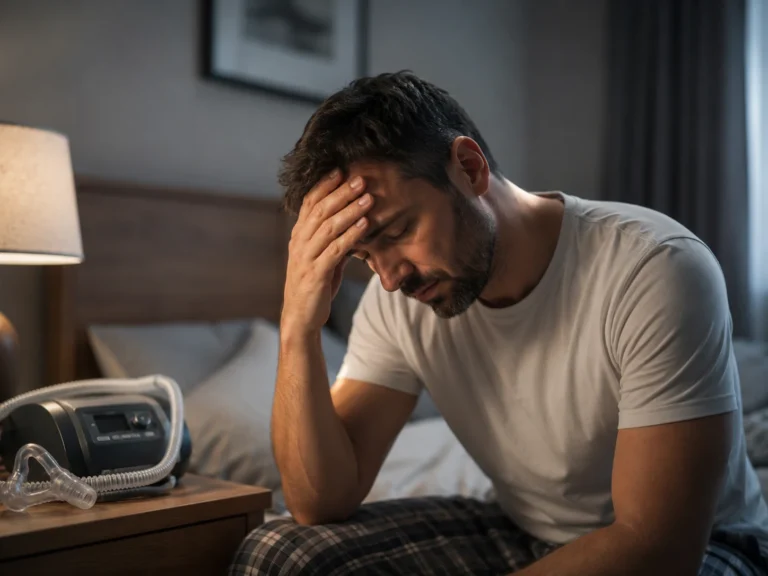
When patients visit my clinic complaining of waking up exhausted and in pain, one of the first questions they ask is, can sleep apnea cause headaches? As Dr. Julian Thorne, a specialist in sleep medicine, I hear this specific complaint almost every day.
Waking up with a throbbing head is more than just a bad start to your morning; it is a clinical red flag indicating that your brain is being starved of oxygen overnight. Learn more about sleep apnea basics here.
In sleep medicine clinics, morning headaches are considered one of the primary hallmark symptoms of sleep-disordered breathing. I recently treated a patient who had spent years seeing neurologists for daily head pain, completely unaware that his airway was collapsing dozens of times an hour while he slept. Understanding how REM sleep affects breathing helps explain this pattern.
The core issue comes down to a dangerous imbalance of oxygen and carbon dioxide in your bloodstream during sleep. When your breathing repeatedly stops, your brain triggers a stress response that drastically alters the blood vessels in your head. This physiological cascade is similar to what occurs during blood pressure spikes during cardiac events.
In this comprehensive guide, we will explore exactly how this common sleep disorder triggers varying types of head pain. We will break down why these headaches occur, how they feel, and the most effective medical treatments to finally wake up pain-free. For broader context on other sleep disorders and their symptoms, see our related guide.
Can Sleep Apnea Cause Headaches?
From a clinical perspective, can obstructive sleep apnea cause headaches? Absolutely. The medical mechanism behind this is rooted in severe nocturnal breathing interruptions. When the soft tissues in the back of your throat collapse, your airway is completely blocked, stopping the flow of oxygen to your lungs. This process directly relates to how deep sleep quality impacts oxygenation.
This sudden halt in breathing leads to oxygen desaturation, meaning the oxygen levels in your blood plummet. Simultaneously, because you cannot exhale, toxic carbon dioxide (CO₂) begins to build up rapidly in your bloodstream. This CO₂ retention has a profound effect on the blood vessels in your brain.
To compensate for the lack of oxygen, the blood vessels dilate (widen) to allow more blood flow. This sudden, forceful expansion of blood vessels creates intense pressure inside your skull, leading to what doctors call a hypoxia-driven vascular headache. Research from the American Academy of Sleep Medicine confirms this vascular mechanism.
What Does a Sleep Apnea Headache Feel Like?
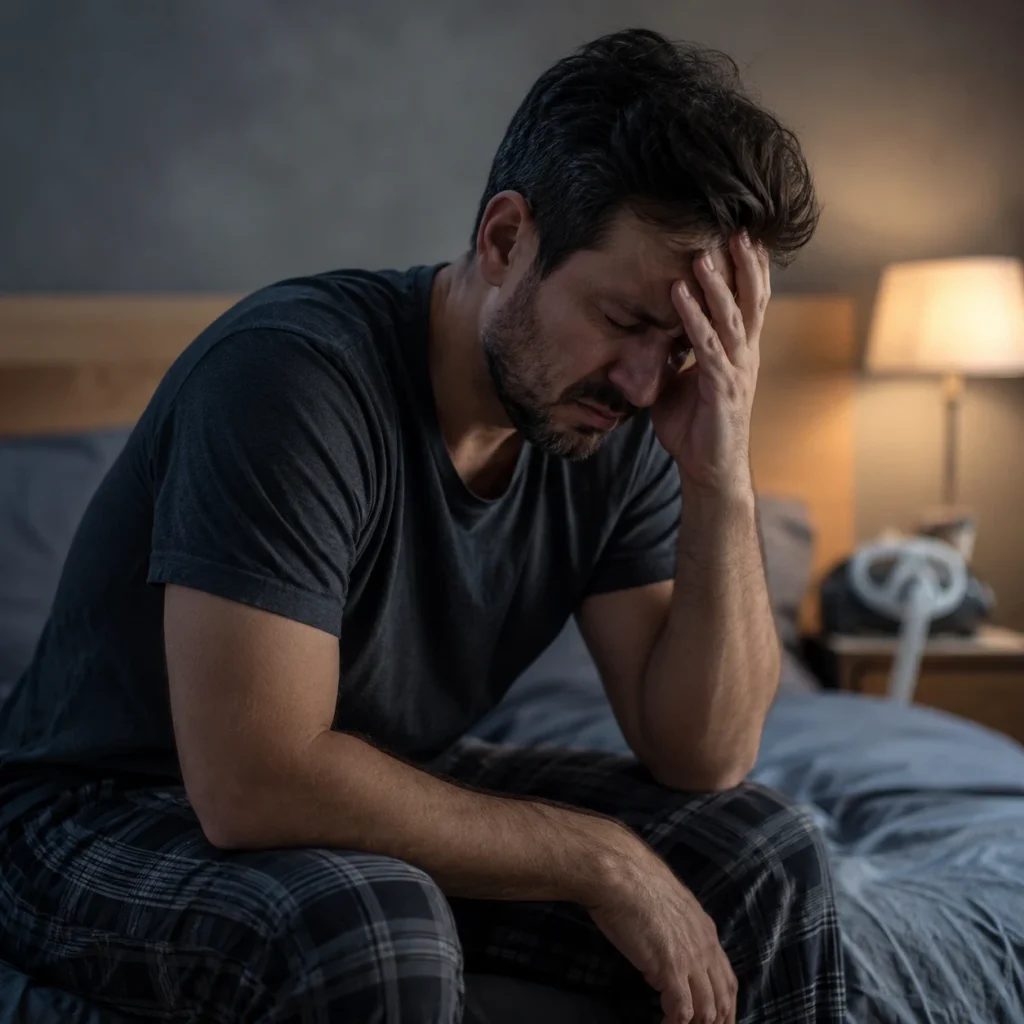
Patients frequently ask, “What does a sleep apnea headache feel like, and how is it different from a normal tension headache?” A classic sleep apnea headache location is usually bilateral, meaning it affects both sides of the head equally.
Instead of a sharp, stabbing pain, patients typically describe a dull, persistent, and heavy pressure. This pressure is most commonly felt right behind the eyes, across the forehead, or gripping the temples. Many of my patients describe it as waking up with a heavy “foggy head” sensation, similar to a severe hangover, even if they have not consumed alcohol.
Notably, this specific type of pain is usually at its absolute worst the moment you open your eyes and gradually lessens as the day progresses. For comparison, fatigue-related headaches from mood disorders often present differently.
Can Sleep Apnea Cause Morning Headaches?
The strongest clinical association we see is with morning symptoms. Can sleep apnea cause headaches in the morning? Yes, morning headache apnea is one of the most reliable diagnostic indicators we look for during an initial consultation. So, can a sleep apnea headache be a morning headache exclusively? Often, yes.
This is due to the intense CO₂ buildup that occurs specifically overnight. During the deepest stages of sleep, particularly REM sleep, your muscles are most relaxed, making airway collapse much more severe and prolonged. This REM sleep disruption means your brain experiences the most intense oxygen drops right before you wake up.
Fortunately, because this pain is vascular and driven by trapped CO₂, the symptom typically improves within a few hours of waking once you begin breathing normally and oxygenating your blood. Understanding how sleep duration affects morning symptoms provides additional context.
Can Sleep Apnea Cause Headaches All Day?
While morning pain is standard, can sleep apnea cause headaches all day? In cases of untreated severe OSA, the pain can unfortunately linger. Can sleep apnea cause headaches that last all day? Yes, but the nature of the pain often shifts. When you suffer from severe sleep fragmentation, you develop profound, chronic daytime fatigue.
This extreme exhaustion causes the muscles in your neck and scalp to tighten, transitioning a morning vascular headache into a persistent, all-day tension headache. Furthermore, this all-day pain is often exacerbated by overlapping lifestyle factors.
Patients with severe sleep apnea often suffer from nighttime sweating and heavy mouth breathing, leading to intense morning dehydration, which fuels all-day head pain. Staying hydrated is critical; see our guide on recognizing dehydration symptoms for practical tips.
Can Sleep Apnea Cause Headaches During the Day?
Beyond waking up in pain, can sleep apnea cause headaches during the day? Yes, the physiological toll of poor sleep quality accumulates as the hours pass. One major factor is rebound hypoxia effects. Your brain has spent the entire night in a state of high stress, and your neurological system remains highly sensitive and inflamed throughout the afternoon.
Additionally, we frequently observe a caffeine dependence cycle. Exhausted sleep apnea patients consume massive amounts of coffee to stay awake. By mid-afternoon, as the caffeine wears off, they experience severe withdrawal headaches on top of their sleep deprivation. Managing stimulant intake is part of effective stress and energy management.
Can Sleep Apnea Cause Nighttime Headaches?
Though less commonly discussed, can sleep apnea cause headaches at night? Yes, some patients are actually jolted awake in the middle of the night by intense head pain. During an extreme apnea episode, the physical struggle to pull air through a closed throat causes massive spikes in blood pressure.
These episodes trigger sudden intracranial pressure changes, resulting in acute, throbbing pain that wakes the patient. This sleep fragmentation pain response is a direct signal from the brain that it is in distress.
While clinically observed less frequently than morning headaches, nighttime head pain requires immediate medical evaluation to rule out severe cardiovascular strain. For context on nighttime sweating and sleep disruptions, see our related article.
Can Sleep Apnea Cause Neck Pain and Tension Headaches?
The physical struggle to breathe has profound musculoskeletal effects. Can sleep apnea cause headaches and neck pain? Absolutely. The connection lies in how your body subconsciously attempts to open your airway. When you cannot breathe through your nose, you rely on mouth breathing.
To keep the mouth open and the airway as clear as possible, patients often adopt highly unnatural sleeping postures, tilting their heads severely backward. This sleeping posture compensation leads to intense muscle tension from the airway effort.
The cervical strain during repeated nocturnal arousals leaves the neck muscles stiff, inflamed, and painful, easily triggering severe tension headaches that radiate up the back of the skull. Proper sleep positioning is discussed in our guide on healthy sleep practices.
Can Sleep Apnea Cause Headaches and Dizziness?
The combination of neurological and cardiovascular stress leads to other alarming symptoms. Can sleep apnea cause headaches and dizziness? Yes, these two symptoms frequently present together in sleep clinics. Severe oxygen deprivation overnight leads to intense morning brain fog and cognitive impairment.
When the brain is starved of oxygen, the vestibular system—which controls your balance—can become temporarily inflamed or dysfunctional. These vestibular effects of hypoxia result in morning imbalance symptoms. Patients often report feeling lightheaded, unsteady on their feet, or experiencing a spinning sensation immediately after getting out of bed.
For more on how heart rate variability affects dizziness, consult our cardiovascular health resource.
Can Sleep Apnea Cause Migraine Headaches?
For patients with a history of severe headaches, the question arises: can sleep apnea cause migraine headaches? While sleep apnea is rarely the sole root cause of migraine disease, it is a massive trigger. Migraines caused by sleep apnea are a result of severe neurological irritation.
Sleep fragmentation significantly lowers your pain threshold, increasing your overall migraine sensitivity and making attacks much more frequent. Furthermore, the sudden oxygen desaturation and subsequent blood vessel dilation alter serotonin levels in the brain.
These rapid serotonin and vascular changes are exactly the type of physiological stress that triggers a full-blown migraine episode in susceptible individuals. The Mayo Clinic details migraine triggers extensively.
Can Sleep Apnea Cause Severe Headaches?
Patients often underestimate the severity of the pain. Can sleep apnea cause severe headaches? In cases of untreated, severe OSA, the headaches can be debilitating and mimic serious neurological conditions. The untreated severe OSA risk is largely tied to how low the patient’s blood oxygen drops.
When polysomnography studies show nocturnal oxygen drops below 85%, the resulting vascular swelling in the brain is extreme. Patients often describe these as morning “pressure explosion” headaches.
The pain is so severe that it can cause nausea and sensitivity to light, making it difficult for the patient to function or attend work until the CO₂ clears from their system. Recognizing early warning signs of cardiovascular strain is equally important for holistic health.
Sleep Apnea Headache vs Other Headaches
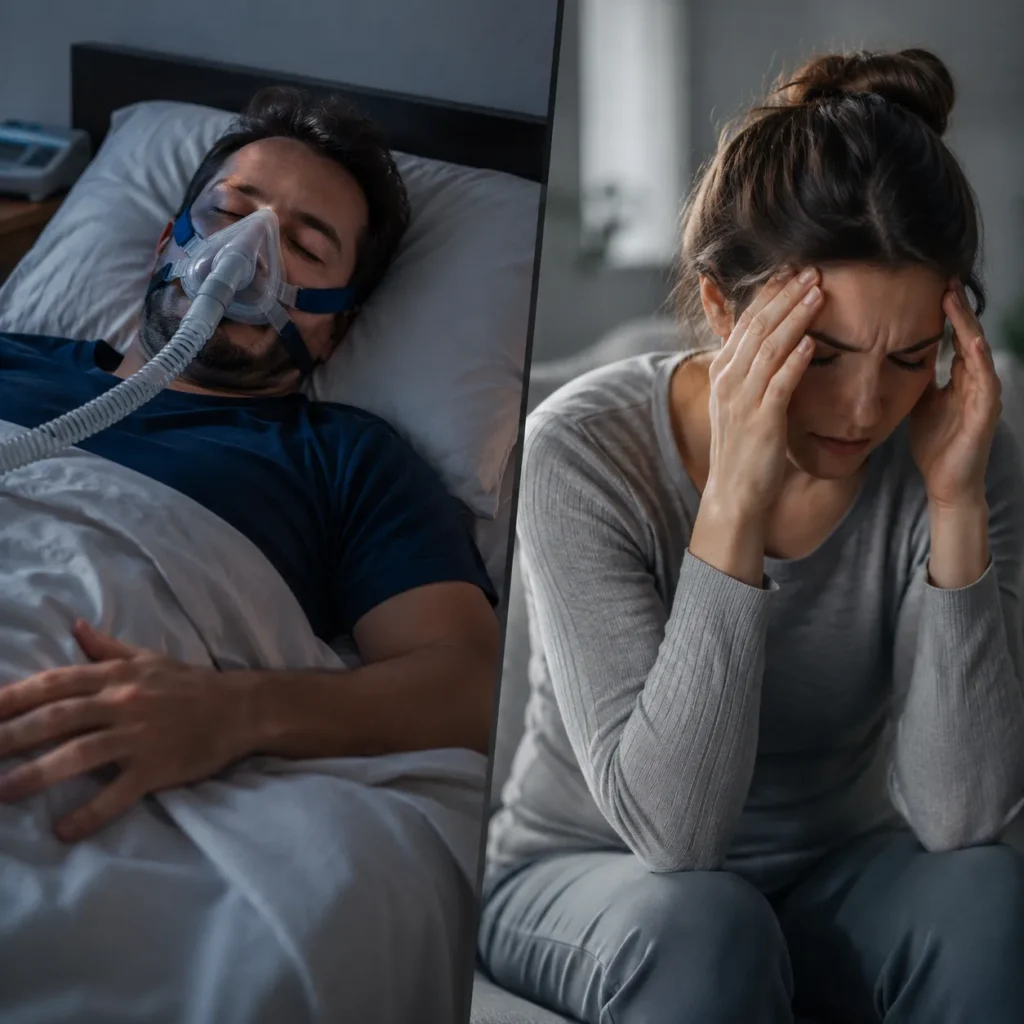
To get the right treatment, it is vital to distinguish between a sleep apnea headache and other common headache disorders. A standard tension headache usually feels like a tight band squeezing the head and is often stress-related, rather than sleep-related.
A true migraine usually affects only one side of the head, features a throbbing pain, and is accompanied by visual auras or severe nausea. Sinus headaches involve deep pressure in the cheekbones and nose, usually accompanied by nasal congestion or a fever.
We also see shallow-breathing headaches. Can shallow breathing cause headaches? Yes, even without a full airway collapse, chronic shallow breathing during sleep fails to expel enough CO₂, leading to the exact same dull, bilateral morning pressure seen in full sleep apnea cases.
For differential diagnosis insights, the Centers for Disease Control and Prevention offers headache classification resources.
Why Sleep Apnea Causes Headaches
To truly understand this condition, we must dive deeply into the exact physiological and biological mechanisms at play. In my practice, I find that when patients understand why their head hurts, they are much more likely to adhere to their treatment plans. The pain is not random; it is a calculated biological response to suffocation.
The primary mechanism is severe oxygen deprivation, clinically known as hypoxia. When your airway collapses, your lungs cannot extract oxygen from the air. Your blood oxygen saturation, which should remain above 95%, can rapidly plummet into the 80s or even 70s.
The brain, which consumes a massive amount of the body’s oxygen, goes into a state of cellular panic, triggering inflammatory pathways that result in severe pain signaling. The second core mechanism is toxic carbon dioxide retention. Breathing is a two-way street; you must inhale oxygen and exhale CO₂. During an apnea event, that exhaust gas is trapped inside your lungs and forced back into your bloodstream.
High levels of CO₂ are potent vasodilators. This means it chemically forces the blood vessels in your brain to expand massively, increasing intracranial pressure and causing that characteristic throbbing, heavy sensation behind the eyes.
The third factor is the sheer trauma of sleep fragmentation. Polysomnography studies show that a patient with severe OSA might stop breathing and micro-awaken 30 to 60 times an hour. This means the brain never enters the deep, restorative stages of sleep required to clear out neurological toxins.
This constant “fight or flight” arousal floods the nervous system with adrenaline, leaving the brain hyper-sensitized to pain. The National Heart, Lung, and Blood Institute provides detailed pathophysiology explanations.
Sleep Apnea Headache Treatment
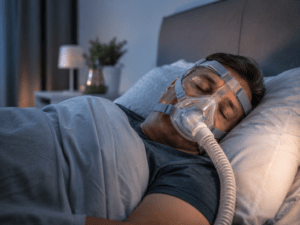
Fortunately, because the root cause is mechanical, sleep apnea headache treatment is highly effective. The goal is to physically open the airway, stabilize blood oxygen levels, and prevent the nightly buildup of CO₂. The gold standard for how to get rid of apnea headaches is Continuous Positive Airway Pressure (CPAP) therapy.
By using a machine to blow a steady stream of air into the throat, the airway remains stented open all night. Most patients report a dramatic CPAP therapy improvement timeline, with morning headaches vanishing within the first week of compliant use.
Secondary treatments focus on overall lifestyle and sleep hygiene. Aggressive hydration upon waking helps flush lingering CO₂ and metabolic waste. Weight loss support is also critical, as losing even 10% of body weight can significantly reduce the fatty tissue compressing the throat.
Finally, positional therapy—such as wearing a special bumper belt to prevent sleeping on your back—can drastically reduce the severity of apneic events and subsequent headaches. For broader wellness strategies, see our guide on exercise benefits for overall health.
Frequently Asked Questions
Is sleep apnea a confirmed cause of morning vascular headaches?
Yes, sleep apnea is a leading cause of morning vascular headaches. The repetitive cessation of breathing causes oxygen levels to drop and toxic carbon dioxide to build up, forcing the blood vessels in the brain to painfully expand. Clinical studies from the National Sleep Foundation support this association.
How does a sleep apnea headache typically feel?
A sleep apnea headache typically presents as a dull, heavy, and persistent pressure on both sides of the head. The pain is usually concentrated across the forehead, temples, or directly behind the eyes and lacks the sharp, stabbing nature of a migraine. The Cleveland Clinic describes headache characteristics in detail.
Why are morning headaches most common with sleep apnea?
Morning is the most common time to experience these headaches because airway collapse is most severe during deep REM sleep, which occurs heavily in the early morning hours. The trapped carbon dioxide peaks right before you wake up. Understanding REM sleep requirements helps explain this timing.
Can sleep apnea cause dizziness and neck pain alongside headaches?
Yes, the severe oxygen deprivation during the night causes morning brain fog and vestibular imbalance, leading to dizziness. Furthermore, the physical struggle to breathe causes intense muscle spasms in the jaw and cervical spine, resulting in chronic neck pain. For more on how stress manifests physically, see our mental wellness guide.
Can sleep apnea headaches trigger nausea or migraine symptoms?
While standard sleep apnea headaches usually do not cause severe nausea, the profound sleep fragmentation can trigger intense migraines in susceptible individuals. If a sleep apnea episode triggers a true migraine, severe nausea and light sensitivity can occur. The Harvard Health Publishing discusses headache red flags.
Conclusion
Waking up with a throbbing headache should never be accepted as a normal part of life. When your body sends you a pain signal the moment you open your eyes, it is desperately trying to warn you about a nocturnal crisis. Can sleep apnea cause headaches?
The clinical evidence proves that the lack of oxygen and the toxic buildup of carbon dioxide directly assault your neurological system every single night. If you are suffering from chronic morning head pain, heavy snoring, and relentless daytime fatigue, it is time to seek professional medical help.
By undergoing a formal sleep study and committing to therapies like CPAP, you can protect your brain from oxygen starvation. Treating your airway is not just about getting a quieter night of rest; it is the ultimate key to waking up refreshed, clear-headed, and entirely pain-free.
For comprehensive cardiovascular prevention strategies, explore our guide on how to prevent heart disease.
Authoritative Resources
- World Health Organization. (2026). Healthy sleep and neurological health fact sheet. https://www.who.int/news-room/fact-sheets/detail/sleep-and-health
- WebMD. (2025). Sleep apnea headaches: Causes and relief strategies. https://www.webmd.com/sleep-disorders/sleep-apnea/sleep-apnea-headaches
- Medical News Today. (2026). How sleep apnea affects brain health and headache risk. https://www.medicalnewstoday.com/articles/sleep-apnea-headaches
- Johns Hopkins Medicine. (2025). Sleep apnea: Diagnosis and treatment overview. https://www.hopkinsmedicine.org/health/conditions-and-diseases/sleep-apnea
- Britannica. (2026). Sleep disorders and neurological impacts. https://www.britannica.com/science/sleep-disorder
- American Heart Association. (2025). Sleep apnea and cardiovascular risk connection. https://www.heart.org/en/health-topics/sleep-disorders/sleep-apnea-and-heart-disease
- Healthline. (2026). Morning headaches: Causes linked to sleep quality. https://www.healthline.com/health/morning-headaches-sleep-apnea
- National Institute of Neurological Disorders and Stroke. (2025). Headache information page. https://www.ninds.nih.gov/health-information/disorders/headache
- Sleep Education (AASM). (2026). Sleep apnea symptoms and treatment options. https://sleepeducation.org/sleep-disorders/sleep-apnea/
- Harvard T.H. Chan School of Public Health. (2025). Sleep and chronic disease prevention. https://www.hsph.harvard.edu/nutritionsource/sleep/
Related Posts



MORE from Author
Read More As a physician specializing in exercise science and public health, I regularly consult patients who feel completely lost in the…
 Just last week, a 34-year-old patient named Clara sat in my clinic, feeling entirely overwhelmed by the modern fitness industry.…


 Hello, I am Dr. Kenji Sato, MD, specializing in sports medicine and performance optimization. In my sports clinic, I constantly…
- In my clinical practice as a physician focused on exercise science, I often tell patients that mastering fitness bench workouts…