
Is Sleep Apnea Genetic? What Research Says About Family Risk and Inherited Causes
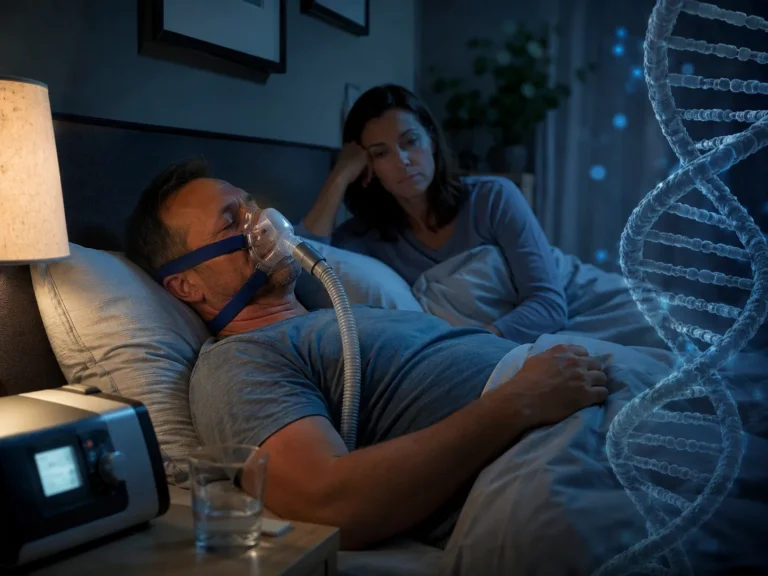
If your parent relies on a CPAP machine every night, the thought has likely crossed your mind: are you more likely to develop it, too Is Sleep Apnea Genetic? It is the most common question I hear from exhausted families.
Patients frequently ask me, is sleep apnea genetic, or is it simply a byproduct of modern lifestyle choices? As Dr. Julian Thorne, a physician focusing on metabolic and sleep health, I can tell you the answer is a complex mix of both.
Sleep apnea is heavily influenced by both genetics and lifestyle factors. Having a family history significantly increases your risk, but it does not mean your diagnosis is set in stone.
Different types of sleep apnea—namely obstructive sleep apnea and central sleep apnea—have completely different genetic links. In this medically reviewed guide, we will explore how genetics actually influence your airway, what symptoms to watch for in your children, and actionable steps for prevention.
For foundational knowledge, explore our guide on what is sleep apnea to better understand this complex disorder.
What Is Sleep Apnea?
Before we look at family trees, we must define the condition itself. Sleep apnea is a serious sleep disorder where a person’s breathing repeatedly stops and starts throughout the night.
There are two primary types:
Obstructive Sleep Apnea (OSA): The most common form, occurring when throat muscles relax and physically block the airway.
Central Sleep Apnea (CSA): A neurological issue where the brain fails to send the proper signals to the muscles that control breathing.
When patients ask what sleep apnea symptoms are, they often think only of loud, disruptive snoring. However, the clinical signs are much broader.
Common symptoms include witnessed pauses in breathing, waking up gasping for air, severe daytime fatigue, and chronic morning headaches. Globally, it is incredibly common; research estimates that nearly 1 billion adults worldwide suffer from mild to severe sleep apnea.
The American Academy of Sleep Medicine provides comprehensive clinical resources on sleep apnea diagnosis for patients and providers.
Is Sleep Apnea Genetic or Hereditary?
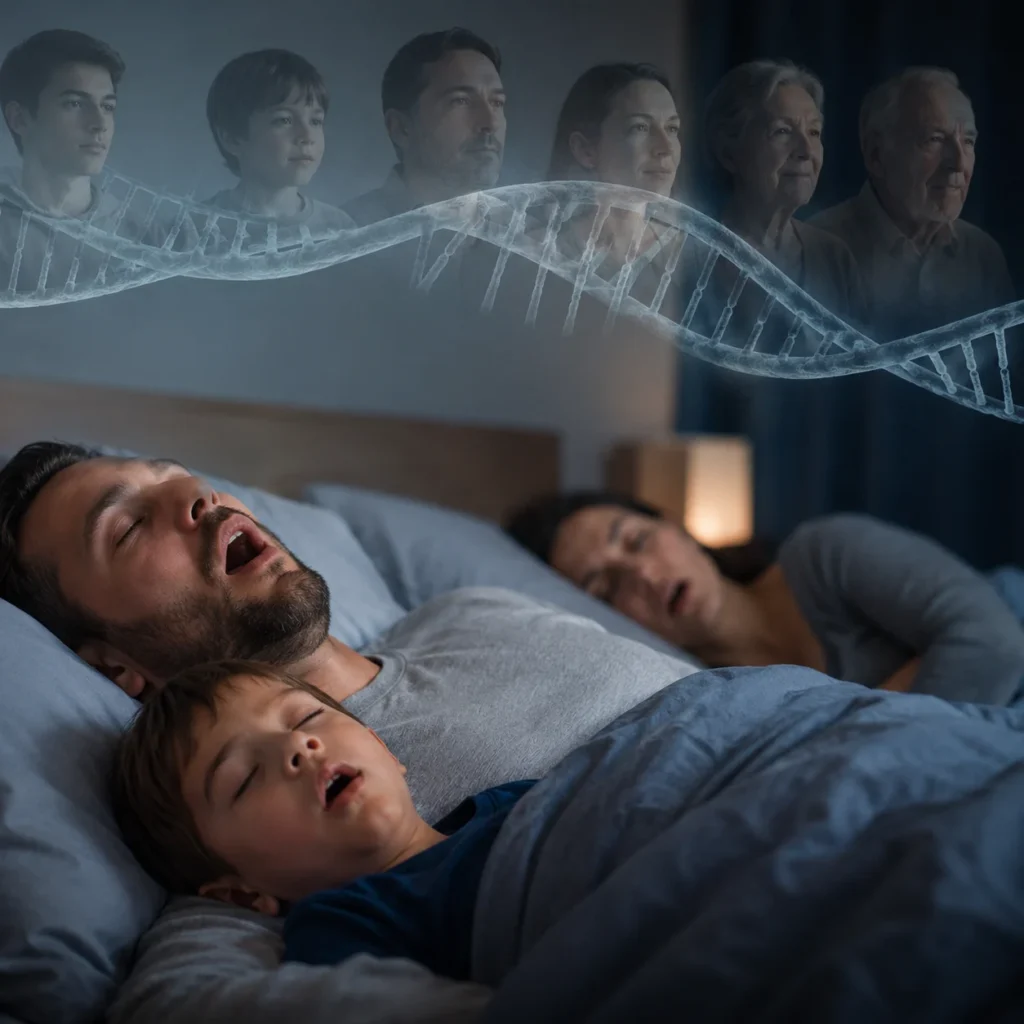
So, is sleep apnea genetic or hereditary? In mainstream medicine, we know that sleep apnea itself is not caused by one single, isolated gene.
You do not inherit “the sleep apnea gene” the way you might inherit blue eyes or cystic fibrosis. Instead, genetics strongly influence the physical and neurological traits that make your airway prone to collapsing.
You can inherit specific craniofacial structures, such as a narrow upper airway, a recessed jaw (retrognathia), or a larger-than-average tongue. Genetics also dictate how and where your body stores fat, particularly around the neck.
Muscle tone is another inherited factor. If your family naturally has weaker pharyngeal (throat) muscles that relax too much during deep sleep, your risk increases. Ultimately, family history is a massive red flag that warrants clinical attention.
Understanding sleep architecture is crucial; learn more about what is REM sleep and its role in respiratory patterns.
Does Sleep Apnea Run in Families?
Yes, sleep apnea absolutely runs in families. In my clinical practice, I frequently see “family clusters” of heavy snoring and daytime exhaustion spanning multiple generations.
Consider a recent patient of mine, David. He came in for chronic fatigue, noting that both his father and grandfather were notorious for “shaking the walls” with their snoring. Upon examination, David shared the exact same physical traits as his father: a thick neck circumference and a naturally narrow soft palate.
We often see shared lifestyle habits overlapping with shared anatomy in these families. A parent and child might both have an obesity tendency combined with enlarged tonsils, creating a perfect storm for airway collapse.
What doctors look for is this combination of genetic anatomical traits and environmental triggers. If your father has it, you are significantly more likely to develop it, particularly if you share his physical build.
The National Institutes of Health confirms that family history is a key risk factor for obstructive sleep apnea development.
Is Obstructive Sleep Apnea Genetic?
When discussing hereditary risks, we must ask: is obstructive sleep apnea genetic? Of all the sleep-breathing disorders, OSA has the strongest and most documented hereditary link.
Studies show that having a first-degree relative with OSA increases your risk by roughly 50%. This is because the root causes of obstructive sleep apnea are almost entirely physical and structural.
For more on sleep quality fundamentals, explore our article on how much deep sleep do you need for optimal health.
Inherited Structural Risks for Obstructive Sleep Apnea
The genetic risk factors for OSA revolve around the architecture of your face and throat. A naturally narrow airway is highly heritable.
Similarly, facial bone structures—like a high arched palate, a small lower jaw, or an overbite—are passed down directly from parents. These structures force the tongue backward during sleep, blocking oxygen flow.
Furthermore, obesity-related genes play a massive role. Genetics can dictate a tendency to gain weight specifically in the neck (a “thick neck”), which puts physical pressure on the windpipe when lying flat.
Mayo Clinic research indicates that anatomical factors significantly contribute to OSA risk across populations.
Environmental and Lifestyle Triggers
While the anatomy is inherited, what causes obstructive sleep apnea to actually manifest is often environmental.
Weight gain, even just 10 or 15 pounds, can turn a mild genetic predisposition into severe OSA. Smoking inflames the upper airway, causing swelling that narrows an already tight throat.
Alcohol and sedatives are also major culprits. They artificially relax the throat muscles far beyond their natural state. Even your preferred sleep position matters; sleeping on your back lets gravity pull inherited heavy tissues directly over your airway.
If you struggle with sleep positioning, our guide on how to sleep offers practical positioning strategies.
Is Central Sleep Apnea Genetic?
The conversation shifts entirely when we ask, is central sleep apnea genetic? Central sleep apnea is primarily a communication error between the brainstem and the respiratory muscles.
CSA is usually linked to secondary health issues rather than direct inheritance. The most common drivers are severe neurological disorders, congestive heart failure, or the chronic use of opioid medications.
While there are some rare neurological or genetic conditions (like congenital central hypoventilation syndrome) that can cause CSA, they are exceptionally uncommon.
To clarify the difference: Central sleep apnea is generally considered much less hereditary than obstructive sleep apnea. It is typically acquired later in life due to other systemic health failures.
Cleveland Clinic explains that CSA often stems from underlying medical conditions rather than inherited traits.
Genetics Comparison: OSA vs CSA
| Type of Sleep Apnea | Genetic Link | Main Underlying Cause |
|---|---|---|
| Obstructive Sleep Apnea (OSA) | Stronger | Physical airway blockage & inherited anatomy |
| Central Sleep Apnea (CSA) | Weaker | Brain signaling failures & secondary diseases |
Is Sleep Apnea a Genetic Disorder?
It is important to use precise medical terminology here. Is sleep apnea a genetic disorder? In clinical terms, no, it is not classified as a classic genetic disease.
A true genetic disorder, like sickle cell anemia, is caused by a specific mutation in a single gene. Sleep apnea is considered a multifactorial condition.
This means it requires a combination of multiple genetic predispositions interacting with environmental factors to develop. You inherit the vulnerability to the disease, but not necessarily the disease itself.
Therefore, having a family history gives you a genetic predisposition, but managing your weight, avoiding alcohol before bed, and sleeping on your side can often prevent the condition from ever taking hold.
Harvard Health Publishing notes that multifactorial conditions like sleep apnea respond well to lifestyle interventions.
Is Sleep Apnea Genetic in Babies and Children?
Parents who use CPAP machines often worry about their kids. So, is sleep apnea genetic in babies and young children? Yes, pediatric sleep apnea is heavily influenced by inherited traits.
The most common cause of sleep apnea in children is adenotonsillar hypertrophy—simply put, abnormally large tonsils and adenoids. The size of these lymphoid tissues is often a hereditary trait.
Furthermore, craniofacial anatomy inherited from parents can cause breathing struggles from birth. Prematurity is another risk factor, as the brain’s respiratory control centers may not be fully developed, leading to infant central sleep apnea.
For parents concerned about sleep patterns, our resource on how many hours of sleep do women need provides age-appropriate guidance.
Rare Genetic Syndromes in Children
Certain inherited genetic syndromes drastically increase the risk of pediatric sleep apnea.
Children with Down syndrome, for example, often have lower muscle tone and a relatively large tongue, making OSA highly prevalent. Pierre Robin sequence, a congenital condition, involves a very small jaw that pushes the tongue backward.
Clinical Tip for Parents: Snoring in adults is common, but regular, loud snoring in a toddler or child is never normal. If your child snores, pauses breathing, or sleeps in unusual positions with their neck hyperextended, seek an evaluation from a pediatric sleep specialist immediately.
The CDC emphasizes that early identification of sleep disorders in children supports healthy development.
What Is the Cause of Sleep Apnea?
Despite all the genetic variables, patients still want to know: What is the number 1 cause of sleep apnea? For the vast majority of the global population, the primary cause is mechanical airway obstruction during sleep driven by excess body weight.
Adipose (fat) tissue deposited around the neck physically compresses the upper airway. When the throat muscles naturally relax during REM sleep, this extra weight causes the airway to collapse completely.
However, it is crucial to remember that conditions that cause sleep apnea are diverse. Nasal obstruction from a deviated septum, chronic allergies, and the use of nighttime sedatives all heavily contribute to this mechanical collapse.
Understanding related sleep phenomena can be helpful; read about what causes sleep paralysis for broader sleep health context.
Who Is Most at Risk for Sleep Apnea?
When assessing risks for obstructive sleep apnea, doctors look at several demographic and physical markers. Can anyone get sleep apnea? Yes, but specific groups carry a much higher burden.
The highest risk demographic includes overweight men over the age of 40. However, postmenopausal women also face a massive spike in risk, as the loss of protective hormones like estrogen and progesterone leads to decreased airway muscle tone.
Having a large neck circumference—typically greater than 17 inches for men and 16 inches for women—is a major clinical red flag.
WebMD provides a comprehensive sleep apnea risk assessment tool for personal evaluation.
The “Thin Person” Myth
There is a dangerous myth that only overweight individuals suffer from this condition. This is where E-E-A-T (Experience, Expertise, Authoritativeness, Trustworthiness) becomes vital.
In clinical practice, we see many perfectly thin, fit individuals diagnosed with severe OSA. For these patients, the root cause is almost entirely genetic craniofacial anatomy—such as a recessed jaw or an abnormally narrow airway—proving that you cannot out-diet a structural genetic trait.
If sleep quality concerns you, explore our guide on is 6 hours of sleep enough for optimal functioning.
Problems and Health Risks Sleep Apnea Can Cause

Is sleep apnea dangerous? Untreated, it is one of the most insidious threats to your long-term health. The constant drops in oxygen trigger a “fight or flight” response in your nervous system all night long.
The problems sleep apnea can cause start with your cardiovascular system. It is a leading driver of treatment-resistant high blood pressure and significantly increases the risk of heart disease, atrial fibrillation, and stroke.
It also wreaks havoc on your metabolism. The chronic stress of oxygen deprivation increases insulin resistance, making it a massive risk factor for type 2 diabetes.
Mentally, the severe sleep fragmentation leads to clinical depression, severe memory issues, and a terrifyingly high risk of fatal car accidents due to daytime microsleeps. Untreated sleep apnea demonstrably shortens your lifespan.
The American Heart Association warns that sleep apnea significantly impacts cardiovascular health and requires prompt management.
Is Sleep Apnea Curable?
A diagnosis often brings panic, followed by the question, “Is sleep apnea curable?” I always explain this honestly to my patients: while there is no magic pill, some cases can be effectively “cured,” while others are highly manageable.
If your OSA is entirely driven by obesity, significant weight loss (such as through bariatric surgery or profound lifestyle changes) can completely reverse the condition.
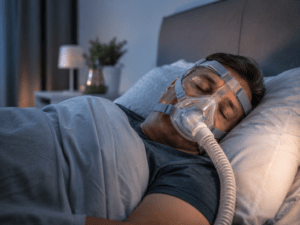
For genetic or anatomical causes, CPAP (Continuous Positive Airway Pressure) therapy remains the gold standard. It acts as a pneumatic splint, keeping the airway open with air pressure, though it is a treatment, not a cure.
Custom oral appliances made by specialized dentists can pull the jaw forward, resolving mild to moderate cases. In specific anatomical situations, surgeries like Maxillomandibular Advancement (MMA) can permanently restructure the jaw and effectively cure the disorder. Avoid online trends promising overnight cures; rely on clinical treatments.
For supplemental support strategies, see our article on does magnesium help you sleep as part of a holistic approach.
Frequently Asked Questions
Is sleep apnea hereditary or genetic?
It is both. Sleep apnea is a multifactorial condition, meaning you inherit genetic traits (like jaw structure, narrow airways, and body fat distribution) that make you highly predisposed to developing the disorder.
Environmental factors then interact with these inherited vulnerabilities to determine whether the condition manifests clinically. Managing modifiable risks remains essential regardless of genetic background.
Will I get sleep apnea if my parent has it?
Having a parent with sleep apnea increases your risk by roughly 50%, especially if you share their physical build. However, it is not guaranteed; managing your weight and avoiding sedatives can help prevent it.
Regular sleep health monitoring and early intervention can significantly reduce the likelihood of developing severe symptoms even with a strong family history.
Can thin people get sleep apnea?
Yes, absolutely. Thin individuals frequently develop severe obstructive sleep apnea due to inherited craniofacial structures, such as a small, recessed lower jaw or naturally enlarged tonsils that block the airway.
This underscores why anatomical assessment by a sleep specialist is crucial for accurate diagnosis regardless of body weight or BMI classification.
Is central sleep apnea inherited?
Central sleep apnea is generally not inherited. It is typically a secondary condition caused by other severe health issues, such as heart failure, neurological damage, or the use of opioid pain medications.
Unlike OSA, CSA rarely runs in families unless specific rare neurological syndromes are present, making family history less predictive for this subtype.
Can babies inherit sleep apnea?
Yes, babies and children can inherit sleep apnea. They often inherit the genetic tendency for enlarged tonsils and adenoids, or specific facial bone structures, which are the leading causes of pediatric airway obstruction.
Early pediatric sleep evaluation is recommended if there is a strong family history of sleep-disordered breathing or observable symptoms like snoring or breathing pauses.
What is core sleep and how does it relate to apnea?
Core sleep refers to the essential deep and REM sleep stages critical for physical restoration and cognitive function. Sleep apnea fragments these stages, preventing the body from achieving restorative core sleep.
Learn more about what is core sleep and why protecting these stages matters for overall health.
Conclusion
To summarize, sleep apnea often has powerful hereditary influences. While you do not inherit a specific disease gene, you do inherit the physical airway anatomy and metabolic tendencies that make airway collapse highly likely.
Obstructive sleep apnea has a much stronger genetic link than central sleep apnea. However, your lifestyle choices—particularly regarding weight management, alcohol consumption, and sleep position—play a massive role in whether those genetic traits turn into a clinical diagnosis.
Early diagnosis reduces severe cardiovascular complications. If you suspect your family history is catching up with your sleep quality, reach out to a sleep specialist today to protect your long-term health.
For personalized sleep optimization strategies, explore our resource on which magnesium is best for sleep as part of a comprehensive wellness plan.
Authoritative References
- World Health Organization. (2026). Sleep and health fact sheet. https://www.who.int/news-room/fact-sheets/detail/sleep-and-health
- National Heart, Lung, and Blood Institute. Sleep apnea overview. https://www.nhlbi.nih.gov/health/sleep-apnea
- American Academy of Sleep Medicine. Sleep apnea clinical resources. https://sleepeducation.org/sleep-disorder/sleep-apnea/
- Mayo Clinic. Obstructive sleep apnea. https://www.mayoclinic.org/diseases-conditions/obstructive-sleep-apnea/symptoms-causes/syc-20352090
- Cleveland Clinic. Central sleep apnea. https://my.clevelandclinic.org/health/diseases/17145-central-sleep-apnea
- Harvard Health Publishing. Disrupted sleep and sleep apnea. https://www.health.harvard.edu/topics/sleep-apnea
- Centers for Disease Control and Prevention. Sleep and sleep disorders. https://www.cdc.gov/sleep/index.html
- WebMD. Sleep apnea risk factors. https://www.webmd.com/sleep-disorders/sleep-apnea/sleep-apnea-risk-factors
- American Heart Association. Sleep apnea and cardiovascular disease. https://www.heart.org/en/health-topics/sleep-disorders/sleep-apnea-and-heart-disease
- National Sleep Foundation. Sleep apnea overview. https://www.sleepfoundation.org/sleep-apnea
Related Posts



MORE from Author
Read More As a physician specializing in exercise science and public health, I regularly consult patients who feel completely lost in the…
 Just last week, a 34-year-old patient named Clara sat in my clinic, feeling entirely overwhelmed by the modern fitness industry.…


 Hello, I am Dr. Kenji Sato, MD, specializing in sports medicine and performance optimization. In my sports clinic, I constantly…
- In my clinical practice as a physician focused on exercise science, I often tell patients that mastering fitness bench workouts…