Plank Fitness Exercise: Proper Form, Benefits, and Best Home Workout Routine
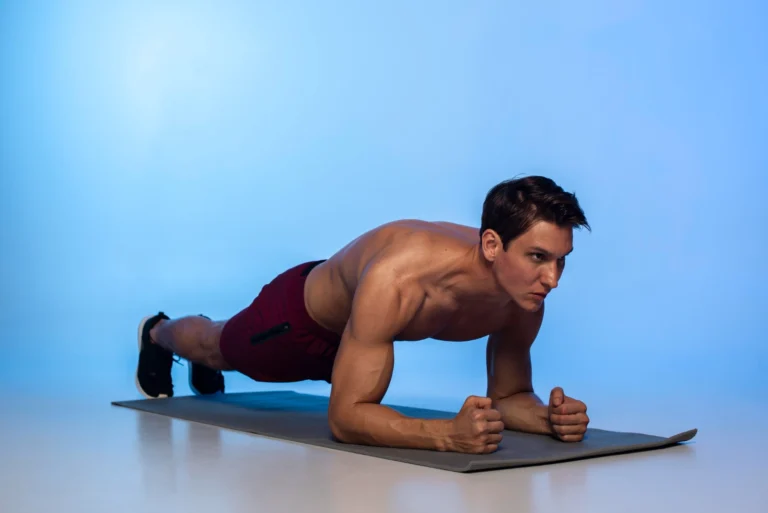
Welcome to your comprehensive, medically backed guide on the ultimate core stabilization movement. If you want to build a resilient, pain-free body, mastering the plank fitness exercise is absolutely non-negotiable. As a sports medicine physician, I prescribe this foundational movement to nearly all of my clinical patients.
Just last month, a 42-year-old mother of two named Jessica visited my clinic complaining of chronic, nagging lower back pain.
She assumed her spine was severely damaged, but my clinical evaluation revealed profound weakness in her deep abdominal muscles. Her lack of core stability was forcing her lower back to overcompensate during daily tasks.
I immediately guided Jessica away from dangerous crunches and introduced a strictly monitored daily plank routine. Within six weeks of practicing proper isometric core engagement, her chronic back pain entirely resolved.
She built a functional “muscular corset” around her spine, proving the incredible, restorative power of this simple exercise.
Key Takeaways
Ultimately, the isometric plank is an undeniable powerhouse for building functional core strength and joint stability. By forcing your body to resist gravity as a single, rigid unit, you train your muscles exactly how they function in real life.
Always remember that proper, strict biomechanical form is completely critical to your success. A perfectly straight alignment protects your spine and maximizes tension. Finally, check your ego at the door; start incredibly slow and progress your holding times gradually.
What Is a Plank Fitness Exercise?
What exactly is this highly celebrated movement? Fundamentally, a plank fitness exercise is an isometric core exercise where you hold your body in a rigid, straight line. You actively support your entire body weight on your forearms or hands and your toes.
Unlike dynamic exercises like sit-ups that bend your spine, an isometric movement requires you to hold a static position under tension. This forces your deep stabilizing muscles to fire continuously to resist gravity. It is the absolute safest way to train your midsection without causing harmful spinal friction.
While many assume it only works the stomach, it is actually a demanding full-body exercise. A properly executed plank engages your transverse abdominis, rectus abdominis, obliques, shoulders, chest, and even your leg muscles.
What Fitness Component Is Plank Exercise?
Patients frequently ask me what specific fitness component the plank exercise actually targets. From a clinical exercise science perspective, the plank primarily builds profound core strength. It forces the deep muscles surrounding your trunk to tightly brace and stabilize your spine.
Furthermore, it is a quintessential test of muscular endurance. Because you are holding a static position for an extended time, your muscle fibers must sustain prolonged, agonizing tension. This continuous effort drastically improves the stamina of your stabilizing muscles.
Finally, this movement heavily challenges your systemic stability and balance. By actively resisting gravity and preventing your hips from dropping, you train your central nervous system to maintain strict bodily control.
Plank Exercise Benefits
Why should you dedicate your valuable time to this static hold? The clinical plank exercise benefits are vast and heavily supported by modern biomechanical research. First and foremost, it builds profound, highly functional core strength.
By targeting the transverse abdominis—the deepest layer of your core—planks essentially build an internal weightlifting belt. This deep strength directly enhances your daily posture. When your core is strong, it naturally pulls your shoulders back and keeps your spine stacked perfectly upright.
Additionally, these core improvements aggressively support your lower back health. By teaching your abdominal muscles to bear the load of your torso, you remove dangerous pressure from your fragile lumbar discs. Furthermore, regular practice may significantly improve your overall physical balance and joint stability.
Benefits of Doing Planks Every Day
Is it safe and effective to perform this movement daily? The benefits of doing planks every day are substantial, provided you prioritize perfect form. Daily practice leads to rapid, gradual strength improvement across your entire midsection.
Furthermore, daily repetition builds incredible posture awareness. When you consistently train your body to hold a perfectly straight line, your brain subconsciously applies this posture to your daily walking and sitting.
You will also experience vastly increased muscular endurance. A hold that feels excruciating for 20 seconds on Monday will eventually feel entirely manageable for a full minute within a few short weeks of daily consistency.
How to Do Plank Correctly (Step-by-Step)
Proper execution is absolutely critical; terrible form will only lead to shoulder and back injuries. Learning exactly how to do the plank correctly ensures you maximize muscle activation while protecting your delicate joints. Here is my clinical, step-by-step checklist.
First, you must establish the correct foundational base by placing your elbows exactly where they belong. The core rule of the plank fitness exercise, elbows under shoulders alignment, ensures your skeletal structure supports your weight. If your elbows are too far forward, you will severely strain your rotator cuffs.
Second, you must achieve a plank fitness exercise, a straight body posture. Imagine a perfectly straight steel rod running from the back of your head, down your spine, and through your heels. You must actively squeeze your glutes and quadriceps to lock your legs into this rigid position.
Third, you must strictly maintain a front plank fitness exercise with a neutral spine. Do not look up at the ceiling, as this aggressively compresses your cervical vertebrae. Keep your gaze focused on the floor directly between your hands to keep your neck perfectly aligned with your back.
Forearm Plank Fitness Exercise
The forearm plank fitness exercise is the standard, widely recognized variation that most beginners should master first. Because you are resting on your forearms, you naturally have a larger base of support compared to resting on your hands.
To execute this, get down onto the forearm plank fitness exercise floor position. Rest your weight entirely on your forearms and toes. Your forearms should be parallel to one another, firmly pressed into the exercise mat.
The absolute key here is maintaining the forearm plank fitness exercise, straight body. You must violently pull your belly button up toward your spine. This intense internal bracing prevents gravity from dragging your heavy stomach toward the floor.
Forearm Plank Demonstration Guide
If you are struggling to visualize this movement, a proper forearm plank fitness exercise demonstration guide is vital. When viewing a lifter from a strict side view alignment, you should not see any dramatic curves or dips.
The shoulder positioning is critical in this demonstration. Your upper back should be slightly rounded, actively pushing the floor away from you. If your shoulder blades are pinching together, you are collapsing into your joints rather than using your muscles.
High Plank Fitness Exercise
Once you master the forearm variation, you can transition to the high plank fitness exercise. This variation is physically identical to the starting position of a standard push-up. You support your body weight entirely on your fully extended arms and your toes.
This specific variation engages your shoulders and triceps significantly more than the forearm version. Because your arms are locked out, your upper body must work aggressively to stabilize your torso. It is a phenomenal way to build arm endurance while simultaneously working the core.
Front Plank Fitness Exercise Form
Whether you choose the forearm or high variation, your front plank fitness exercise form must remain impeccable. The most crucial element is continuously checking your neutral spine.
If you feel any sharp, pinching pain in your lower back, your form has structurally failed. You must immediately drop to your knees, reset your tight core, and try again. It is clinically better to hold a perfect plank for ten seconds than a terrible one for a minute.
Side Plank Fitness Exercise
To build a truly functional midsection, you cannot ignore your lateral core muscles. The side plank fitness exercise is completely mandatory for total abdominal development. This movement shifts your entire body weight onto one single arm and the side of your foot.
The primary benefit of this challenging variation is how intensely it targets your obliques. These are the muscles running down the sides of your stomach. A strong side plank fitness exercise obliques contraction protects your spine from serious twisting injuries during athletic movements.
Side Plank Demonstration
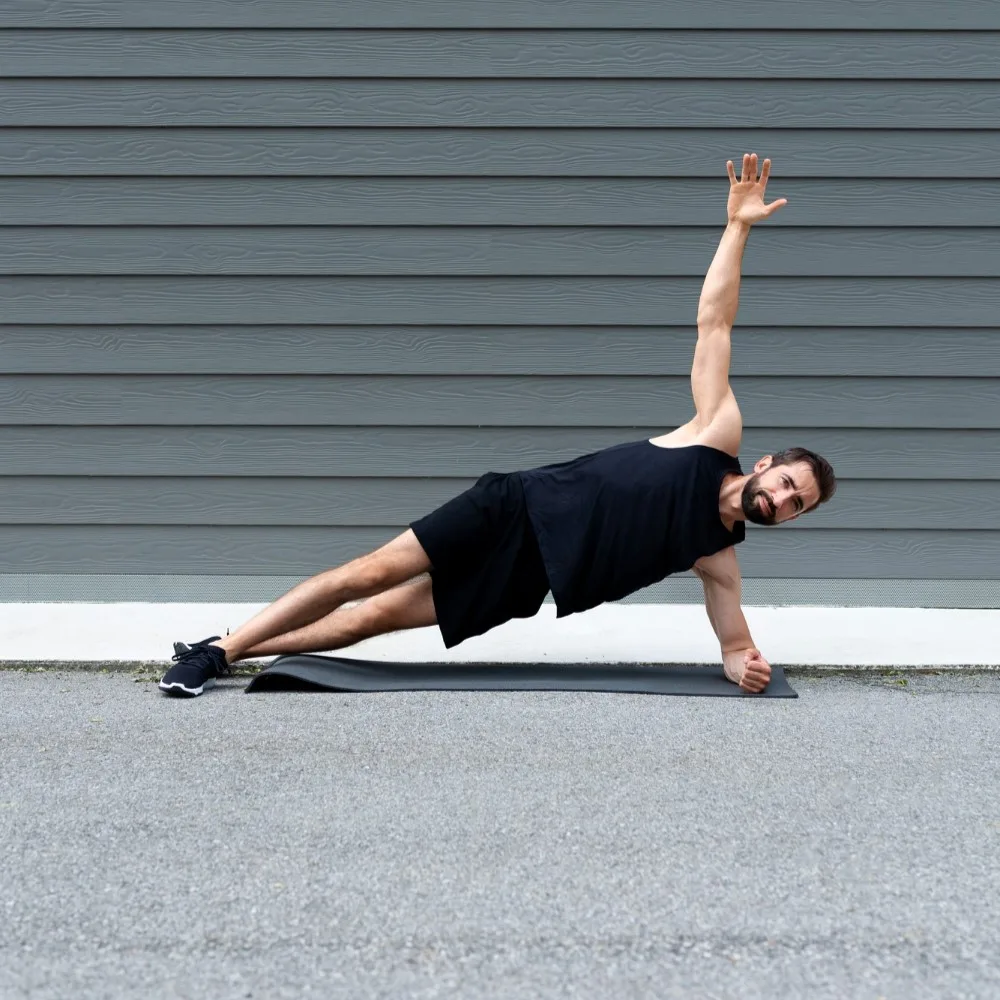
To properly understand the mechanics, a clear side plank fitness exercise demonstration is clinically necessary. Start by lying entirely on your side with your legs completely straight. Prop your upper body up, resting directly on your forearm with your elbow strictly under your shoulder.
When observing a woman performing side plank fitness exercise in my clinic, I actively look for perfect body alignment. Your hips, knees, and shoulders must form one continuous, rigid line. You must aggressively drive your bottom hip away from the floor.
If your hips begin to sink toward the exercise mat, your obliques have reached complete muscular failure. Immediately stop the exercise, drop to the floor, and allow your core to recover. Pushing past this failure point places extreme shearing force on your lumbar spine.
Plank Fitness Exercise Demonstration
A comprehensive plank fitness exercise demonstration must clearly highlight proper visual cues. Whether you are performing the movement on your hands or forearms, your body must remain tightly locked. Observing a person holding a plank fitness exercise correctly looks almost effortless due to total bodily tension.
The most critical visual cue is the absolute flatness of the back. You should theoretically be able to balance a cup of water directly on your lumbar spine without it spilling. Your glutes must be violently squeezed, and your quadriceps must be actively engaged to lock out the knees.
Beginners often fail this visual test by completely relaxing their lower body. The plank is not just a stomach exercise; it requires systemic muscular tension. If your legs are soft and relaxed, your core is forced to bear entirely too much weight.
Common Plank Mistakes
In my sports medicine practice, I see patients completely ruin the benefits of this movement by making dangerous biomechanical errors. The most prevalent mistake is severely sagging hips. This occurs when your transverse abdominis fails, dumping all of your body weight directly into your lower back joints.
Conversely, some patients aggressively raise their hips high into the air, forming a mountain shape. While this takes the dangerous pressure off the lower back, it completely removes the necessary tension from the core muscles. You are essentially cheating the movement by shifting the load to your shoulders.
Finally, extreme neck strain is a constant clinical complaint. Patients naturally try to look up at the clock or completely drop their chins to their chest. You must lock your neck into a perfectly neutral position to avoid irritating your sensitive cervical nerves.
Plank Workout at Home
Are you ready to safely build your core strength away from the crowded gym? A highly structured plank workout at home is completely accessible and requires zero fitness equipment. You only need a soft yoga mat and a standard digital timer.
For a true plank fitness exercise at home, absolute beginners must start slowly. I clinically prescribe a basic routine consisting of 20 to 30 seconds of holding, followed by a full minute of rest. Repeat this cycle for exactly 3 highly focused sets.
Do not rush to hold the position for five straight minutes. Building thick, resilient core muscle requires gradual, steady exposure to tension. Focus entirely on perfect, rigid form during those brief 30-second windows.
Best Plank Workout Routine
If you want to rapidly accelerate your core development, you need the absolute best plank workout routine possible. This advanced plank exercise routine aggressively targets the front, sides, and deep stabilizing layers of your midsection.
First, begin with the standard forearm plank. Hold this rigid position for 45 to 60 seconds to pre-exhaust the anterior core. Second, immediately transition into a right-sided side plank, holding for 30 intense seconds to aggressively fire the obliques.
Third, smoothly roll over and execute a left-sided side plank for another 30 seconds. Finally, finish the agonizing circuit by pressing up into a strict high plank and holding until total muscular failure. Rest for two minutes and repeat the entire sequence.
Plank Exercises for Beginners
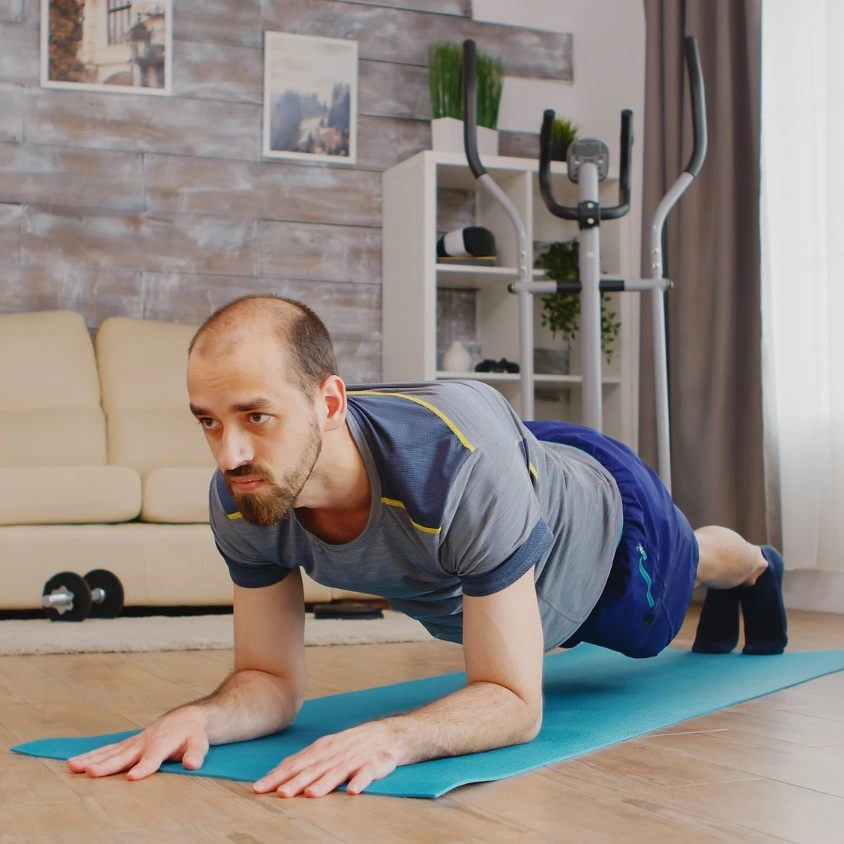
If a standard floor hold is too painful, plank exercises for beginners provide safe, necessary regressions. A plank fitness exercise for beginners should never cause sharp joint pain. The knee plank is my absolute favorite clinical modification for new lifters.
Instead of balancing on your toes, you simply drop your knees directly to the padded mat. You must still maintain a perfectly straight, rigid line from your head down to your knees. This drastically reduces the total body weight your weak core must support.
Alternatively, the standing wall plank is phenomenal for elderly patients or those recovering from severe spinal injuries. Place your forearms flat against a sturdy wall and slowly step your feet backward. The further you step away, the more intense the core engagement becomes.
Plank Exercises for Women
Female anatomy and biomechanics frequently require highly specific training considerations. Plank exercises for women must carefully address core stability, especially during crucial postpartum recovery phases. The immense plank exercise benefits for female patients include naturally tightening the separated abdominal wall.
However, standard planks can sometimes exacerbate a condition called diastasis recti (abdominal separation) if performed incorrectly. Therefore, postpartum-safe modifications are clinically vital. I highly recommend that new mothers begin with elevated wall planks to minimize internal abdominal pressure.
Once the deep core wall heals and strengthens, women can safely progress to strict floor routines. Consistently holding these static positions builds incredibly dense, functional muscle that permanently improves overall female posture and athletic performance.
Plank Exercise Time by Age
Patients frequently ask me if age dictates how long they should hold this grueling position. Clinically, your physical age absolutely influences your starting muscular endurance. Below is a medical guideline outlining appropriate plank exercise time by age goals.
| Age Range | Recommended Goal Time |
| 20–40 Years Old | 30–90 seconds per set |
| 40–60 Years Old | 20–60 seconds per set |
| 60+ Years Old | 10–30 seconds per set |
How Many Minutes a Day Should You Plank?
If you commit to daily practice, how many minutes a day should you plank for optimal results? You absolutely do not need to hold this position for hours. Clinical data suggest that accumulating just 1 to 3 minutes of total planking time daily is highly effective.
You can easily break this total time into smaller, manageable sets. For example, performing three sets of 45 seconds perfectly achieves your daily requirement. Chasing world-record holding times usually results in terrible form and severe back injuries.
Advanced Questions
Diaphragm Strengthening
Do isometric core holds actively strengthen your breathing muscles? Yes, they strengthen the diaphragm indirectly via deep core stabilization. When you violently brace your abdominal wall during a hold, your diaphragm must work significantly harder to pull oxygen into your lungs.
Bone Density Benefits
Can this static exercise improve your skeletal strength? Yes, it may directly contribute to bone health through necessary weight-bearing tension. Supporting your body weight forces your arm and shoulder bones to adapt and slowly grow denser over time.
Safety Considerations
Pelvic Organ Prolapse Modifications
Can you safely perform this movement if you suffer from pelvic organ prolapse? The heavy downward pressure generated by a strict floor plank can severely worsen prolapse symptoms. You must absolutely consult a clinical healthcare provider before attempting floor-based core exercises.
Related Exercise Categories
To build a truly bulletproof body, you must pair core training with other functional movements. Balance exercises naturally complement planking by actively testing the core strength you have built. Standing on one leg forces those same deep stabilizing muscles to fire dynamically.
Furthermore, integrating strict pelvic floor exercises creates a solid foundation for your entire abdominal cavity. A strong pelvic floor acts as the supportive bottom of your core cylinder. Finally, plantar fasciitis exercises keep your feet mobile, ensuring your toes can comfortably grip the floor during long holds.
Weekly Workout Plan Integration
How do you safely fit this movement into your busy schedule? Seamlessly integrating this into your broader workout plan is incredibly simple. You should always combine isometric planks with your standard full-body resistance training.
I clinically recommend performing your heavy, dynamic lifts like squats and deadlifts first. Once your central nervous system has handled the heaviest weights, finish your gym session with dedicated plank circuits. This completely exhausts the core without compromising your heavy barbell lifts.
Action Plan
Are you completely ready to bulletproof your lower back today? Your immediate action plan requires you to strictly practice your form in front of a mirror. Ensure your elbows are stacked securely under your shoulders, and your hips are locked in place.
Start your journey tonight with incredibly short, 20-second holds. Focus entirely on violently squeezing your glutes and bracing your stomach. Consistently increase your holding duration by just five seconds every single week, and watch your physical strength explode.
Frequently Asked Questions
What is the absolute correct plank posture?
The correct clinical posture requires a perfectly straight body alignment from your head to your heels. Your elbows must rest directly under your shoulders, your glutes must be squeezed tightly, and you must maintain a strictly neutral spine.
How long should absolute beginners hold a plank?
Beginners should safely target holding the position for exactly 20 to 30 seconds per set. It is clinically better to perform multiple short, perfect sets rather than struggling through one long, biomechanically dangerous hold.
Are isometric planks truly effective for deep core strength?
Yes, they are arguably the most effective movement available. Because they heavily target the transverse abdominis, they build an internal muscular corset that directly stabilizes your entire skeletal spine.
Can I safely do planks every single day?
Yes, daily practice is highly beneficial if performed with strictly perfect form and adequate deep recovery. If you experience severe muscle soreness or sharp joint pain, you must take a rest day to allow your tissues to heal.
Do planks actively help reduce lower back pain?
Yes, when performed correctly, they are phenomenally effective for back pain reduction. By aggressively strengthening the deep core stabilizing muscles, planks remove dangerous, daily weight-bearing pressure from your fragile lumbar discs.
Conclusion
Building a truly resilient, pain-free body absolutely does not require complicated, expensive machines or hours inside a crowded gym. As a sports medicine physician, I constantly remind my patients that foundational, isometric movements like the plank are the ultimate secret to long-term spinal health.
You must strictly prioritize perfect biomechanical form over your personal fitness ego. Holding a sloppy, sagging plank for five full minutes will only destroy your lower back, but holding a perfectly rigid, braced plank for 30 seconds will completely transform your physical strength.
Stop completely neglecting the deep stabilizing muscles that actively protect your fragile joints every single day. Roll out your fitness mat, aggressively apply these clinical form cues, and commit to your new daily plank routine to build the powerful, bulletproof core you truly deserve.
Authoritative References:
- PMC: Core Muscle Activity during Physical Fitness Exercises
- PMC: Plank Exercise Improves Respiratory Capacity Through Body Composition & Autonomic Changes
- PubMed: Trunk Muscle Activation in Prone Plank Exercises with Different Body Tilts
- PMC: Core Muscle Activation With Foam Rolling and Static Planks
- American College of Sports Medicine (ACSM): 2026 Resistance Training Guidelines
Related Posts
MORE from Author
Read More As a physician specializing in exercise science and public health, I regularly consult patients who feel completely lost in the…
 Just last week, a 34-year-old patient named Clara sat in my clinic, feeling entirely overwhelmed by the modern fitness industry.…
 Hello, I am Dr. Kenji Sato, MD, specializing in sports medicine and performance optimization. In my sports clinic, I constantly…
- In my clinical practice as a physician focused on exercise science, I often tell patients that mastering fitness bench workouts…