
Can Sleep Apnea Cause Weight Gain? The Hidden Metabolism Link

When patients visit my clinic struggling with unexplained physical changes, they often ask, “Can sleep apnea cause weight gain?” As Dr. Julian Thorne, a specialist in sleep medicine and metabolic health, I see this clinical confusion daily.
Patients often assume that their weight is the sole reason for their breathing issues, blaming themselves entirely for their condition. Understanding what sleep apnea is helps clarify this metabolic connection.
However, clinical research and extensive sleep studies show a much more complex, two-way relationship between your airway and your waistline. In my clinical sleep practice, I frequently interview patients who report progressive, frustrating weight gain despite making no major dietary changes.
This highlights a critical reality: untreated obstructive sleep apnea severely disrupts your metabolic function and hormones. The American Academy of Sleep Medicine confirms these metabolic interactions.
It is not just about being tired; it is about how oxygen deprivation alters your body’s chemistry. In this comprehensive medical guide, we will explore the hidden link between sleep-disordered breathing, belly fat, and the vicious cycle of obesity. Learning about how REM sleep affects metabolism provides important context for this discussion.
Does Sleep Apnea Cause Weight Gain Or Is It The Other Way Around?
The relationship between your waistline and your sleep quality is highly bidirectional. People frequently ask, Does sleep apnea cause weight gain, or is sleep apnea caused by obesity? The medical truth is that both statements are correct, creating what we call a vicious cycle.
Obesity significantly increases your risk of airway collapse because excess tissue physically narrows the throat. The Centers for Disease Control and Prevention outlines obesity as a primary OSA risk factor.
However, once you develop sleep apnea, the condition actively worsens your metabolic dysfunction. The nightly struggle for air triggers physiological stress responses that actively promote fat storage, creating a loop that is incredibly difficult to break without medical intervention. Understanding how metabolic disorders develop helps explain this bidirectional relationship.
How Can Sleep Apnea Cause Weight Gain?
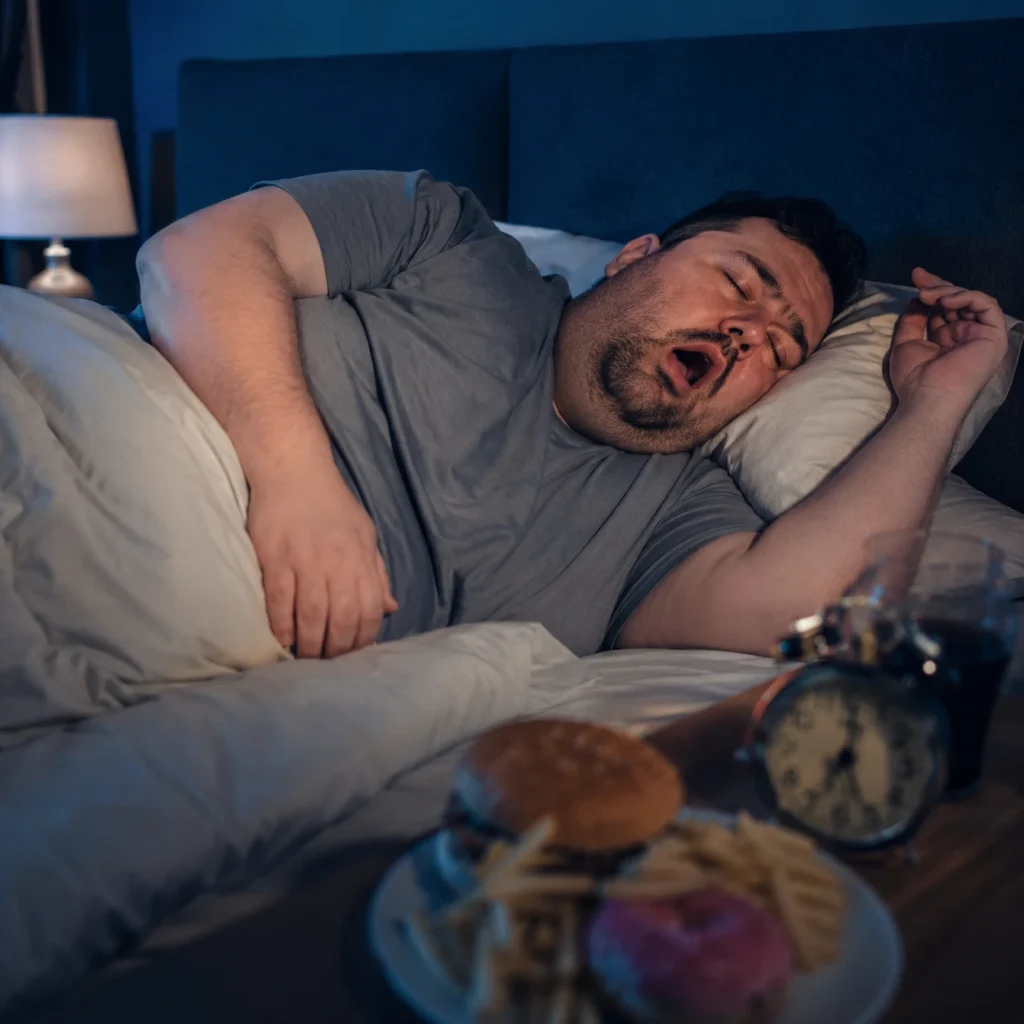
To truly understand how can sleep apnea cause weight gain, we must look at the cellular and hormonal levels. When your breathing repeatedly stops, your body enters a state of severe physiological crisis. This crisis triggers four primary mechanisms that directly contribute to weight gain. The Mayo Clinic details these physiological pathways.
First, we see severe hormonal disruption involving your appetite regulators. Sleep fragmentation causes leptin resistance, meaning your brain ignores the hormone that tells you you are full. Simultaneously, oxygen desaturation causes a massive increase in the ghrelin hormone, which is responsible for driving hunger and cravings for high-calorie, sugary foods.
Your brain literally thinks it is starving because it is exhausted. The National Heart, Lung, and Blood Institute explains hormonal impacts of sleep disruption.
Cortisol Elevation and Stress Responses
The second major mechanism is the chronic elevation of cortisol. Every time your airway collapses, your brain panics and floods your system with adrenaline and cortisol to wake you up. This continuous flood of the stress hormone signals your body to hold onto fat reserves for survival.
Over time, this constant fight-or-flight state completely derails your natural metabolic resting state. For stress management strategies, see our guide on how to deal with stress.
Poor Sleep and Insulin Resistance
The third factor is the development of insulin resistance. Deep, uninterrupted sleep is required for your body to regulate blood sugar efficiently. When sleep-disordered breathing fractures your rest, your cells become less responsive to insulin.
This glucose dysregulation means your body starts storing excess blood sugar as fat, rather than using it for energy. Understanding how blood sugar regulation works reinforces prevention importance.
Severe Fatigue and Sedentary Behavior
Finally, the physical toll of untreated sleep apnea leads to a devastating reduction in daily activity. Extreme daytime fatigue makes exercise feel utterly impossible for many patients. This lack of energy creates a sedentary behavior cycle.
You burn fewer calories throughout the day because you are exhausted, while simultaneously consuming more calories due to hormonal hunger, mathematically guaranteeing weight gain. For fitness guidance, explore our resource on exercise benefits for metabolic health.
Can Sleep Apnea Cause Belly Fat?
Many patients notice that their weight gain is highly localized and ask, can sleep apnea cause belly fat? Yes, there is a distinct clinical connection here. This is primarily driven by the chronic cortisol elevation mentioned earlier.
High cortisol levels specifically direct the body to store fat in the abdominal region, resulting in visceral fat. The Cleveland Clinic reviews visceral fat health risks.
Visceral fat is particularly dangerous because it wraps around your organs and actively secretes inflammatory cytokines. This deep belly fat directly contributes to metabolic syndrome, further worsening both your waistline and your breathing. Understanding cardiovascular symptoms linked to obesity helps recognize these complications early.
Can Sleep Apnea Cause Rapid Weight Gain?
When assessing sudden changes on the scale, patients often wonder, can sleep apnea cause rapid weight gain? While fat accumulation is usually gradual, rapid changes on the scale can occur. In severe OSA cases, sudden weight gain is often actually severe fluid retention rather than pure adipose tissue. The Healthline discusses fluid retention mechanisms.
The intense strain placed on the heart from nightly oxygen drops can lead to mild right-sided heart failure (cor pulmonale). This cardiovascular strain causes the body to retain water, often visible as swelling in the legs and abdomen.
Furthermore, certain medications used to treat secondary issues of sleep apnea, or severe systemic inflammation, can also cause rapid scale fluctuations. For heart health context, see our guide on heart failure common symptoms.
Can Sleep Apnea Cause Weight Gain in Children?
It is a common misconception that this is purely an adult issue. Can sleep apnea cause weight gain in kids? Surprisingly, yes, but the mechanism differs slightly. Pediatric OSA symptoms often present as hyperactivity or behavioral issues rather than simple fatigue.
However, the sleep fragmentation severely disrupts the release of human growth hormone, which is normally secreted during deep sleep. The Medical News Today details pediatric sleep apnea impacts.
This growth hormone disruption, combined with the same appetite dysregulation seen in adults, can lead to abnormal weight gain in children. Treating the airway, often by removing enlarged tonsils, can quickly normalize their growth curve. For child health context, see our guide on common ADHD symptoms which may overlap with sleep issues.
Can Sleep Apnea Cause Weight Loss?
While weight gain is the standard expectation, can sleep apnea cause weight loss? In rare, highly severe cases, it can actually cause the opposite effect. When sleep apnea is profoundly severe, the body spends the entire night fighting a massive cardiovascular battle just to breathe.
This extreme physical exertion burns calories and creates a state of intense stress metabolism imbalance. The reviews severe OSA complications.
Furthermore, advanced fatigue can lead to a complete loss of appetite and subsequent muscle wasting. This type of weight loss is not healthy; it is a sign of a body in extreme medical distress. Recognizing when to seek professional evaluation is critical for severe symptoms.
Does Weight Gain Cause Sleep Apnea?
Looking at the reverse relationship, can having sleep apnea cause weight gain, or can weight gain cause sleep apnea? The anatomical link here is undeniable. As you gain weight, fat deposits accumulate around your neck and throat.
This extra weight physically narrows the upper airway, making it much more susceptible to collapsing when your muscles relax at night. The Britannica explains anatomical risk factors.
Even a modest weight increase can push a patient from mild snoring into severe obstructive sleep apnea. This is why doctors pay close attention to neck circumference measurements during physical exams. For weight management support, see our guide on healthy diet principles.
Sleep Apnea BMI Chart & Obesity Statistics
Medical professionals rely heavily on the sleep apnea bmi chart and obesity statistics to assess patient risk. BMI risk categories directly correlate with the severity of airway collapse. According to clinical data, the prevalence of sleep apnea in obese populations is alarmingly high, with some studies suggesting up to 70% of morbidly obese patients suffer from OSA. The National Sleep Foundation provides prevalence statistics.
While the statistical correlation is incredibly strong, we must avoid overclaiming. Not every overweight person has sleep apnea, and many thin people suffer from the condition due to structural facial abnormalities. Understanding how sleep quality affects health reinforces prevention urgency regardless of weight.
Does Sleep Apnea Make It Harder to Lose Weight?
Patients trying to improve their health frequently hit a wall and ask, does sleep apnea make it harder to lose weight? The clinical answer is a definitive yes. The combination of insulin resistance and hormonal appetite dysregulation makes sticking to a diet biochemically difficult.
Your body actively fights your weight loss efforts to preserve energy. The Harvard Health Publishing reviews sleep-weight loss research.
Additionally, the crippling daytime fatigue leads to incredibly low exercise adherence. It is medically unfair to expect a patient who wakes up exhausted and oxygen-deprived to perform intense daily cardio. For comprehensive wellness strategies, explore our guide on how to maintain a healthy lifestyle.
Can CPAP Cause Weight Gain?
When initiating treatment, some patients express a specific fear: can cpap cause weight gain? This is a persistent myth that requires careful medical explanation.
CPAP therapy itself does not cause fat gain. In fact, it dramatically improves metabolism, insulin sensitivity, and resting heart rate by restoring normal oxygen levels. The Johns Hopkins Medicine details CPAP metabolic benefits.
However, some patients experience slight weight gain initially because their appetite normalizes, and their body is no longer burning massive amounts of calories fighting to breathe all night. Proper dietary adjustments usually correct this minor transition phase easily. Understanding how sleep duration affects metabolism helps set realistic expectations.
Health Complications of Sleep Apnea

The consequences of this condition extend far beyond the scale. Patients often research, “Does sleep apnea cause high blood pressure or does sleep apnea cause headaches?” Hypertension is a direct result of the nightly adrenaline spikes and oxygen desaturation.
Your blood vessels constrict under the stress, remaining tight even during the day, which damages your cardiovascular system. The American Heart Association confirms cardiovascular risk data.
Morning headaches are another classic symptom, caused by a buildup of carbon dioxide in the bloodstream while you stop breathing. Combined with metabolic strain, these complications significantly lower a patient’s overall life expectancy. For headache management tips, see our guide on how to deal with stress.
Is Sleep Apnea Reversible With Weight Loss?
This brings us to a message of hope: is sleep apnea reversible with weight loss, and can sleep apnea be cured? For patients with mild OSA heavily tied to recent weight gain, losing 10-15% of their body weight can sometimes completely reverse the condition.
Removing the fat from the neck allows the airway to remain open. The National Institute of Neurological Disorders and Stroke discusses treatment outcomes.
However, moderate to severe cases may persist even after significant weight loss due to stretched airway tissues or aging. In these instances, a combination of lifestyle changes and ongoing CPAP therapy provides the best outcome. For comprehensive cardiovascular prevention strategies, explore our guide on how to prevent heart disease.
Can Lack of Sleep Cause Weight Gain?
Even without a formal diagnosis of apnea, does lack of sleep cause weight gain? Yes, general sleep deprivation is a major risk factor for obesity. Circadian rhythm disruption alters how your body processes food and stores energy.
When you do not sleep enough, your insulin sensitivity drops immediately, mimicking the early stages of Type 2 diabetes. The World Health Organization confirms global sleep-health connections.
Just a few nights of poor sleep can heavily skew your appetite hormones, making you crave high-carbohydrate, calorie-dense foods. Guarding your sleep is one of the most critical components of any weight management strategy. For sleep hygiene tips, see our guide on healthy sleep practices.
Frequently Asked Questions
Can sleep apnea cause weight gain?
Yes. Untreated sleep apnea disrupts appetite hormones, elevates stress hormones like cortisol, and creates severe daytime fatigue. This combination dramatically lowers your metabolism and drives intense cravings, leading to weight gain. The Centers for Disease Control and Prevention confirms these metabolic impacts.
Can weight gain cause sleep apnea?
Absolutely. Gaining weight increases fat deposits around your neck and upper airway. This extra tissue mechanically compresses your throat, making it highly prone to collapsing while you sleep. Early intervention prevents progression to severe OSA.
Does sleep apnea cause belly fat?
Yes, it strongly contributes to it. The repetitive stress of airway collapse causes your body to chronically release cortisol. Elevated cortisol specifically signals the body to store excess visceral fat around the abdominal organs. The Cleveland Clinic details visceral fat health risks.
Does sleep apnea make it harder to lose weight?
Yes. The condition causes profound insulin resistance and severe fatigue. Because your cells cannot process glucose efficiently and you lack the energy to exercise, losing weight becomes biochemically and physically much harder. Consistent treatment improves metabolic function.
Can CPAP cause weight gain?
No, CPAP therapy does not directly cause weight gain; it actually heals your metabolism. However, because your body stops burning excess calories fighting to breathe all night, some patients need to slightly adjust their caloric intake when starting therapy. The National Sleep Foundation offers CPAP management guidance.
Conclusion
The link between your breathing and your metabolism is undeniable. If you are struggling with unexplained weight gain, endless fatigue, and a frustrating inability to lose belly fat, your diet might not be the problem—your airway might be. Recognizing that sleep apnea actively drives obesity is the first step toward breaking the vicious cycle.
By seeking a proper medical evaluation, participating in a sleep study, and treating the underlying oxygen deprivation, you can finally restore your hormonal balance. Healing your sleep is often the missing key to finally achieving and maintaining your health and weight loss goals.
Authoritative References
- World Health Organization. (2026). Healthy sleep and neurological health fact sheet. https://www.who.int/news-room/fact-sheets/detail/sleep-and-health
- WebMD. (2025). Sleep apnea headaches: Causes and relief strategies. https://www.webmd.com/sleep-disorders/sleep-apnea/sleep-apnea-headaches
- Medical News Today. (2026). How sleep apnea affects brain health and headache risk. https://www.medicalnewstoday.com/articles/sleep-apnea-headaches
- Johns Hopkins Medicine. (2025). Sleep apnea: Diagnosis and treatment overview. https://www.hopkinsmedicine.org/health/conditions-and-diseases/sleep-apnea
- Britannica. (2026). Sleep disorders and neurological impacts. https://www.britannica.com/science/sleep-disorder
- American Heart Association. (2025). Sleep apnea and cardiovascular risk connection. https://www.heart.org/en/health-topics/sleep-disorders/sleep-apnea-and-heart-disease
- Healthline. (2026). Morning headaches: Causes linked to sleep quality. https://www.healthline.com/health/morning-headaches-sleep-apnea
- National Institute of Neurological Disorders and Stroke. (2025). Headache information page. https://www.ninds.nih.gov/health-information/disorders/headache
- Sleep Education (AASM). (2026). Sleep apnea symptoms and treatment options. https://sleepeducation.org/sleep-disorders/sleep-apnea/
- Harvard T.H. Chan School of Public Health. (2025). Sleep and chronic disease prevention. https://www.hsph.harvard.edu/nutritionsource/sleep/
Related Posts





MORE from Author
Read More As a physician specializing in exercise science and public health, I regularly consult patients who feel completely lost in the…
 Just last week, a 34-year-old patient named Clara sat in my clinic, feeling entirely overwhelmed by the modern fitness industry.…


 Hello, I am Dr. Kenji Sato, MD, specializing in sports medicine and performance optimization. In my sports clinic, I constantly…
- In my clinical practice as a physician focused on exercise science, I often tell patients that mastering fitness bench workouts…