Functional Fitness Workouts: The Ultimate Guide for Strength, Mobility & Daily Performance
As a sports medicine physician, I constantly see patients struggling with everyday movements, from lifting groceries to simply getting up from a chair. Incorporating functional fitness workouts into your routine is the most effective way to bridge the gap between gym strength and real-world capability.
Recently, I interviewed a patient in my clinic who completely resolved her chronic lower back pain, not through isolated machine exercises, but by mastering basic functional movements
This comprehensive guide will break down the exact routines, exercises, and scientific principles you need to build a resilient, highly capable body.
What Is Functional Fitness Training?
Functional fitness training focuses on exercises that mimic real-life movements to improve daily performance, strength, and injury prevention. Instead of isolating a single muscle group like a traditional bicep curl, this training style engages multiple muscle groups and joints simultaneously
The primary goal is to prepare your body for the physical demands of daily life, occupational tasks, or athletic endeavors. By training your muscles to work together in multi-planar motions, you develop profound core stability and joint mobility.
This approach is heavily endorsed by exercise science specialists because it directly translates to improved biomechanics
public-pages-files-2025.frontiersin.org. Whether you are picking up a toddler or carrying heavy boxes, functional training ensures your body can handle the load safely. For more on the broader benefits of exercise, check out our detailed resource.
What Are the 7 Movements of Functional Fitness?
Human biomechanics can be boiled down to a core set of foundational movement patterns. Understanding what the 7 movements of functional fitness are is crucial for building a balanced, full-body routine.
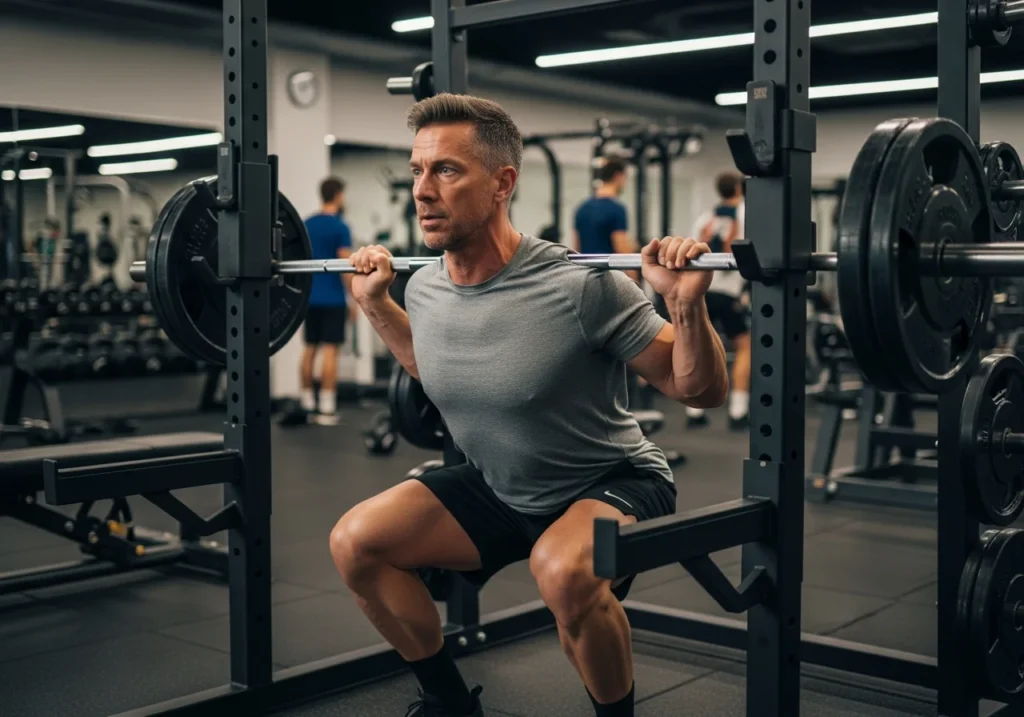
First is the Squat, a movement pattern we use every time we sit down or stand up. It heavily engages the quadriceps, hamstrings, and glutes while requiring significant core stabilization.
Second is the Hinge, primarily seen in movements like bending over to tie your shoes. This pattern targets the posterior chain, heavily utilizing the hamstrings and lower back to safely move loads.
Third is the Push, which involves moving an object away from your body. This can be horizontal, like pushing a heavy door, or vertical, like placing an object on a high shelf.
Fourth is the Pull, the opposite of the push, where you draw an object toward your torso. This is essential for back strength and posture, mimicking actions like opening a heavy refrigerator.
Fifth is the Lunge, an asymmetrical movement vital for balance and unilateral strength. We use this pattern constantly when climbing stairs or stepping over obstacles.
Sixth is Rotation, which involves twisting the torso. This is critical for spinal health and athletic power, utilized in everything from swinging a golf club to looking over your shoulder.
Finally, there is Gait, which encompasses walking, jogging, or sprinting. Proper gait mechanics are the absolute foundation of human locomotion and cardiovascular health
Examples of Functional Fitness Workouts
When patients ask me what examples of functional fitness workouts are, I point to routines that combine the seven fundamental movement patterns. You do not need complex machinery; you need exercises that demand total-body coordination.
One classic example is a workout built around the Deadlift. The deadlift is the ultimate hip-hinge exercise, teaching you how to safely lift heavy objects from the floor using your legs and glutes rather than your fragile lumbar spine
I always ensure my patients master the deadlift to prevent future back injuries.
Another prime example is the Farmer’s Carry. This exercise simply involves holding heavy weights in each hand and walking for a set distance. It is incredibly effective for building grip strength, core stability, and shoulder endurance, directly mimicking the act of carrying heavy grocery bags.
Kettlebell Swings are also a staple in the functional fitness exercises list. This dynamic, explosive movement heavily targets the posterior chain while providing a massive cardiovascular benefit. It teaches the body how to generate power from the hips, which is vital for athletic performance.
Push-ups and Pull-ups represent the foundational push and pull movements. Because they are closed-kinetic-chain exercises (where your hands are fixed and your body moves), they force your core and stabilizing muscles to work overtime compared to standard bench presses or pulldowns
Finally, different kinds of functional exercises include dynamic, multi-planar movements like the Medicine Ball Slam or the Woodchopper. These exercises force the body to transfer power from the ground, through the core, and out through the upper body, building incredible athletic rotation.
3 Best Functional Fitness Exercises
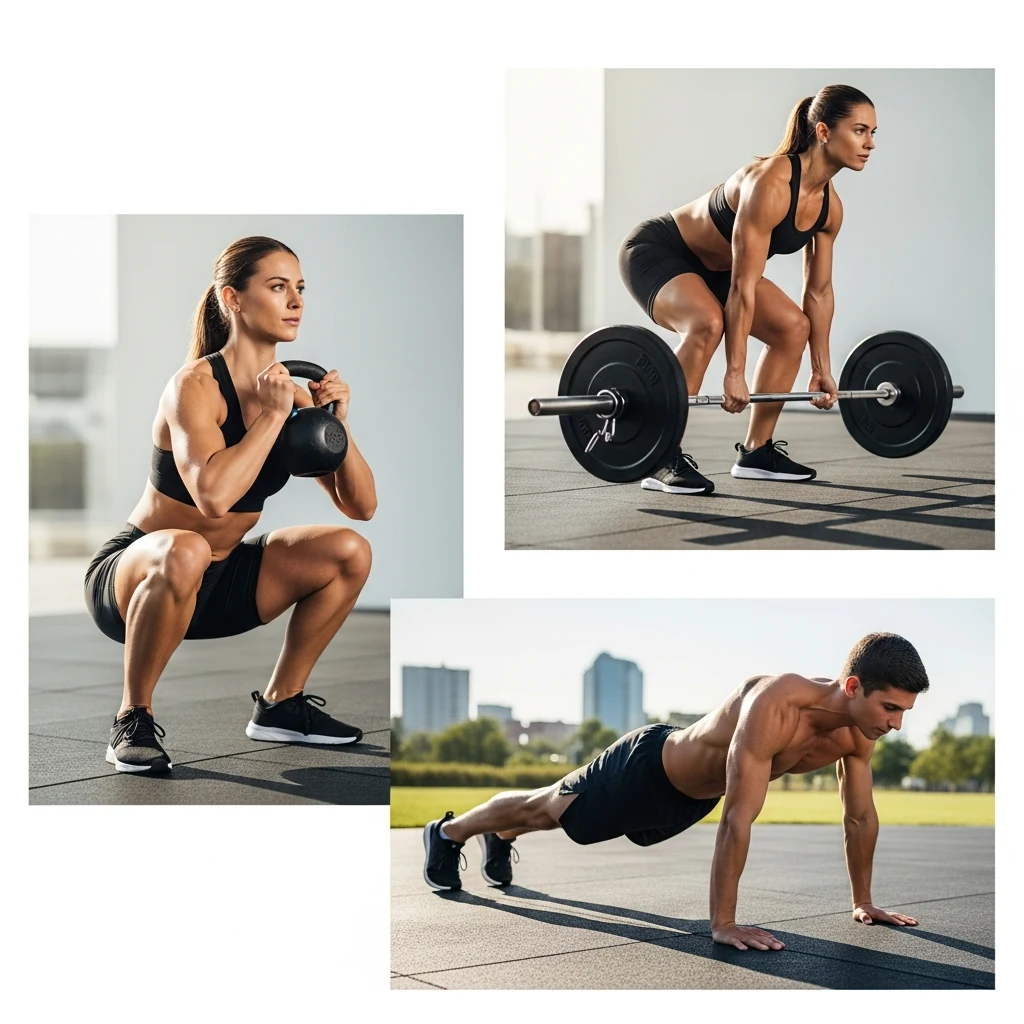
If you are short on time and need to know the 3 best functional fitness exercises for maximum return on investment, focus on these foundational pillars.
First are Squats (bodyweight, goblet, or barbell). They are the undisputed king of lower-body functional strength, building the quadriceps and glutes while requiring immense core bracing.
Second are Deadlifts. As discussed, mastering the hip hinge is non-negotiable for spinal longevity and posterior chain power. It is the most practical lifting movement a human can learn.
Third are Push-ups. A strictly performed push-up is essentially a moving plank. It develops upper body pushing strength while actively teaching your abdominal muscles how to stabilize your spine under tension. For more bodyweight fitness exercises you can do anywhere, explore our guide.
Functional Fitness Exercises List
To build your own routines, you need a comprehensive functional fitness exercises list categorized by movement focus. By selecting one or two from each category, you can create a perfectly balanced session.
Lower Body Focus: Bodyweight squats, goblet squats, Bulgarian split squats, reverse lunges, walking lunges, and step-ups. These movements are essential for leg strength, knee joint stability, and overall balance.
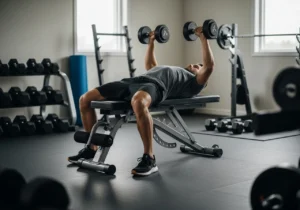
Upper Body Focus: Standard push-ups, overhead presses, pull-ups, inverted rows, and dumbbell floor presses. These exercises fortify the shoulder girdle, build the chest and back, and improve upper-body pushing and pulling mechanics.
Core and Rotation: Planks, bird-dogs, dead bugs, Russian twists, medicine ball rotational throws, and Pallof presses. Unlike traditional crunches, these exercises train the core to resist unwanted movement and stabilize the spine dynamically.
Full-Body and Power: Kettlebell swings, thrusters (squat to overhead press), burpees, farmer’s carries, and sled pushes. These highly demanding movements integrate the upper and lower body, rapidly improving cardiovascular conditioning and total-body power
Functional Fitness Workouts at Home
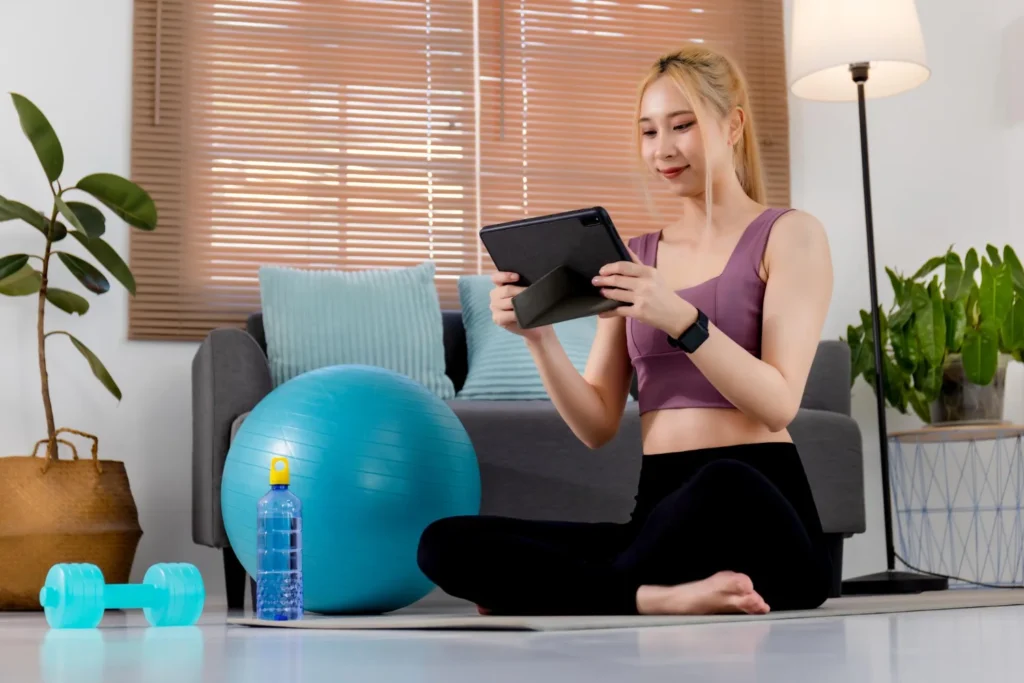
You do not need an expensive gym membership to build real-world strength. Functional fitness workouts at home can be incredibly effective using just your body weight or minimal equipment like dumbbells.
A standard at-home functional fitness workout routine might start with 3 sets of 15 bodyweight squats to engage the lower body. Focus entirely on depth and keeping your chest proud.
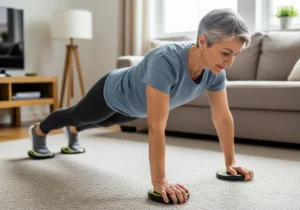
Next, move to 3 sets of 10 to 15 push-ups, modifying on your knees if necessary. Follow this with 3 sets of 12 reverse lunges per leg to challenge your unilateral balance and hip stability.
Finish the routine with 3 sets of a 45-second plank and 3 sets of 15 glute bridges. These bodyweight functional fitness workouts are perfect for morning routines and keeping your joints mobile without heavy joint loading. For beginners, our fitness tips for beginners can help you start safely.
Functional Fitness Workouts for Beginners
When starting out, functional fitness workouts for beginners must prioritize strict form and technique over intensity or heavy weights. The goal is to groove proper movement patterns into your nervous system.
Beginner functional fitness workouts should heavily feature slow, controlled tempos. For example, when learning the hip hinge, practice with a PVC pipe or broomstick on your back to ensure your spine remains perfectly neutral before adding any weight
Start with low-impact variations of the fundamental movements. Instead of a barbell back squat, begin with a box squat to safely learn the depth and mechanics without fear of falling.
Functional Fitness Workouts for Seniors & Over 50
As we age, maintaining muscle mass and mobility becomes a critical medical priority. Functional fitness workouts for seniors directly combat sarcopenia (muscle loss) and heavily improve daily autonomy.
A well-designed functional fitness workout for seniors should prioritize balance training and fall prevention. Single-leg stands, assisted lunges, and slow step-ups are absolutely vital for maintaining proprioception
The CDC’s STEADI initiative offers evidence-based tools for healthcare providers to assess and reduce fall risk in older adults
Furthermore, functional fitness workouts for over 50 should focus on joint-friendly exercises. Incorporating resistance bands for rows and presses protects the shoulders while still providing adequate muscle stimulus to maintain bone density.
Military & Tactical Functional Fitness Workouts
First responders and military personnel require bodies that can perform under extreme physical duress. Military functional fitness workouts are highly rigorous and heavily focus on loaded, unpredictable movements.
Army functional fitness workouts often incorporate heavy rucking (walking with a weighted backpack), sandbag carries, and high-intensity sprint intervals to mimic combat scenarios.
Similarly, firefighter functional fitness workouts emphasize pulling heavy loads, climbing stairs with weighted vests, and explosive power to ensure they can rescue individuals safely without suffering lower back blowouts.
Best Functional Fitness Workouts (Programs & Routines)
To see long-term results, you need structured programming rather than random exercise selection. The best functional fitness workouts combine progressive overload with varied metabolic conditioning
Functional fitness workout routines frequently utilize circuit training to keep the heart rate elevated while building muscle. Alternatively, integrating heavy strength days with separate High-Intensity Interval Training (HIIT) functional workouts provides a well-rounded athletic profile.
I always advise my patients to follow a program that trains movements, not muscles. A routine that balances squats, hinges, and presses across a week is vastly superior to traditional “chest days” or “arm days.” For a structured approach, explore our guide to fitness circuit workouts.
Functional Training Circuit Example
A functional training circuit is an excellent way to build strength and cardiovascular endurance simultaneously. By moving rapidly from one exercise to the next, you maximize your time and metabolic output.
Sample Circuit: Perform the following 5 exercises for 45 seconds each, resting for 15 seconds between movements.
- Kettlebell Goblet Squats
- Dumbbell Inverted Rows
- Alternating Reverse Lunges
- Standard Push-ups
- Heavy Farmer’s Carry
Complete this entire block for 3 to 4 total rounds, taking a strict 60-second rest between each full round. This protocol trains nearly every muscle in your body efficiently
Online Functional Fitness Workouts
The digital fitness landscape has revolutionized how we train. Accessing functional fitness workouts (online workouts), the latest releases provide fresh, professionally programmed routines directly to your phone.
Subscription platforms and online coaching services offer video demonstrations for every movement. This is invaluable for ensuring your hinge and squat mechanics remain flawless when training alone.
Whether you are using a premium app or following high-quality YouTube channels, online training provides the flexibility to perform elite-level routines in your garage or local gym.
Functional Fitness Training Near You
Sometimes, in-person coaching is necessary to perfect complex movements. Searching for “functional fitness near me” is a great way to find local facilities dedicated to this training style.
These local facilities often provide group classes that blend strength training with metabolic conditioning, offering both expert form correction and a highly motivating community atmosphere.
Health Benefits of Functional Fitness
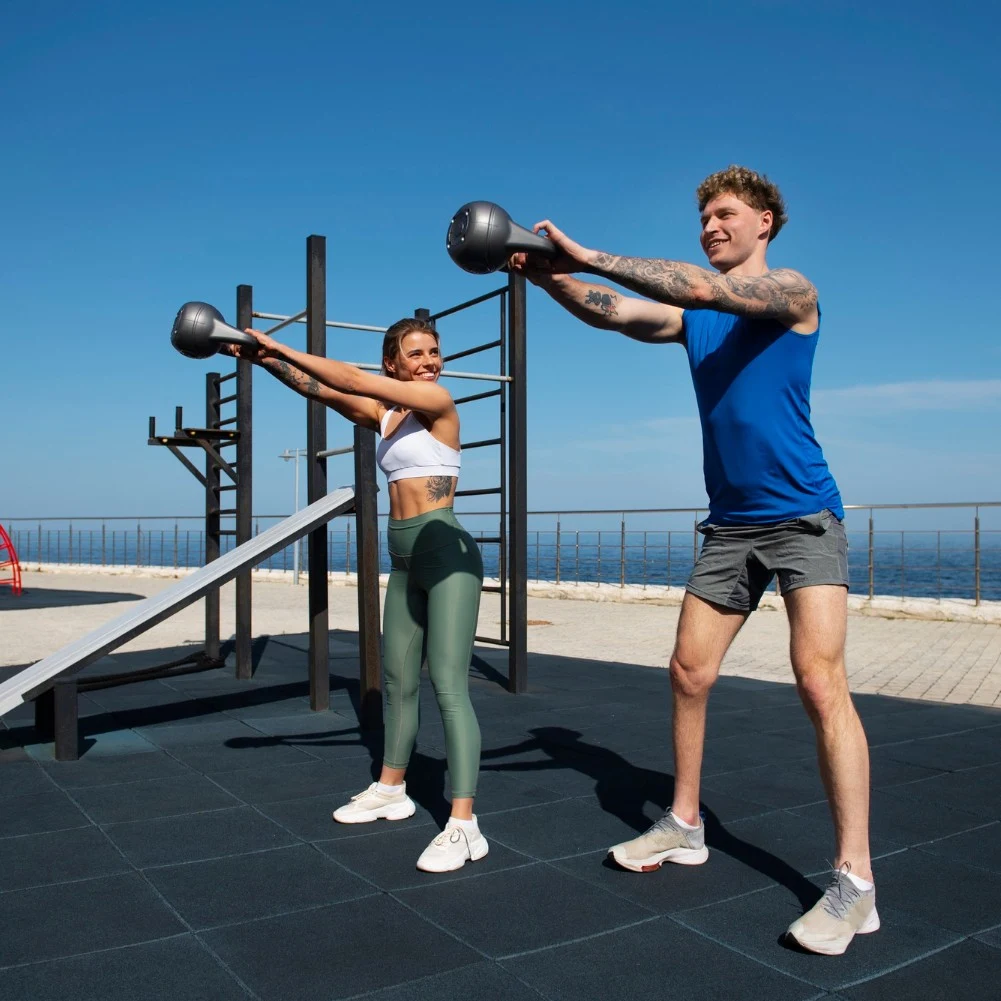
The medical advantages of this training style are profound. Functional fitness heavily improves balance and neuromuscular coordination, which directly reduces your risk of acute injuries and falls
By strengthening the core and stabilizing muscles, it aggressively combats chronic lower back pain and joint stiffness
Your daily performance—whether lifting children or doing yard work—is drastically enhanced. For targeted relief, see our resource on fitness for lower back pain.
Furthermore, because these exercises engage multiple large muscle groups simultaneously, they provide a massive cardiovascular stimulus. This heavily supports heart health and improves metabolic markers like insulin sensitivity
What Exercise Is Best for High Blood Pressure?
Patients frequently ask me in the clinic: “What exercise is best for high blood pressure? “The medical consensus points strongly toward regular, moderate-intensity functional exercises and cardiovascular training.
Brisk walking, combined with light bodyweight circuits, helps lower resting blood pressure by making the heart more efficient. Resistance training is also excellent, provided the patient breathes properly and avoids holding their breath (the Valsalva maneuver)
I heavily recommend starting with foundational movements like bodyweight squats and modified push-ups. These functional exercises improve vascular health and lower arterial stiffness safely and effectively. For more on the best exercise for heart health, read our expert guide.
Safety Tips for Functional Training
While highly beneficial, safety must always be the top priority. You must always warm up properly before a functional fitness session, focusing on dynamic stretches that open the hips and shoulders.
Always prioritize strict form over the amount of weight you are lifting. An improperly loaded deadlift can cause severe spinal injury; leave your ego at the door and lift with perfect mechanics.
Avoid severe overtraining by ensuring you have adequate rest days programmed into your week. If you have preexisting joint issues or heart conditions, always seek a medical consultation before beginning a new fitness regimen. Managing stress is also key to recovery; learn how to deal with stress effectively.
Frequently Asked Questions
What is functional fitness training?
Functional fitness training is a specialized exercise approach that focuses on training the body for the activities performed in daily life, utilizing multi-joint, multi-planar movements to build real-world strength and mobility
What are examples of functional workouts?
Classic examples include routines utilizing squats, deadlifts, lunges, push-ups, pull-ups, and loaded carries like the farmer’s walk, all of which directly translate to better physical performance outside the gym.
What are the 7 movements of functional fitness?
The core foundational movements human biomechanics rely on are the squat, the hip hinge, the horizontal/vertical push, the horizontal/vertical pull, the lunge, core rotation, and gait (walking or running)
Are functional workouts good for beginners?
Yes, they are exceptionally beneficial for beginners because every movement can be easily scaled down to bodyweight versions, allowing novices to safely learn proper form and joint mechanics before adding heavy resistance.
How often should you do functional training?
For optimal health benefits and muscular recovery, most fitness and medical professionals recommend engaging in structured functional fitness routines three to four times per week, paired with active recovery days
Conclusion
Functional fitness is not just another passing exercise trend; it is a fundamental shift in how you care for your physical body.
As a sports medicine physician, I have seen firsthand how mastering these basic, real-world movements prevents chronic pain, corrects postural imbalances, and combats age-related structural decline.
The true measure of fitness is not how much weight you can isolate on a seated machine, but how effortlessly and safely you can navigate your daily physical demands.
By prioritizing the seven foundational movements—squatting, hinging, pushing, pulling, lunging, rotating, and walking—you are building a resilient, highly capable musculoskeletal system.
Whether you are a senior looking to maintain your independence, a busy parent lifting children and heavy groceries, or a tactical athlete, these exercises will directly enhance your physical autonomy. Start slowly, prioritize flawless biomechanical form over heavy weights, and remain highly consistent with your weekly routine.
Do not wait for a debilitating back injury or joint failure to force you into physical therapy to finally learn these proper mechanics.
Take proactive control of your health today, start moving with purpose, and experience the profound difference that true, functional strength brings to your everyday life. For more on how to stay healthy, explore our comprehensive wellness resources.
References
- American College of Sports Medicine. ACSM’s Complete Guide to Fitness & Health. https://acsm.org/wp-content/uploads/2025/01/acsms-complete-guide-fitness-health-sample-download.pdf
- Centers for Disease Control and Prevention. STEADI – Older Adult Fall Prevention. https://www.cdc.gov/steadi/index.html
- Centers for Disease Control and Prevention. What Counts as Physical Activity for Older Adults. https://www.cdc.gov/physical-activity-basics/adding-older-adults/what-counts.html
- World Health Organization. Physical activity. https://www.who.int/news-room/fact-sheets/detail/physical-activity
- Rainville J, et al. Exercise as a treatment for chronic low back pain. Spine J. 2004. https://pubmed.ncbi.nlm.nih.gov/14749199/
- Ratamess NA, et al. American College of Sports Medicine position stand. Progression models in resistance training for healthy adults. Med Sci Sports Exerc. 2009. https://pubmed.ncbi.nlm.nih.gov/19204579/
- World Health Organization. WHO Guidelines on physical activity and sedentary behaviour. https://www.ncbi.nlm.nih.gov/books/NBK566046/
- Centers for Disease Control and Prevention. Falls Compendium. https://www.cdc.gov/falls/interventions/falls-compendium.html
- Grgic J, et al. Comparison of single- and multi-joint lower body resistance training. J Strength Cond Res. 2018. https://pmc.ncbi.nlm.nih.gov/articles/PMC6460214/
- Smith AC, et al. Exercise Biomechanics for Health: Evaluating Lifelong Activities for Optimal Function. Front Public Health. 2023. https://pmc.ncbi.nlm.nih.gov/articles/PMC10048551/
Related Posts

MORE from Author
Read More As a physician specializing in exercise science and public health, I regularly consult patients who feel completely lost in the…
 Just last week, a 34-year-old patient named Clara sat in my clinic, feeling entirely overwhelmed by the modern fitness industry.…
 Hello, I am Dr. Kenji Sato, MD, specializing in sports medicine and performance optimization. In my sports clinic, I constantly…
- In my clinical practice as a physician focused on exercise science, I often tell patients that mastering fitness bench workouts…