Starter Fitness Plan: The Ultimate Beginner Workout Guide (Gym & Home) 2026

Just last month, a patient named Mark came into my clinic feeling incredibly defeated. He wanted to improve his cardiovascular health and lose weight, but stepping into a commercial gym made his anxiety skyrocket.
As a Board-Certified MD specializing in public health and exercise science, I see this specific type of paralysis constantly. Finding a reliable, scientifically backed starter fitness plan can feel like trying to learn a foreign language overnight.
The modern fitness industry aggressively overcomplicates health, pushing extreme routines that lead to immediate burnout or severe joint injuries. You do not need to spend three hours a day lifting massive weights to drastically improve your metabolic health.
What you actually need is a structured, predictable routine that focuses on consistency and proper biomechanics. In this comprehensive 2026 guide, we will break down exactly how to start exercising safely, effectively, and confidently. For evidence-based fitness tips for beginners, start here.
TL;DR Summary
A safe, effective starter fitness plan includes three to four weekly workouts that intelligently combine full-body strength training, moderate cardiovascular exercise, and dedicated recovery days. Beginners must prioritize consistency over intensity, master proper exercise form, and practice gradual progressive overload.
This guide provides free workout plans, both gym and home routines, and medical-grade expert tips to help you build sustainable muscle and improve your overall health safely.
What Is the Best Fitness Plan for Beginners?
The absolute best fitness plan for beginners is one that combines full-body strength training, moderate aerobic cardio, and strict rest days. It must be performed consistently three to four times per week.
Your primary goal during the first month is not to lift the heaviest weight possible, but simply to build the neurological habit of exercising. A recommended workout routine for beginners should leave you feeling energized, not completely incapacitated by muscle soreness. Learn more about the benefits of exercise for long-term health.
Key Principles of a Starter Fitness Plan
Before you touch a single dumbbell, you must understand the biological rules of muscle adaptation. Progressive overload is the foundation; you must gradually increase the weight, repetitions, or intensity over time to force your body to adapt.
Secondly, consistency heavily outweighs intensity. Working out moderately for three days a week yields vastly better long-term results than one extreme workout that leaves you injured.
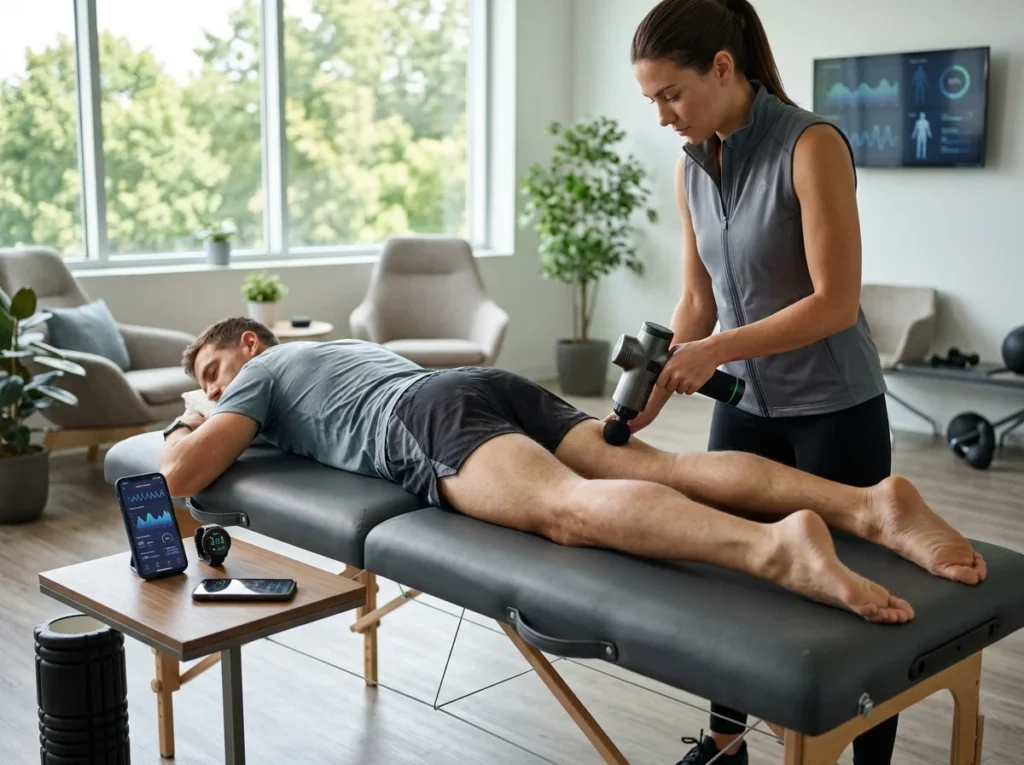
Finally, recovery is when the actual muscle growth occurs. Your muscle fibers repair and strengthen while you sleep, making rest days a mandatory biological requirement. Prioritize how much sleep do I need for optimal recovery.
Complete Workout Plan for Beginners
When prescribing exercise as medicine, I always structure a complete workout plan for beginners to prevent central nervous system fatigue. A highly effective weekly structure balances physical stress with optimal biological recovery.
Full-Body Strength Training: Focus on learning the primary compound movements like squats and rows. Keep the weights light and strictly focus on the mind-muscle connection.
Cardiovascular Health: Engage in 30 minutes of moderate-intensity steady-state (MISS) cardio. This can be a brisk outdoor walk, cycling, or swimming to improve heart health.
Active Recovery: Complete rest from heavy lifting. You should focus on light stretching, yoga, or simply taking a leisurely walk to promote blood flow to recovering tissues.
Full-Body Strength Training: Return to the weights, slightly varying the exercises from Day 1 to stimulate different muscle fibers. Maintain strict form.
Light Activity & Mobility: Focus entirely on joint mobility and core stability. A strong core heavily protects your lower back during heavier lifts later in your journey.
Free Beginner Workout Plan (Gym Version)
Navigating a commercial gym requires a solid strategy. This free workout plan for beginners uses basic equipment to safely build a foundation of strength. This is an excellent beginner workout gym plan that targets all major muscle groups.
Goblet Squats (Legs & Core)
Hold a single dumbbell vertically against your chest. Keeping your chest up, lower your hips down and back as if sitting in a chair. This movement heavily targets the quadriceps and glutes while teaching safe spinal alignment.
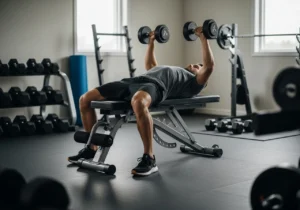
Dumbbell Bench Press (Chest & Triceps)
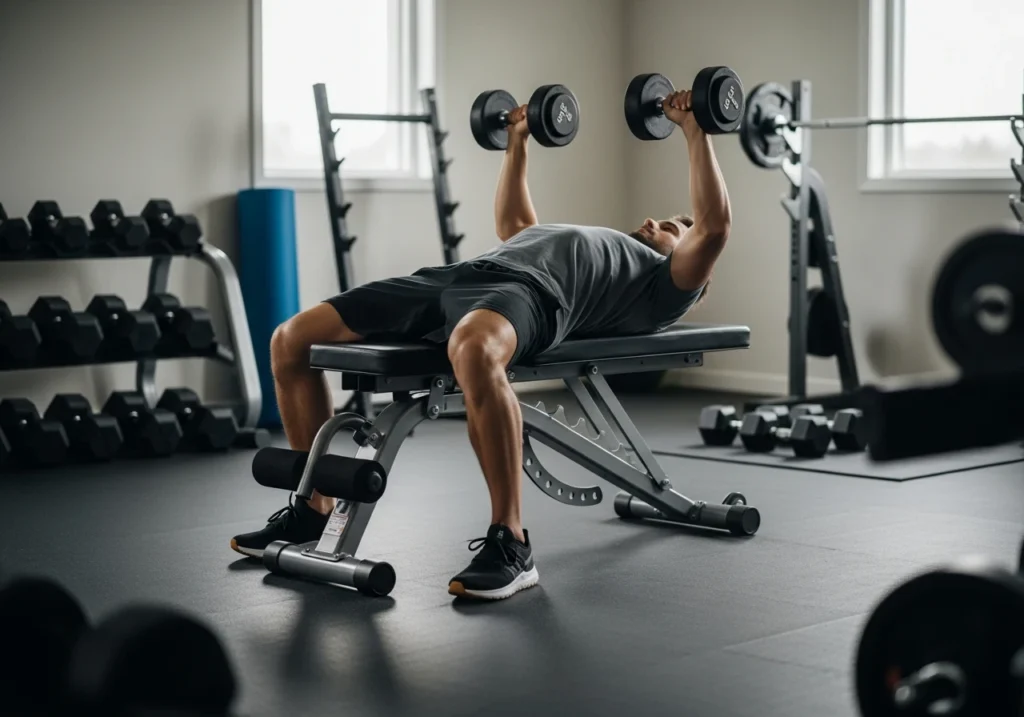
Lie flat on a bench with a dumbbell in each hand. Press the weights straight up over your chest, then lower them slowly with strict control. This is far safer for a beginner’s shoulder joints than a heavy barbell press.
Lat Pulldowns (Back & Biceps)
Using the cable machine, grip the wide bar and pull it smoothly down to your upper chest while squeezing your shoulder blades together. This exercise builds the crucial back muscles required for proper daily posture.
Dumbbell Hammer Curls (Arms)
Stand tall, holding dumbbells at your sides with your palms facing your thighs. Curl the weights upward without swinging your torso. This safely isolates the biceps and builds vital grip strength.
Workout Plan for Beginners Female
While human muscle physiology is identical across genders, a specific workout plan for beginners female often aligns with common aesthetic and functional goals. Many of my female patients specifically request routines that emphasize lower-body strength, core stability, and overall muscle toning.
This specific variation focuses heavily on building the glutes and hamstrings while safely strengthening the upper body. Exercises like Romanian deadlifts, glute bridges, and modified push-ups are incredibly effective. For tailored advice, see our fitness tips for women.
Remember, lifting weights will not make you “bulky”; it will simply build dense, metabolically active muscle tissue that actively burns fat throughout the day.
Workout Routines for Beginners at Home

You absolutely do not need an expensive gym membership to drastically change your physique. Workout routines for beginners at home are highly effective when utilizing strict bodyweight mechanics. This free beginner workout routine requires zero equipment.
Bodyweight Squats: Stand with your feet shoulder-width apart and lower yourself slowly. Focus on pushing your knees outward and keeping your weight entirely in your heels to protect your joints.
Incline Push-Ups: Standard push-ups are often too difficult for true novices. Place your hands on a sturdy chair or a kitchen counter to reduce the gravity load. Keep your core tight and lower your chest to the edge.
Forearm Plank: Rest on your forearms and toes, keeping your body in a perfectly straight line. This isometric hold builds deep abdominal strength far better than traditional sit-ups, protecting your lumbar spine. Explore more bodyweight fitness exercises you can do anywhere.
Reverse Lunges: Step backward with one leg and lower your back knee toward the floor. Stepping backward is biologically much easier on the knee joints than stepping forward, making it perfect for beginners.
Best Workout Plans for Beginners
When exploring the best workout plans for beginners, you will encounter three primary methodologies. Understanding the differences will help you choose the best workout program for beginners that fits your lifestyle.
Full-Body Workouts: You train every major muscle group in a single session. This is clinically the best approach for novices because it maximizes muscle protein synthesis across the entire body three times a week.
Upper/Lower Split Routines: You dedicate one day entirely to the upper body and the next to the lower body. This is excellent for slightly more advanced beginners who want to increase their daily training volume safely.
Circuit Training: You move rapidly from one exercise to the next with minimal rest. This drastically elevates your heart rate, blending strength training with cardiovascular conditioning in a very short timeframe.
Weight Lifting Chart for Beginners
Having a visual guide prevents gym anxiety and keeps your progress highly organized. Use this weight-lifting chart for beginners to track your initial sets and repetitions safely.
| Exercise | Sets | Repetitions | Rest Period |
|---|---|---|---|
| Goblet Squat | 3 | 10 – 12 | 90 Seconds |
| Dumbbell Bench Press | 3 | 8 – 10 | 90 Seconds |
| Seated Cable Row | 3 | 10 – 12 | 90 Seconds |
| Dumbbell Lunges | 2 | 10 per leg | 60 Seconds |
| Plank Hold | 3 | 30 Seconds | 60 Seconds |
What Is the 3-3-3 Rule in Gym?
The 3-3-3 rule is a highly effective, minimalist training philosophy designed specifically to prevent beginner overwhelm. It dictates that you choose exactly 3 compound exercises, perform 3 sets of each movement, and work out exactly 3 days per week.
By severely limiting the number of exercises, a novice can entirely focus their mental energy on mastering proper form rather than memorizing a complex routine. It is a brilliant psychological tool for building long-term gym adherence.
What Is the 5-5-5-30 Rule?
The 5-5-5-30 rule is a structured, time-efficient framework for busy individuals. It involves a mandatory 5-minute dynamic warm-up, selecting 5 specific exercises, completing 5 sets of each, all contained within a strict 30-minute workout window.
Because the time is heavily restricted, your rest periods must remain short, which naturally elevates your cardiovascular output. This rule proves that you can achieve a highly effective, medically sound workout on a tight schedule.
Good Workout Routine for Beginners
Sometimes, patients just want the simplest possible path forward. A good workout routine for beginners removes all guesswork and requires almost zero setup.
Start by walking briskly for ten minutes to elevate your core temperature. Then, complete three rounds of ten squats, ten incline push-ups, and a thirty-second plank.
Finish the session with five minutes of deep stretching. This routine touches every foundational human movement pattern safely and effectively. For more ideas, check our free fitness workout plan.
Gym Workout Plan for Beginners PDF
Having a physical checklist heavily reinforces your new daily habits. We highly recommend downloading a gym workout plan for beginners PDF so you can track your exact weights and rest times without looking at a distracting smartphone.
Tracking your numbers is the only way to ensure progressive overload is actually happening. Check the bottom of this page to join our medical newsletter and receive your free, printable starter template today.
What’s the Best Exercise for Type 2 Diabetes?
As a physician, I treat metabolic disease constantly. Walking, resistance training, and aerobic exercises are universally the most effective interventions for Type 2 diabetes.
When you lift weights, your muscles physically pull glucose out of your bloodstream to use as fuel, actively lowering your blood sugar independent of insulin.
Combining a brisk daily walk with three days of beginner strength training is a profound, life-saving medical intervention. Learn how to lower blood sugar through lifestyle changes.
How to Progress Safely as a Beginner
Your muscles will adapt quickly, but your tendons and ligaments take much longer to strengthen. To progress safely, you must increase your lifting weight incredibly slowly, typically no more than five pounds at a time.
If you cannot complete an exercise with perfect, controlled form, the weight is too heavy, regardless of your ego. Overtraining your joints early on is the number one reason beginners abandon their fitness journey within the first month.
Common Mistakes Beginners Should Avoid
Skipping your dynamic warm-up is a critical error that leads to severe muscle tears and joint impingements. You must prepare your tissues with light movement before adding heavy external loads.
Secondly, relying entirely on momentum rather than strict muscle contraction ruins the effectiveness of the exercise. Finally, starving yourself while starting a new routine will crash your metabolism and prevent any actual muscle recovery from occurring.
Nutrition Tips for Beginner Fitness Plans

You cannot out-train a severely poor diet. To support your new fitness plan, you must drastically increase your daily protein intake, aiming for roughly 0.8 to 1 gram of protein per pound of your target body weight.
Protein provides the essential amino acids required to rebuild the muscle tissue you break down during training. Furthermore, aggressive hydration and complex carbohydrates are required to fuel your central nervous system during these new workouts. Explore our guide to a healthy diet for fueling your workouts.
How Long Before You See Results?
Patience is a biological necessity. Typically, it takes four to eight weeks of strict consistency before you notice visible, physical changes in the mirror.
However, your central nervous system adapts much faster; you will likely feel stronger and experience vastly better sleep within the first fourteen days. Focus entirely on how your energy levels improve rather than obsessing daily over the bathroom scale.
Frequently Asked Questions
How many days a week should a beginner work out?
Three to four days per week is ideal to balance muscle stimulation and nervous system recovery.
Can beginners build muscle quickly?
Yes, beginners experience “newbie gains,” allowing for rapid muscle growth during the first six months of consistent training.
Are home workouts without equipment effective?
Yes, bodyweight exercises like push-ups, lunges, and squats provide enough mechanical tension to build a strong foundation.
Do I need to change my diet to see results?
Yes, consuming adequate lean protein and complex carbohydrates is medically required to rebuild the muscle tissue broken down during exercise.
How should I manage severe muscle soreness after working out?
Engage in light active recovery like walking, prioritize eight hours of sleep, and ensure adequate protein intake to support tissue repair.
Conclusion
Embarking on a new fitness journey can feel incredibly overwhelming, but it does not have to be a complicated scientific equation. As I constantly remind my clinic patients, the most effective workout plan is simply the one you can stick to consistently week after week. You are building a lifelong biological habit, not training for an immediate Olympic event.
Whether you choose to start with bodyweight squats in your living room or light dumbbells at a commercial gym, the physiological benefits begin the moment you start moving.
Focus heavily on mastering your exercise form, fiercely prioritizing your sleep and recovery, and nourishing your body with adequate daily protein.
Remember to give yourself profound grace during those first few weeks of inevitable muscle soreness and fatigue. Your body is rapidly adapting, healing, and becoming functionally stronger every single day.
Take a deep breath, trust the gradual process, and take that first empowered step toward reclaiming your long-term metabolic health. Start your journey with how to start a healthy lifestyle today.
References
- CDC. Physical Activity Guidelines. cdc.gov/physicalactivity
- WHO. Exercise for Health. who.int/physical-activity
- ACSM. Beginner Training Principles. acsm.org
- Harvard Health. Strength Training Basics. health.harvard.edu
- NIH. Muscle Adaptation Science. nih.gov
- Mayo Clinic. Safe Exercise Progression. mayoclinic.org
- Sleep Foundation. Recovery & Performance. sleepfoundation.org
- American Heart Association. Cardio for Beginners. heart.org
- NIH. Protein & Muscle Repair. nih.gov
- CDC. Injury Prevention in Fitness. cdc.gov/fitness-safety
Related Posts

MORE from Author
Read More As a physician specializing in exercise science and public health, I regularly consult patients who feel completely lost in the…
 Just last week, a 34-year-old patient named Clara sat in my clinic, feeling entirely overwhelmed by the modern fitness industry.…

 Hello, I am Dr. Kenji Sato, MD, specializing in sports medicine and performance optimization. In my sports clinic, I constantly…
- In my clinical practice as a physician focused on exercise science, I often tell patients that mastering fitness bench workouts…